Volvo Trucks: Diversity drives progress, advancing the transport industry

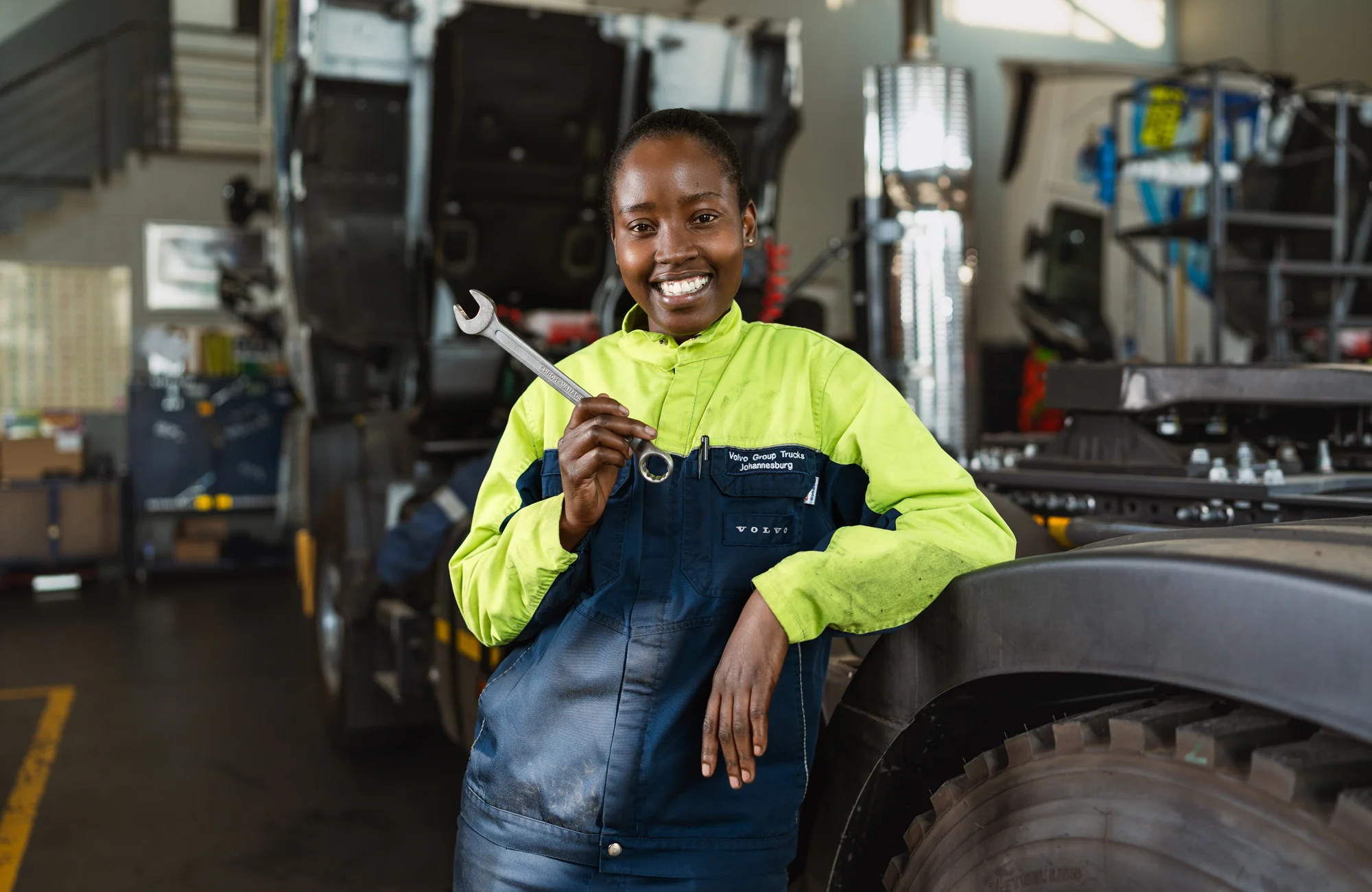


Iron Women leading the way
Volvo Trucks is also championing greater female participation in the transport industry through its pioneering Iron Women truck driver training programme. Since its launch in 2019, the initiative has empowered 556 women by providing them with the training and qualifications needed to become professional truck drivers.
“Women represent a largely untapped talent pool, and since the inception of Iron Women, we have seen that more and more fleets are now actively recruiting female drivers,” says Onica Ndlovu, director commercial offering at Volvo Trucks South Africa. “Female truck drivers serve as visible role models in communities where girls are still steered away from technical or physical careers. It shifts perceptions for employers, communities and the next generation of girls watching.”

The programme is facilitated by the Commercial Transport Academy (CTA). The current intake consists of 15 women, who are part of a 12-month-long driver learnership programme with Goldfields Logistics. “Professional truck drivers work under a level of sustained pressure that is rarely fully recognised. This includes impatient motorists, congested roads, extreme weather and safety risks,” says CEO and founder of CTA, Nicci Scott-Anderson.
“The programme is specifically designed for these women to enter a traditionally male-dominated profession,” she adds. “Not only will they achieve the recognised professional driver qualification, but they’ll also be enabled through additional interventions such as advanced defensive and economical driver training with Volvo Trucks, extended practical driving exposure, visual and cognitive performance development, women’s health and well-being workshops, financial capability and soft-skills development.”
Studies and fleet operator feedback consistently show
that female drivers tend to have fewer accidents, handle cargo more carefully, and demonstrate stronger communication with dispatch and clients. “Our objective wasn’t simply to produce women who had completed a learnership, but rather professional drivers who were technically competent, confident, resilient and better prepared to transition safely and successfully into the workplace,” says Scott-Anderson.
“Women drivers have shown themselves to be extremely resilient; they are not afraid to work hard – often in tough conditions over long hours – to ultimately transport loads safely and efficiently,” says Ndlovu. “For women, truck driving represents a path to financial independence that bypasses traditional qualification barriers. Representation matters. For the trucking industry to thrive, especially in a market like South Africa where logistics infrastructure is critical, it simply can’t afford to ignore half the population.”
Published by



focusmagsa