Artificial intelligence is transforming supply chains, but unchecked gender bias could undermine hard-won progress for women, influencing recruitment, career pathways and leadership opportunities across the profession in South Africa.
Artificial intelligence’s tendency to “hallucinate” – in other words, confidently inventing facts, citing non-existent sources or producing inaccurate answers – frequently makes headlines. But another potential flaw poses a different kind of risk: gender bias.
Supply chain industry body SAPICS is shining a light on the issue this Women’s Month. “While AI itself isn’t biased, it’s a mirror. When trained on historical data, AI tools reflect the gender prejudices that already exist. It’s the classic rule of supply chain: garbage in, garbage out. If left unchecked, AI won’t just mirror past inequities, it will amplify and accelerate them at scale,” SAPICS warns.
The organisation argues that tackling gender bias in AI is not simply an IT issue; it is also a cultural and leadership challenge.
What AI learns is important
A recent study of 133 AI systems found that 44% demonstrated clear gender bias. Large language models have repeatedly associated women with domesticity and childcare while linking men with business, leadership and career success. According to UN Women, when researchers asked large language models simply to complete a sentence beginning with a person’s gender, around one in five responses was sexist or misogynistic.
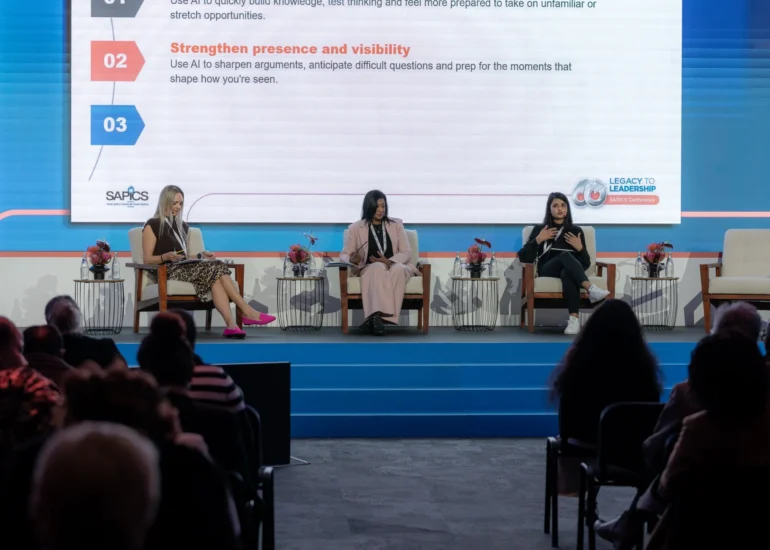
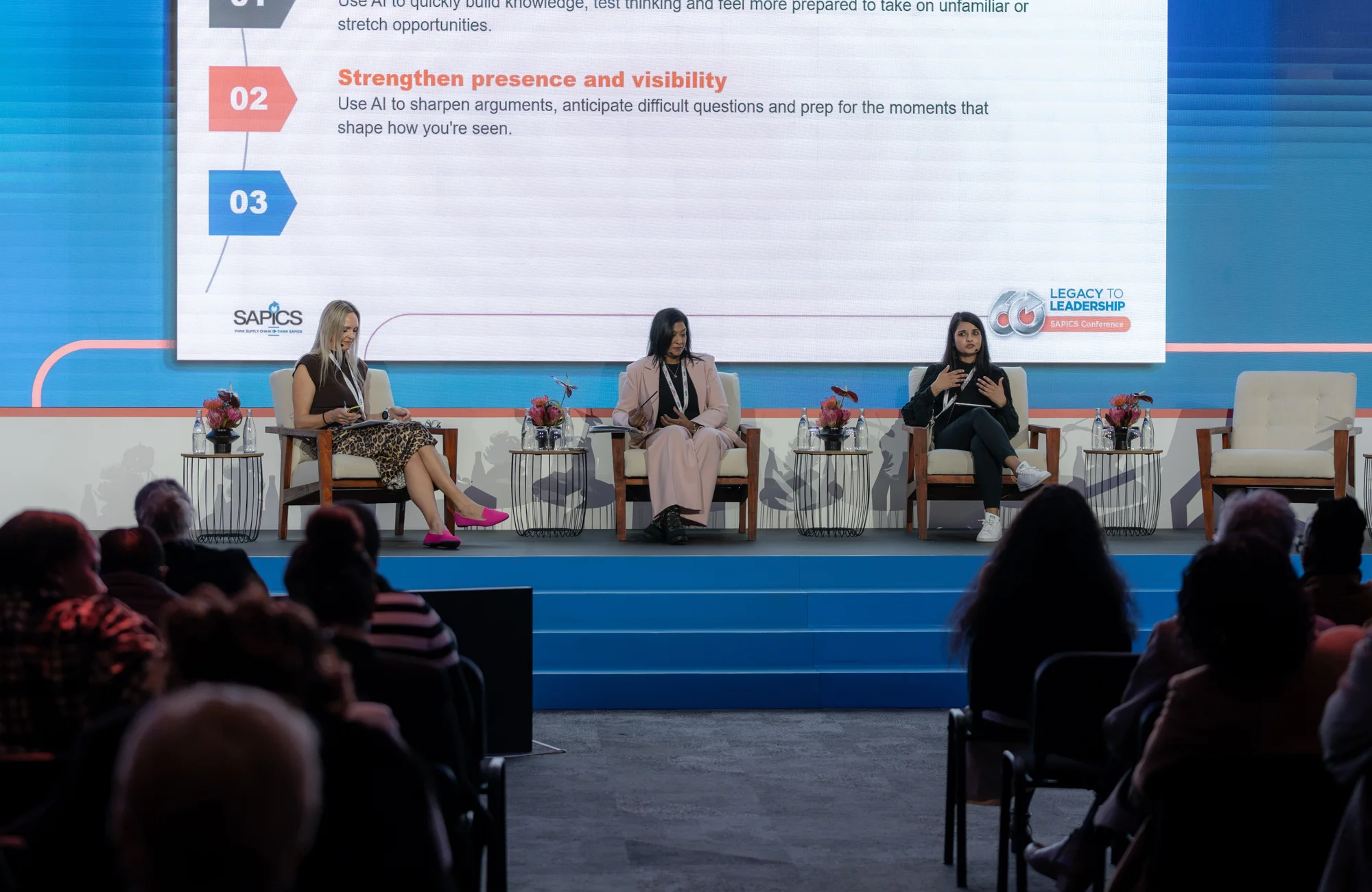
The subject was among those explored during a Women in Supply Chain Leadership panel discussion at the recent 2026 SAPICS Conference in Cape Town, which brought together around 600 supply chain professionals. Attendees heard that many recruitment algorithms can favour male candidates because they have been trained on decades of historical information reflecting inequalities that already exist. Algorithms may not independently create those prejudices, but the information used to train them shapes their outputs.
The panellists also highlighted another imbalance: only 22% of AI and data science professionals are women.
What happens to the first rung?
Another concern is the automation of entry-level work as AI becomes more widely adopted. Gartner reports that 55% of supply chain leaders expect advances in AI to reduce entry-level hiring over the coming years. This has implications for women because entry-level positions provide an important route into the supply chain profession. If that first layer of jobs is cut significantly, the future pool of female supervisors, managers and executives could shrink before women have had the opportunity to progress.
That presents supply chain organisations with a difficult question: how do they capture the productivity benefits of AI without inadvertently eliminating the very pathways needed to develop future talent?
Supply chains are changing rapidly
The question is becoming more urgent because AI is moving rapidly into modern supply chain operations. It is already being applied to demand forecasting, inventory optimisation, warehouse automation, predictive analytics and numerous other functions. Its influence will inevitably extend beyond operational decisions to the people working within the supply chain.
The concern raised during the SAPICS discussion was that overlaying AI onto an already unequal gender landscape could do more than slow progress. Poorly designed or inadequately scrutinised systems could potentially reverse some of the gains already made.
Women need a seat at the AI table
The panellists urged women working in supply chain to become actively involved in deciding how AI is selected, implemented and used. They also encouraged professionals to examine their own biases as well as those within their teams, while retaining responsibility for their decisions rather than automatically accepting an AI-generated recommendation.
The message was straightforward: AI can inform a decision, but human judgement must remain central to it. This becomes particularly important when technology influences recruitment, promotion or other decisions with significant consequences for people’s careers.