International Truck of the Year turns 50: These were the winners from 2002-2006
International Truck of the Year turns 50: These were the winners from 2002-2006
The International Truck of the Year is 50 years old! In celebration of this, RICHARD STANIER is paying tribute to all the winners over the years.
In previous issues of FOCUS, we explored the winners from 1977 to 2001. Now, here are the winners from 2002 to 2006.
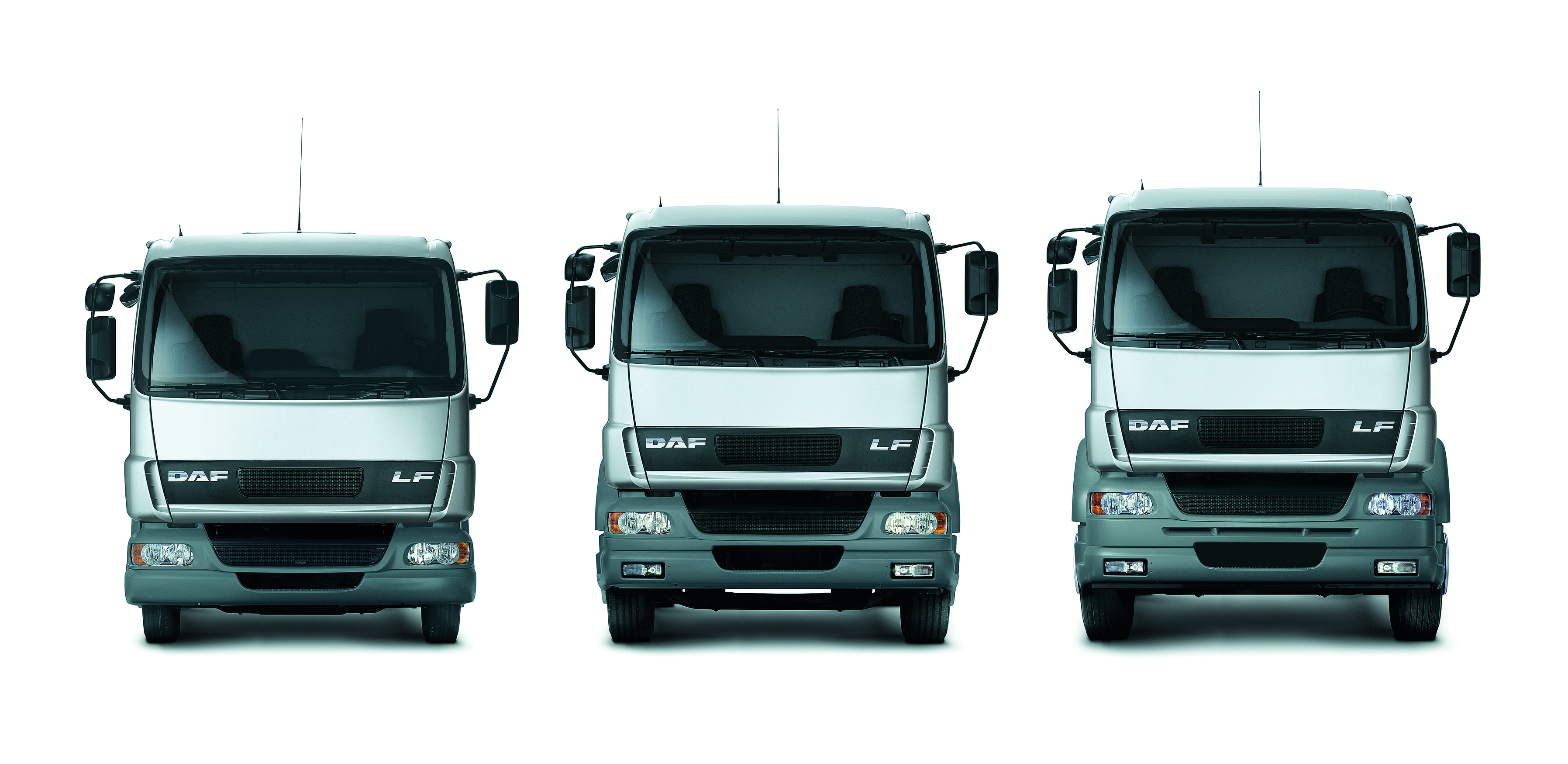
2002: DAF LF
DAF’s third win came in 2002 with the LF distribution range, proving – like the Mercedes-Benz Atego three years earlier – that the International Truck of the Year (IToY) judges were not starstruck by flagship trucks when the right proposition came along.
The LF was launched at the Brussels Show in January 2001 as a replacement for the 45 and 55 Series. It owed its victory to the driveability of the range, with good ride and handling, an in-cab layout that compared well with heavier classes of vehicle, good manoeuvrability for distribution and the flexibility of the new Cummins ISBe engines. The judges awarded 87 points to the little DAF, ahead of the new Volvo FH12 500 on 80 points and the Renault Magnum on 29. DAF also scored a fourth place with the revised CF models.
While the outgoing 45 Series had been very successful in Britain and the Benelux countries, the new LF was designed as part of DAF’s stated intention to secure 15% of the European market for vehicles of 6 tonnes and above. The design engineers were presented with a “clean sheet” opportunity for the new models – and the resulting range was produced in close association with outside suppliers, both old and new.
Essentially a six- to 18-tonne range, with 6×2 rigids up to 21 tonnes and tractor units up to 28 tonnes, the LFs were powered by either four- or six-cylinder Cummins engines, which were rebadged as the Paccar BE and Paccar CE respectively. The four-cylinder 3.9-litre unit was rated at 135hp (101kW), 150hp (112kW) or 167hp (125kW) and was adopted because of the difficulties of achieving Euro 3 emission standards with lower-powered six-cylinder engines. The 5.9-litre six-cylinder engine was rated at 185hp (138kW), 220hp (164kW) or 250hp (186kW). The new engines were developed by Cummins as part of the European Engine Alliance with New Holland and Iveco, with DAF having input into the development of its versions.
Cab options were dictated by anticipated production volumes. The choices were to design a completely new cab, scale down the CF cab or collaborate with another manufacturer, with the final option winning the day through an arrangement with Renault.
The LF cab was given distinctly different styling to distinguish it from the Renault Midlum, but the cabs were supplied fully trimmed by the French manufacturer, with DAF and RVI sharing ownership of the design and tooling. Models from 6.2 to 12 tonnes GVW, designated LF45, had the lowest-mounted cab. The LF55 was fitted with 19.5-inch wheels in 12- to 15-tonne form, with the tallest LF being the LF55 18-tonner on 22.5-inch wheels. Disc brakes were employed on each axle, but DAF refrained from electronic operation, claiming it was unnecessary at these weights.
The driveline was completed with a choice of ZF five- or six-speed manual gearboxes – or an Eaton nine-speed gearbox with the more powerful engines – each driving Albion rear axles. The “Light Forte” certainly earned its place in transport history, with 238,700 examples produced during a production run of almost 23 years.


2003: IVECO STRALIS
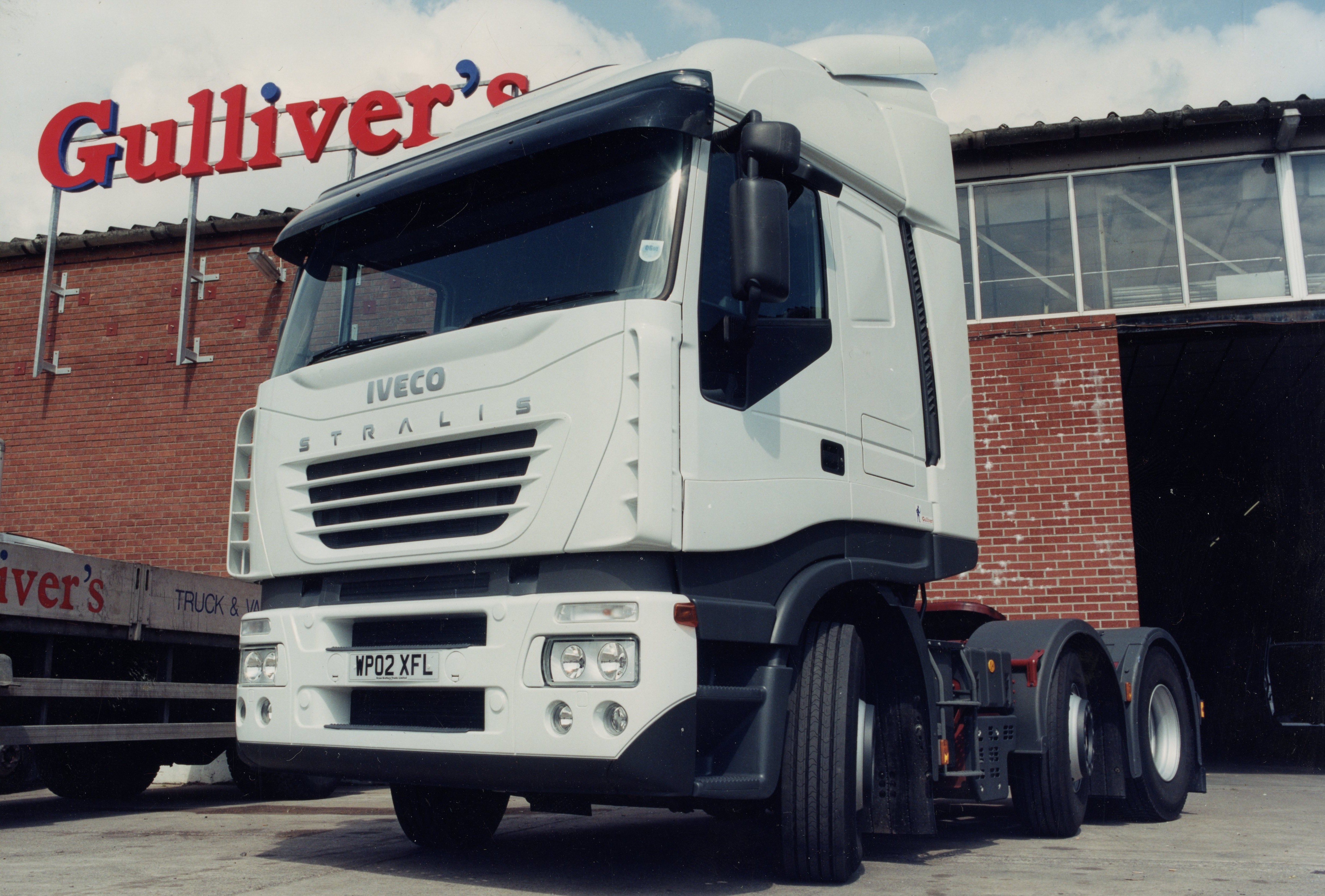
A decade after the Eurotech’s 1993 award, Iveco was back on winning form with a new generation of heavy trucks. Having achieved the monumental task of replacing its entire range in 1991/92, the shortcomings of the Single Product Range, as it was known, helped inform the development of the Stralis. The earlier range had been launched with the lighter EuroCargo models before moving up the weight scale, whereas the Stralis effectively replaced the top-tier Eurostar and more powerful Eurotech models.
At a time when speculation was rife about the sale of the Iveco business and suggestions that it was “make or break time” once again, Iveco delivered with a combination of a proven driveline, CAN-bus electronic architecture and innovative cab design.
Already proven in the preceding model range, the Cursor 10 and 13 Euro 3 engines featured unit pump injectors, a single overhead camshaft and variable-geometry turbocharging. With the Stralis, radiator area was increased by 23% and the intercooler by 21%, while a new 540-hp (403-kW) rating of the 13-litre was offered alongside the existing 480-hp (358-kW) variant. The 10-litre maintained its 400-hp (298-kW) and 430-hp (321-kW) ratings.
Iveco’s version of the ZF AS-Tronic automated gearbox – marketed as EuroTronic 2 – was the standard transmission, with the 12-speed version fitted behind the 10-litre engine and the 16-speed behind the 13-litre. ZF’s 16-speed manual Ecosplit, fitted with servo-shift assistance, was retained as an alternative for traditionalists.
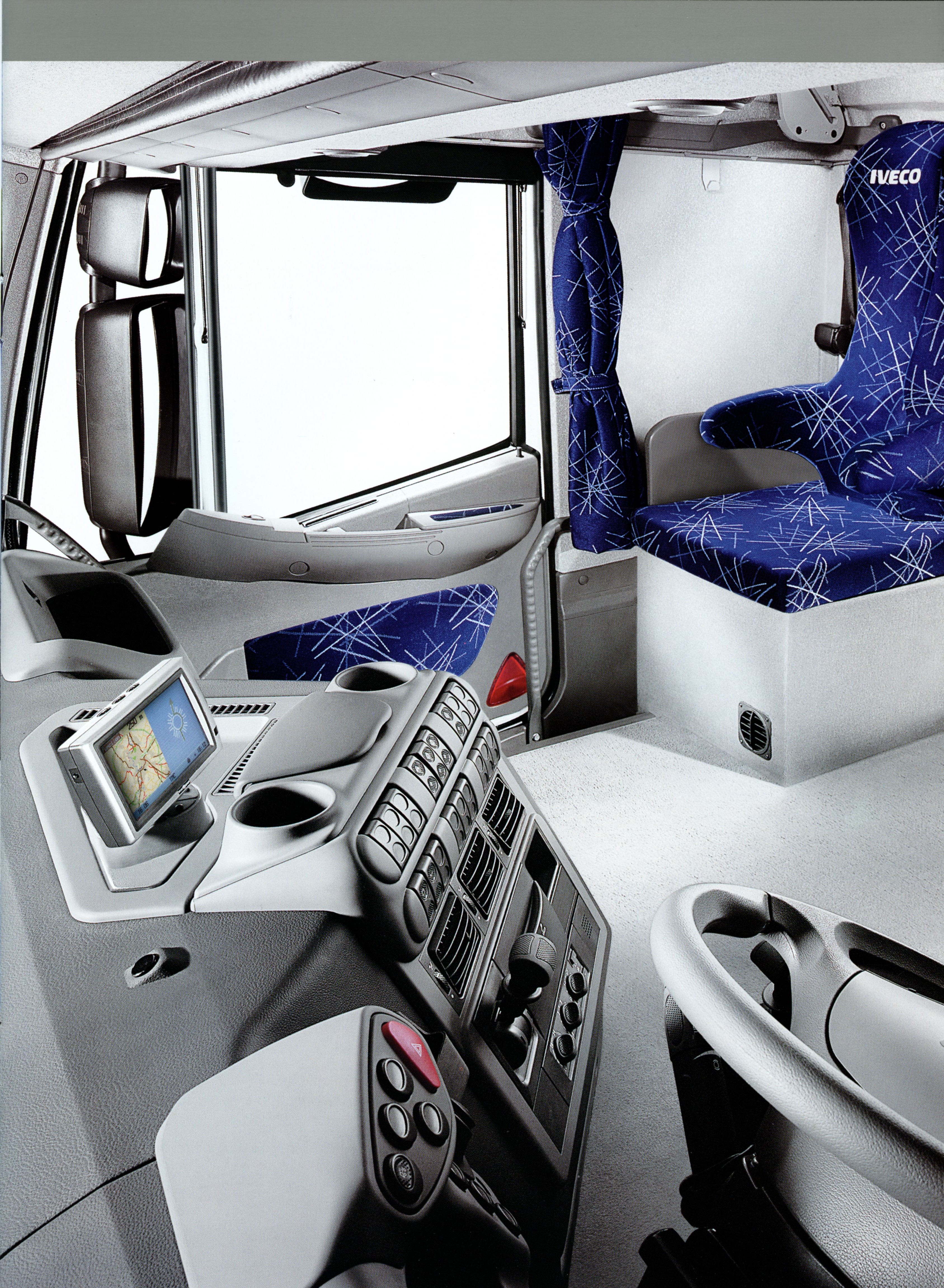
Despite retaining the cab frame from the Eurostar, 80% of the Stralis panels were new, giving the truck a much more assertive appearance than its predecessor. Surprisingly, only one cab size was initially offered – the 2.5m-wide, high-roof model, with a tapered roofline for improved aerodynamics and a new four-point air and damper suspension system. While the roofline reduced headroom at the front of the cab, there was still 1.96m of standing room in front of the bunk. Iveco’s designers also incorporated several innovative interior features, including the deletion of the conventional passenger seat in some layouts.
Designated the “Active Space” design, there were three interior concepts. The Enhanced Single Driver version featured an armchair-style seat against the nearside rear wall, which could be angled through 90 degrees. The Long-Distance Single Driver layout featured a larger lower bunk or a larger upper bunk with a chair and table beneath it. A Two-Driver cab was also offered with an air-suspended passenger seat, providing extra legroom and 90 degrees of rotation.
Features such as these, together with the rotating gear console that could be swung out of the way and the multicoloured LCD dashboard display, particularly appealed to the judges from 19 countries. They regarded the focus on driver comfort and the well-developed driveline as worthy of a 102-point score. Second place went to the DAF XF95 with 50 points, with the Volvo FM third on 44.
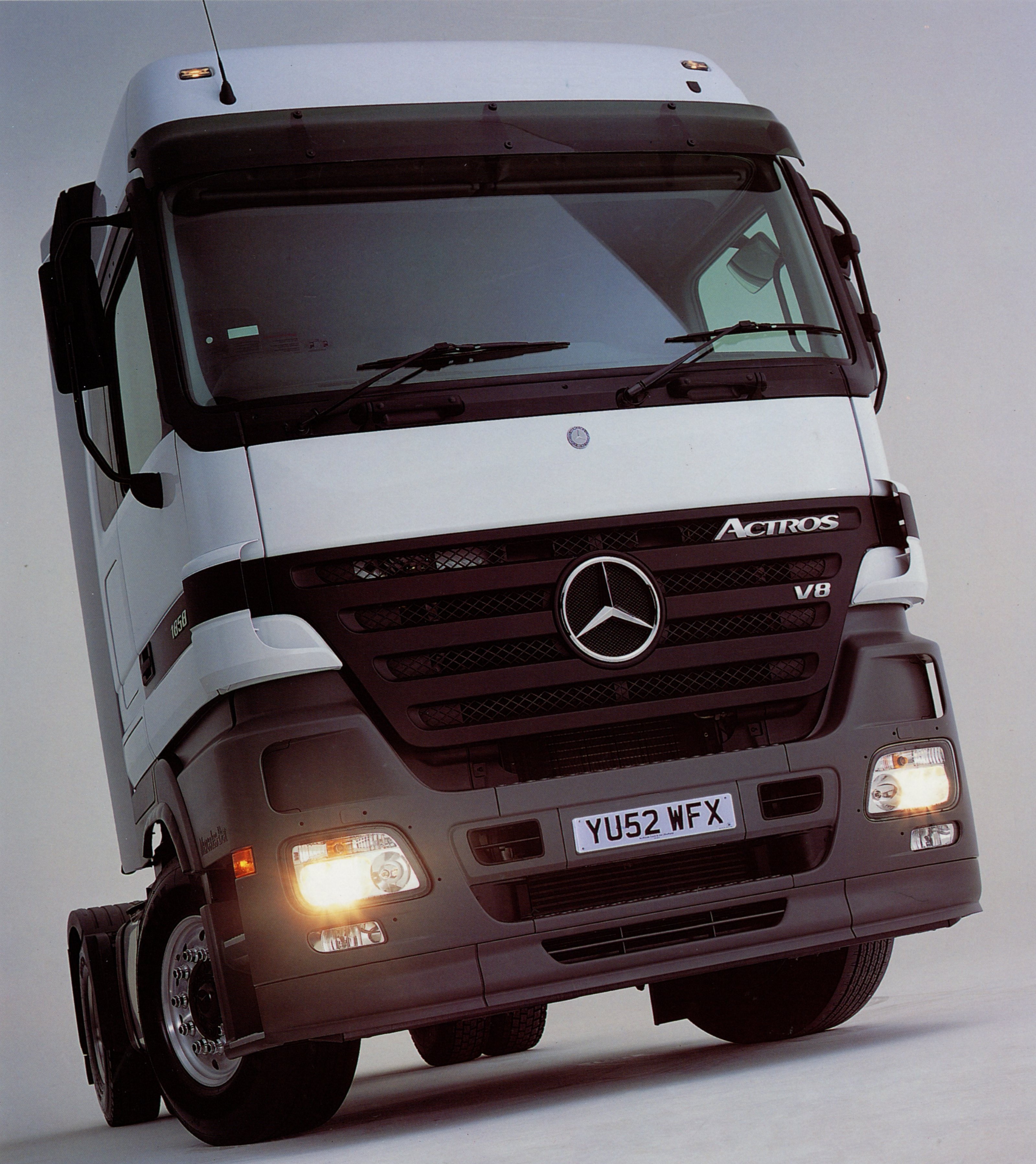
2004: MERCEDES-BENZ ACTROS
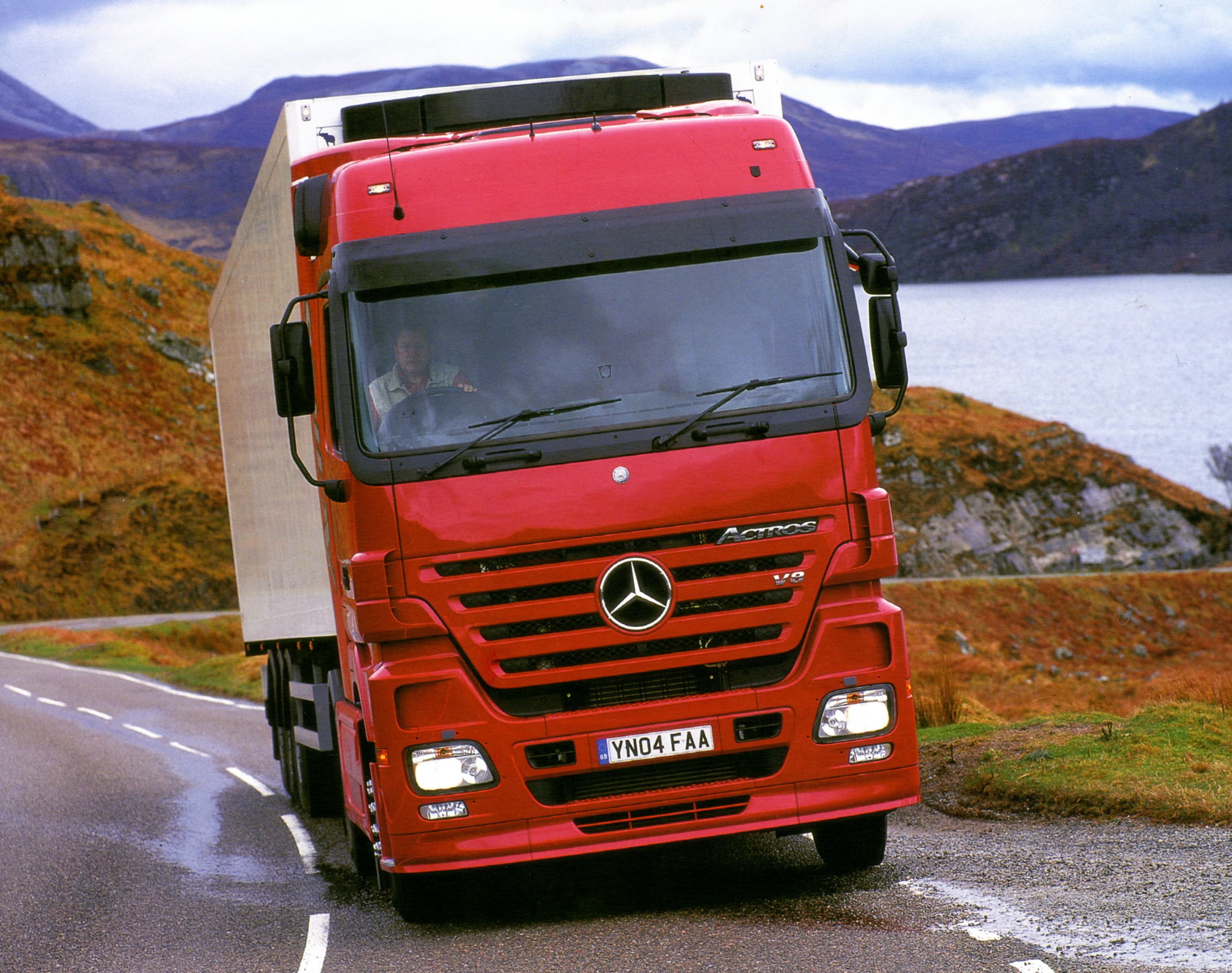
The year 2004 brought a second win for the Mercedes-Benz Actros, which had originally prevailed in 1997 as the harbinger of the electronic truck. The original Actros had been a significant success, with 250,000 sold before the full launch of its successor, which became known as the Actros MP2, with MP standing for Model Project.
Despite those sales, the original Actros had certainly divided opinion, with some operators wary of the cost and reliability of the technology. This led Mercedes-Benz to introduce the Axor for more general fleet roles from 2001. To avoid direct competition with the Axor, Mercedes-Benz was able to develop the Actros further into the premium truck niche in which it was always most at home. When the new Actros was announced in October 2002, this differentiation became clearer.
The Euro 3 V6 engines of 320hp (239kW), 360hp (268kW) and 410hp (306kW) were restricted to rigid versions of the new model, with tractor units employing 440-hp (328-kW) or 460-hp (343-kW) variants of the engine. These sat above the Axor’s straight-six horsepower ratings. The new V6s had 10% more torque than their predecessors, while the V8 versions received a 4% increase and were rated at 500hp (373kW), 540hp (403kW) or 580hp (433kW).
Chassis improvements included the adoption of a fully bolted rather than riveted front end and new rear air suspension on single-drive tractors, featuring a lighter dual-bellows system. A new drive axle saved a further 90kg, while repositioning the shock absorbers behind the axle improved ride, handling and stability. Batteries and air tanks were also located within the rear of the chassis rails to free up space in anticipation of SCR for Euro 4 and Euro 5.
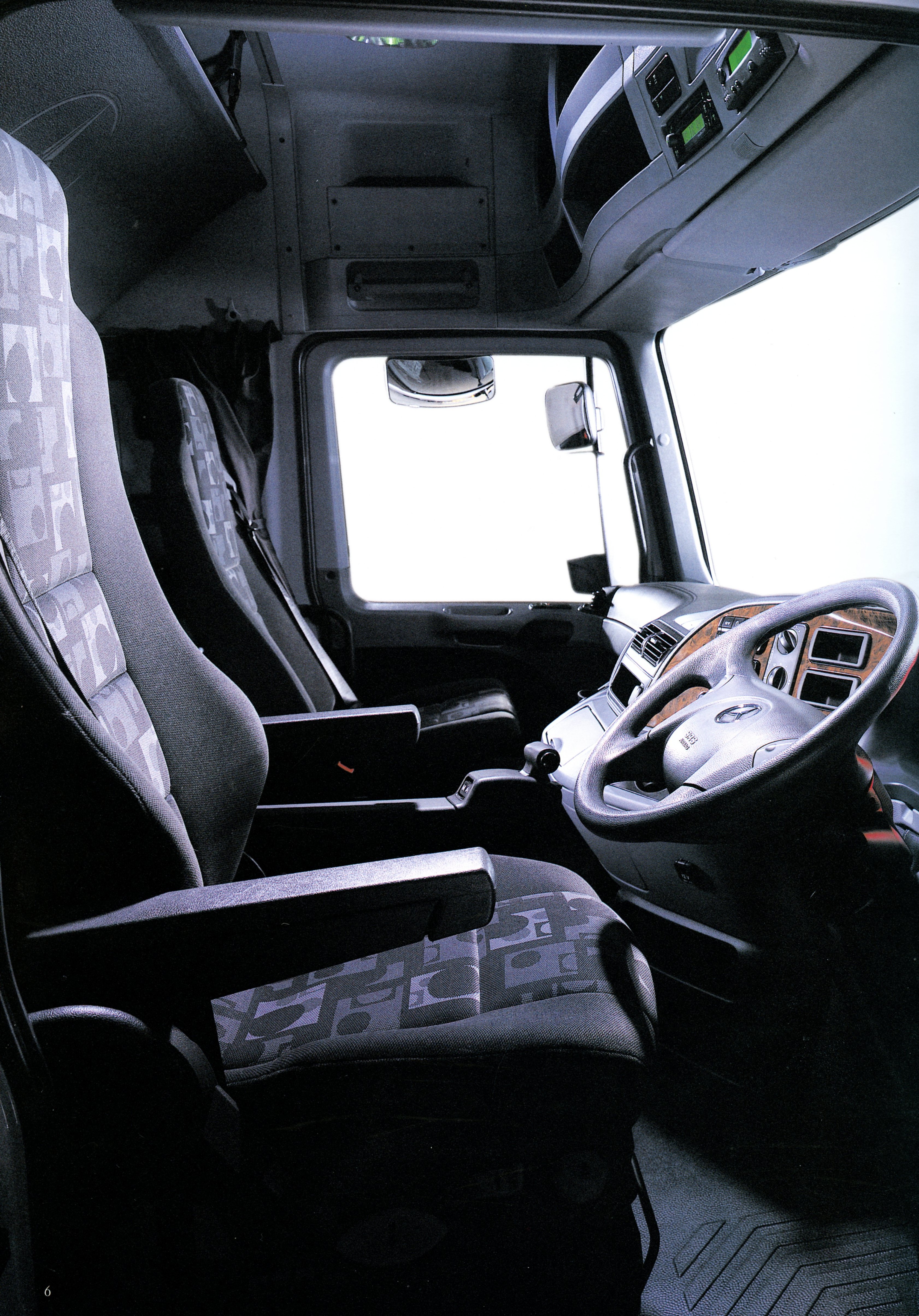
Externally, the new Actros featured a facelifted grille with more prominent horizontal bars and a redesigned bumper and deflector arrangement, together with new headlamps and an improved aerodynamic profile. Inside, the changes were more extensive, as Mercedes-Benz sought to align the truck more closely with the quality associated with its passenger-car range and dispense with the previous idiosyncratic seat patterns and grey plastics. A new curved dashboard, improved seating, additional storage and better bunks were introduced.
The cabs comprised the “S” short day cab in Distribution or Construction specifications, the “M” short sleeper with a 250-mm increase in depth to the rear wall, the “L” standard-roof sleeper and the high-mounted MegaSpace with its flat floor. Fully sprung mattresses replaced the previous foam versions in the sleeper cabs.
All cabs featured electric windows and CD players as standard, while the new seats were approved by the German orthopaedic authority. The Telligent gear lever was incorporated into the driver’s seat and the handbrake lever into the dashboard, with multifunction buttons on the steering wheel. The MegaSpace cab was offered in Long Distance and Executive versions, with the latter featuring automatic air conditioning and a fully automated transmission.
The improvements for the driver were recognised by the IToY judges when they proclaimed the new Actros the winner in Amsterdam in October 2003. The Mercedes-Benz achieved 91 points, ahead of the Iveco EuroCargo on 58 and the Volvo FH16 on 48.
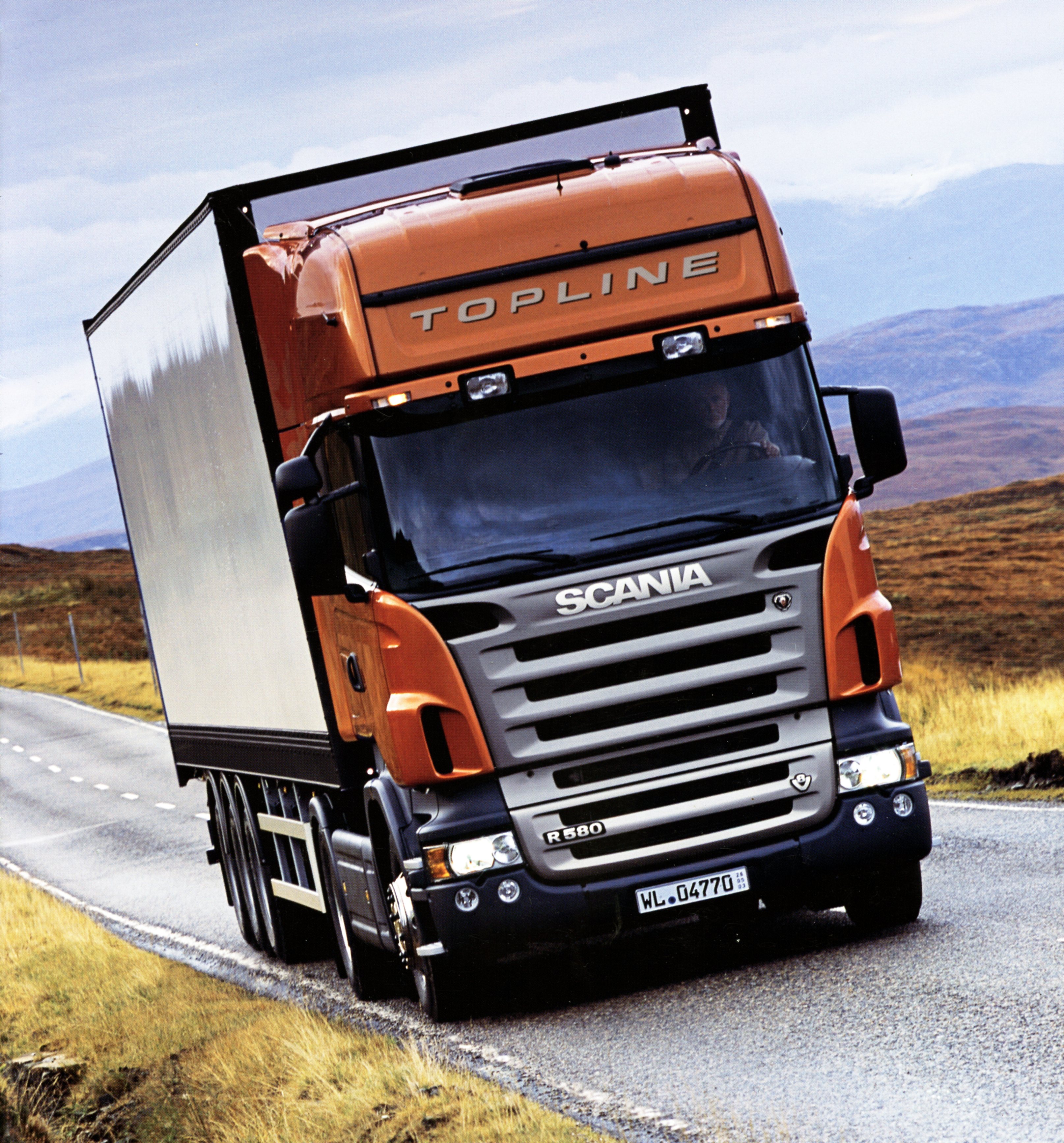
2005: SCANIA R-SERIES
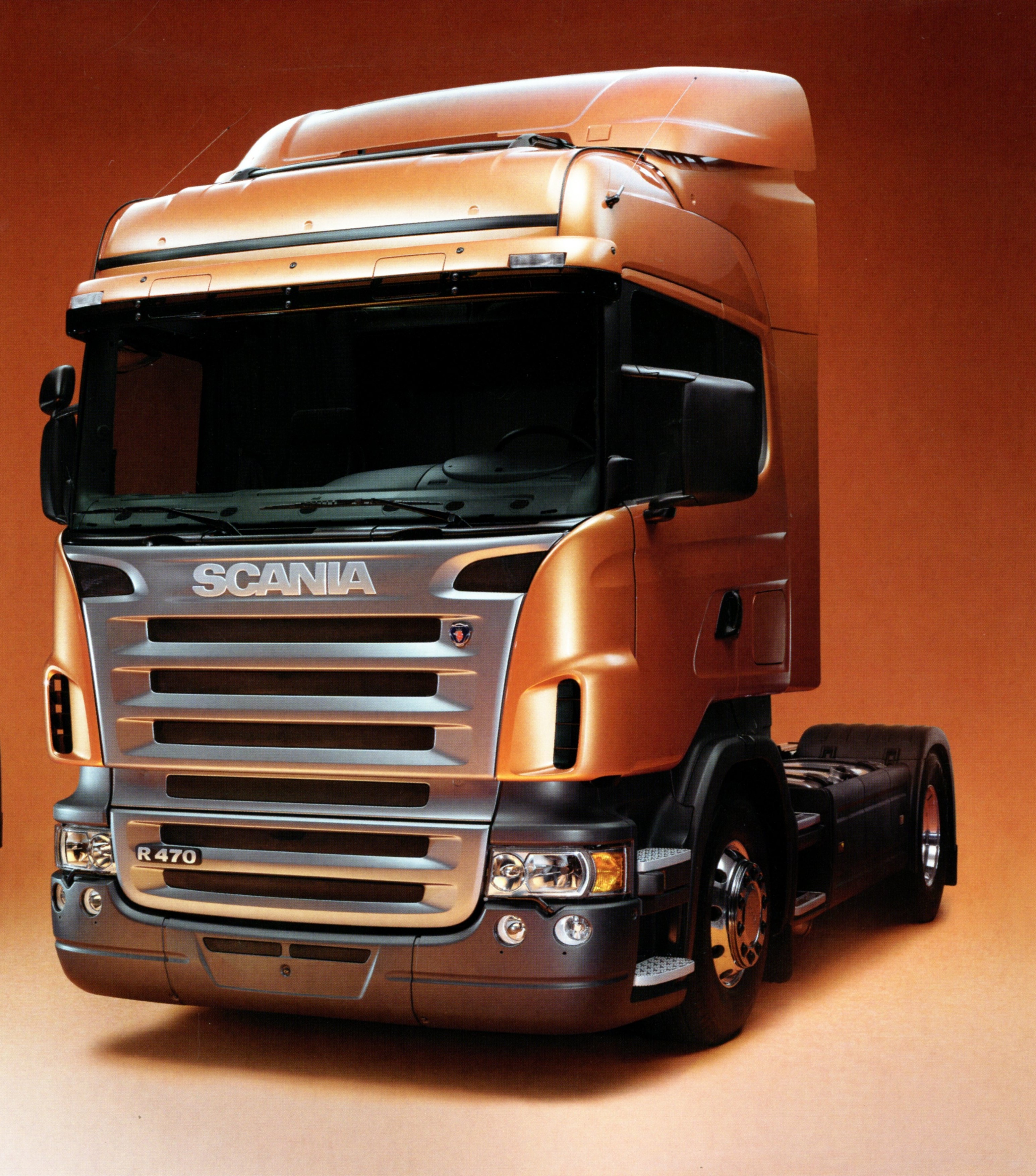
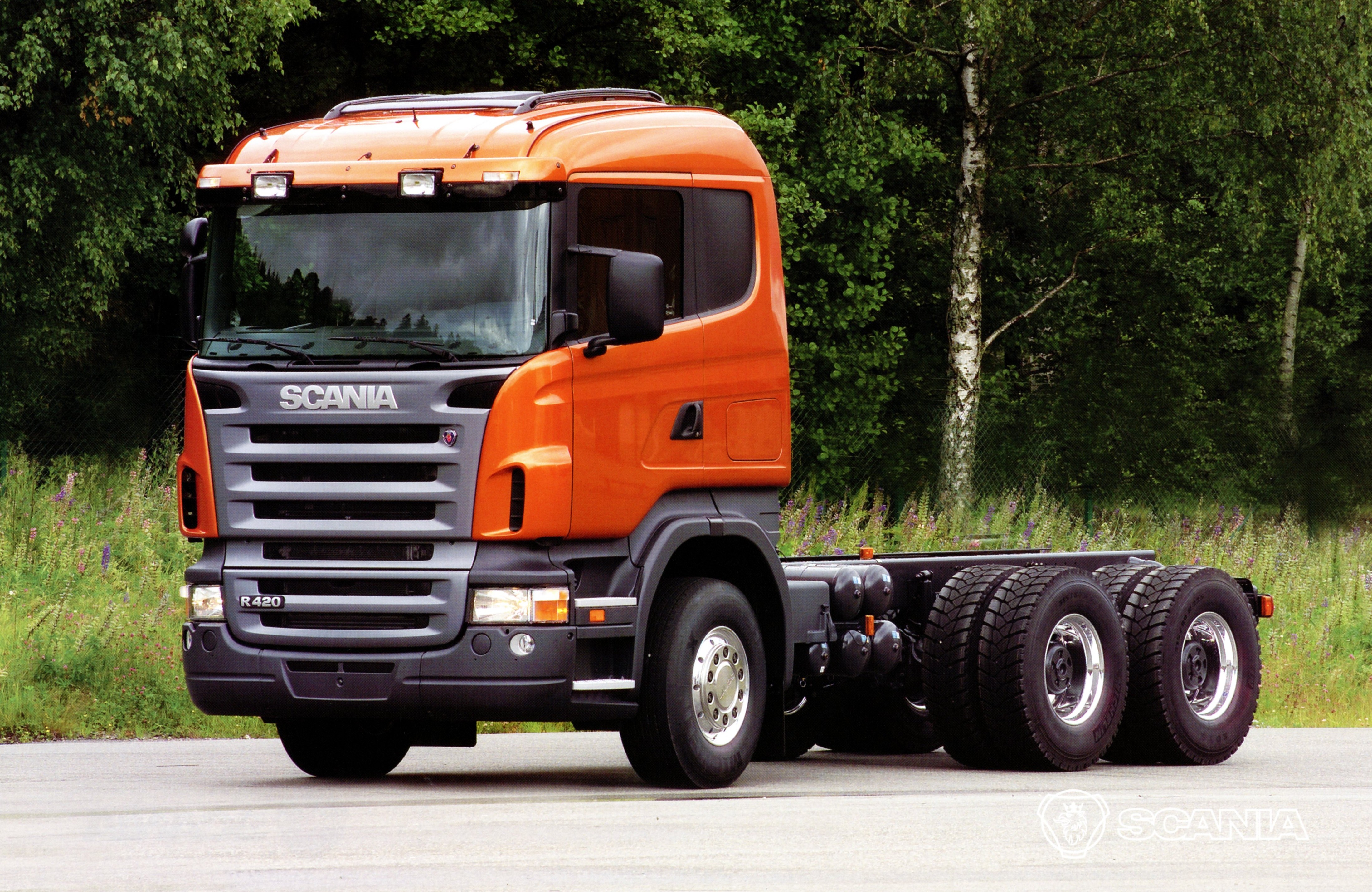
In April 2004, Scania announced the new R-series and immediately became a favourite to win the IToY contest for 2005. As history records, that year was unusually quiet for new truck launches. The R-series eventually went head-to-head with the MAN TGA, featuring its new D20 common-rail engine, and the Renault Mascott. Light trucks are generally outsiders in the IToY contest, and the new engine alone was not enough to clinch the competition for MAN, so the new Scanias scored a third win for Södertälje, with the judges expressing admiration for the improved driver environment and driveline.
In keeping with the Scania ethos, the R-series was an evolutionary product within a modular design concept that saw low-cabbed P models and the bonneted T-series launched over the following 12 months. The outgoing 4-series had received some criticism and Scania claimed that 35% of the new trucks’ content had been changed. The models also received a new naming convention, with designations based on cab type followed by power rating.
The R-series cab received an extensive makeover, with an all-new interior. The remodelled dashboard was mounted closer to the windscreen to provide more interior space. The cab was also mounted slightly higher to reduce footwell depth to just 145mm and provide an “almost-flat” floor. New fabrics were introduced, with light sand-coloured materials in the upper cab to enhance the feeling of light and space and darker, dirt-resistant materials in lower areas.
The Opticruise and retarder controls became column-mounted, while radio controls were incorporated into the steering wheel. The 4-series’ novel front bunk arrangement in the Topline cab was abandoned in favour of the conventional position at the rear of the cab. A new high-roof cab design was added between the standard-height roof and the enormous Topline. The new high-roof cab – designated the CR19H – provided an additional 20cm of headroom and extra storage above the windscreen.
Externally, the redesigned grille provided a stylish facelift, with its contoured lines enhancing the visual appeal of the cab. “The focus is no longer on the bars, instead the space between them is what creates the truck’s identity,” Scania’s PR team rather cryptically explained.
The R-series chassis benefited from a CAN-bus system integrated with new-generation Knorr-Bremse ABS and EBS disc brakes and an electronically controlled air compressor. An Electronic Stability System was also offered on 4×2 tractors with air suspension and EBS. The chassis itself was available with four-spring rear air suspension, while an alternative 7-mm side-member was offered for weight-conscious operators; when supplied with a lightweight fifth wheel, 270kg could be saved.
Scania’s renowned 16-litre V8 was offered at 580hp (433kW), while the former 480-hp (358-kW) version was uprated to 500hp (373kW). The 11-litre was offered at either 340hp (254kW) or 380hp (283kW) and the 12-litre line-up was offered at 420hp (313kW) or 470hp (350kW). Scania also offered its first Euro 4 engine – a 12-litre 420-hp (313-kW) unit with turbo-compounding and EGR.


2006: MAN TGL
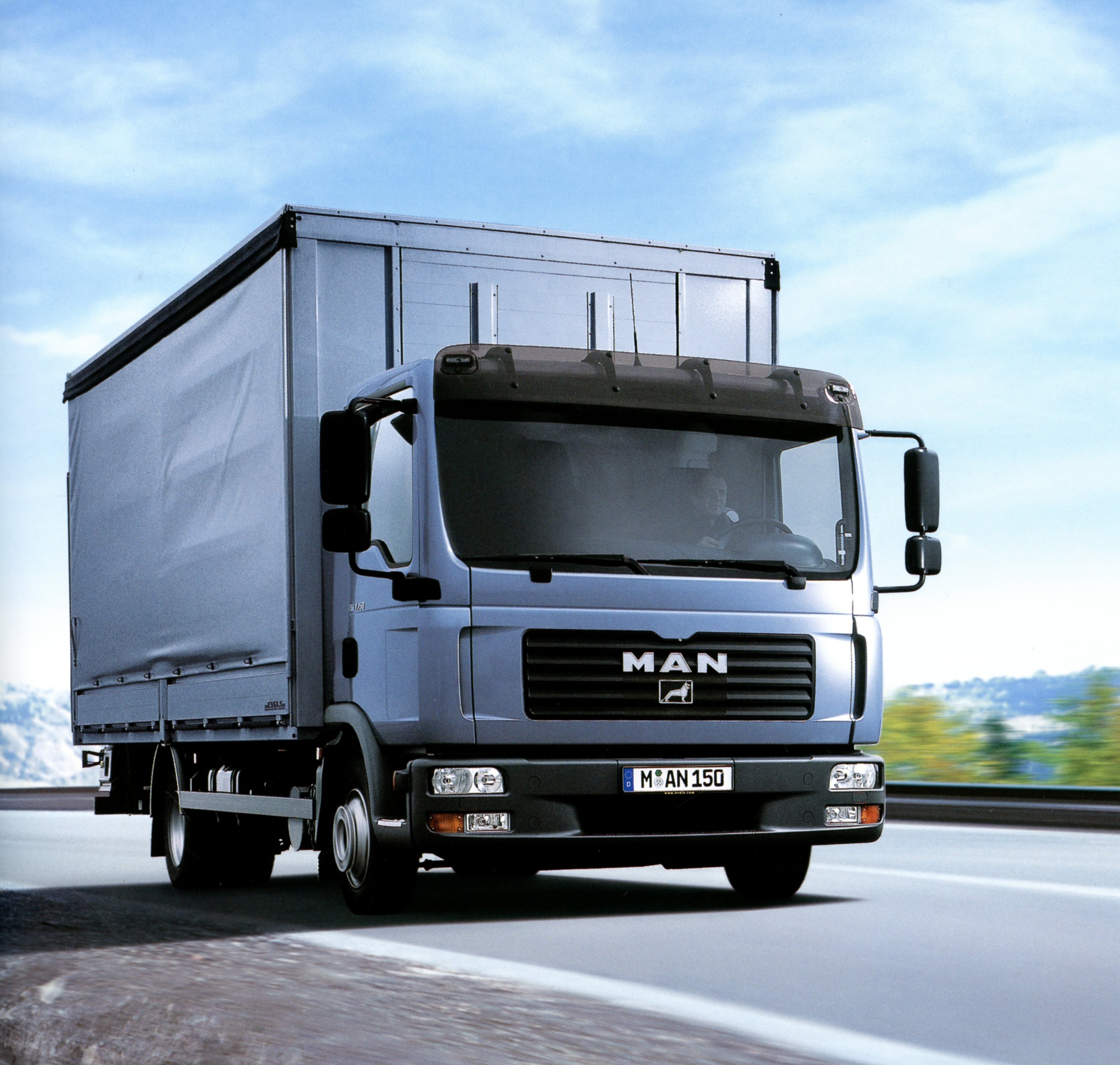
In October 2005, MAN’s TGL range scored an impressive 94-point win to become the 2006 IToY, as the “Trucknology Generation” expanded into the lightweight sector. Runners-up that year were the revised Iveco Trakker on 39 points and the Mercedes-Benz Atego on 33. The judges were particularly impressed with the new cab styling and interior. They also welcomed the excellent driver environment, deep windscreen and effective mirror arrangement, which gave distribution drivers an especially good field of vision.
The TGL was regarded as long overdue when it was launched in April 2005 as a replacement for the LE2000 models, which featured the old Steyr-derived cab. The adaptation of the TGA cab for a range spanning 7.5 to 12 tonnes was viewed as a significant advance, and the TGL was offered with three cab options.
The “C” cab was the entry-level offering and was mounted low, with only one step. Designed for tippers and multi-drop operations, its width was the full 2,240mm but length was restricted to 1,620mm. It was most common in 7.5-tonne applications. The “L” cab was a sleeper design with a length of 2,280mm. It was mounted higher, with two access steps, and equipped with a large bunk. For long-distance operation, the “LX” cab was the same length as the “L” but had a higher roof, providing 1,665mm of headroom above the engine tunnel. Tinted glass and air conditioning were also included in the specification. All the cabs were noted for their blind-spot-reducing mirror arrangements, the general standard of trim and the storage available in the sleeper models.
While the new cab was undoubtedly the centre of attention, the TGL also offered an updated chassis, revised engines and new transmissions. The rear of the chassis frame was drilled with closely positioned holes and fitted with a bolted cross-member so that the overhang could easily be cut to length. A new two-bag air suspension was offered as an alternative to the standard rubber-bushed parabolic leaf springs, while internally ventilated disc brakes with electronic control were used on both axles.
The four-cylinder 4.6-litre D08 common-rail engine was offered at either 150hp (112kW) or 180hp (134kW) in the 7.5-tonne models and at 180hp (134kW) or 206hp (154kW) in the eight-, 10- and 12-tonners. The 206-hp (154-kW) rating was a new development fitted with two-stage turbocharging to produce a class-leading 830Nm of torque. For even greater power, a 6.9-litre six-cylinder engine rated at 240hp (179kW) was available for the eight-, 10- and 12-tonners.
The TGL was the first truck to be offered with the new ZF six-speed automated transmission, available with all ratings of the four-cylinder engine under MAN’s “TipMatic” brand name. Conventional six-speed ZF gearboxes were also available, with a five-speed offered for the 150-hp (112-kW) 7.5-tonner. The 12-tonne model remained resolutely manual, with a nine-speed Eaton gearbox.
This article was originally published in Commercial Motor magazine. We have retained references to the British market, because we believe South African readers will find them interesting. The series will continue in the next issue.
Published by

Focus on Transport


focusmagsa