Boxing clever: 70 years of the shipping container
Boxing clever: 70 years of the shipping container
What does a frustrated trucking entrepreneur in post-Depression USA have to do with the 70th anniversary of containerised shipping in 2026? Everything, as JULIA TEW discovered while researching the box that “made the world smaller and the world economy bigger”.
Every day, thousands of ships arrive at seaports around the world, transporting nearly 90% of the world’s non-bulk dry cargo in steel containers. It’s almost impossible to imagine global trade without them. Yet this year marks only the 70th anniversary of a deceptively simple idea – one born not in a boardroom or a laboratory, but out of the frustration of a logistics entrepreneur watching longshoremen laboriously loading and unloading cargo by hand.
How it all began
North Carolina-born Malcom McLean was an astute businessman who was convinced there had to be a faster, safer, cheaper and more efficient alternative to the centuries-old “breakbulk method” that congested ports for days and incurred high insurance costs due to frequent damage and theft.
In 1955, after building his trucking company into the fifth-largest fleet in the US, he sold it to capitalise on a revolutionary idea. Teaming up with mechanical engineer Keith Tantlinger, McLean created the first commercialised shipping container: a stackable steel box that could be transferred seamlessly between ships, trucks and trains without needing to be opened or modified.
On 26 April 1956, the first consignment of 58 containers was loaded aboard the SS Ideal X, a converted World War II oil tanker, which then sailed from Port Newark to Houston, flying the flag of McLean’s Pan-Atlantic Steamship Company.
The Containerization & Intermodal Institute called it “the voyage that changed the world”, noting that the Ideal X’s departure “launched a revolution in global trade that endures to this day”. US historian and economist Marc Levinson immortalised the development in his 2008 book, The Box: How the Shipping Container Made the World Smaller and the World Economy Bigger. Forbes Magazine hailed McLean as “one of the few men who changed the world”, while The Maritime Association of the Port of New York & New Jersey heralded him in 1999 as the “Man of the Century”.
Interestingly, the US military had already experimented with a precursor: the Container Express, or Conex system, developed during the Korean War. But it was McLean’s commercial vision that turned the concept into a global standard.
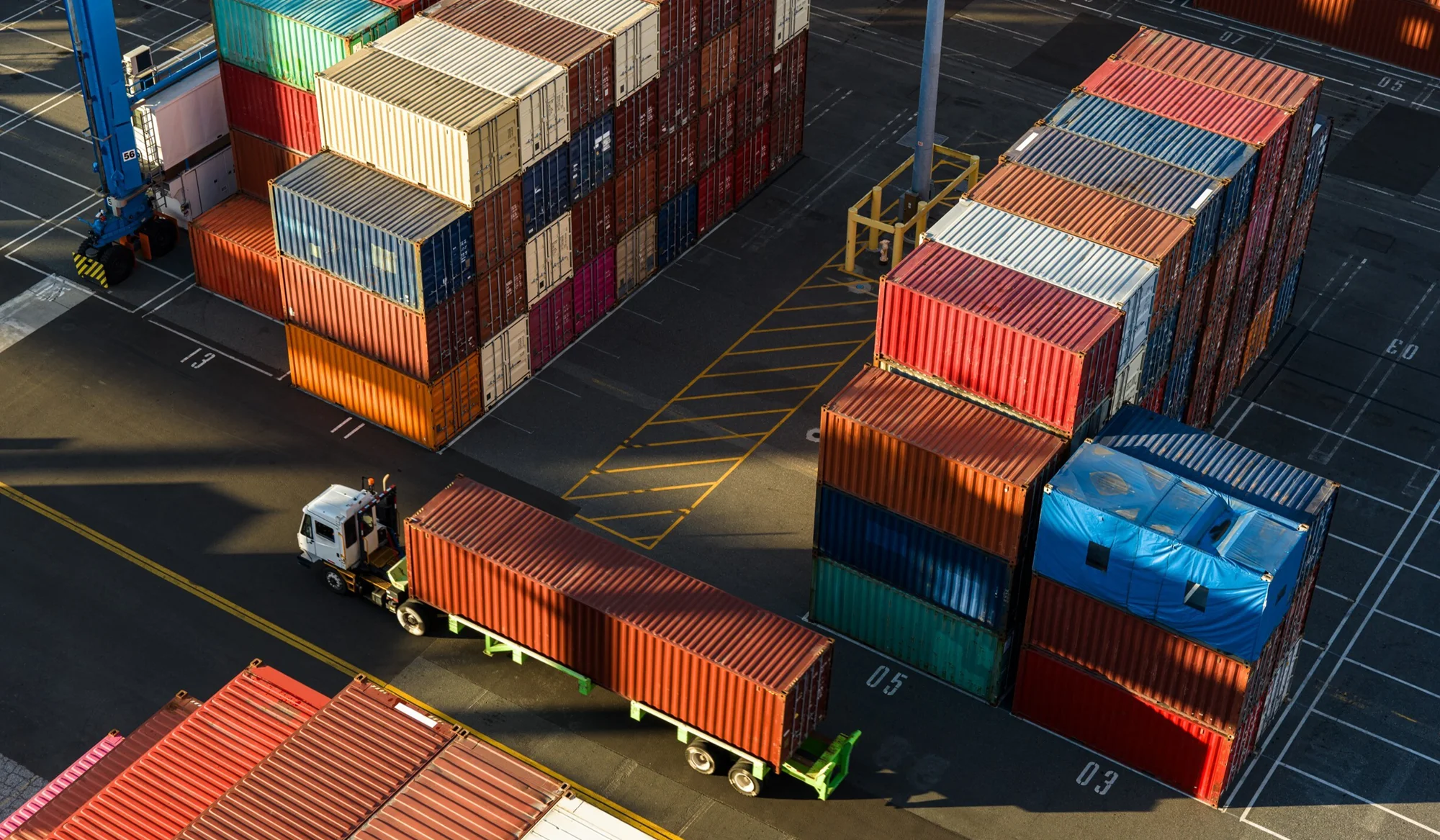
The original container was 35 feet long – matching the standard US truck size of the era – with some early variants running at 33 and 24 feet. It was only in the late 1960s that the International Organization for Standardization (ISO) established the globally recognised units of 20 feet (TEU) and 40 feet (FEU) under ISO 668 – the same dimensions that define the industry to this day.
Containerisation moved fast across the Atlantic. In May 1966, McLean’s ship Fairland arrived at the port of Bremen, Germany, offloading 110 containers in the technology’s European debut. Through the 1960s, momentum grew as more international trade companies saw the efficiencies on offer. Container ports began springing up worldwide, with Port Elizabeth in Newark, New Jersey, in the US being widely regarded as the first purpose-built container terminal – the place where operational processes were comprehensively redesigned around the metal box.
Dockworkers’ associations fiercely opposed the change that was eliminating many of their traditional roles. Ports did, in fact, experience around a 90% reduction in their workforce, giving rise to militancy by longshoremen’s unions, including a 134-day strike in 1971 in all 56 ports on the west coast of the US. But these challenges, however regrettable, did little to hinder the powerful impact containerisation continued to have on international trade and the world economy.
The box grows up and conquers the world
As standard sizes were agreed upon and purpose-built container vessels replaced converted tankers, the economics became transformative. By the 1980s, container shipping had spread worldwide and container ports were found in 90% of the world’s trading nations.
The benefits were far-reaching: improved and quicker handling of cargo; flexibility of cargo operations; door-to-door movement using the same unit, meaning no unpacking and repacking at each transfer point; greatly enhanced cargo security; and cheaper per-unit shipping costs – savings that could be passed directly to consumers. What’s more, intermodal and multimodal operations allowed cargo to reach virtually any destination by sea or land.
Containerisation also enabled just-in-time (JIT) manufacturing, reducing inventory costs for retailers and manufacturers. New logistics jobs emerged as shipping efficiencies transformed supply chain management globally.
On the back of these advances, the US was able to import four times as many varieties of global goods between 1972 and 2002, which not only enhanced consumer choice but also produced a large welfare gain for the nation, raising real income by about 3%.
China’s role in globalisation
No country has shaped the modern container era more profoundly than China. Its integration into the global economy during the 1990s and 2000s – its emergence as “the world’s factory” – was built on the back of container shipping. This, in turn, contributed significantly to the growth of global trade, as manufacturing value chains adapted to utilise China’s abundant labour and to serve new customers worldwide.
Global container traffic (trade liftings) grew from an estimated 61 million TEUs in 2000 to around 150 million TEUs by 2015, reaching a record 192.9 million TEUs in 2025, according to Container Trade Statistics (CTS). The momentum is not letting up: January 2026 opened at 16.03 million TEUs, 4% up from January 2025 and nearly 10% ahead of January 2024. China is the dominant engine of this growth, originating roughly a quarter of all global container trade liftings. In 2025, its total goods imports and exports exceeded 45 trillion yuan (US$6.3 trillion), consolidating its position as the world’s largest trader of goods.
China is also the world’s largest ship-owning nation by fleet value and vessel count. Its flagship carrier, COSCO Shipping Group – formed in 2016 through the merger of China Ocean Shipping Company and China Shipping Group – is the world’s fourth-largest container line and operates across the entire maritime ecosystem, from port terminals and logistics to shipbuilding and digital services. Its current US$7-billion fleet renewal programme includes 18 newbuild container ships, among them 12 liquefied natural gas (LNG) dual-fuel vessels of 18,000 TEU each.
China’s trade with the US fell by around 30% in 2025, equivalent to roughly US$165 billion, as Trump-era tariffs left their mark. China responded by redirecting exports toward Europe (up 10 to 15%), Africa (up 20 to 25%) and intra-Asian lanes (up 6 to 8%). Despite this disruption, foreign trade container handling at Chinese ports rose 9.8% in 2025, reflecting resilient momentum with fast-growing emerging economies.
Africa’s container ambitions
That surge in African imports is no accident. For Southern Africa in particular, the infrastructure receiving that trade is a story in its own right. Durban remains the dominant hub for the region, as the southern terminus for most northern Europe-South Africa and Asia-Southern Africa services. Ngqura, Gqeberha and Cape Town see additional carrier calls, but Gauteng’s container traffic continues to flow overwhelmingly through Durban.
Walvis Bay in Namibia is emerging as a credible alternative. Its container terminal is operated by MSC/AGL, giving the world’s largest container line direct operational control and the ability to channel its own traffic through the port, effectively building it into a hub in a way an independent terminal operator could not.
Mozambique’s Maputo Port, meanwhile, is expanding its container and coal terminals. Completion is targeted for 2027, positioning the port as a further alternative gateway. However, its container volumes remain relatively modest compared to Durban, Ngqura, Cape Town and, increasingly, Walvis Bay – largely because major global carriers have yet to incorporate Maputo into their primary rotations.
Further north, CMA CGM pledged US$800 million to upgrade container terminals at Kenya’s Port of Mombasa, signed at the Africa Forward Summit in Nairobi. For a continent long on the periphery of global shipping, the direction of travel is clear.
The Scale of the fleet today
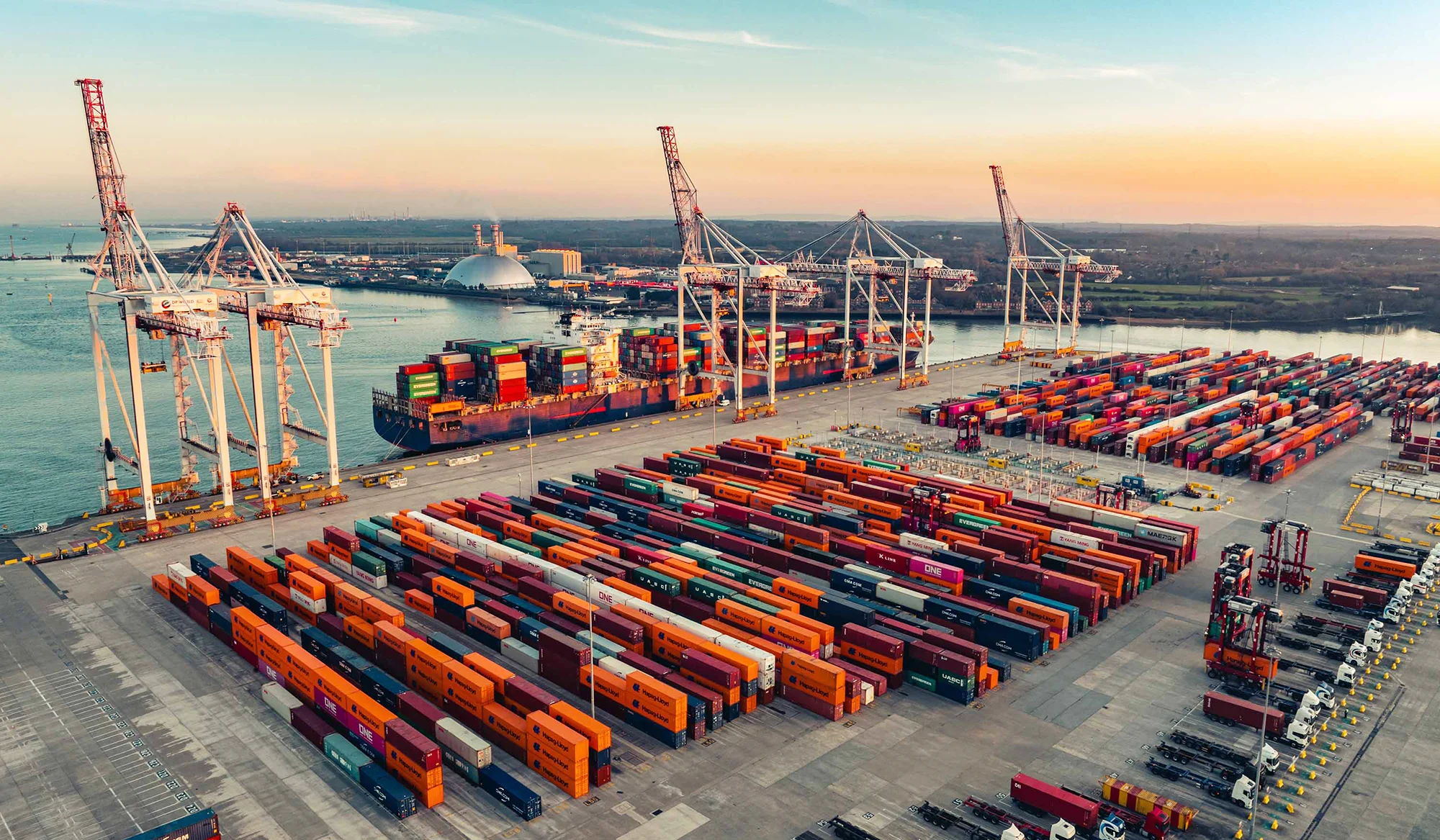
Today, 70 years after the box’s conception, the scale of global container shipping is staggering. As of April 2026, the world’s fully cellular fleet exceeded 6,700 ships for the first time in history, and global container ship capacity surpassed 34 million TEU. The largest vessels operating today, such as the 400-m HMM Algeciras operated by Hyundai Merchant Marine, can carry around 24,000 TEU in a single voyage.
At the carrier level, Mediterranean Shipping Company (MSC) has extended its lead as the world’s largest container line and operates independent of any alliances. With a capacity exceeding 7.3 million TEU, its fleet represents roughly 21.6% of the global fleet. Second to MSC is Maersk, which in 2025 entered a long-term operational collaboration with fifth-placed Hapag-Lloyd called the Gemini Cooperation. This network utilises around 340 vessels and operates 57 services with a total capacity of 3.7 million TEU, focusing on East-West trade routes.
In third position is European carrier CMA CGM, which operates over 700 vessels and serves over 420 ports globally. Recent developments include the delivery of CMA CGM Monte Cristo, the company’s 400th owned vessel and the first in a new methanol-powered containership series. Expansion in India is also on the cards, with the firm ordering six LNG-powered containerships and looking to recruit around 1,500 Indian seafarers within this year.
Following Hapag-Lloyd’s exit from THE Alliance, sixth-placed Ocean Network Express (ONE) teamed up with HMM and Yang Ming Marine Transport (ranking eighth and ninth respectively) to establish the Premier Alliance, which focuses on East-West trade routes between Asia, North America and Europe.
Enter the smart box: container innovation
In terms of the variety now available, the container of 2026 bears only a passing resemblance to McLean’s original steel box. Over the decades, as volumes multiplied and trade routes proliferated, the box itself kept evolving to meet new demands:
- Refrigerated containers (reefers): Introduced in 1966 as part of the first fully containerised transatlantic journey, reefers carry perishable goods like food, pharmaceuticals and other temperature-sensitive cargo using built-in cooling systems.
- High cube containers: Developed in the 1970s, these are standard containers with extra height to maximise storage volume within the same footprint on deck.
- Tank containers: Used to transport liquids and gases, tank containers were first trialled in the 1960s, but only achieved commercial success in the 1970s, once material safety standards improved.
- Flat rack containers: Introduced in the 1970s for oversized, irregularly shaped or exceptionally heavy cargo, flat racks are essentially platforms with collapsible side panels.
- Lightweight containers: Lightweighting containers by reducing steel content or substituting with aluminium or high-tensile steel is a relatively unexplored strategy to decrease energy and greenhouse gas emissions. A 10% reduction in system mass can reduce fuel consumption by 2 to 8%, depending on the mode.
- Smart containers: These are state-of-the-art containers equipped with GPS, sensors and communication systems that provide real-time data on location, temperature, humidity and security status, giving shippers and supply chain stakeholders unprecedented visibility over their cargo.
Cold chain and clean fuel: two growth stories
Temperature-controlled cargo is one of the fastest-growing segments of container shipping. The top 10 operators jointly increased their reefer plug capacity by 7.9% year-on-year in the period to April 2026. MSC led in absolute terms, adding nearly 100,000 reefer plugs (a 15.3% rise) while ONE achieved 14.5% growth, driven largely by the delivery of nine new 13,900-TEU vessels with high reefer specifications. European carriers Maersk and CMA CGM continue to maintain proportionally larger reefer capacity shares than many Asian competitors, reflecting their strategic focus on temperature-controlled segments.
The push to reduce shipping’s carbon footprint is also reshaping the global fleet. As of March 2026, 440 dual-fuel container ships and vehicle carriers are in service – a 65% year-on-year increase, according to the latest Dual-Fuel Fleet Dashboard published in May by the World Shipping Council (WSC). A further 764 dual-fuel vessels are on order, with 78% of all new container ship orders being dual-fuel capable. In total, 1,204 dual-fuel container ships and vehicle carriers have been delivered or are on order, representing over US$180 billion in private investment.
LNG has emerged as the dominant alternative fuel. MSC now operates close to 90 LNG-equipped vessels – more than a third of all such ships in service worldwide – while CMA CGM operates 76 vessels. Recent deliveries include the YM Willpower, a 15,600-TEU LNG dual-fuel vessel built by Hyundai Heavy Industries for Yang Ming. It’s the Taiwanese carrier’s first LNG-capable vessel and the first of five on order. Chinese builder New Times Shipyard also delivered the 11,400-TEU MSC Boston, the penultimate vessel in a 10-ship LNG dual-fuel series for MSC.
WSC president and CEO Joe Kramek explains that ships built today will operate for decades, and “the ability to operate on different fuel pathways helps reduce risk, strengthen energy security and support more resilient global supply chains”.
Disruption due to geopolitical factors
The 70th anniversary of containerisation has arrived against a backdrop of significant geopolitical disruption. Despite a US-Iran ceasefire, container traffic through the Strait of Hormuz has remained extremely limited. In April, three non-Iranian container ships attempting to transit came under direct attack; two were subsequently seized, including the MSC Francesca and the Epaminondas. At least 58 container ships, representing around 310,000 TEU, were reported diverted or sheltered due to the Gulf conflict – tightening the market even as overall fleet capacity expanded.
The deeper structural story, though, is one of resilience and growth. The container “kept going” through a global pandemic, port congestion crises, Houthi attacks on the Bab-el-Mandeb that rerouted over 2,000 vessels around the Cape of Good Hope, and now fresh Gulf tensions. Fleet expansion, record trade lane volumes and ongoing newbuild investment have continued largely unaffected. The new container ship orderbook in 2025 stood at over 1,165 vessels, totalling around 11.3 million TEU – equivalent to 33.5% of the entire active fleet.
A new lease on life
The container’s resilience extends beyond the geopolitical sphere. ISO shipping containers are made from COR-TEN steel – designed to withstand heavy loads, marine exposure and long service lives. Most containers serve as active freight units for roughly 10 to 15 years, during which time they endure rough handling, climate extremes and heavy stacking. Eventually, wear and tear or newer regulations make older containers less viable for international shipping – but they’re far from useless.
Recycling the raw steel may seem like an obvious solution, but this involves cutting, transporting, melting and remaking – processes that require a lot of energy and generate emissions. Direct reuse avoids this entirely. End-of-life shipping containers are increasingly being repurposed as storage units, affordable housing, schools, offices, pop-up retail spaces and even entire neighbourhoods in markets as diverse as the US, the Netherlands, South Africa and South Korea. Their modular dimensions and structural strength make them ideal building blocks, and the cost savings over conventional construction can be significant. There’s a satisfying circularity at play when a box built to prop up global trade can provide shelter within the communities that trade has enriched.
Still stacking up after 70 years
The shipping container is one of the most consequential inventions in the history of modern trade. In seven decades, it has transformed from a trucker’s brainwave into the backbone of the global economy. Today’s containers are smarter, greener and more specialised than anything McLean could have imagined on the Newark docks in 1956.
The challenges are just as real: geopolitical disruption, rising fuel costs, port congestion, overcapacity concerns and the long road to decarbonisation and pollution reduction. Not all regions can afford container infrastructure, which
risks widening global inequalities. As demonstrated by the record orderbook, record trade lane volumes and record fleet capacity of 2026, however, the shipping container is not just surviving its 70th year… it’s thriving. Happy birthday to the box that changed the world!
Published by

Focus on Transport

focusmagsa