ACT Expo 2026: fleets become more cautious as transport transition accelerates
ACT Expo 2026: fleets become more cautious as transport transition accelerates
May 21, 2026
The global commercial vehicle industry is still moving towards lower-emission transport, but ACT Expo 2026 in Las Vegas – North America’s leading event for commercial transportation innovation – revealed a market becoming far more cautious, selective and pragmatic. WILL SHIERS reports that fleets are now demanding proven performance, practical economics and real-world viability – not hype.
The latest State of Sustainable Fleets report, unveiled at the show, highlighted how operators are reassessing the pace of electrification amid rising vehicle costs, infrastructure constraints and uncertain policy support. Rather than backing a single technology, many fleets are now spreading investment across diesel, renewable fuels, gas and battery-electric vehicles (BEVs) in an effort to reduce operational risk.
That message will resonate strongly in South Africa, where fleet operators face many of the same concerns: high vehicle prices, unreliable infrastructure and pressure to reduce operating costs while maintaining uptime.
The report noted that BEVs continue to gain traction in medium-duty urban operations and depot-based applications. However, heavy-duty long-haul transport remains far more challenging.
Tesla Semi edges closer
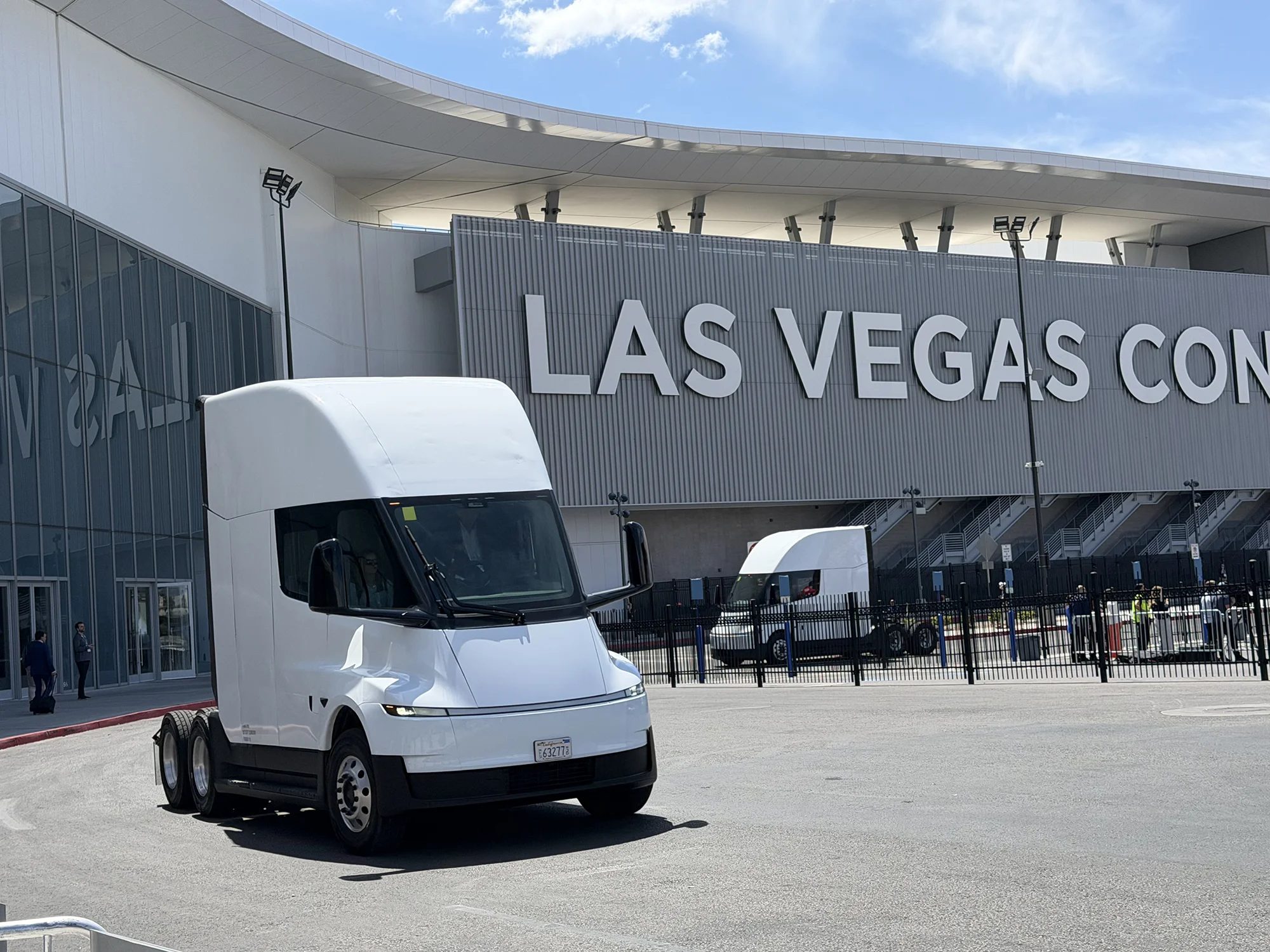
Tesla once again attracted attention with its long-delayed Semi electric truck, now finally entering production at the company’s Nevada Gigafactory. The Semi offers a claimed range of up to 500 miles (805km) and uses a tri-motor drivetrain producing more than 1,000hp (746kW). Although still limited to passenger rides at ACT Expo, the truck appears to be moving beyond prototype status nearly nine years after its original unveiling.
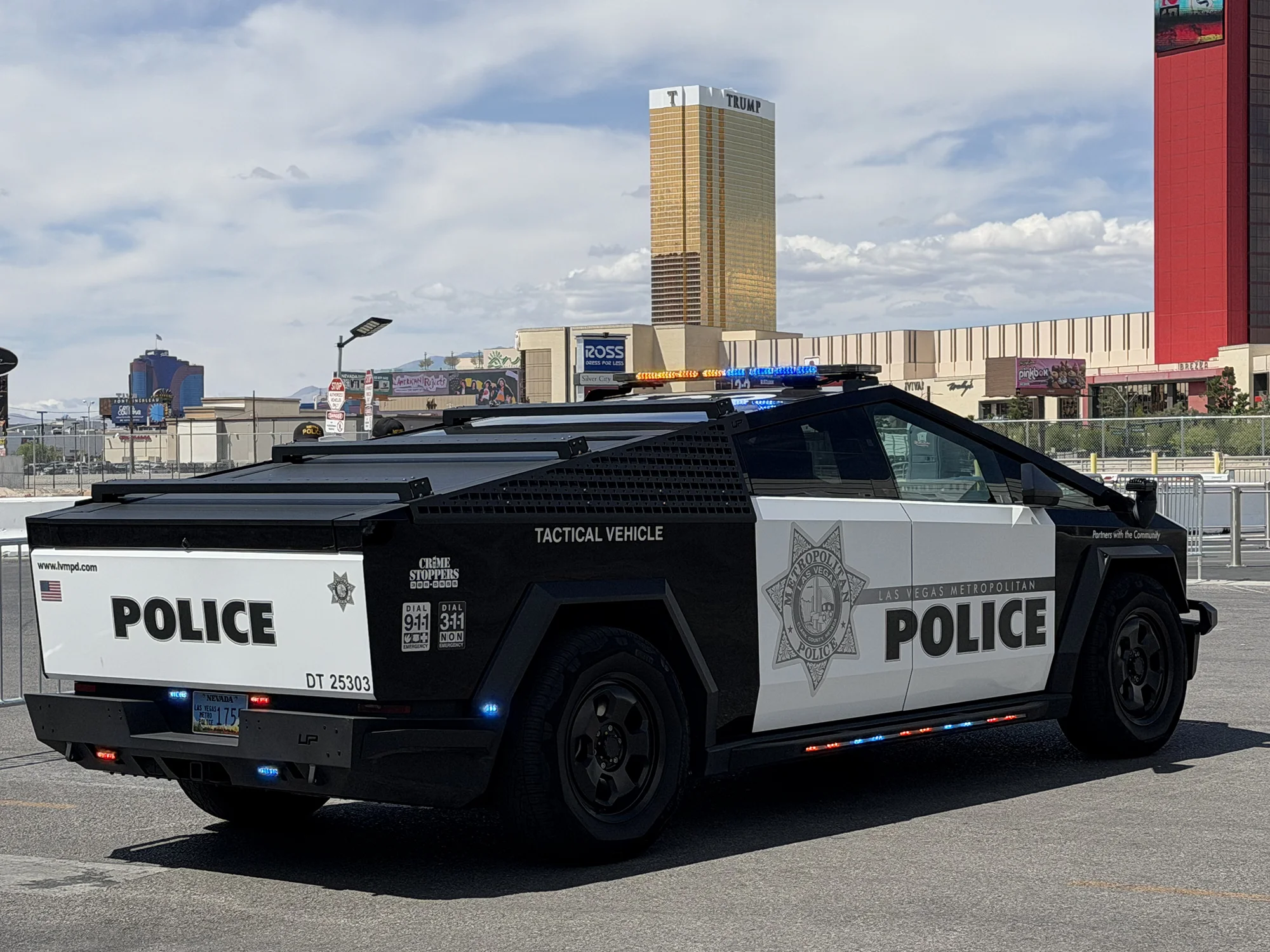
A Tesla Cybertruck used by the Las Vegas Metropolitan Police Department also patrolled the exhibition grounds, underlining how rapidly electric vehicles are entering frontline operational roles in the US.
Harbinger targets urban fleets
Harbinger Motors used the exhibition to showcase its HC Series cab-forward truck, aimed at urban and regional fleet operations. Available as both a battery-electric and range-extended hybrid model, the HC Series offers between 140 and 210 miles (225 to 338km) of range depending on battery specification. The hybrid version extends operating range to around 500 miles (805km). Built on an 800V modular platform, the truck focuses heavily on manoeuvrability, payload flexibility and simplified body integration.
Diesel development continues
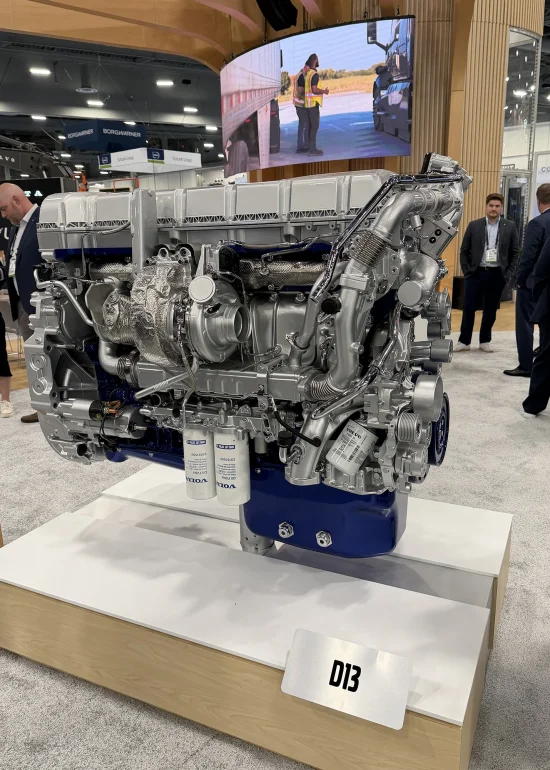
Despite the growing focus on electrification, ACT Expo also demonstrated that diesel technology is far from finished, with Volvo Group unveiling a new generation of EPA 2027-compliant diesel engines for Volvo Trucks North America and Mack Trucks.
Both of these diesel engines deliver outputs of up to 540hp (403kW) and 2,650Nm of torque, while also meeting the significantly stricter new emissions standards. Engine braking performance has also improved substantially, with the engines delivering up to 630hp (470kW) of braking power.
The launch highlighted a reality often overlooked in electrification discussions: truck manufacturers continue investing heavily in cleaner, more efficient diesel engines because many markets still depend on them. This is particularly relevant in South Africa, where electric heavy truck infrastructure remains very limited and long-haul operators continue to rely heavily on diesel technology.
Hydrogen gains momentum
Hydrogen continues to attract interest because it potentially addresses one of the biggest limitations of battery-electric heavy trucks: charging downtime on long-haul operations. Hydrogen-powered transport therefore received significant attention at the expo.
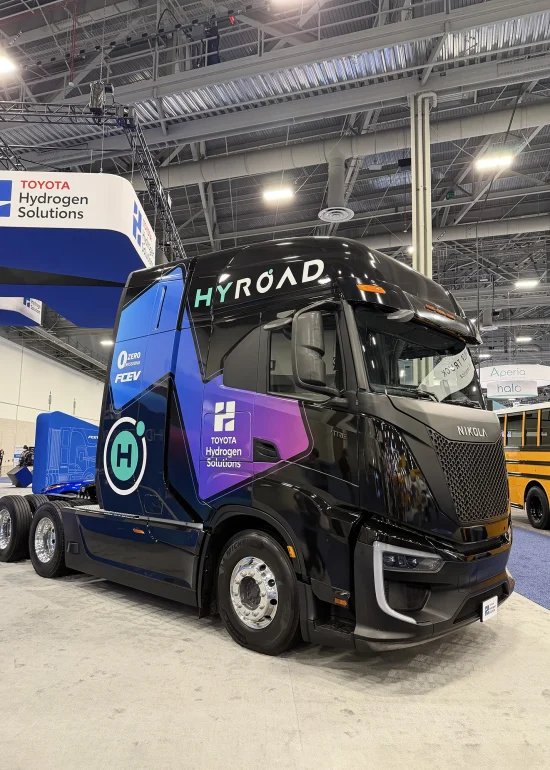
For example, Toyota Motor North America announced a partnership with Hyroad Energy to deploy 40 hydrogen fuel-cell heavy trucks in Southern California. The trucks offer ranges of up to 500 miles (805km) and can be refuelled in similar timeframes to diesel vehicles. The project aims to create a fully integrated hydrogen ecosystem combining vehicles, fuel supply, maintenance and operational support under one commercial model.
Electric axle systems expand
Hendrickson also unveiled its new ELECTRAAX electric drive axle for medium-duty trucks. Developed with Driventic, the integrated system combines the motor, inverter, gearbox and axle into a single unit, claiming efficiency of up to 94%. The system targets trucks in the 12 to 26-tonne category and is designed to reduce weight, improve range and lower energy consumption.
Hino expands electric range
Hino Trucks introduced its new Le Series battery-electric medium-duty truck range, aimed at urban and regional distribution work. The trucks use a 269-kWh battery and support DC fast charging at up to 120kW, allowing charging from 0 to 80% in under two hours. An integrated e-axle delivers peak output of 348hp (260kW). Production is scheduled to begin during the third quarter of 2026.
Pragmatism replaces hype
One of the clearest themes emerging from ACT Expo 2026 was the industry’s growing realism. Fleet operators are no longer focusing purely on ambitious future promises. Instead, the emphasis has shifted firmly towards total cost of ownership, operational practicality and proven real-world performance.
That mirrors the mood increasingly seen in South Africa’s freight industry, as operators grapple with rising fuel costs, infrastructure uncertainty and growing pressure to improve efficiency.
The transition to cleaner transport is still happening. But ACT Expo showed that the industry is becoming far more selective about how – and how quickly – that transition unfolds.