Volkswagen: luxury meets performance
While the Amarok is available in five variants and with four engines, Volkswagen nailed its colours to the V6 mast for the group test. VASSILIS DARAMOUSKAS and CHARLEEN CLARKE really liked the bakkieโs power and refinement.
The Amarok range comes with four diesel engines (see the sidebar) and spans five variants: the baseline Amarok, Amarok Life, Amarok Style, Amarok PanAmericana, and Amarok Aventura. But Volkswagen decided to bring only the two top-of-the-range models, namely the Aventura and PanAmericana, to the group test โ equipped with the V6 motor only.
The Aventura can be compared to the Ranger Platinum, which comes to South Africa next year. It has a slightly softer suspension, is hugely enjoyable to drive on the freeway, and has an ingeniously light steering wheel, which camouflages the size of the bakkie. You really feel as though youโre driving something much smaller.ย
The PanAmericana, on the other hand, makes you think of the Ranger Wildtrak V6 with its more off-road orientation. It will go anywhere and do anything, constantly reminding the driver that itโs at the top of its game.
So, if it reminds you of the Ranger, the question must be asked: is there actually any difference between the two bakkies? Overall, both manufacturers have done their utmost to differentiate their bakkies. In a sense, this is the big battle of 2023: which of the two bakkies โ each of which intend to dominate the segment, despite sharing an engine and driveline โ is better?
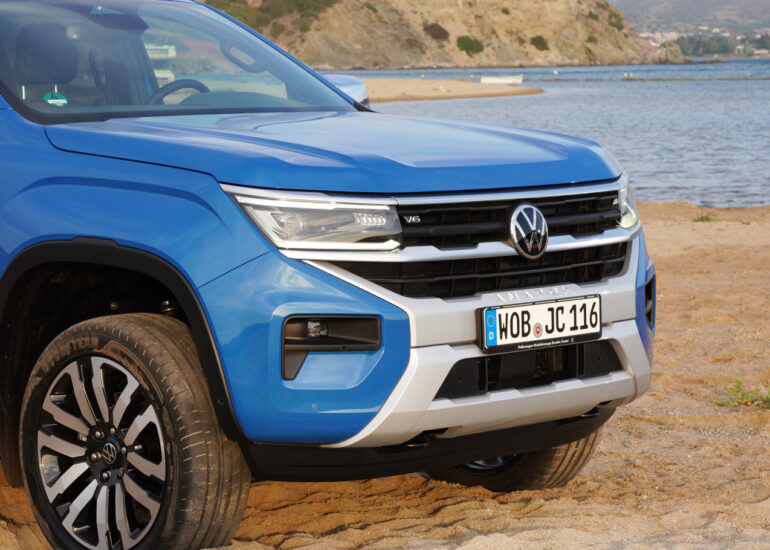
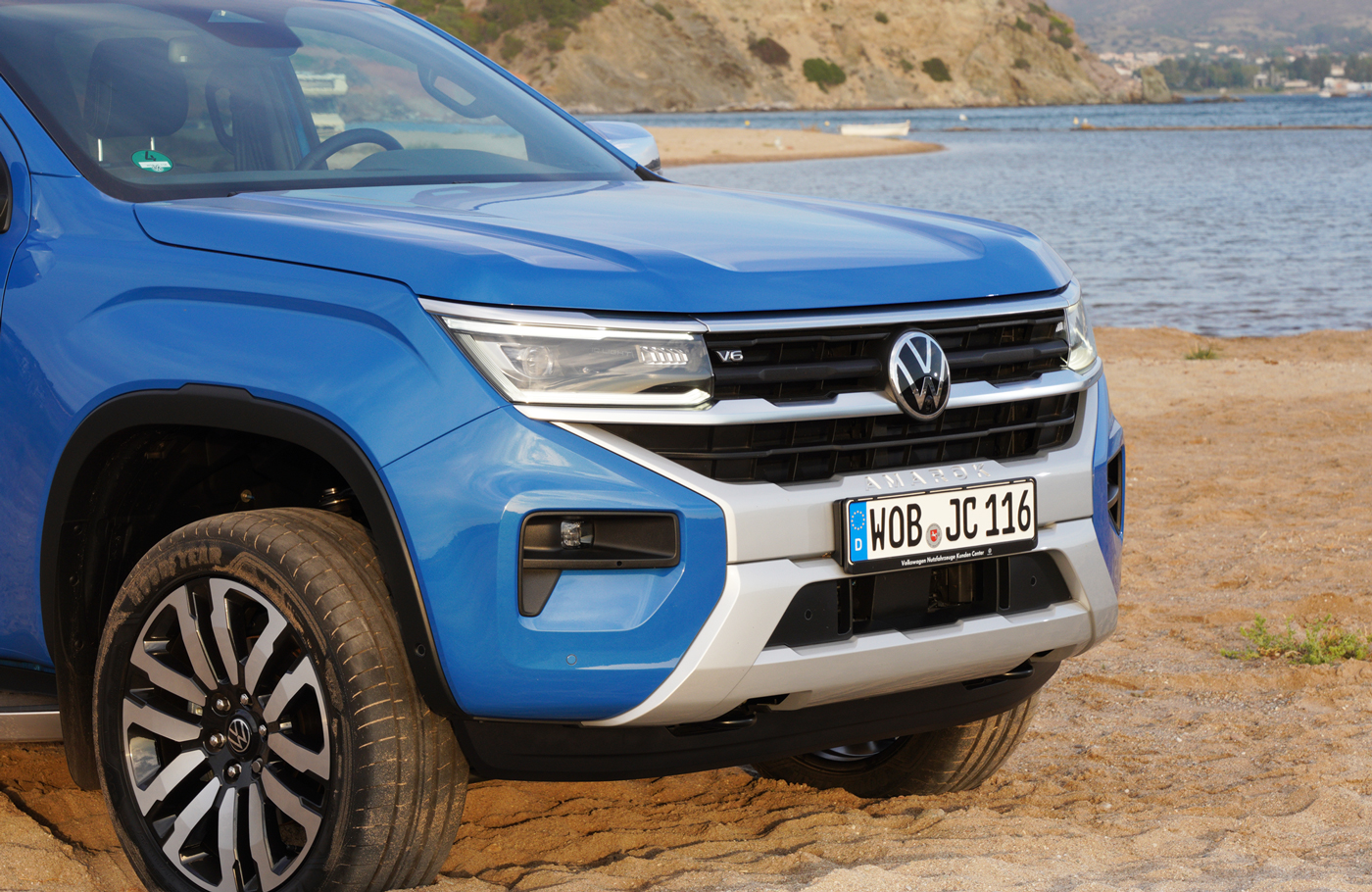
The truth is that, if you donโt know that the bakkies were co-developed and share many technical traits, you will think that youโre looking at two completely different vehicles that simply share the same exterior dimensions. Itโs telling that, on the bodywork, the only things the Amarok and the Ranger have in common are the mirrors and the roof. In the case of the Amarok, everything else is a Volkswagen exclusive design.
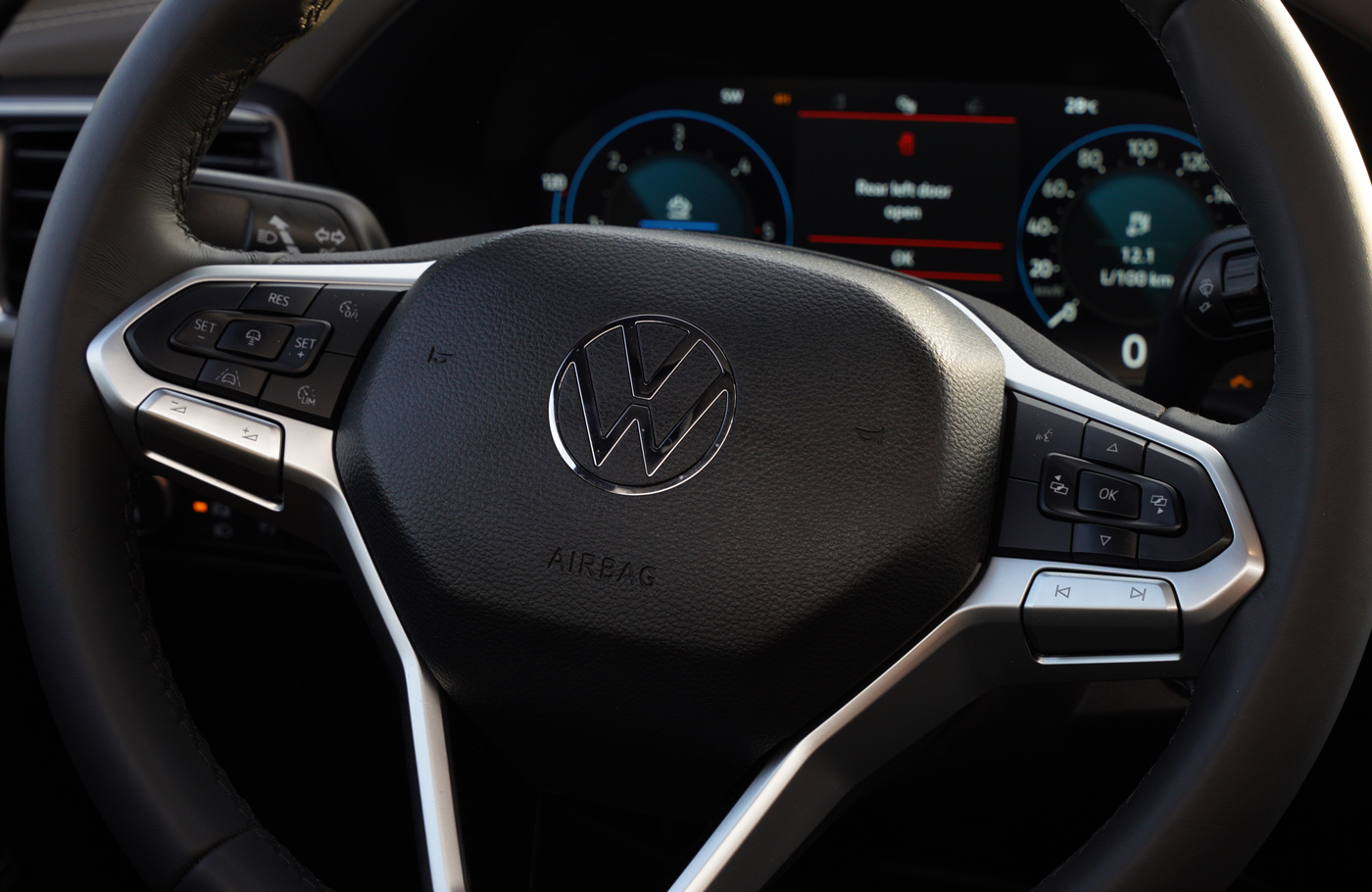
Clearly, Volkswagenโs designers had complete freedom, with the same pattern continuing into the interior, which couldnโt be more โVolkswagenโ. Gorgeous trim and expensive materials abound; it is pure luxury. The instrumentation and dashboard are also very โVolkswagenโ, and itโs reminiscent of the companyโs passenger cars.
In the comfort and safety equipment, things have โ in a positive sense โ gone completely off the rails: we counted 30 active safety systems in total! We especially liked the Area View 360-degree surround-view camera, Lane Assist and Side Assist, Parking Exit Assist, and Traffic Sign Recognition. Itโs also important to see the availability of curtain-type airbags for rear passengers as well.
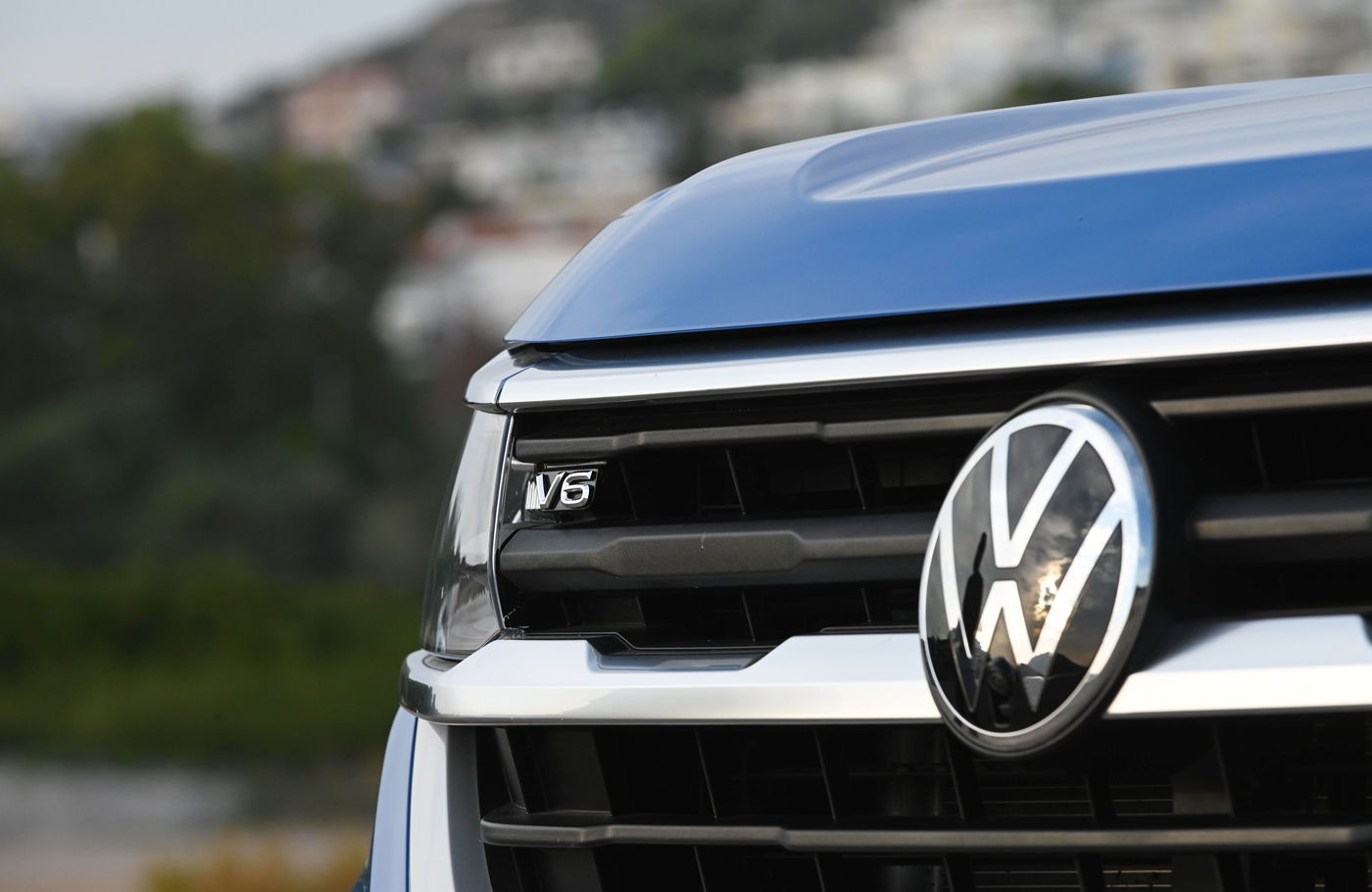
So, whatโs it like to drive? Well, on the roads of the Athens Riviera (which is as beautiful as the Amarokโs interior, by the way), we soon realised that Volkswagen HQโs choice of โV6 onlyโ was no accident. That V6 and the Amarok go together like fish and chips. With 179kW of power and a massive 600Nm of torque up for grabs, itโs pure bliss to drive.
From the driverโs seat, visibility is excellent, thanks also to the large side windows. As expected, the front seats are fully electric and heated, and theyโre almost infinitely adjustable. In fact, barring the not-so-ergonomically placed cupholders in the centre console, the interior is faultless.
The central 12-inch touchscreen dominates the interior. This is where you control almost everything (the Amarok doesnโt have the switches below the touchscreen that you can find in the Ranger): from modes and settings for driving on any terrain, to operating the premium Harman Kardon audio system, to the navigation system and the aircon.
When it comes to charging capabilities for electronic devices, thereโs everything from inductive charging and 12-volt power through to USB-A and USB-C ports. On the roof behind the mirror are six aviation-style AUX switches for the professional who wants to use various accessories that require power.
So, is the Amarok better than the Ford? Both represent the technological pinnacle of modern bakkies. The Amarokโs steering is lighter, the suspension is slightly softer, and it looks completely different โ inside and out. It all boils down to personal preferences; some jury members prefer the Amarok and others prefer the Ranger โ and neither group can be faulted in their choice.
Amarok range
The Amarok is available with four diesel engines matched to various transmissions, including a new 10-speed automatic.
- 2.0 TDI 110kW: This four-cylinder engine with a five-speed manual transmission produces 110kW of power with maximum torque of 350Nm. The top speed is 170km/h and fuel consumption is 6.9 litres/100km.
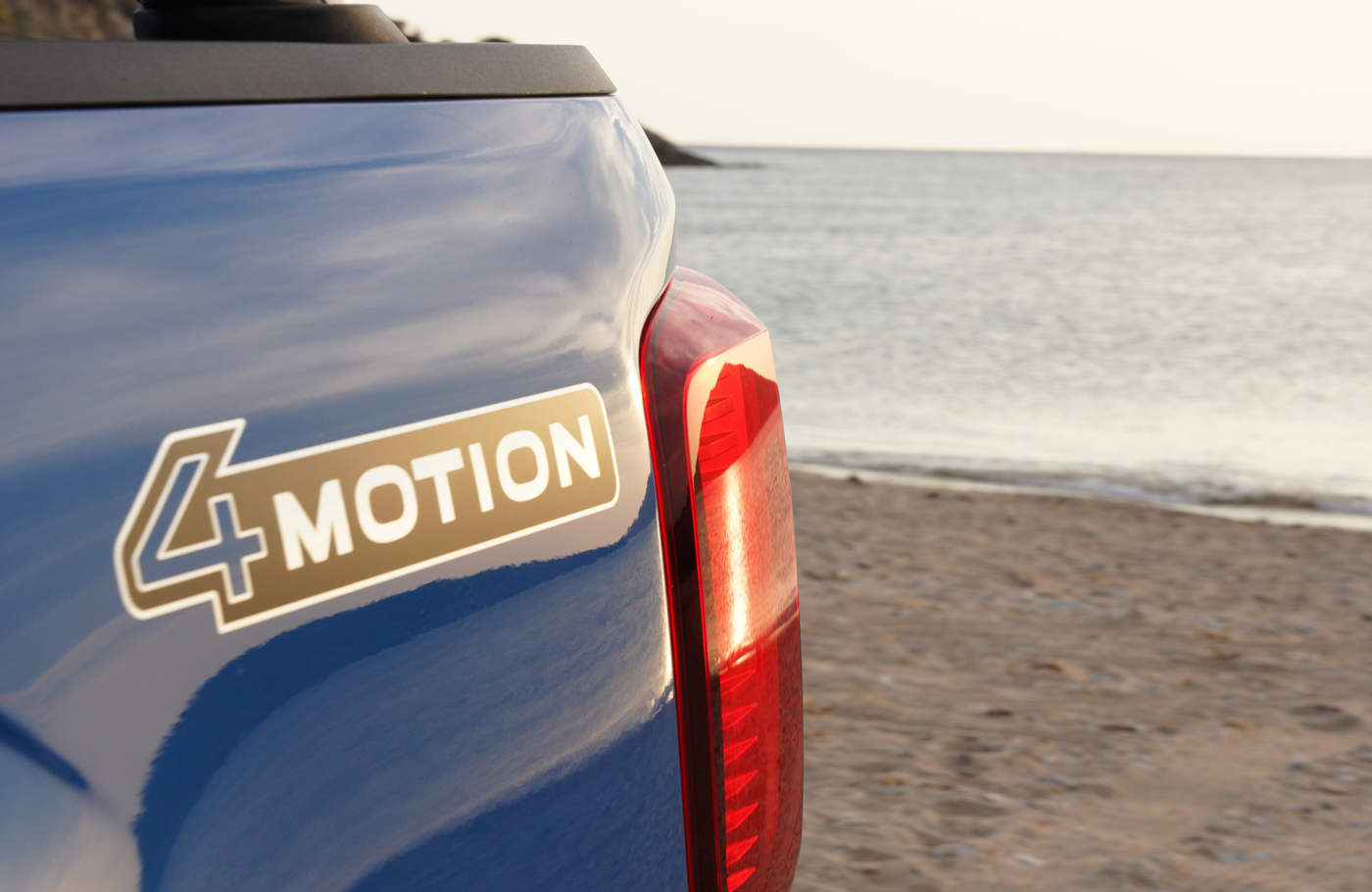
- 2.0 TDI 125kW: This four-cylinder engine with a six-speed manual transmission produces 125kW of power with 405Nm maximum torque and a top speed of 180km/h. The 2.0 TDI 125kW uses 6.9 litres/100km. On the 2.0 TDI 125kW with 4MOTION, fuel consumption is 7.1 litres/100km, while the 2.0 TDI six-speed automatic with 4MOTION uses 7.7 litres/100km.
- 2.0 BiTDI 154kW 4MOTION: This four-cylinder engine with a 10-speed automatic transmission produces 154kW of power with maximum torque of 500Nm. The top speed is 180km/h and fuel consumption is 7.5 litres/100km.
- 3.0 TDI V6 184kW 4MOTION: This six-cylinder engine with a 10-speed automatic transmission produces 184kW of power with maximum torque of 600Nm. The top speed is 180km/h and fuel consumption is 8.4 litres/100km.
* Data โ including fuel consumption figures โ provided by Volkswagen.
Published by
Focus on Transport
focusmagsa