The great CV invasion: why no one can stop China’s rise
The Chinese are not just playing the commercial vehicle game – they’re rewriting it. Faster, bolder, and unshackled by tradition, they have one goal: dominance. Frankly, there’s a good chance that they will succeed. Here’s why…
Recently, I found myself at the launch of a vehicle that few South Africans will yet have heard of – the Farizon SV. “Sorry, what?” I can hear you say… Well, the name may be unfamiliar, but Farizon is no small player. In fact, it is part of the mighty Geely Holding Group, the same Chinese giant that owns Lotus, Polestar, Volvo, Zeekr, and others. Make no mistake: this company and others like it will eventually become household names in the commercial vehicle (CV) market. Why? Because they do things differently.
Who is Farizon?
Farizon is the CV division of Geely. Established less than a decade ago, it has already become the leading new energy CV brand in China. It offers the full range: trucks, vans, and buses – all electric, hybrid, or powered by alternative fuels such as methanol. It runs China’s largest research institute for new energy CVs, employing over 2,000 engineers, and it is adding customers at breakneck speed.
In 2024 alone, Farizon sold over 300,000 units, and it is “A Seriously Big Deal” in China, where it doubled its market share for three consecutive years. Today, it has a market share of over 20% in China, and it’s now setting its sights abroad…
Meet the SV – “SuperVan”
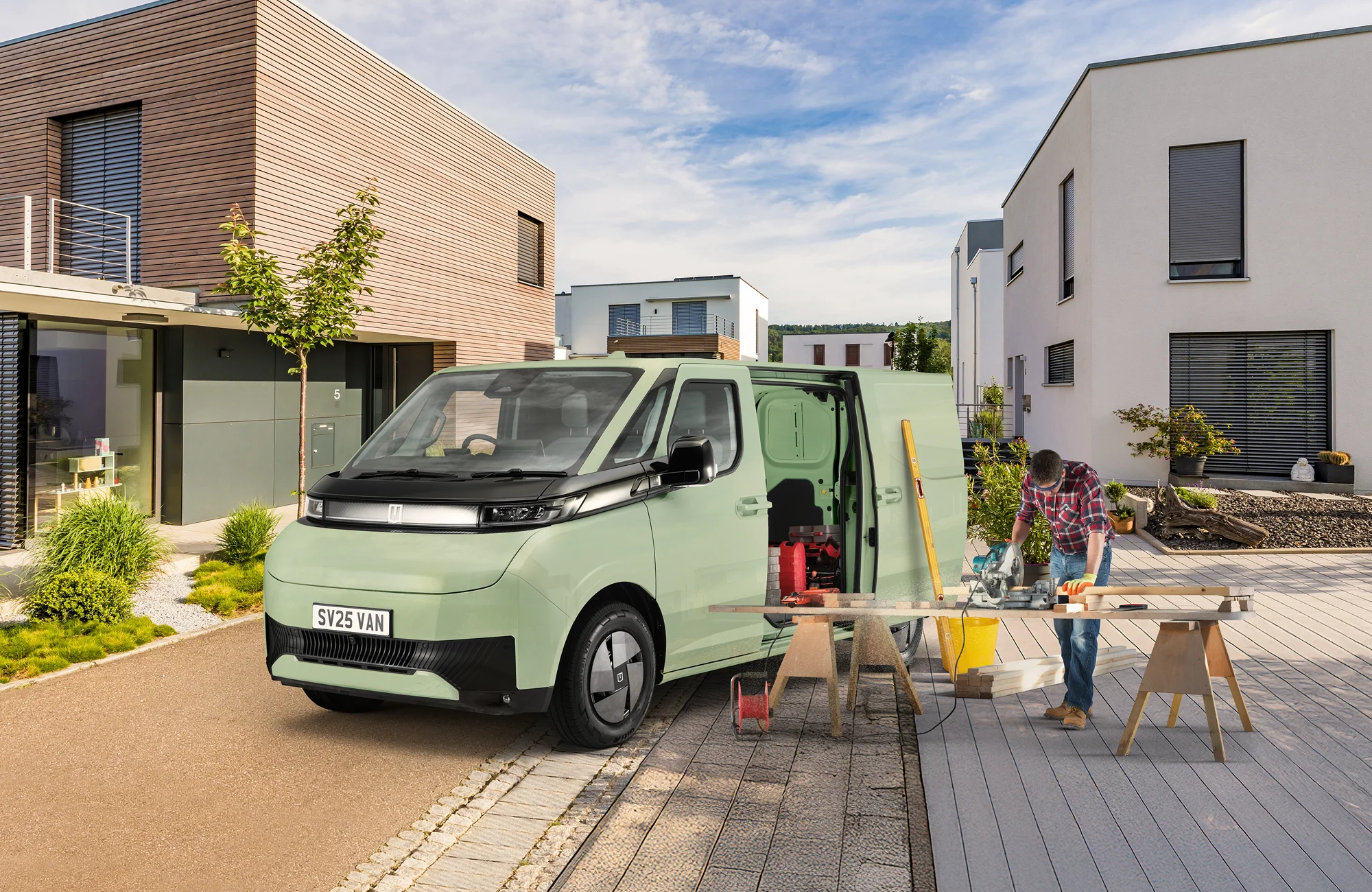
One of Farizon’s newest products is the SV, which the company insists stands for SuperVan (and no, I am not talking about Sarel). It is a fully electric large panel van, developed from the ground up on a bespoke EV platform. Depending on the variant, the SV can swallow up to 13 cubic metres of cargo, with payloads exceeding 1,000kg. Range stretches to nearly 400km WLTP, with charging from 20 to 80% possible in just 36 minutes.
We all know that the Chinese are light years ahead of the rest of the world when it comes to e-mobility. They are rapidly rolling out EVs across every segment, from cars to buses, trucks, and vans. With unrivalled speed, scale, and innovation, they’re delivering EVs faster than you can say “internal combustion engine” – leaving traditional manufacturers scrambling to keep pace with their relentless momentum.
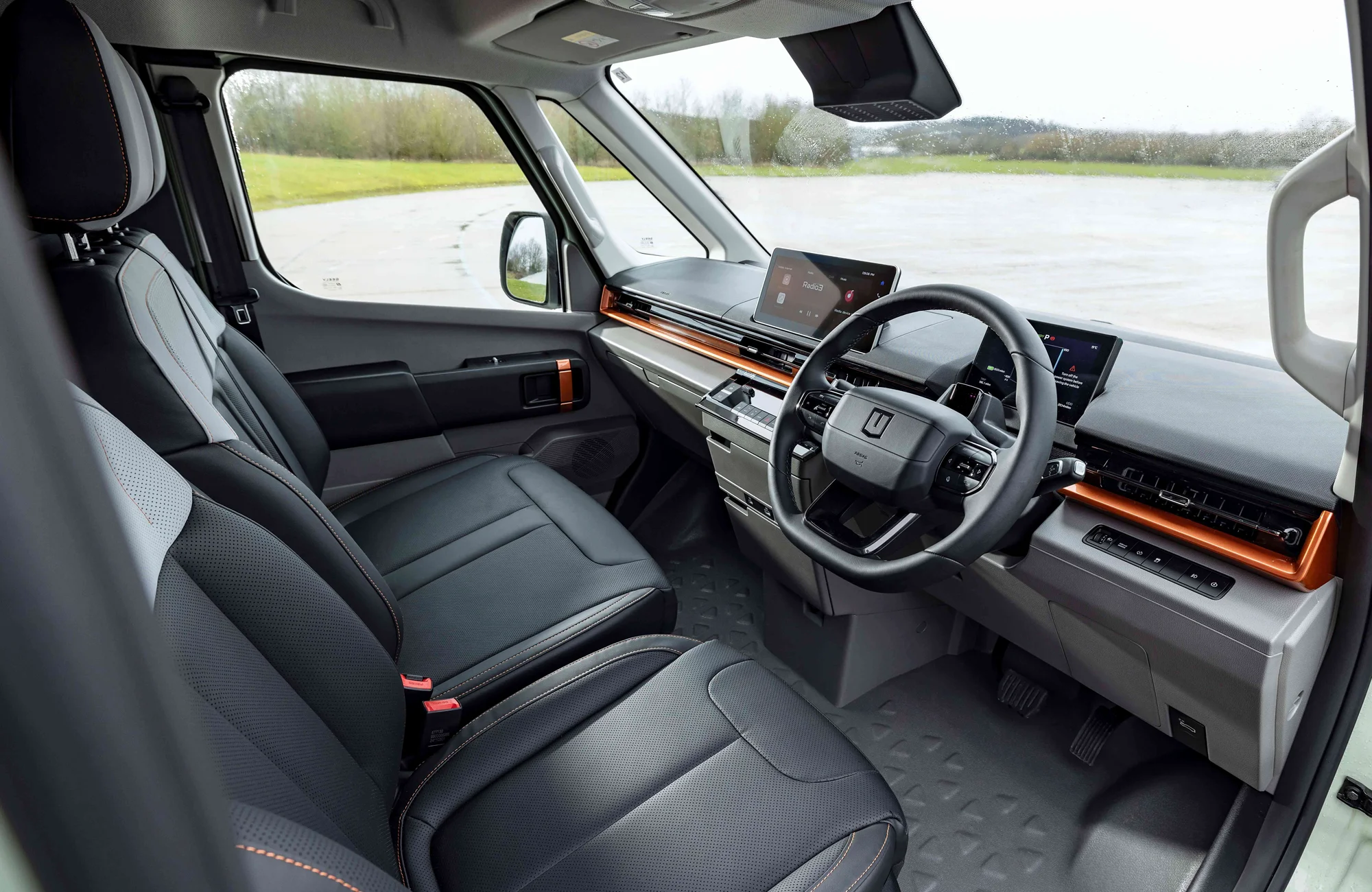
In terms of technology, the SV is bristling with innovation and is the first van in the world to use a dual-redundancy drive-by-wire system. It also features an independent dual wishbone front suspension – more at home on a passenger car – to deliver comfort and stability when fully loaded. Euro NCAP has already given it a five-star safety rating.
Clearly, this is not the sort of “cheap and cheerful” Chinese product that sceptics may still imagine. This is a proper contender – and Farizon wants it to be crowned the next International Van of the Year.
The Madrid encounter
In pursuit of that title, Farizon flew International Van of the Year jury members (yours truly included) to Madrid to drive the new SV. Why Madrid? Good question. I don’t know. Presumably it was part of the company’s strategy to crack Europe, but why that particular capital was chosen is anyone’s guess.
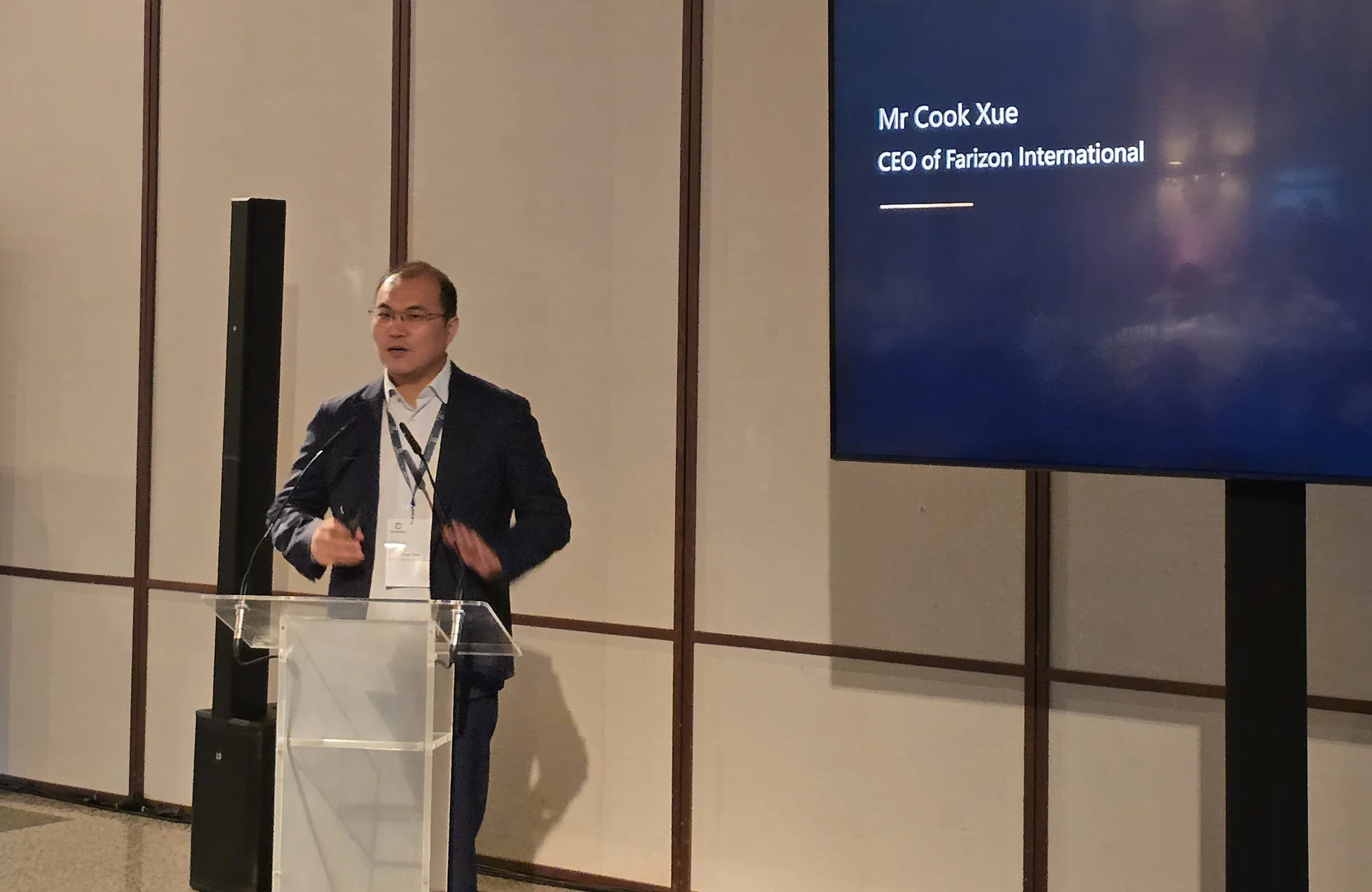
What struck me at the event was not just the vehicle, but the people. The senior executives were not hidden away in ivory towers. Even the CEO of Farizon International – a very pleasant gentleman by the name of Cook Xue – was wandering among the journalists, chatting openly. That doesn’t always happen at media launches.
Then there was their response to criticism. The SV, as impressive as it is, is not perfect. It may have the Euro NCAP rating, but its ADAS systems leave something to be desired. We pointed this out politely, expecting the usual response: “Thank you for your feedback, we’ll look at that in the next generation.” Instead, they told us flatly: “We fix them now. This year.” In other words, product improvements are continuous, not bound by long model cycles. That attitude is a stark contrast to the way many established Western and Japanese CV makers operate.
The speed of the Chinese
This is not my first experience of Chinese manufacturers responding with astonishing speed. I recall a small truck maker entering the South African market some years ago. Their truck failed homologation because the headlights didn’t meet local regulations.
For many brands, that would have meant months, or even years, of delay. But six weeks later – six weeks – new trucks arrived with modified headlights that passed with flying colours. Problem solved. That agility is typical of the Chinese. They do not follow the old playbook.
Listening differently
Another aspect that impressed me in Madrid was the interaction with journalists. Normally, media Q&A sessions are one-way traffic: we ask, they answer. But here, the Farizon executives began asking us questions. What did we think? What was right? What was wrong? How could they make the SV better?
In all my decades of writing about transport, I have never experienced such a reversal of roles. It was not just for show; they were genuinely listening – and prepared to act on what they heard.
From rubbish to remarkable
Let us be blunt. Once upon a time, Chinese vehicles were rubbish: poorly built, questionably engineered, and unsafe. Nobody took them seriously. But those days are gone. Companies like Farizon – backed by groups like Geely – are producing world-class products. They have scale. They have resources. They have technology. And, most importantly, they have the will to do things differently.
Their playbook is built on four pillars, the combination of which is devastating:
- Speed – fixing problems immediately, not at the next facelift.
- Listening – treating feedback as a design input, not a nuisance.
- Innovation – leapfrogging older players with fresh ideas, rather than clinging to legacy platforms.
- Determination – failure is simply not an option.
Should the old guard be afraid?
In a word: yes. European, Japanese, and even US CV manufacturers have long relied on reputation and gradual evolution. They operate within established product cycles, supply chains, and internal hierarchies.
The Chinese are not constrained by those rules. They are willing to experiment. They can turn feedback into production changes in months. They move faster and think differently. And as they prove with vehicles like the SV, the quality gap is closing – fast.
Love them or hate them, the Chinese are invincible in this regard. The established players should be very afraid indeed. Because history tells us that when an industry is confronted by competitors who play by entirely different rules, it is rarely the incumbents who win.
Published by
Charleen Clarke
focusmagsa