Scania unveils cabless concept
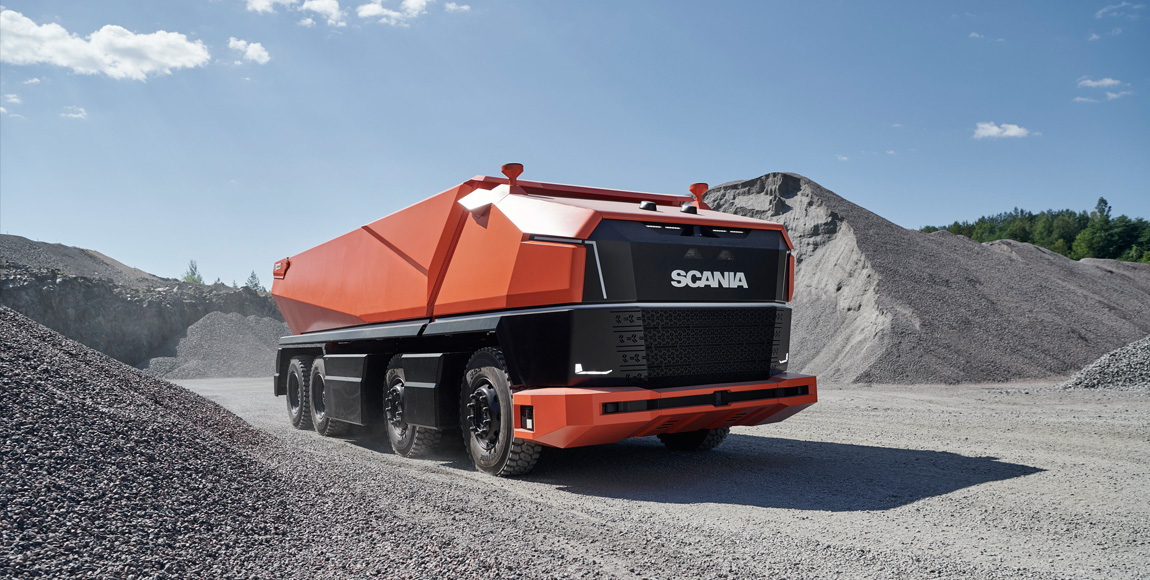
The latest member of Scania’s autonomous-drive family of trucks, the AXL, has made its debut
In what is claimed to be a milestone in the development of heavy-duty, self-driving vehicles, a group of Scania experts in different fields have teamed up and developed a fully autonomous concept truck.
In a statement, Scania’s CEO, Henrik Hendriksson, says as different industries look to streamline transport assignments and make them more sustainable, self-driving vehicles are increasingly being considered.
“Mines and large closed construction sites are examples of environments that are favourable for self-driving pilot projects since they are well-controlled locations,” he says. “With the Scania AXL concept truck, we are taking a significant step towards smart transport systems of the future, where self-driving vehicles will play a natural part.”
For autonomous vehicles, software is in many ways more important than hardware. Hendriksson says the AXL is steered and monitored by an intelligent control system, with autonomous operations facilitated by logistics technology that tells the vehicle how it should perform.
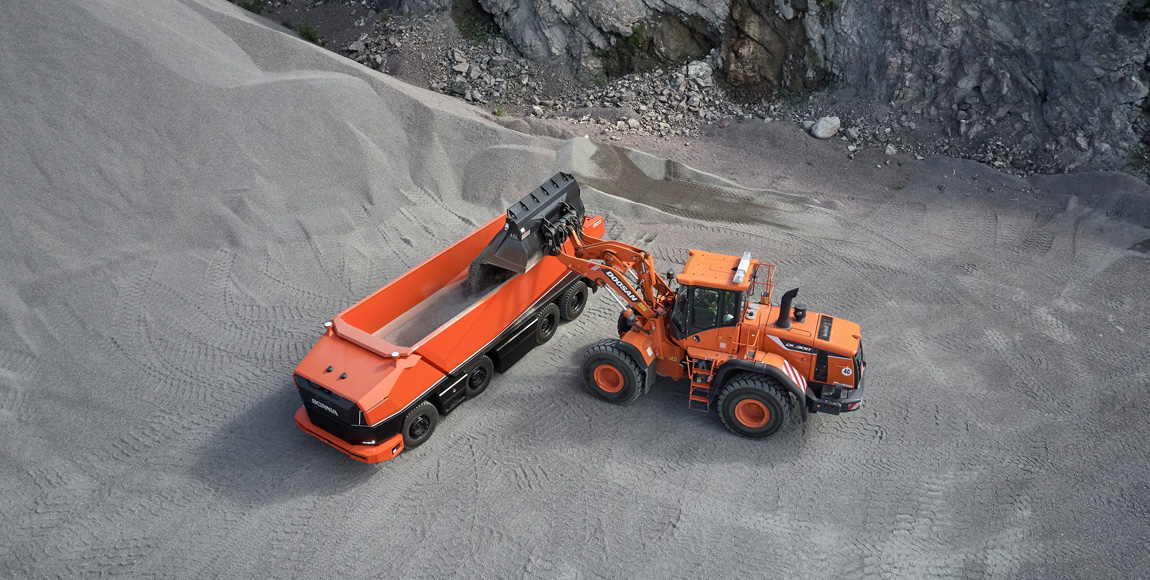
Claes Erixon, head of research and development at Scania, says the company already has self-driving trucks in customer operations – but, so far, they have been designed to accommodate a safety driver who can intervene if necessary.
“The AXL does not have a cab – and that changes the game significantly,” he says. “The development in self-driving vehicles has made great strides in the past years. We still don’t have all the answers, but through concept vehicles like the AXL we break new ground and continue to learn at great speed.”
Cameras, radar, light detection and ranging (lidar) and GPS sensors have replaced the vehicle’s human eye, the data processed by software that makes decisions based on what the sensors detect. Though previous versions of autonomous vehicles have relied on data from cameras and radar, the addition of lidar is said to add an extra element of safety.
“The resolution from camera and radar sensors alone is insufficient to identify the likes of pedestrians and small objects at a distance,” says Fredrich Claezon, a system architect for Scania’s autonomous vehicles. “What happens if the camera and radar suggest conflicting information? Which of these sensors should we trust? With lidar, we can obtain a better basis for decisions.”
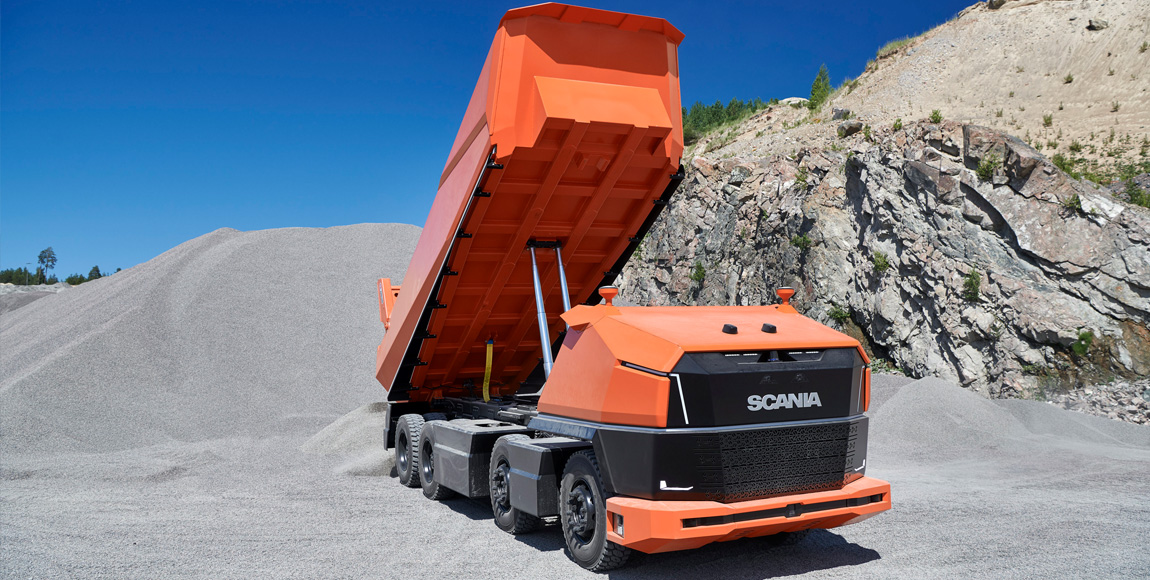
Development engineer Magnus Granström says while the system isn’t yet street smart, it’s designed for a level that meets the operational needs of mines. “Driving in an enclosed environment is fairly simple and predictable. If you’re driving in a more dynamic and less predictable environment, more work will be needed.”
Granström says it was difficult to decide just how complex the software system should be, with development aimed at striking a balance between a general system with many applications and a robust but reliable system for the mining industry. “The AXL would most probably not be fit for city driving but, considering the envisioned environment and planned assignments, it’s sufficiently smart,” he says.
Xavi Carreras Castro, who designed the AXL, says conceptualising the truck was an exciting process. “This is the first time that that we’ve built a truck that has many new components and technologies, enabling us to alter earlier forms and expressions. The result is what we believe future trucks will look like.”
He says though the vehicle appears novel and innovative, it can be clearly recognised as a Scania. “The colours identify it as part of the Scania family and there is still room for the characteristic wrapping T, which on our conventional trucks is formed by the grille and the windscreen.
“It will be a tremendous feeling when a truck such as this eventually appears at a mine,” he says.
Published by



focusmagsa