Revealed: The race to reinvent the modern warehouse
Revealed: The race to reinvent the modern warehouse
Robots are getting cheaper; labour is getting scarcer. Warehouses across the world are under mounting pressure to move faster, smarter and with fewer mistakes. But is automation really the answer – or are companies still underestimating the risks?
Automation is steadily shifting from an optional extra to a core strategic consideration in intralogistics. Yet despite rapid technological progress, the panellists at Test Camp Intralogistics made one point abundantly clear: automation is not about replacing people at any cost. It is about solving operational challenges, improving predictability and preparing businesses for a future shaped by labour shortages, rising customer expectations and increasingly complex supply chains.
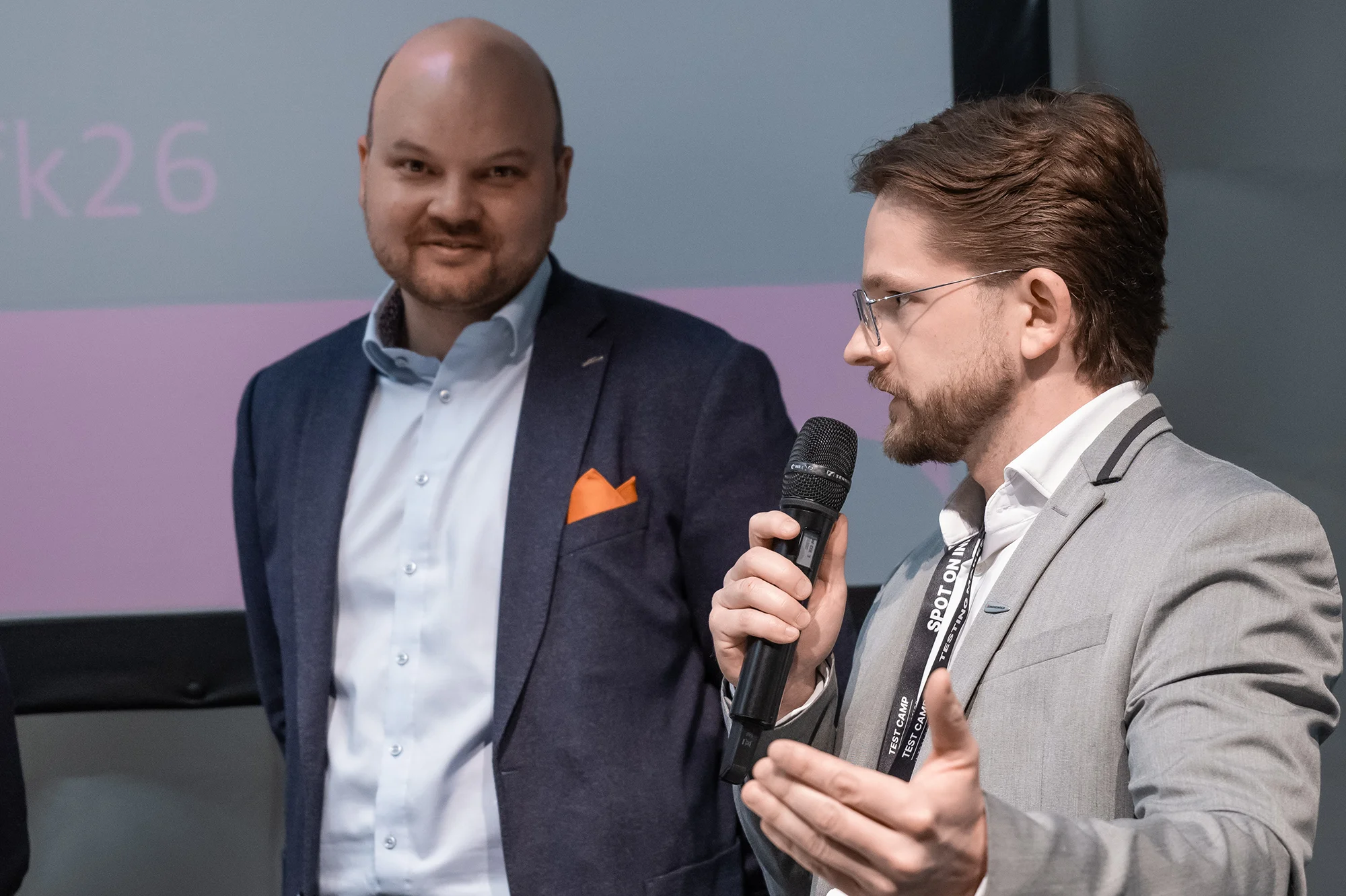
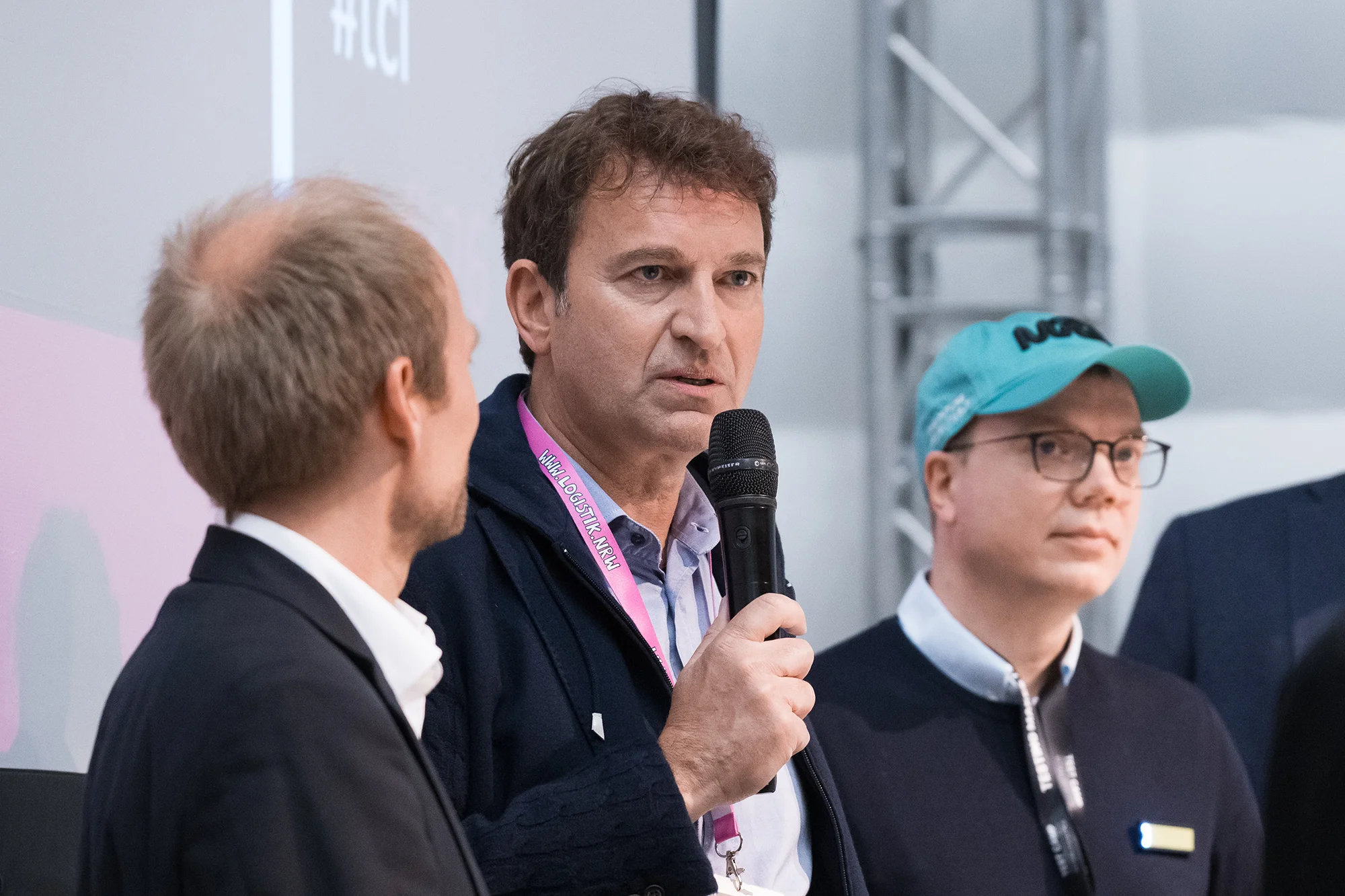
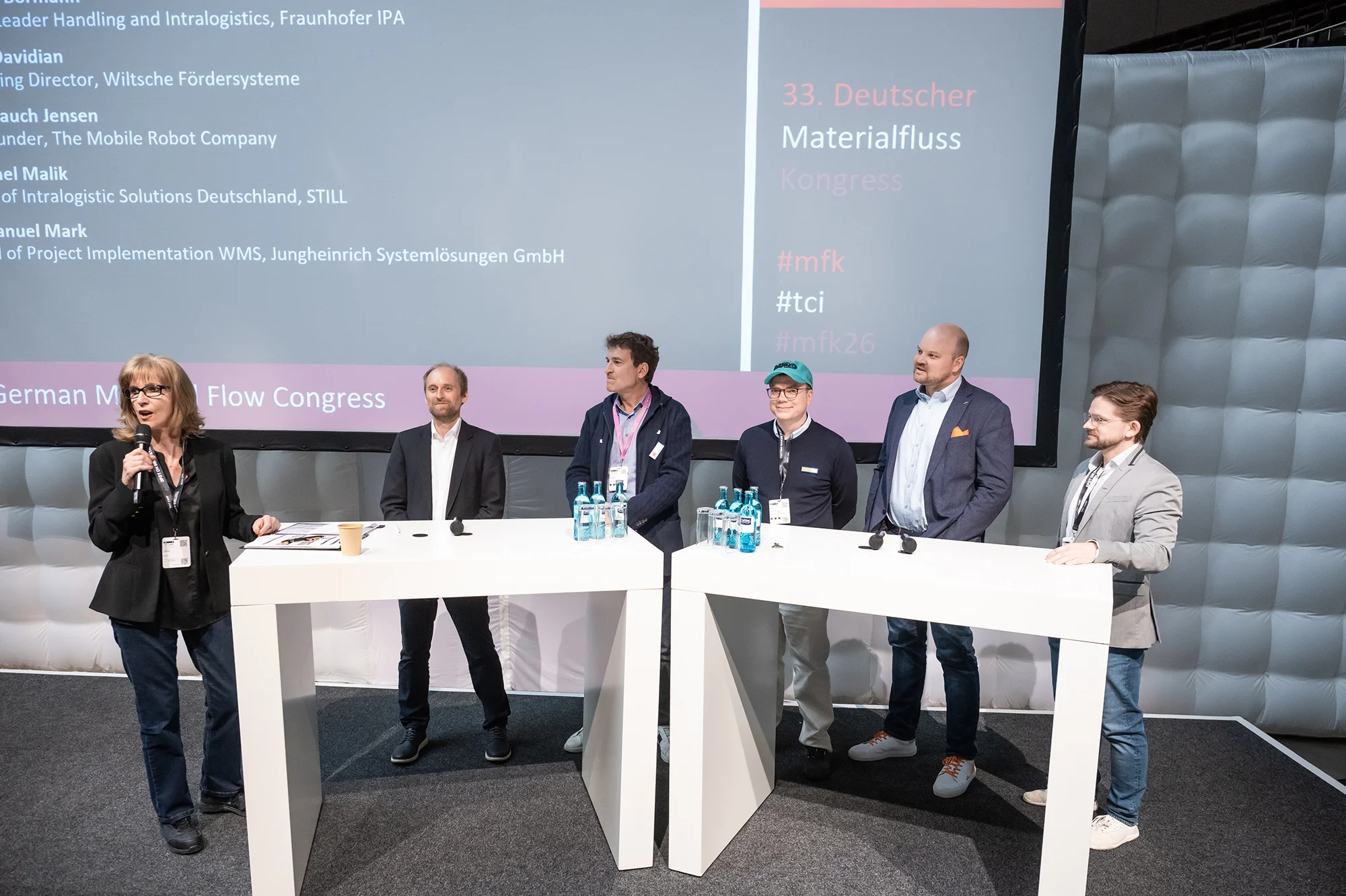
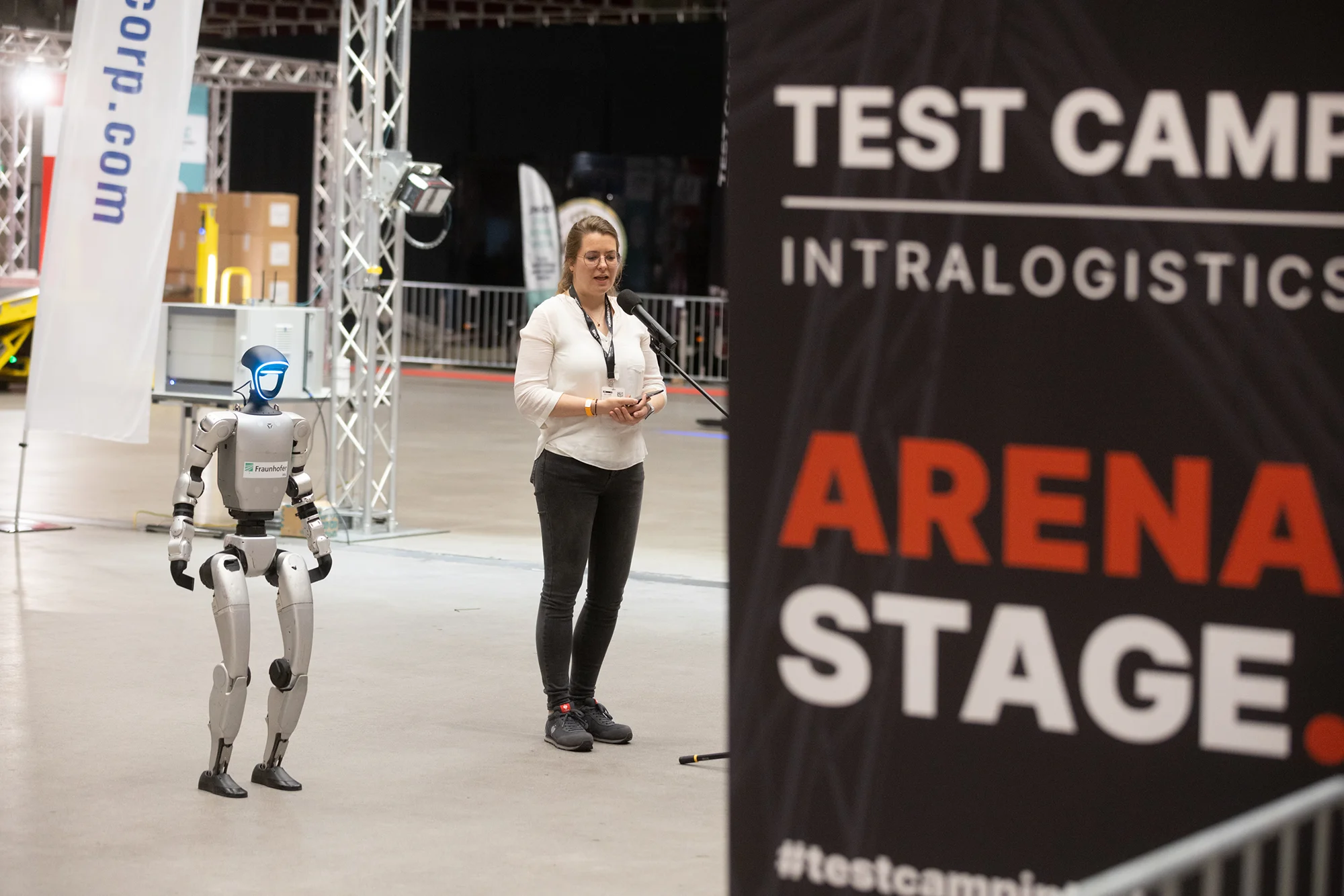
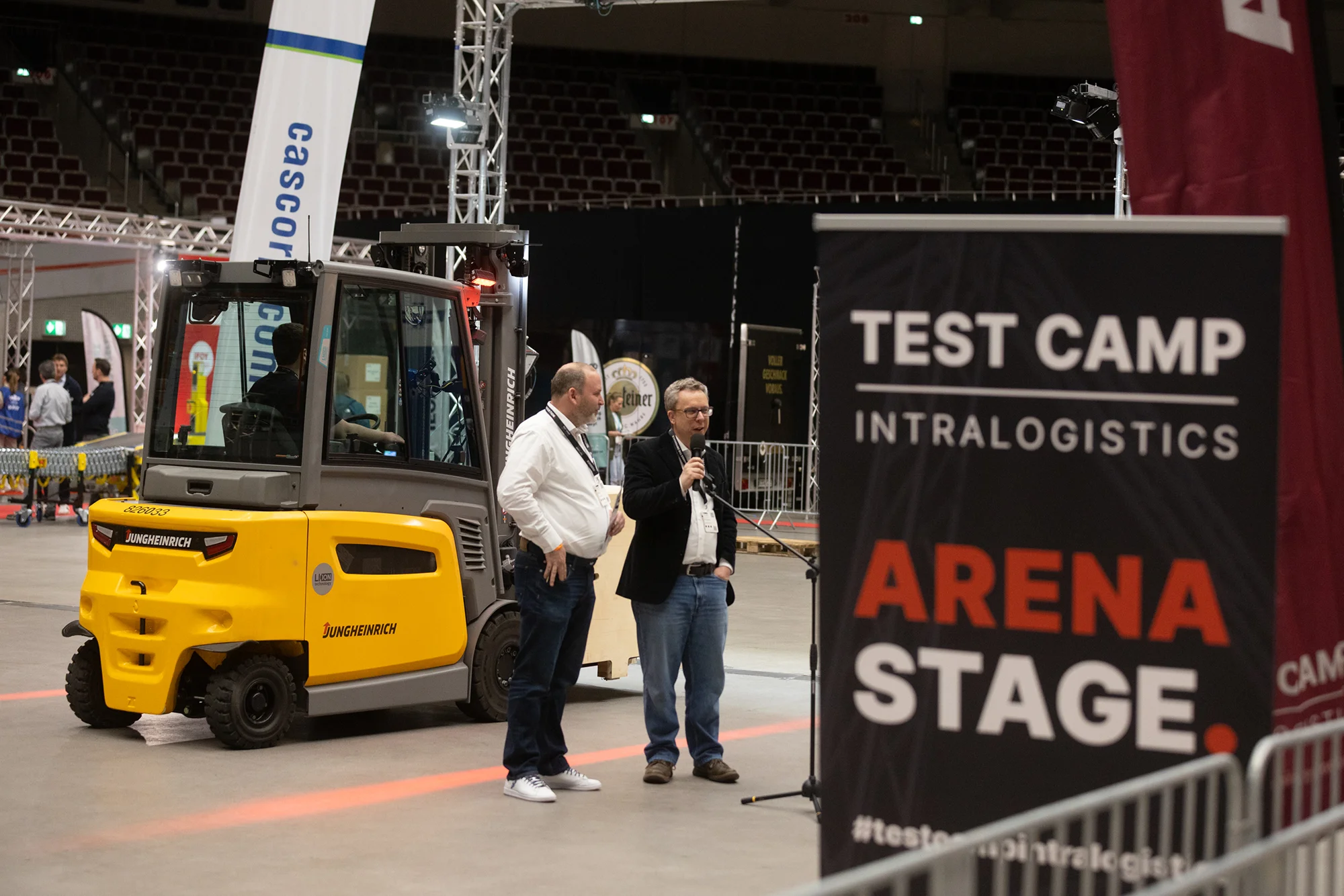
The panel discussion, titled “Automation by Default”, brought together leading voices from across the industry. The session was moderated by Charleen Clarke, IFOY Award Jury member and editorial director of FOCUS.
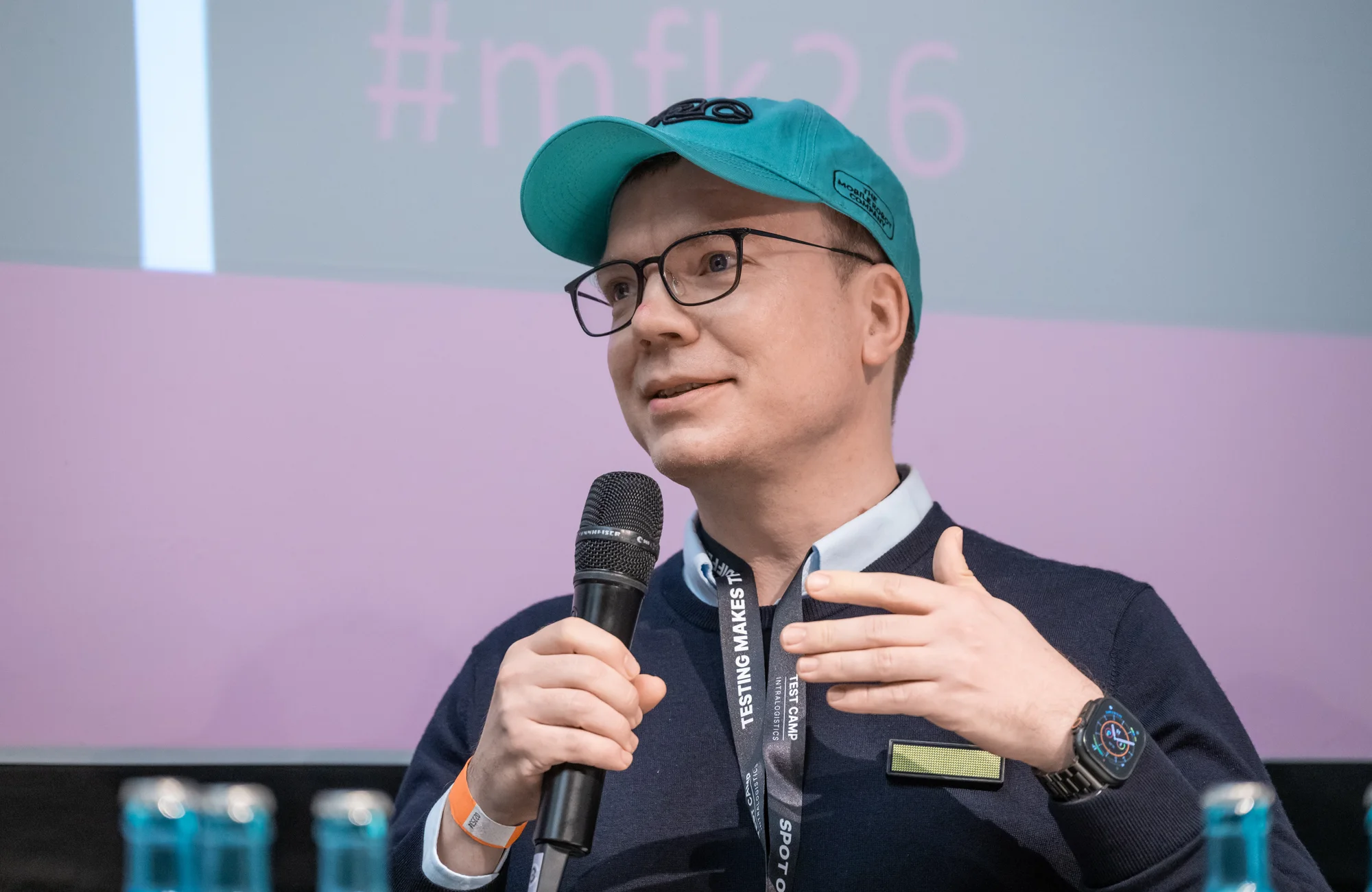
Joining her on stage were Richard Bormann, group leader handling and intralogistics at Fraunhofer IPA; Baret Davidian, managing director of Wiltsche Förder-Systeme; Emil Hauch Jensen, co-founder of The Mobile Robot Company; Michael Malik, head of intralogistic solutions Deutschland at STILL; and Immanuel Mark, head of project implementation WMS at Jungheinrich.
Together, they explored why automation adoption is accelerating, where barriers still exist and what warehouses could look like within the next five years.
Labour shortages are driving automation
For many businesses, automation is no longer driven purely by efficiency targets. It is increasingly becoming a response to labour shortages. Davidian illustrated this with the example of the German confectionery manufacturer Reber, famous for its Mozart-Kugeln chocolates. As the company expanded, recruiting workers for manual packaging operations became increasingly difficult.
He explained that the family-owned company grew to a point where labour constraints threatened future production capacity. “They were running out of people. They were using people from the area, but they were battling to recruit new staff,” he said.
According to Davidian, management recognised that continuing with manual operations would eventually limit growth. The result was a multimillion-euro investment in robotic packaging systems. “They spent a few million euros on a new robot system which does absolutely everything. It needs no-one, except for perhaps a supervisor,” he explained.
The transition mirrors wider demographic trends across Europe. “The northern hemisphere has a demographic problem. The ageing workforce presents a significant challenge. In five years’ time, the baby boomers are almost all going to be in retirement. That’s a massive issue. We’re talking about a couple of million people that are just leaving their jobs,” warned Davidian.
Automation starts long before robots arrive
While much of the industry discussion around automation focuses on robots and autonomous forklifts, Mark argued that the process actually begins much earlier: “When embarking on the automation journey, you need to think about the initial steps very carefully.”
He stressed that suppliers, packaging formats and warehouse processes all need to be designed with automation in mind: “When you do your production, when you talk to your suppliers, when you discuss how they deliver the material, you need to bear in mind that everything needs to be handled with an automated system.”
Mark also highlighted one of the least glamorous but most critical aspects of automation: data quality. “Customers are chasing the solution for automation very often,” he said. “But they don’t like to get their data right before we start.” He added that poor data and inconsistent processes remain major obstacles. “You need to have your master data right. You need to have your processes straight,” he explained. “Customers usually don’t want to go through the pain of getting their data straight.”
However, once systems are properly configured, the operational benefits can be substantial. “In my opinion, the number of errors will definitely go down in the system,” Mark said. He further argued that automated systems deliver consistency that humans often cannot maintain under pressure: “If you have an automated system, it will not become stressed, it will not start to improvise, it will not make any errors… it will just always act the same way.”
As a result, predictability improves. “You just get a more stable system and a calculable throughput through your system, which is, I guess, what everyone wants to have in an intralogistics system,” he elaborated.
Costs are falling but ROI still matters
The cost of automation remains one of the most debated topics in warehousing. While panellists agreed that automation is becoming more affordable, they also cautioned against oversimplifying the business case.
“I think it very much depends, of course, on the solution and the scale you automate,” said Malik. He pointed out that entry-level automation solutions are significantly more accessible than they were a few years ago: “There are some easy-entry solutions, which are, compared to some years before, much more accessible in terms of costs, in terms of scalability and in terms of easiness.”
However, fully automated warehouse systems still require considerable investment. “We have big, automated warehouses where costs are, of course, still a factor,” Malik explained.
Most importantly, he argued that businesses should not evaluate automation purely through the lens of the purchase price, emphasising: “You need to see the bigger picture – the complete operation, the full business, the processes…”
Jensen agreed that economics remain central to adoption decisions, but he believes the market is changing rapidly. “First of all, the cost of automation is going down dramatically,” he noted, going on to identify several reasons for this shift. “The Chinese have been coming to Europe in a very big way over the last five years, and that has put a huge price pressure on the robotic market,” he said.
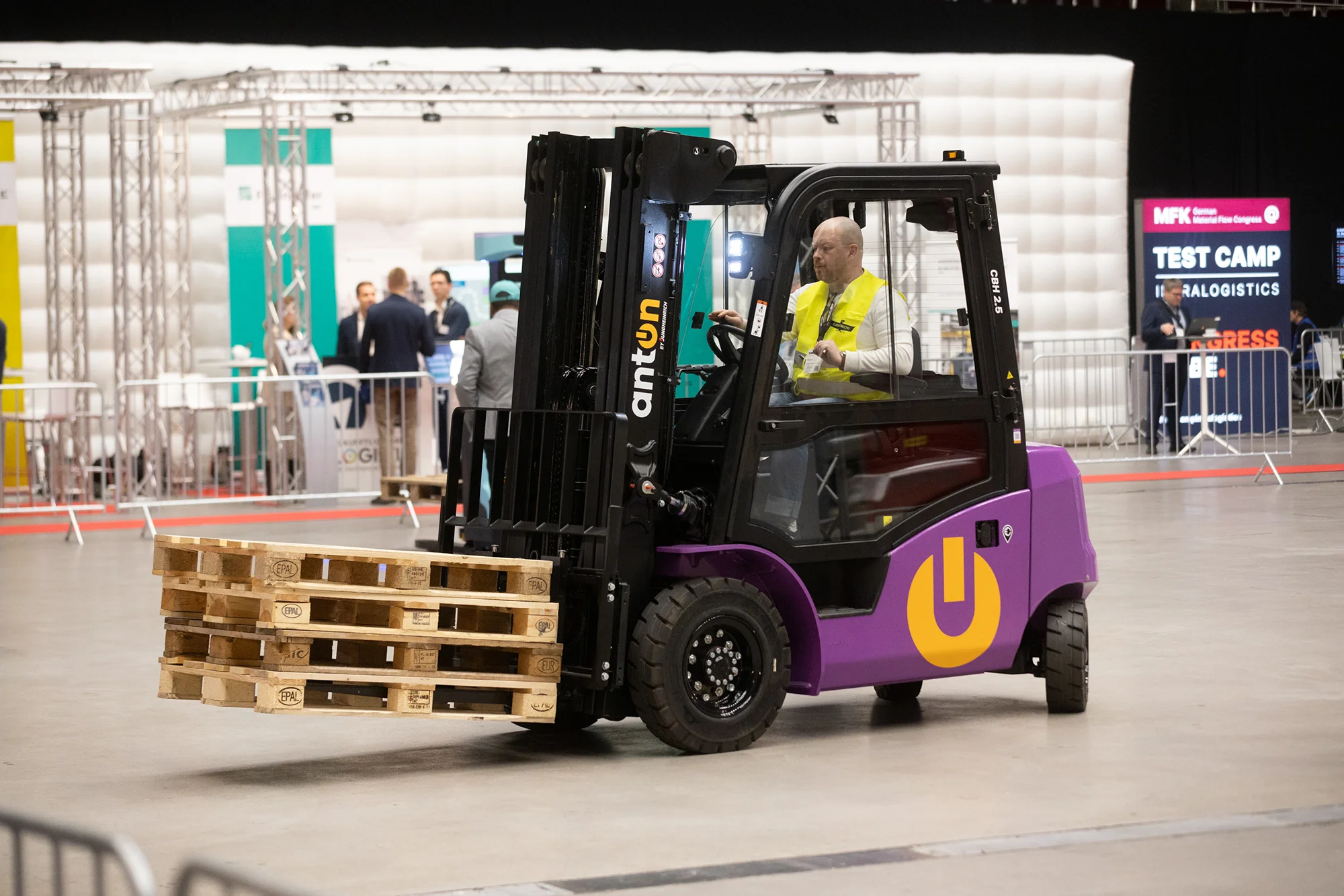
He added that at the same time, rising production volumes are lowering unit costs, explaining: “The more robots you produce, the cheaper they get.” Competition is also intensifying. “In the forklift category, I know of 200 different companies that can provide an automated forklift,” he expanded.
According to Jensen, these trends are steadily improving total cost of ownership: “In the total cost of operations, what you’re left with is the cost of managing the system and running it. And that is now starting to improve.”
He added that ease of deployment is also becoming a major differentiator: “We try to make it really quick to deploy our products, for instance – we’re talking about a day.”
Why automation adoption is still relatively slow
Despite technological progress, adoption rates remain relatively modest. Clarke noted that only around 3 to 5% of forklifts are currently automated, while Bormann believes one reason is that automated systems still struggle to match human adaptability. He explained that many automated systems remain too rigid: “You need a structured environment and structured processes for automated forklifts to run efficiently.”
Humans, by contrast, are remarkably capable problem-solvers. “A typical human forklift driver is super smart when it comes to the work he is doing,” said Bormann. Tasks such as truck loading remain particularly challenging. “Normally you try to avoid collisions with your AMRs or automated forklifts,” he noted. “In this case, you actually seek for collisions, to put pallets next to each other.”
The gap between human and robotic capability is narrowing, however, largely thanks to advances in sensing and artificial intelligence. “AI is now taking up a lot of functions that you saw in the past were not possible,” explained Bormann.
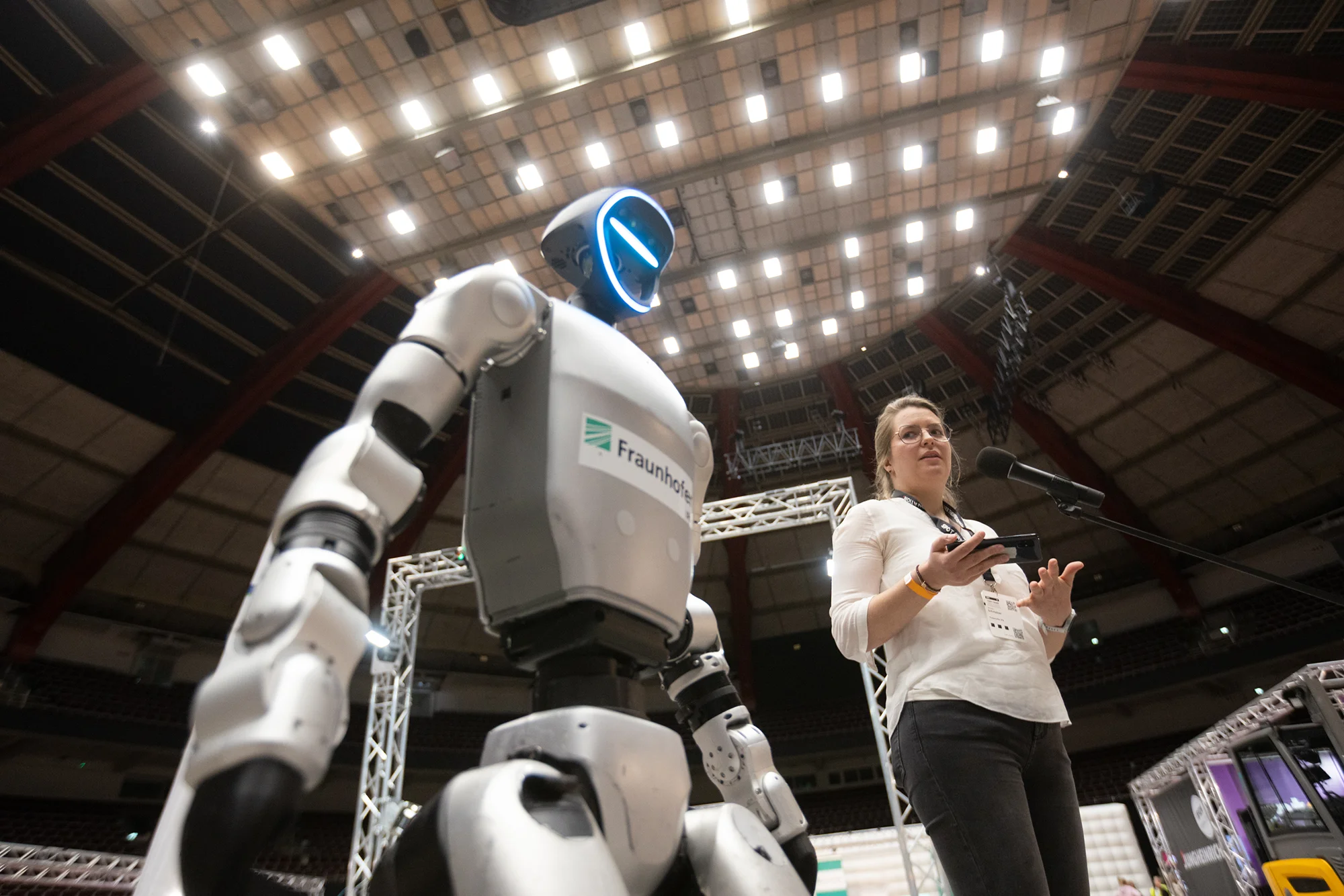
Fraunhofer IPA is researching ways to make robots more intuitive and flexible. “We are researching how to instruct systems in the same manner as you would instruct a human worker,” Bormann said. This includes multimodal interaction. “This means talking to them, pointing to them, showing them something, how it is done. Then the robot has to figure out how to work in a flexible way,” he explained.
Automation will not eliminate people
One of the strongest themes emerging from the discussion was that warehouses of the future will still require people. “There are still many things in the warehouse where people just are better,” Mark stressed. Like Bormann, he pointed specifically to loading and unloading trucks and handling irregular items, noting: “You will always have people involved.” Malik echoed this view, saying: “We want to be a partner for our customers and find the right solutions together.”
For STILL, the answer isn’t simply automation everywhere: “From a manual forklift to a fully automated system… there are many solutions our customers require.” Jensen agreed that flexibility remains critical and recalled visiting an Amazon distribution centre where many processes were still manual. “I was really surprised by the lack of automation because they were doing a lot of things the old way that we know how to automate,” he said. The reason, according to Amazon staff, was straightforward: “It wasn’t good ROI and they were losing flexibility.”
Jensen therefore believes customers are right to remain cautious. “It’s their business after all,” he said. “And we as robot suppliers need to meet that requirement of saying, ‘How can we make it flexible? How can we make it cheap enough?’”
Davidian reinforced this message with an example from a fulfilment business handling CD-ROMs for Mitsumi in the 1990s. “They said, ‘We are more flexible with our workflow as it is at the moment’,” he explained. When the CD-ROM market collapsed, the company shifted into textiles. “That’s the thing,” Davidian said. “If you’re a 3PL or you’re a fulfilment centre, or perhaps like an Amazon, you just need to be as flexible as possible.”
Getting staff buy-in remains essential
Technology alone does not guarantee successful automation. “Take your people with you,” advised Malik. He warned companies not to assume suppliers can simply install automation and leave, emphasising: “It needs to be a part of your business.”
Mark agreed that employee engagement is critical, saying: “You’ll have to make sure that people are working with the system – that they’re interested in the system – to improve the system.”
Without proper integration, automation projects can fail. “If you don’t have the orchestration in the middle to control everything, at the end, your cheap robot is going to just be a very persistent obstacle in the way,” Mark added.
A more attractive industry for young talent
The panellists agreed that automation could help make intralogistics more appealing to younger workers. “The skillset required to operate the warehouse of the future is, of course, going to be very different,” said Mark. Instead of relying mainly on forklift operators, warehouses will increasingly need software-oriented employees. “We need more people who can confidently work with an IT system,” he explained.
That shift could broaden the industry’s appeal. “It will attract a lot more people who are really into IT solutions,” Mark continued. “That makes jobs a lot more attractive.” Malik agreed enthusiastically. “It’s very attractive for young people to be part of that journey right now, to see that evolution,” he said.
Asked what students should study if they wanted to enter intralogistics, Malik recommended a blend of business and technical disciplines. “We should not be technical nerds, because our customers want efficiency in the end,” he elaborated. “When I’m looking on skillset, for sure, (I want) a very good mix between business and technical skills.”
Warehouse of the future
While average ages in intralogistics could drop, what about the actual facilities? What will warehouses look like in five years? Predictions varied, but all the panellists agreed that automation adoption will increase substantially.
“You will see dark warehouses for simpler processes where it just makes sense,” predicted Bormann, although he added that many operations will remain heavily dependent on people. Jensen, meanwhile, expects automation adoption rates to rise sharply. “Five years from now, my guess is (it will be) double digits, maybe close to somewhere between 30 and 40%,” he predicted.
Malik was more conservative: “I would say 20% automation. That’s my guess in five years.” He expects AI and integrated systems to become increasingly common, saying: “We will see much more AI as part of these solutions. We will also see the robots behaving more like humans.”
Mark believes the transformation will be gradual. “We are right at the very start of the automation route,” he said. “It will change, but it will be a slow ramp up.”
Automation with realism, not hype
One of the clearest conclusions from the discussion was that the industry is approaching automation with a far more pragmatic mindset than in previous years. The panellists repeatedly stressed that automation is not a silver bullet. Businesses must consider flexibility, ROI, process design, staff engagement and long-term strategy.
“Look into your processes and establish where it makes most sense and (there is the most) potential to automate,” advised Bormann. He also urged companies to test systems carefully before scaling: “Do some proof of concept before you really scale up. That’s important.” For Jensen, companies should focus on mature technologies rather than getting distracted by hype. “Look not only for the newest technology. Instead, look for mature technology that is ready to deploy,” he advised.
Ultimately, the discussion suggested that automation by default does not mean automation everywhere. Instead, it means that businesses entering any logistics or warehousing decision must now actively consider whether automation makes sense. The debate is no longer about whether automation belongs in intralogistics. The real question is where, when and how it can deliver the greatest value.
Published by

Focus on Transport

focusmagsa