Nick Porée: The man who shaped SA freight policy
There are figures in the transport sector whose contributions shape policy. There are others whose work strengthens industry practice. And then there are individuals whose influence is so deep that they help define the direction of an entire national logistics system. Nick Porée is one such individual, writes CHARLEEN CLARKE.
For more than four decades, Porée has been a guiding intellect behind South Africa’s freight transport development: a practitioner, thinker, reformer and – above all – a professional whose integrity has remained unshakeable in a sector not always known for it. He shrugs off any suggestion of a grand masterplan. “My career was haphazard and directed by the various opportunities as they were offered,” he says. “It happened without a clear path or support.”
Yet the arc of that “haphazard” journey has left a remarkably coherent imprint on the country’s freight thinking. His legacy can be found not only in the major strategies, studies and policies he has developed or contributed to, but also in the thousands of professionals whose careers were shaped by the transport courses he designed, and the many colleagues who have leaned on his wisdom, clarity and moral compass.
A life shaped by history
Born in 1939 in Permatang Siantar, Sumatra, to Jersey-born parents working on a tea estate, Porée’s first months were defined by global upheaval. “My parents managed to escape the Japanese invasion by a few months,” he recalls. “We left via Medan and Colombo on a cargo ship to Durban.”
His father fought in North Africa in the Royal Durban Light Infantry and was captured during the fall of Tobruk, escaping and fighting alongside partisans behind enemy lines. He returned home after the war, but the trauma of conflict contributed to the family’s eventual break-up.
Porée left school at 17 with a Natal Senior Certificate and entered the world of agriculture, first in dairy farming and later in the demanding sugar industry. He worked as an overseer, spending long hours on horseback across the cane fields. He rose to the position of estate manager and married in 1963, eventually raising four sons. Along the way, a pivotal transfer within Tongaat changed the trajectory of his career and, ultimately, the trajectory of South African transport policy.
A mind for systems: Discovering transport economics
When the company moved Porée into its transport department, something clicked, and what began as a work assignment became a vocation. Despite not having a matric, he was admitted to UNISA under the mature age clause and began a BCom that would take seven years to complete – all while raising a family, working full-time and immersing himself in the complex logistics environment of an operation that handled 320 tonnes of sugarcane per hour every day.
This proved to be a training ground unlike any classroom. “That Tongaat operation shaped my professional approach,” Porée says. “It was 100 trucks, 320 tonnes per hour, 24 hours a day, nine months a year; a large workshop of 240 staff doing maintenance, repairs and construction for a 1,500-vehicle fleet.” Out of that intensity came innovative scheduling systems, management accounting tools and operational controls that drew on Porée’s contacts with several experts, including Helmut Eggers, Connie Verburg and Professor Wynand Pretorius – the latter becoming a long-time mentor and friend.
Along the way, Porée became involved in the Full Gospel Businessmen’s Fellowship International, serving as a chapter president and becoming a leader in community faith initiatives – a reflection of both his values and his deep sense of responsibility towards others. If integrity is the spine of his career, faith has been the quiet rhythm beneath it.

Shaping the industry through knowledge
When Tongaat-Hulett merged and Porée resigned, Pretorius extended an invitation that would shape the next phase of his career: join Rand Afrikaans University (RAU) to design a national transport qualification. What followed was nothing short of transformative.
Porée structured, authored and lectured on the National Transport Certificate and later the National Diploma in Transport, which became the industry standard for entry and advancement in the sector. At its peak, the programme enrolled roughly 2,000 students a year. “The RAU courses became the industry standard,” he remembers. More than 30,000 students graduated before it ceased to focus on industry management and became academic in about 1996.
For many professionals across South Africa – today’s fleet managers, logistics planners, operations heads and regulators – the course was their first structured introduction to transport economics, costing, regulations and systems thinking. Porée regards this as his proudest achievement. “The success of the RAU courses elevated many people, teaching them how to improve company performance and qualifying them for managerial positions,” he explains. This educational legacy alone would have been enough to cement Porée’s status in the industry – but he was only getting started.
An unlikely path to consultancy
After selling the family farm and emigrating to the UK, Porée expected to build a new career in Europe. Meaningful work proved elusive, however, and he found himself undertaking systems development for a large strawberry processor. “I thought I could find work in the UK,” he says dryly, “but I couldn’t find anything suitable.”
Meanwhile, back in South Africa, a Durban-based consultancy for which he had sub-contracted had been appointed to perform the freight section of the first National Transport Masterplan (NATMAP). A suggestion from the company secretary changed everything: they reached out to Porée, asking him to return and join the project. Tragically, the consultant died in a car crash shortly before Porée’s arrival. “I had a flight booked, returned, and found that he’d died in a car crash,” he recalls. “So, I applied to the three lead engineering firms to take over the freight section, and we negotiated terms directly with all of them.”
Recognising the scale of the task ahead, Porée invited Rekha Sookream to join him as administration director, forming Nick Porée and Associates (NP&A). They had no office, no permanent staff – just a network of experts, a commitment to quality and the discipline to manage some of the most complex freight studies in the country. Porée explains the model simply: “We never employed full-time staff; we negotiated with professional experts to collaborate with us on agreed budgets and timetables, and we always wrote and controlled the output to ensure quality, accuracy and consistency.”
Over the next decade, NP&A became one of the most respected – though often under-recognised – freight advisory consultancies in South Africa.



Work that mattered: NP&A’s national contributions
Porée’s role in shaping major national strategies cannot be overstated. NP&A either led or contributed to a number of significant initiatives:
Eight provincial freight databanks. These were the result of the successful implementation of the KZN Freight Transport Policy study (2004) and KZN Freight Databank, and became foundational repositories of freight information for the respective provinces.
The freight component of NATMAP. The only section of the entire plan considered usable, this was nevertheless ultimately discarded. Porée is blunt about it, explaining: “The project was badly designed and managed by the Department of Transport (DoT), so that ours was the only usable output. But it was shelved after Transnet objected to recommendations on rail, ports and competition.”
Border post process and facilities review. NP&A was appointed to survey seven South African border posts but, after months of unpaid work and deadlock with the DoT, it withdrew. “After six months of wrangling and refusal to pay for ongoing work at borders, we walked away,” Porée says. “We lost R400,000. A second consultant was appointed and also walked away, so the project was never completed.”
National Freight Logistics Strategy (NFLS) review. A rigorous and honest assessment, this was again rejected by the DoT and Transnet, with Porée noting that it was never published because it challenged internal orthodoxies, institutions and positions.
Road Freight Strategy (RFS). NP&A’s final strategy was approved by Cabinet in 2017 – one of the very few national freight policy documents ever formally adopted. “We were appointed because the original appointee produced a report with obvious flaws. We completed the RFS and Cabinet approved it in 2017, but it was never implemented,” Porée elaborates.
RFS Implementation Evaluation. Despite NP&A’s efforts, entrenched interests on the implementation panel prevented progress. “The committee was determined to mute every recommendation or skew them to existing structures,” Porée recalls. “The result was deadlock and no implementation.”
Multiple freight policy and corridor studies across Southern Africa. These included assignments on regional integration, cross-border flows and regulatory harmonisation for the Southern African Development Community (SADC). One standout project was the Tripartite Transport and Transit Facilitation Programme (TTTFP), a €20-million, 10-year project accepted by the SADC-COMESA-EAC Tripartite and funded by the European Union – although this has now derailed and stalled. Additional work was carried out for the World Bank (in Tanzania and along the Nacala corridor), Trademark East Africa (a five-year One Stop Border Post programme in the East African Community), the Japan International Cooperation Agency (JICA) and the United Nations Economic Commission for Africa (UNECA).
NP&A’s successes have been based on the principle that most clearly defines Porée: integrity. Across all this work, NP&A operated on four uncompromising principles: never inflate rates, never compromise on facts, never pay for work or influence and never take payment for favours. “We have never paid anyone for favours or to get work,” says Porée, sounding almost astonished that this even needs to be stated.

Clarity, courage and an unshakeable moral compass
Porée’s willingness to confront flawed logic or weak policy thinking is legendary. In one notable case, when asked to include a chapter in the RFS replacing regulated competition with mandatory BEE in road freight transport operations, his simple response was: “Find another consultant.”
The NP&A team dismantled seven glowing feasibility studies for a multibillion-rand logistics hub in Harrismith – studies produced by big-name engineering and economic consultancies. NP&A quickly demonstrated that the fulsome assumptions were fundamentally flawed, saving the country from yet another expensive white elephant. “We were given seven reports lauding the necessity for the project, already announced in Parliament and worth billions,” Porée reflects. “We demolished the nonsense in three months and it was scrapped.”
His frustration with government inefficiency and bureaucratic inertia is well documented in the pages of FOCUS in his monthly “Driving Africa” column. Yet despite the obstacles, Porée’s persistence has ensured that sound, fact-based freight thinking remained alive in policy circles, even when adoption has been slow or has met with resistance. He remains unsentimental about the push-back he faces: “The project panels and the departmental ‘experts’ were composed of staff with very limited understanding of the complexities of multimodal freight transport and zero authority to implement anything,” he says. “We worked with the same team of people for about four years and nothing we recommended ever got further than File 13.”
A voice of reason in a sector under strain
Porée’s insights on the structural issues facing South African freight transport are sobering but essential. He highlights some of these fundamental challenges:
- The destructive government-union alliance sustaining the monopoly State-Owned Enterprises (SOEs).
Competition – the single most powerful driver of efficiency – remains politically inconvenient. Porée frames it starkly: “The conflict between government and union collusion to support SOEs and BEE, and the need for well-regulated commercial competition, is at the heart of our freight problems.” - A fragmented road freight industry unable to effectively influence policy.
Industry bodies, shaped by internal politics, often prioritise relationships over reform. “The lack of cohesion in the road freight industry (throughout Southern Africa) makes it ineffective in changing government’s skewed perceptions,” Porée notes. - The crushing burden of administered costs.
Fuel levies, taxes, border charges and labour regulations continue to distort transport economics. - The failure to develop a safe, competitive long-distance rail system.
A failure that has reshaped the entire economy, this has pushed freight onto roads and hollowed out small towns. “South Africa has missed out on the obvious efficiency of long-haul intermodal rail, but intermodal logistics only works if it’s agile, responsive and commercially competitive. Without competition, it won’t be,” Porée argues. - The absence of a credible commercial transport regulatory framework.
Without proper operator registration, digital monitoring and enforcement, and professional driver training, safety is deteriorating rapidly. These are not abstract concerns – they are warnings from someone who has spent decades studying the system from the inside.
A life of service, fully lived
Beyond the impressive list of projects, achievements and policy contributions, Porée’s legacy is ultimately a human one. He is especially proud of:
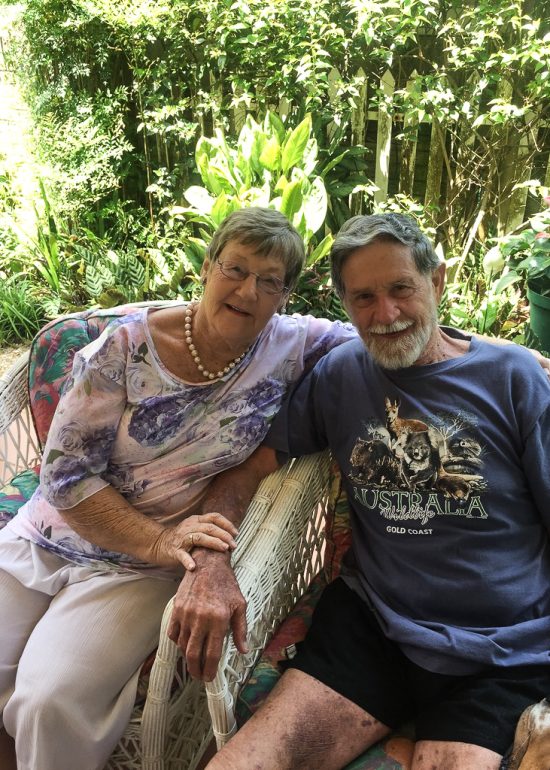
- Fifty-nine years of happy marriage, during which he and his wife raised four successful, capable sons – who have since built wonderful families of their own – despite the pressures and uncertainties of running a consulting practice.
- The thousands of transport professionals whose careers were shaped and strengthened through the RAU courses he helped to develop.
- The countless policymakers, engineers and transport managers who benefited from his technical clarity, strategic thinking and unwavering commitment to improving the sector.
- The colleagues at NP&A who, under his leadership, built a consultancy grounded in professionalism, integrity and public value rather than profit.
In a sector still battling structural dysfunction, misaligned incentives, failing SOEs and unmet potential, Porée’s work is now more relevant than ever. If South Africa eventually builds a competitive rail system, an integrated freight network, an honest regulatory framework, a modern approach to logistics governance and a functioning cross-border system, it will be building – at least in part – on foundations that he has laid.
A lasting legacy
South Africa’s transport sector has been shaped by many – but very few minds have influenced it as persistently and courageously as Nick Porée’s. In an industry that too often rewards expediency over insight, he stands as proof that integrity, intellect and purpose can still shift the trajectory of a nation’s logistics system. “Practicality, integrity and the fundamental principles of transport economics – that’s what has guided me, alongside a refusal to engage in tenderpreneuring or deals,” he reiterates.
His contribution has been immense; his impact, undeniable; his legacy, enduring. I salute you, Nick, as does South Africa’s transport community.
Published by



focusmagsa