Automation has moved from a buzzword to a logistical imperative, and towing equipment isn’t being left behind…
Global market research and market intelligence organisation Straits Research estimates that the global automated truck loading systems (ATLS) market size will grow at a compound annual growth rate of 8.9% from 2025 to 2033.
“The global ATLS market size was valued at US$2,982.53 million in 2024, and is expected to grow from US$3,247.97 million in 2025 to US$6,843.34 million by 2033,” it highlights in its report “Automated Truck Loading System Market”.
“The increasing demand for automation in high-volume industries is a significant driver of the ATLS market. Sectors such as e-commerce, manufacturing, and retail require swift, precise, and efficient logistics to manage large volumes of goods, making automation essential,” Straits explains. “By automating loading and unloading processes, businesses can reduce labour costs, speed up operations, and minimise human error.”
The practical benefits of ATLS are perhaps best illustrated through the success story of Four Hands, an international furniture designer and wholesaler, which has achieved remarkable operational improvements through automation. It has recently partnered with US-based Slip Robotics and deployed SlipBots across multiple facilities – increasing throughput fourfold and slashing trailer loading and unloading times, as well as product touches.
Before SlipBots, loading and unloading trailers posed particular challenges, with eight to 10 people requiring up to 90 minutes to complete a single trailer by hand. The need for a solution was clear: automation that could handle a massive stock-keeping unit mix without requiring extensive IT integrations or infrastructure changes.
“Moving heavy products across eight buildings was creating significant wear and tear on our employees and processes,” explains Jim Anderson, chief operating officer at Four Hands. “It’s a Tetris puzzle of being able to efficiently load and unload between those facilities, and you can’t solve all your problems by just throwing people at the situation.”
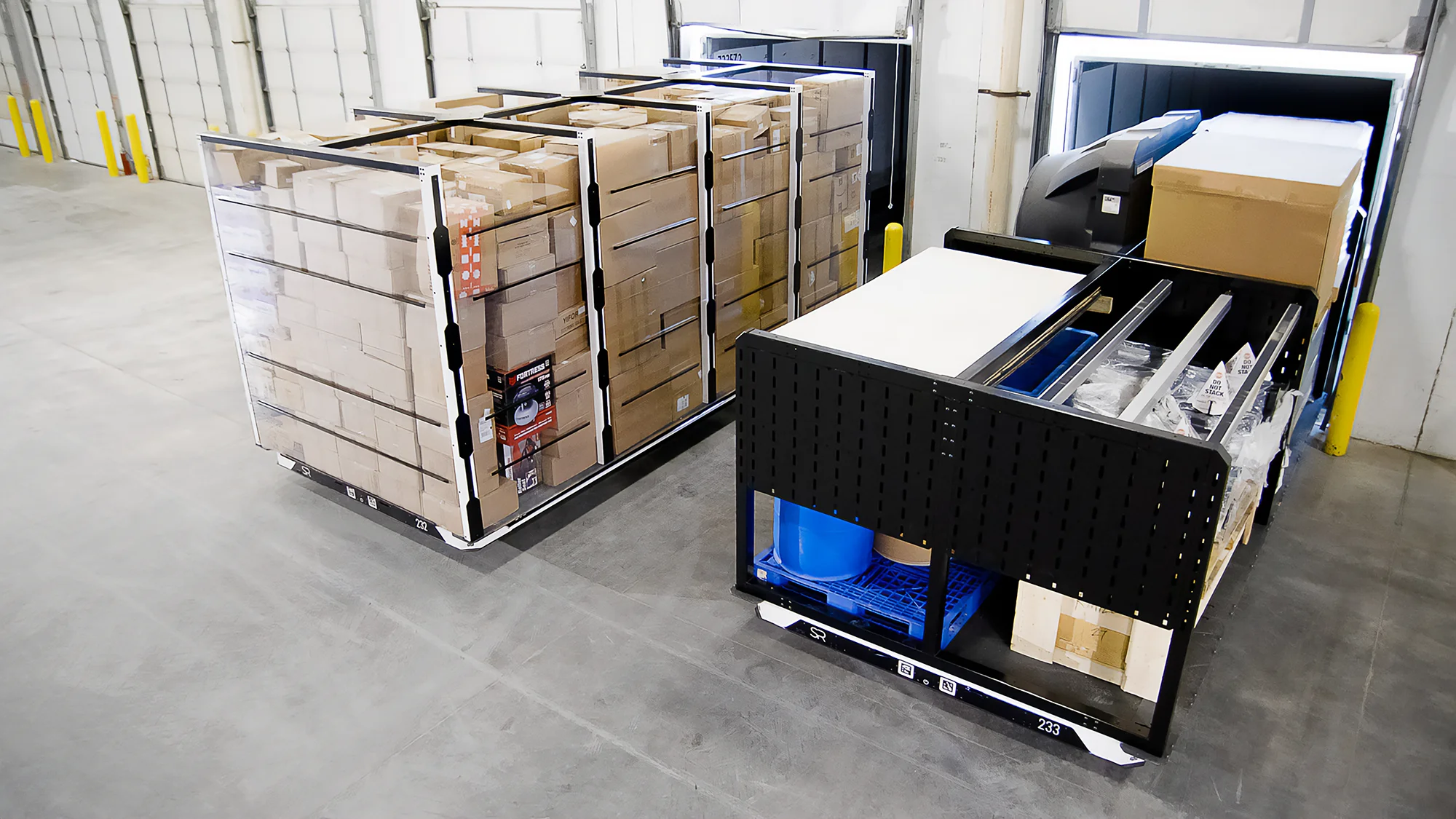
Slip Robotics addressed these challenges by deploying its omnidirectional SlipBot loading robots – a solution designed to simplify operations while improving both speed and safety. They are designed to carry up to eight full pallets and a total of 6.6 tonnes, and autonomously drive into a trailer for transport to the next destination. Here, the SlipBots can exit onto the dock for unloading and loading, while the next three units (the number of bots that can fit in a typical tractor-trailer) can board for immediate departure.