IToY turns 50: These were the first five winners
IToY turns 50: These were the first five winners
The International Truck of the Year (IToY) is 50 years old! In celebration of this, RICHARD STANIER is paying tribute to all the winners over the years.
In this first instalment, we take a look at the first five winners of the IToY award.
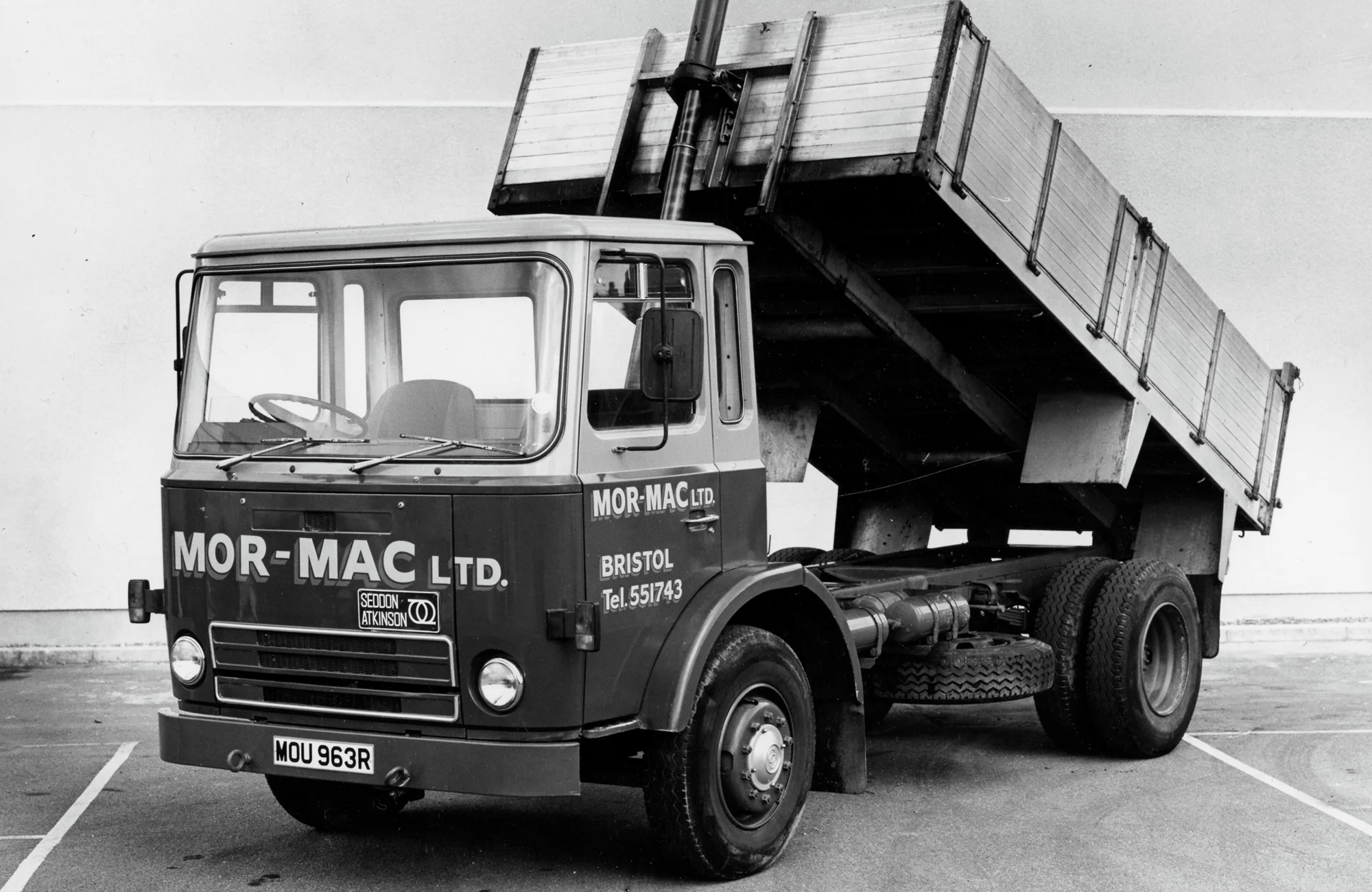
1977: Seddon Atkinson 200
Seddon Atkinson had a real winner on its hands when the heavy-duty 400 Series started to enter service in 1975. Within a couple of years, these trucks had secured 17.5% of the British over-28-tonne market and the manufacturer turned its attention to the rigid 16-tonne market, where Seddon vehicles had traditionally been popular.
The first 200 Series prototypes were unveiled in 1975, with full-scale production commencing in the Spring of 1976. Sharing some chassis components with its larger stablemate, the 200 also featured common cab press pressings for the scaled-down cab, which in its day was regarded as luxurious for a British truck of this weight.
An early supporter of the new truck was Pat Kennett, the legendary first editor and co-founder of TRUCKmagazine, who announced the 200 as the inaugural Truck of the Year in January 1977. Whilst not explicitly describing the criteria used for the award, careful consideration was given to several other contemporary vehicles, with Kennett single-handedly confirming the winner. Seddon Atkinson’s mischievous marketing people lost no time at all in exploiting the win with an advert reading, “We’d like to thank British Leyland, Chrysler, Bedford, Fiat and Mercedes for making it all possible.”
In hindsight, the 200 was a relatively conventional vehicle marked out by a much-improved cab – supplied by Motor Panels (Coventry), which had produced the earlier Seddon cabs – and an unconventional choice of engine in the International D 358. With Seddon Atkinson being under International Harvester ownership since 1974, the engine choice might have seemed a matter of expediency, but officially the men from Oldham rejected the traditional Perkins in favour of the higher power anticipated for 17-tonne operation.
With a design dating back to 1965, the German-built engine was well-proven in agricultural tractors operating overseas and the 6.8-litre, 134-hp (100-kW) naturally-aspirated six-cylinder had a longish stroke and a usable power range between 1,000 and 3,000r/min, with a cruising speed of 60mph (97km/h) at 2,600r/min. Unusually for such a wide power-band, a rev-counter was not included in the instruments, leaving the driver to hone their hearing skills.
The engine was matched to an Eaton five-speed constant mesh gearbox driving a 10.5-tonne single- reduction axle, and an Eaton two-speed axle option was added shortly after introduction. There were three wheelbase options: a 3.8-m tipper, and two haulage variants at 4.5 or 5.6m.
With no alternative engine, transmission or cab options, and only offered as a 16-tonne vehicle, the 200 seems an odd winner from a modern perspective, but the truck was a popular choice at the time, albeit the International engine never fully gained market acceptance, with questions over its performance and reliability. The revised 201 model was announced in September 1982 and by December 1983 this was offered with a turbocharged Perkins engine.
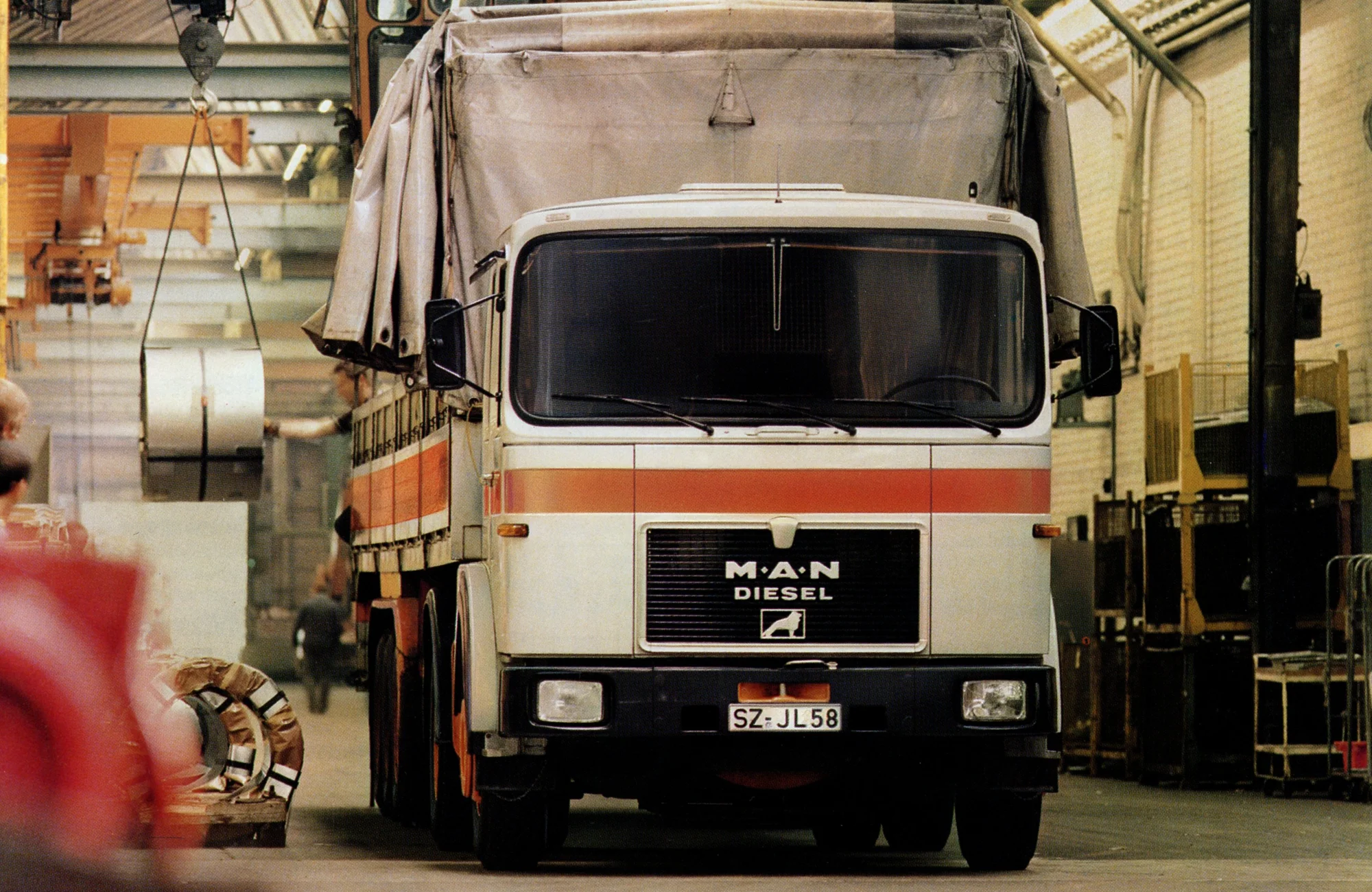
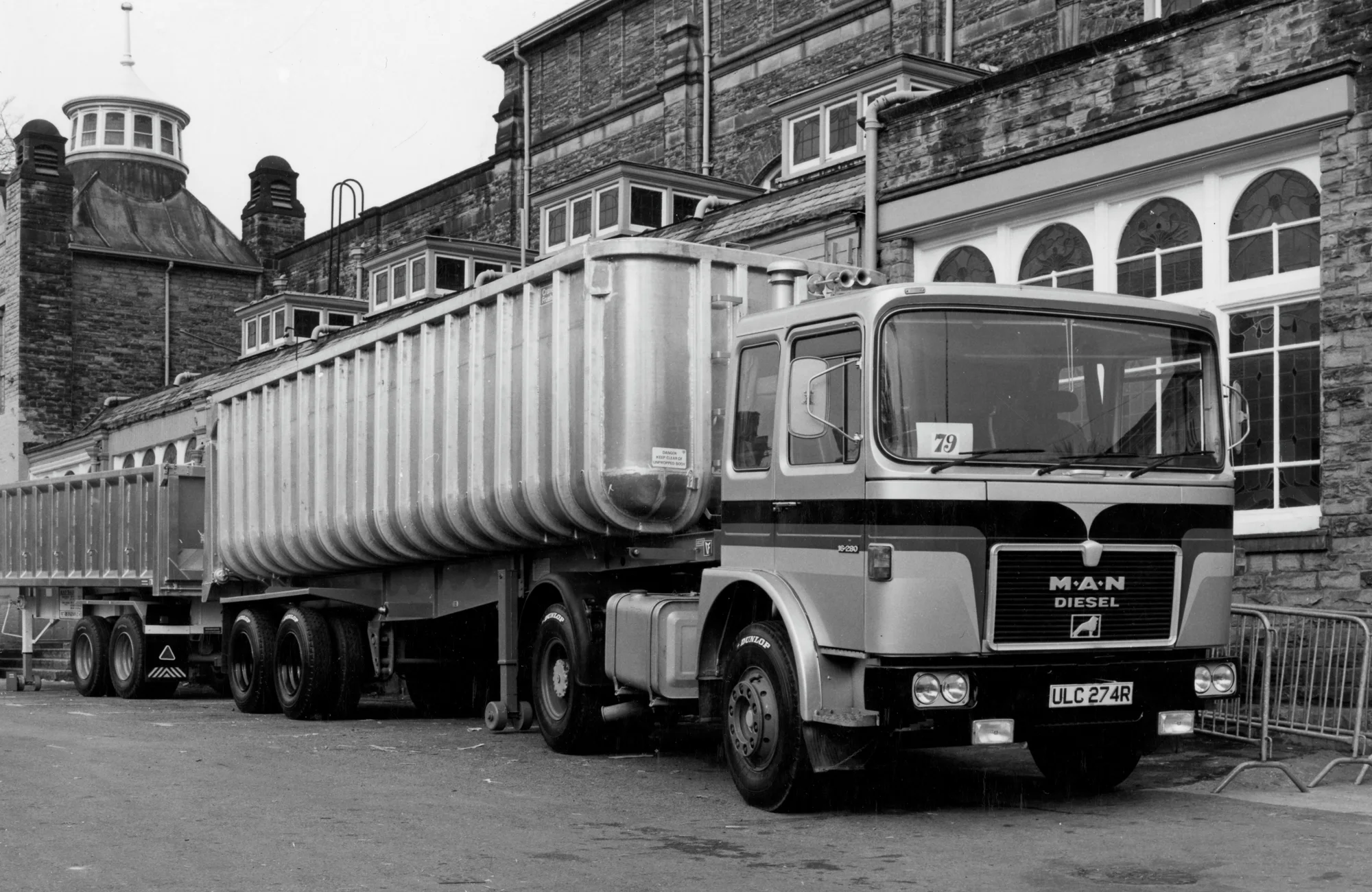
1978: MAN 16.280
MAN was still a relatively new name in the British market when the 280 was announced as the Truck of the Year for 1978. The naturally aspirated 16.232 had been offered since 1974, but the design improvements made to the new model really caught the judges’ attention.
For the second award, Pat Kennett recruited some European expertise and opinion with the inclusion of technical experts from the Netherlands, Denmark and two from Germany, with Kennett acting as the foreman of the jury. At this time, these four countries were responsible for 70% of road freight carried in the European Economic Community. The judging criteria was also further refined so that only new models available on the market in the preceding 18 months were admissible. These were awarded points based on operating performance, engineering excellence and cost.
So, in January 1978, the MAN 280 was announced as that year’s winner with 29 points, having – perhaps unexpectedly – beaten the new Volvo F10/F12 range by two points. Whilst the Volvo’s cab was afforded high praise, the truck was regarded as “over-engineered for many users” leaving the MAN to take top spot with, “An unspectacular formula giving great reliability and high operational efficiency.”
Much thought had certainly gone into MAN’s design. The new D.2566MTF engine was a turbocharged development of the existing 11.4-litre straight-six with a longer stroke and new crankshaft. The 280-hp (209-kW) engine was governed to 2,200r/min and retained MAN’s M-System spherical combustion chamber with new oil-cooled pistons and improved inlet ports and water circulation. During 1977, about one third of all MAN trucks, and half of MAN tractors, were 280-powered, with the new model being nicknamed “The Whisper Truck” on account of its quiet running.
The 13-speed Fuller Roadranger with column-shift was selected as the optimum transmission for the new engine, but a ZF option was available in markets with a high resistance to constant mesh designs. MAN’s hub-reduction rear axle was the standard fitment with either 4.64, 5.22, 5.94 or 6.73 ratios, but the top two were most common for on-road work. The British version of the truck was the 16.280 with an 11-tonne rear axle, whereas a 13-tonne axle was specified on the European 19.280 variant, which was also offered with full air suspension.
Remarkably for a Truck of the Year, the Saviem-designed cab was over a decade old in 1978. But, in testimony to its advanced design, it was still an excellent workplace in the late 1970s, with a very good interior build quality and MAN’s engineers had redesigned the dash panel for optimum visibility.
No truck is perfect though, and a 1977 Commercial Motor test, although generally very favourable, found the 16.280 be thirsty on part-throttle running at 40mph (64km/h) and better-suited to hard work on motorways.
1979: Volvo F7
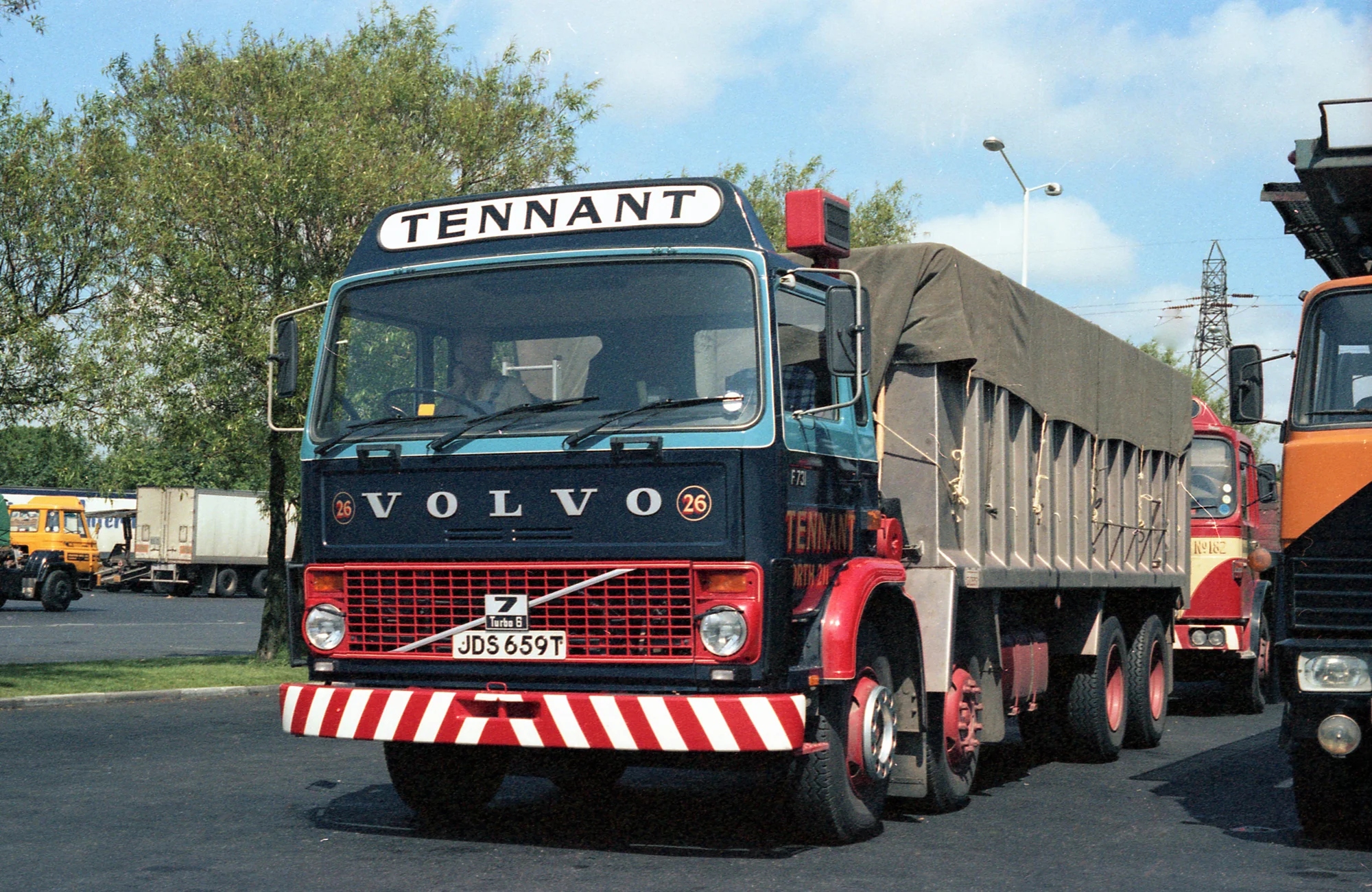
The Volvo F86 was a very tough act to follow, but the F7 stepped up to the mark admirably and completed the renewal of the entire Volvo truck range which had started five years earlier with the N Series.
For 1979’s award, jurors were recruited from Belgium, Norway and Sweden to increase the national representation to seven north-western European countries. The assessment criteria spanned design, engineering, styling, serviceability, repair costs, operating cost, service support and work capacity, and the Volvo F7 emerged as the clear winner. The 18-month qualifying period also meant that 1977’s F10 was still eligible, and that truck took second place, having been pipped at the post in 1978 by MAN.
The F7 was the first truck to win the IToY award with an entire range of vehicles, rather than a distinct model or designation. Despite the range covering two-, three- and four-axle rigids and two-axle tractors over the 16- to 36-tonne weight segments, there were only two engine, cab and gearbox options specified – typical of the production programmes of the day.
The F7 was a masterclass in component development, with its driveline, chassis and cab all being adaptations of earlier, proven parts. The TD 70 6.7-litre engine retained the bore and stroke measurements of the F86’s TD 70E, but gained oil-cooled pistons, a higher-capacity oil pump and an improved head design to become the 202hp (151kW)-rated TD 70G. The TD 70F employed air-to-air charge cooling to develop 224hp (167kW).
Transmission was provided by the R52 eight-speed range-change synchromesh gearbox, which made greater use of roller-bearings for long life in preference to the ball-bearings used in the F86’s R51. The larger R62 gearbox was standard in the double-drive eight-wheeler, supplemented with the option of a 16-speed splitter. The rear axles were also developments of earlier designs and shared with the F10.
The F7’s cab was a development of the “Club of Four” model, sharing rear and side panels with Renault’s enlarged Club design, and was very well-appointed in traditional Volvo fashion with a stylish brown carpet and cloth interior. Offered as a short day-cab or a longer “rest cab”, the vehicle was regarded as quite spacious within its limited dimensions.
Interestingly, the F7 appealed to the judges across a range of European segments, from a high-powered distribution truck in Scandinavia to a longer-haul 36-tonner in the Netherlands. Britain’s preference for 6×4 tippers and eight-wheelers led to the development of these models at Irvine, as part of the Volvo programme rather than as an adjunct to it.
The F7 proved to be hugely successful in Britain and even appeared as a 38-tonner with the 243-hp (181-kW) TD 70FS engine in 1983. At the time of its replacement with the new FL range in 1985, the F7 was still contributing over a third of Volvo’s British sales without any significant revisions or even a major facelift.
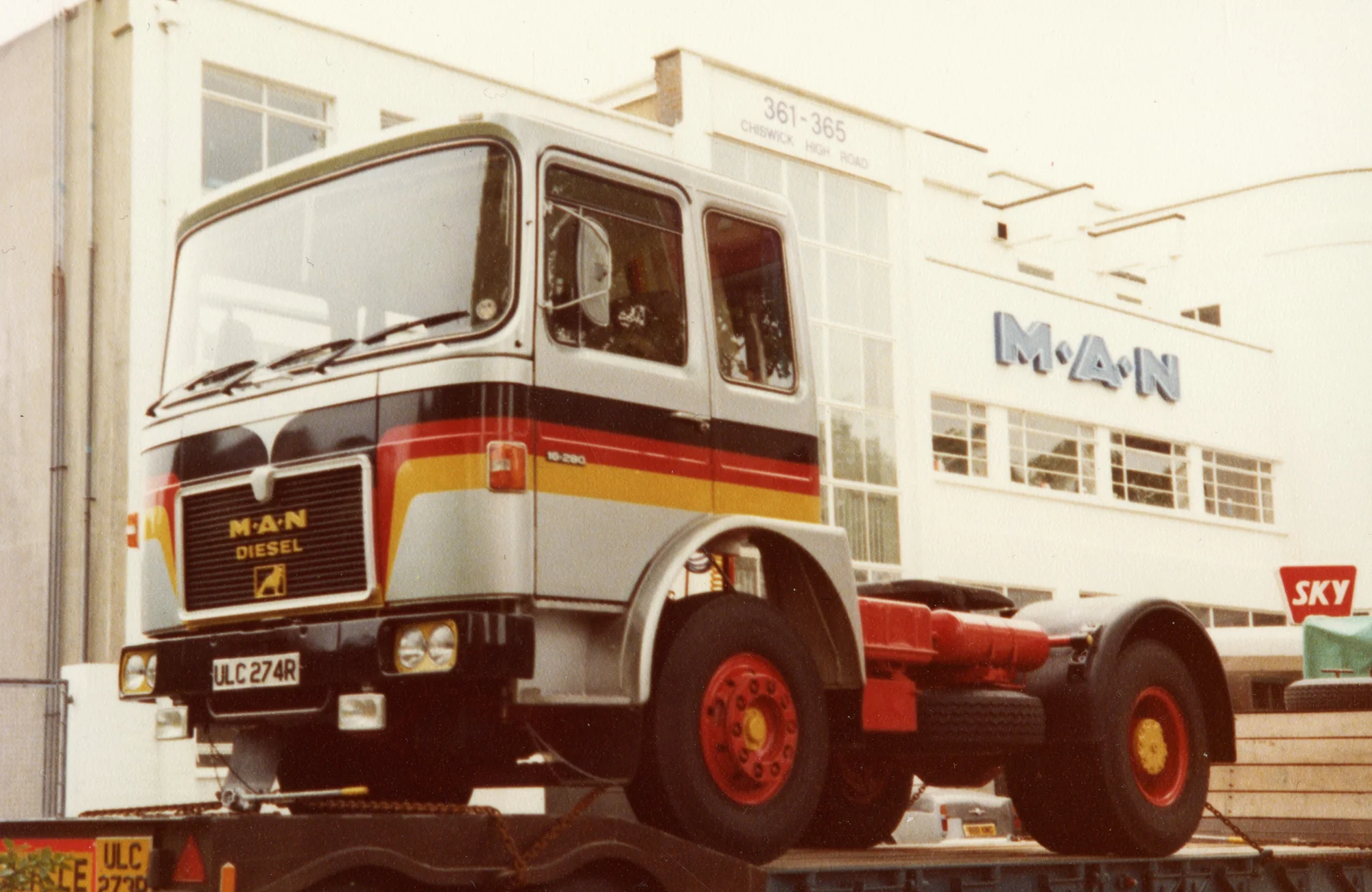
1980: MAN 321
MAN’s second win came within two years of its first, with the victorious 321 model essentially a development of the earlier 280. 1980’s runners-up were the DAF 2800 DKSE – an economy-tuned variant of the long-serving 2800 which wasn’t available in the UK at that time – and the Fiat Daily, which punched above its weight from the light truck sector.
MAN’s trump card was the new 320-hp (239-kW) six-cylinder D2566MK engine, which caught the jury’s attention with its tuned induction resonance system and intercooler. Improving turbocharger output and fuelling produced the required increase in power, whilst an intercooler reduced the air charge temperature to 50°C. The induction resonance system was designed to overcome the then-common obstacle of turbo-lag and low torque production at low engine speeds.
Essentially, the MAN system used an impulse charge system to draw a greater volume of air into the cylinder at around 700 to 900r/min. The incorporation of a balance chamber provided the advantage of drawing air from a relatively still source, rather than from a fast-flowing stream.
The new technology won plaudits for its ability to generate greater torque at low speeds than any other 11.4-litre engine of the day, with the added bonus of the thorough combustion system resulting in very clean running. This was quite a leap forward from the earlier MAN D2530 engine, which had developed 330hp from its 16 litres and 10 cylinders.
In contrast to 1979’s winner (Volvo’s F7), the MAN 321 was an improved model within a range, rather than a new range in itself, and was typically seen in Europe as the 19.321 4×2 tractor, or as a three-axle truck for drawbar-trailer operation. British operators had to wait until October 1982 to buy the 16.321, following its launch at that year’s Motor Show. By this point the earlier 280 model had also received charge cooling and resonant induction to become the 16.281, and the engine technology eventually spanned the 170 to 360hp (127 to 268kW) output range marketed under the “MAN System Six” name.
The 321 bowed out in September 1985 with the introduction of the new 12-litre D2866-powered 331, which dispensed with tuned induction resonance in favour of more conventional induction and a modified fuel injection system.
Constant mesh transmission was retained in the form of the 13-speed Fuller RTO 11613 Roadranger, but now with a floor-mounted gear lever, mated to the MAN H7 hub-reduction axle rated at 11 tonnes in Britain and 13 tonnes on the continent.
MAN was the first manufacturer to fit the new generation of lower-profile Michelin XZ Pilote tyres, which had the approximate height of an 11.00 tyre but with a weight-carrying capacity of a 12.00. These were fitted as standard on all new 321s.
The 321 bowed out in September 1985 with the introduction of the new 12-litre D2866-powered 331, which dispensed with the tuned induction resonance principle in favour of more conventional induction and a modified fuel injection system.
1981: Leyland T45
The fifth IToY winner was the second from Britain: Leyland’s “make-or-break” T45. However, unlike 1977’s Seddon Atkinson, which had been hand-picked by Pat Kennett, the panel now consisted of judges from 10 Western European countries.
1980 had been a strong year for truck launches, and the Leyland win was claimed by a two-point margin over some impressive competition from the Fiat 170, Volvo F12F and Mercedes-Benz 1628.
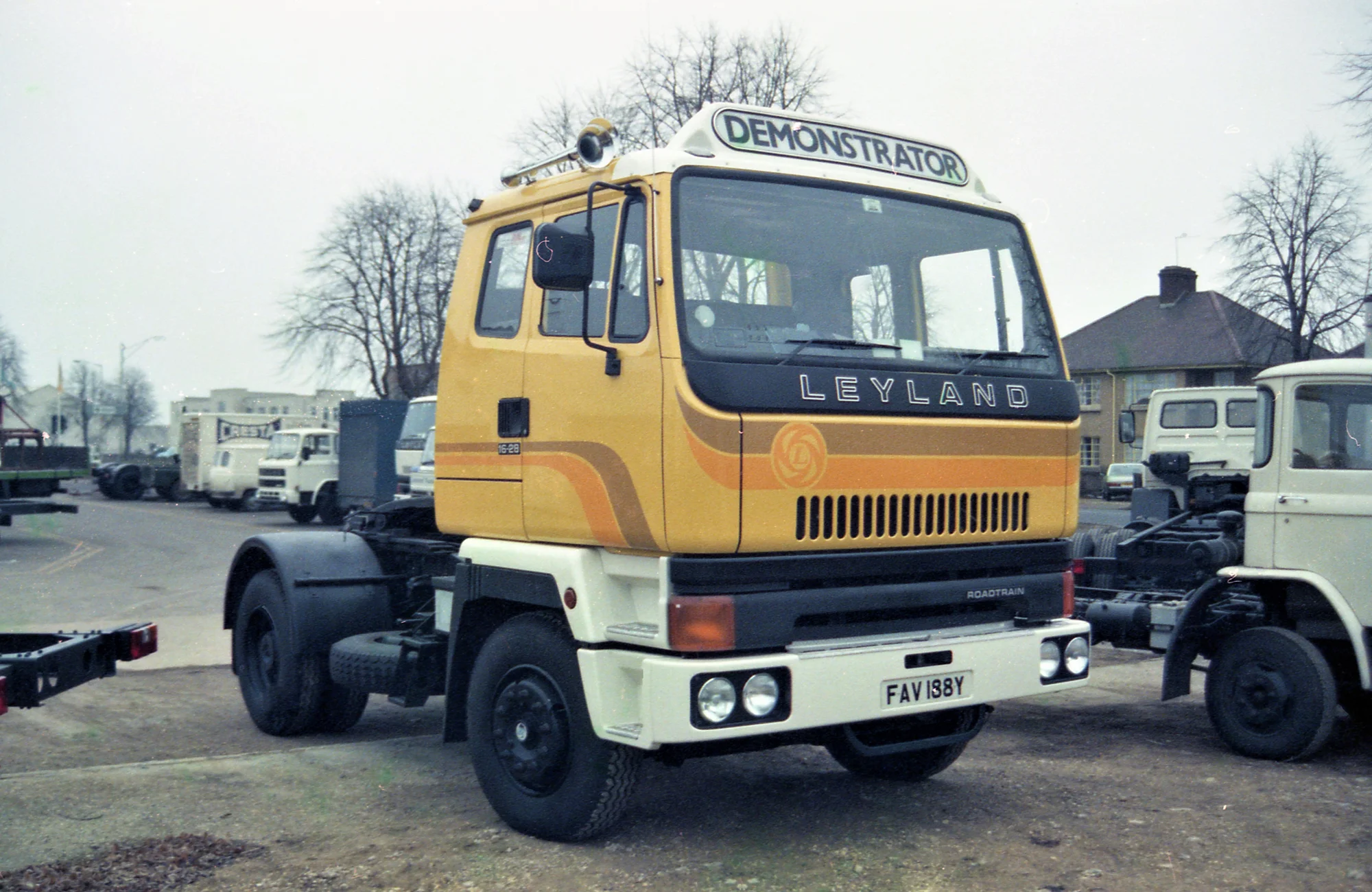
The Leyland’s ability “to make a major contribution to the efficiency of the transport of goods by road” was achieved with a combination of the new cab design, efficient running in early fleets, serviceability, reliability and a “well-balanced mechanical specification”. Officially launched in February 1980, the Roadtrain – as the T45 tractor unit became – was a replacement for the stopgap Leyland Marathon and retained that model’s engine and rear axle in its first incarnation, the 16.28.
The modern new cab was designed by Leyland’s Bill Lowe, styled by Tom Karen and his team at Ogle Design and built by Motor Panels (Coventry). The C40 cab (as it was designated) had a strong theme running through it, with the door handles, grille apertures, dash recesses and floor mat patterns all conforming to a similar style, with a non-aggressive overall appearance. Extensive thought was also applied to the interior fittings, colours and materials.
The cab featured a high degree of practical advantage, with a claimed 30% reduction in drag compared to other full-width European designs. A comprehensive modular system permitted production of a combination of three heights, two widths and three lengths.
In contrast to the Marathon, the T45 project received adequate funding despite the voracious appetite for cash from British Leyland’s ailing car division, and the new truck marked the culmination of a heavy-truck rationalisation programme over a decade in the making. A brand-new facility – the Leyland Assembly Plant – was built in 1979 for the commencement of full-scale production in 1980.
The initial Roadtrain 16.28 was in some ways an odd choice for the launch vehicle, being offered with the lower-cab in short form with a solitary engine specified – the Leyland 12.47 litre, 281-hp (210-kW) TL12. The adoption of the Spicer SST10 10-speed gearbox in place of the ubiquitous Fuller Roadranger on the grounds of the former’s cost and weight also raised eyebrows.
By mid-1980 the Cummins NT250 and Rolls Royce 265L were on the options list, followed shortly by the full-sleeper high-datum cab, initially with the TL12 engine. By early 1981 high-datum models were on the market in mainland Europe, although these took the Fuller transmission, and by the end of the year domestic buyers could acquire the high-cab models with the popular Cummins E290 motor.
The Roadtrain was possibly the right truck, but it came at the time of a catastrophic collapse in the heavy truck market in 1981, creating a mountain to climb in the recovery of development costs. The truck never lived up to its potential in Europe – but it was a stalwart of British haulage in the 1980s.
- The original version of this article was published in Commercial Motor magazine and hence it contains a number of references to the British market. We have not removed these references because we believe that our South African readers will find them interesting. We will continue this series in the next issue.
Published by

Focus on Transport


focusmagsa