International Truck of the Year turns 50: These were the winners from 2007 to 2011
International Truck of the Year turns 50: These were the winners from 2007 to 2011
The International Truck of the Year is 50 years old! To celebrate, RICHARD STANIER is paying tribute to all the winners over the years.
In previous issues of FOCUS, we explored the winners from 1977 to 2006. Now, here are the winners from 2007 to 2011.
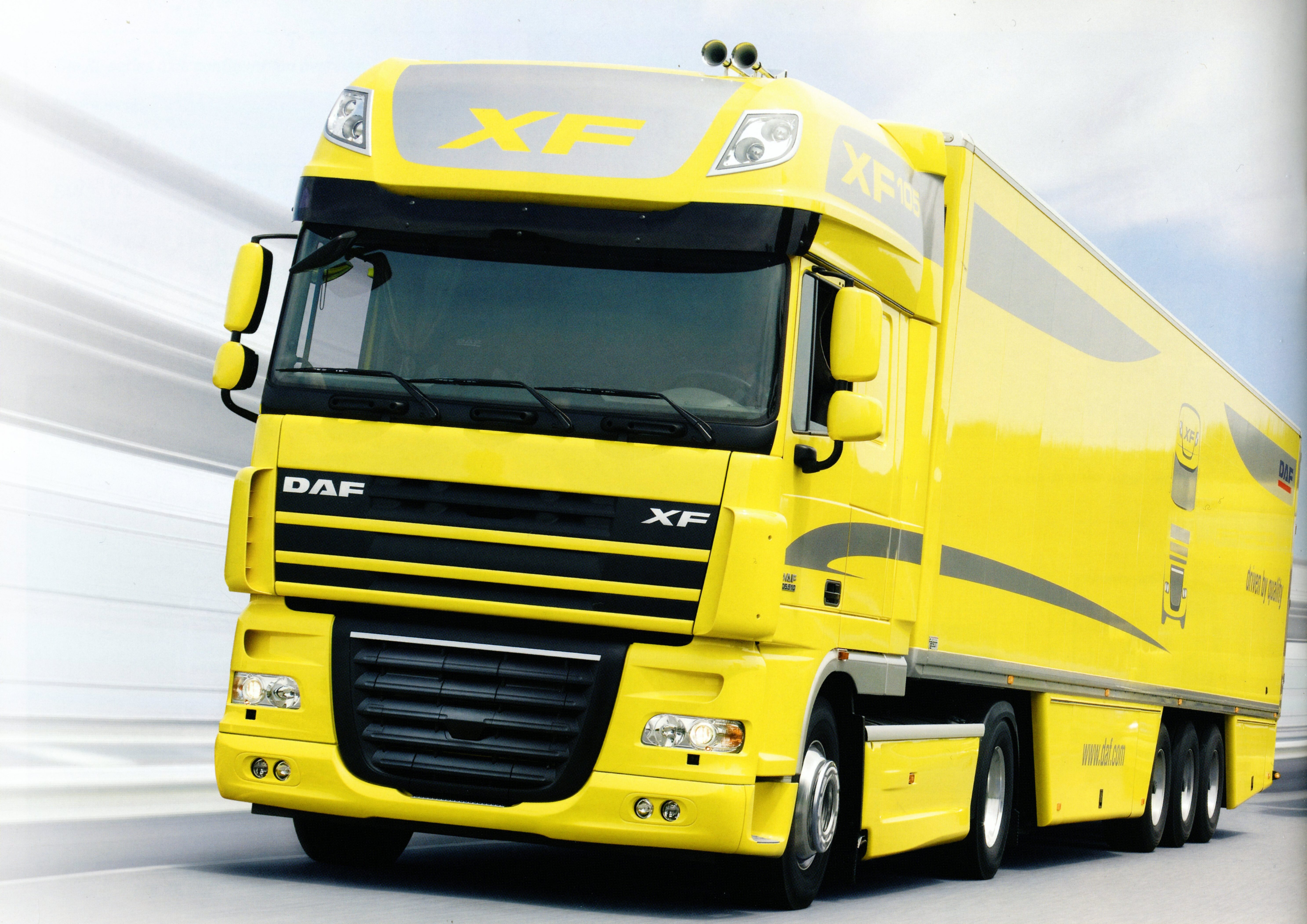
2007: DAF XF105
In 2007, DAF repeated the formula adopted by the original 95XF that won the 1998 competition – a new engine and revised cab with sufficient vehicles in operational service to underwrite the judges’ decision.
The DAF XF105 was the very definition of an evolutionary design, being the product of operator feedback and legislative requirements to retain its position among Europe’s elite. A development of 2002’s XF95, the XF105 was unveiled at Amsterdam’s RAI show in October 2005.
The cab received a significant interior makeover with an engine tunnel that was 150mm lower, new trim and storage, a new steering wheel and a new dash display. Controls for the optional AS-Tronic automated transmission were incorporated into the steering column, with the auto-selector repositioned on the dash, while the gearstick for the manual gearbox could be folded away. The under-bunk pull-out drawer and fridge, the pulley system to raise the top bunk and the bunk’s fold-down steps also won approval.
Externally, the new DAF benefited from more generous mirrors, with a 50-mm increase in width offered with the new four-piece arrangement. The previous mirror arrangement had been identified by drivers as insufficient, and the new set-up featured an aerodynamic design and the option of colour-coding.
The lower grille was restyled so that it extended further into the bumper to afford greater airflow, and an aluminium strip was added to the top to indicate compliance with Euro 4/5 emission standards. The new bumper design featured optional cat’s-eye combination lights and Xenon headlamps. The upper grille also received a makeover, with cleaner lines introduced.
Super Space Cab models came with an entirely revised and slightly higher roofline, with a more streamlined profile into which optional “skylight” halogen spotlights could be integrated.
The onset of Euro 4 emissions standards led to the introduction of the new 12.9-litre MX engine, which was a four-valve-per-cylinder design with a compound graphite iron block. The six-cylinder engine featured a one-piece head with integrated inlet manifold, while the oil filter, thermostat and cooler were integrated into a single lubrication module. The MX was claimed to have 25% fewer parts than its 12.6-litre predecessor and relied on selective catalytic reduction (SCR), leading to the repositioning of the air tanks inside the chassis rails to make space for the AdBlue tanks.
Surprisingly, the MX engine was rated at either 410hp (306kW), 460hp (343kW) or 510hp (380kW), representing a 20-hp (15-kW) reduction on the outgoing models. This was countered by improved torque of 2,000Nm, 2,300Nm or 2,500Nm, available between 1,000 and 1,400r/min, which greatly improved the efficiency of the optional engine brake. With synthetic oil and a centrifugal filter, service intervals were extended to 150,000km.
The new DAF won the 2007 IToY with 86 points, knocking the Renault Premium Route into second position on 61 and the Volvo FL into third spot on 31. At the time of the award presentation at Hannover’s IAA in September 2006, more than 12,500 XF105s had already been sold.
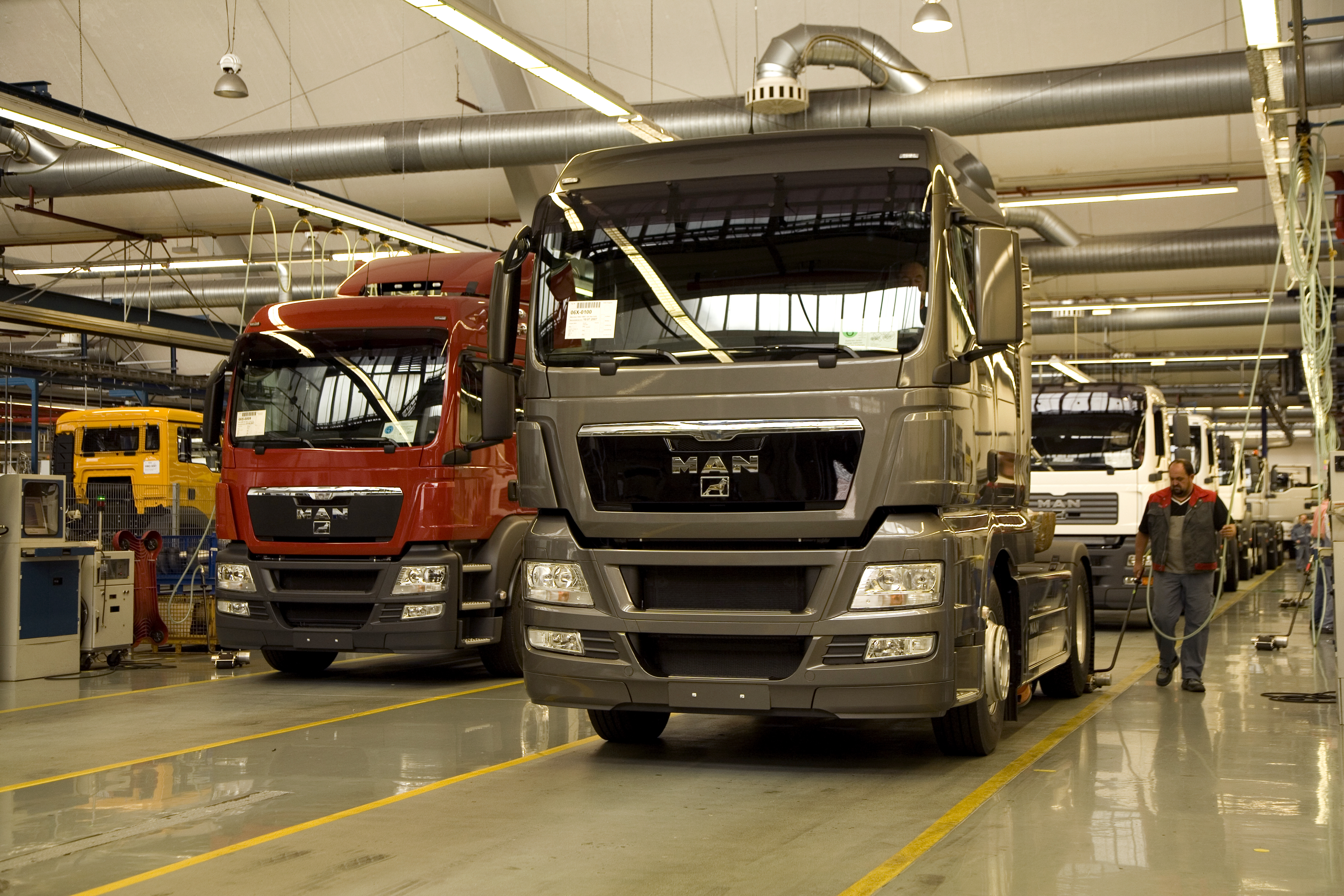
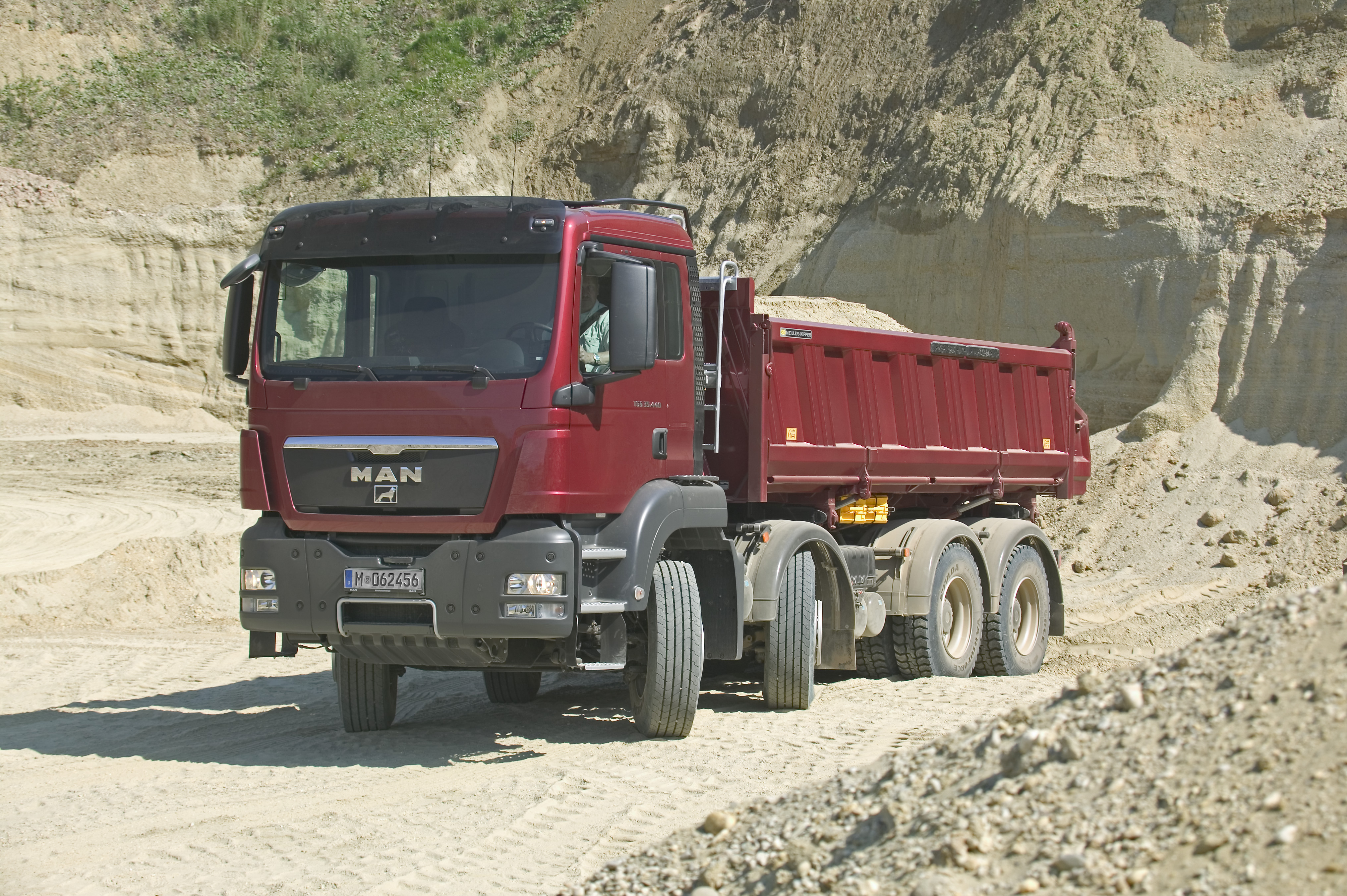
2008: MAN TGX and TGS
MAN’s success in winning the 2008 IToY competition marked an unprecedented seventh win for the German manufacturer, cementing a victory for six generations of new heavy trucks introduced since the 1980s, with the lightweight TGL thrown in for good measure.
Far from being a one-horse race, the MAN faced stiff competition from the Renault Premium Lander and Iveco’s revised Stralis, but the 20-country-strong panel of judges allocated 111 points to the TG range, with 77 for Iveco and 55 for Renault.
The new MAN TG series was a three-part proposition. Firstly, it was a replacement for 2001’s winning TGA range in European markets, with the older model renamed WW, or “Worldwide”, and production transferred to Poland for export to non-European markets.
Secondly, the new-generation “Trucknology” models were differentiated from their predecessor by being split into two distinct ranges based on their cab sizes: the narrower-cabbed models forming the TGS part of the range and the wider-cabbed vehicles becoming the TGX range. These featured relatively modest engineering updates matched to a significantly improved cab.
Thirdly, the TGX range saw the introduction of a new flagship model in the form of the mighty 680-hp (507-kW) V8, which was Europe’s most powerful road truck at the time.
The TG Series was announced in June 2007, with production commencing in September – just in time to secure the 2008 IToY prize, which was awarded at the Amsterdam Show in October 2007.
Naturally enough, the new cab received much attention, with the interior restyled using new, more attractive and durable materials, as well as boasting significantly improved storage space. Externally, the cab featured smoother lines and a high-gloss radiator trim which improved the general appearance of the truck, while particular attention was paid to aerodynamic performance. The A-column, roof contour, air deflector, bumpers and mirrors were all redesigned to claim a 2% reduction in fuel consumption and a 13% reduction in interior noise.
The TG Series carried over the D26 12.4-litre and D20 10.5-litre engines from 2004, with ratings of 320hp (239kW) to 540hp (403kW) in the TGS and 360hp (268kW) to 540hp (403kW) in the TGX. Euro 4 engines used an exhaust gas recirculation (EGR) system, with the Euro 5 models initially using an SCR system before the development of a full EGR solution. Both 16-speed manual and 12-speed automated transmissions were offered.
The rear axles received a lighter and more durable connection to the springs, while the TGX received a new single-leaf parabolic front spring and an altered steering ratio that provided a much more positive driving experience.
The show-stopping V8 TGX was powered by the D2868 16.2-litre, 680-hp (507-kW) engine jointly developed with Liebherr and capable of 3,000Nm of torque. This truck featured an SCR system, with the XXL cab standard on 4×2 tractors.

2009: Mercedes-Benz Actros
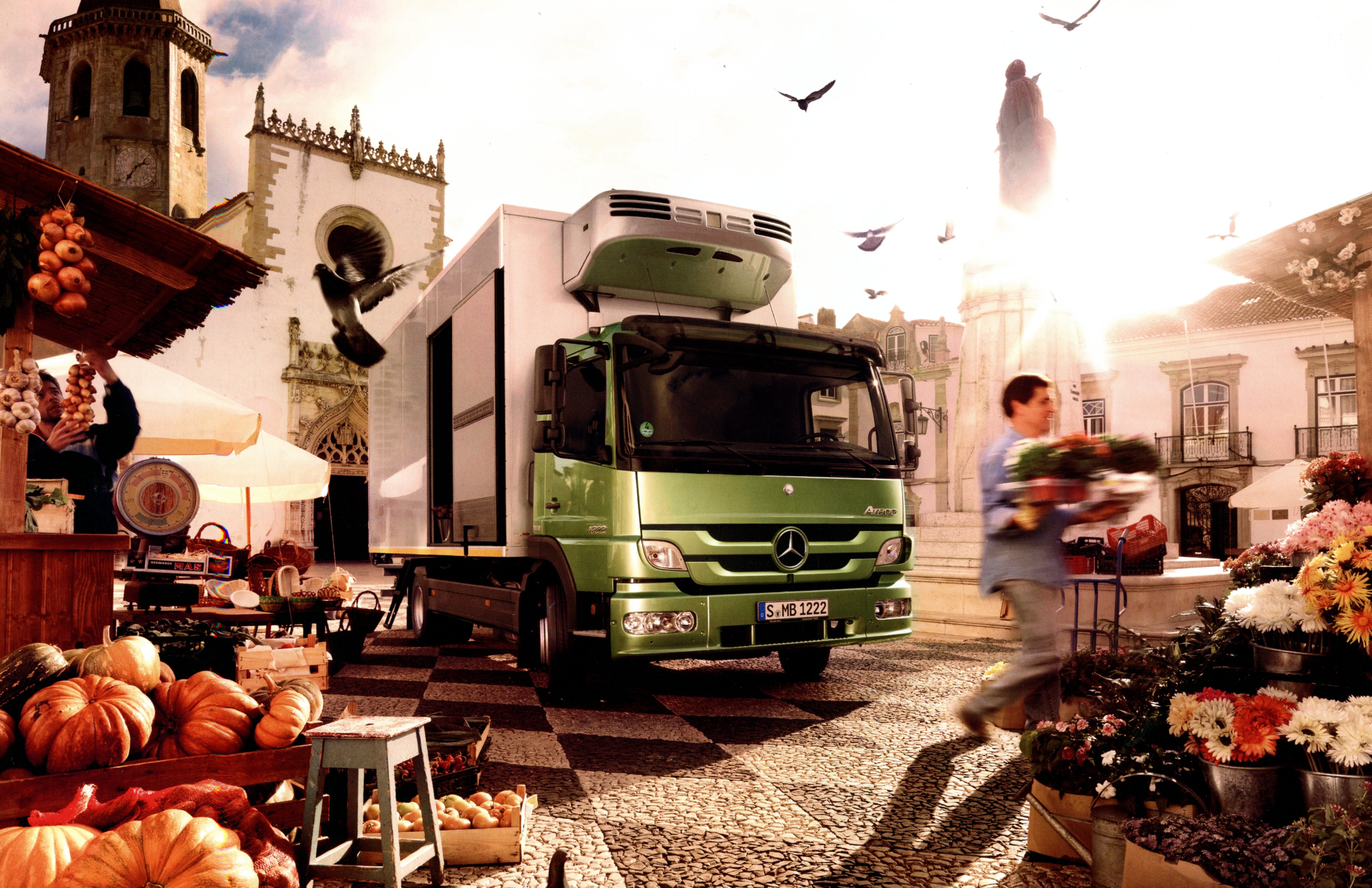
Announced in March 2008, with production of long-haul tractors commencing in July 2008, the Mercedes-Benz Actros MP3 scored an unprecedented third win for the Actros brand, leaving second place to the Iveco EuroCargo and third to be shared between the Scania R-series with EGR and the Volvo FH.
The third incarnation of the Actros was very much an evolutionary rather than a revolutionary design, but a host of improvements ensured that the truck remained at the forefront of technological innovation.
Existing 12-litre V6 and 16-litre V8 engines with SCR technology – called BlueTec 5 by Mercedes – were featured, with the six-cylinder models rated at 320hp (239kW), 360hp (268kW), 408hp (304kW), 435hp (324kW), 456hp (340kW) or 476hp (355kW). Eight-cylinder ratings were 510hp (380kW), 551hp (411kW) and 598hp (446kW). The standard transmission was the automated PowerShift 2 design, which had been available as special equipment since 2006, making the new Actros “the first heavy truck range to be fitted with a 12-speed auto as standard”. The new transmission had faster changes, an “anti-jerk” function and a new “manoeuvring mode”.
An electronic air processing unit was incorporated into the air compressor so that it operated only during periods of low power loss, while a two-stage water pump ran at lower speed during partial-load operation. These two measures in combination were credited with a 1% saving in fuel consumption. A reduced steering ratio was also adopted for improved handling and feel.
A wide range of equipment packages was offered to operators under the Comfort Pack, Safety Pack and Economy Pack options, with basic, classic and top levels. The Top Safety Pack included active brake assist in addition to stability control, lane assist, airbag, proximity control and a Voith retarder. The Actros was the first standard production truck to offer active brake assist as an option.
Externally, the Actros MP3 received a relatively modest restyle, and while the press release’s acclamation that “the new Actros impresses with its dynamism yet also expresses serenity and effortless superiority” may have overstated the case, the new two-bar grille on the lower-mounted cab and three-bar grille on the higher cab certainly made for an attractive-looking machine.
Many of the 37 points outlined in the launch press pack focused on driver comfort and safety, and while some – such as the “new-look key” and optional illuminated Mercedes star – may have been peripheral, many of the others were useful developments. Optional rain and light sensors were borrowed from Mercedes’ E-Class cars, providing another first in a heavy truck.
A battery status indicator was standard as a preventative maintenance measure, in addition to a compressed airgun connection; the airgun was also supplied with construction chassis. The interior received new seat covers and upholstery, while the top bunk incorporated a level-control system so that the bed could always remain horizontal. The lower bunk was also improved with a flexible slatted base. A large swivelling shaving mirror, Bluetooth hands-free system, towel rack, optional auxiliary air-conditioning and a folding table on the passenger side completed the in-cab offering.
2010: Scania R-series
Following Mercedes’ third win for the Actros model in 2009, Scania achieved a second for the R-series in 2010, using a similar formula of proven engines, evolutionary styling, technological enhancements and interior improvements.
The new R Series range was formally announced in September 2009 and took the IToY prize with 114 votes in mid-November 2009 – one of the shortest launch-to-winning periods in the competition’s history. The Volvo FH16 was the runner-up with 60 votes, ahead of the MAN TGL/TGM on 46.
The engine range was already a known quantity, comprising straight-six and V8 options. The 13-litre sixes had been introduced in early 2008 and featured the extra-high-pressure fuel injection system developed with Cummins, with variable geometry turbocharging. Rated at 360hp (268kW), 400hp (298kW), 440hp (328kW) or 480hp (358kW), these engines achieved Euro 5 with EGR only. The V8 15.6-litre engines with SCR were available at 500hp (373kW), 560hp (418kW) or 620hp (462kW) initially, with the 16.4-litre 730-hp (544-kW) unit joining the line-up in April 2010. Scania also offered SCR 12-litre sixes at 380hp (283kW) and 420hp (313kW).
Behind the engine, Scania updated the Opticruise transmission system, finally dispensing with the clutch pedal and introducing new management software for more responsive, smoother performance. A new manoeuvring mode and a rocking function for tippers were added, while a higher geared 2.59:1 axle ratio was offered to enable motorway cruising at under 1,200r/min.



Stylish redesigned side fairings incorporating catwalk steps were added to tractor models, and the batteries were relocated to the rear of the chassis to allow larger fuel tanks of up to 1,500 litres on 4×2 versions.
Externally, the cab received a modest refresh with a larger badge and redesigned grille. The new grille had wider gaps between the bars, and the apertures were tapered at the lower edge. In addition to improving the appearance of the truck, the new design improved airflow to the engine, which would be required in anticipation of Euro 6. The new look extended down to the bumper, which was reworked to accommodate the adaptive cruise control radar.
Inside, the cab received a significant makeover with four optional trim colours and a new dashboard incorporating central storage. Storage in and above the doors was improved and a fold-out table was provided from the passenger glovebox. One of the most welcome changes was the new lower bunk, which was developed into a pull-out design, increasing the width to 900mm and dispensing with the need to use the previous model’s foam infills.
The R Series also saw the introduction of Scania’s Driver Support System, which graded drivers on their hill-climbing, braking and anticipation performance with a star rating via the dashboard. This “innovative learning tool” was one of the measures that appealed to the 22-person jury, alongside the fuel economy, driveability and general efficiency of the vehicle, leading them to declare the R Series a “state-of-the-art truck”.
2011: Mercedes-Benz Atego
In March 2010, Commercial Motor tested a Mercedes-Benz Atego, recognising the 7.5-tonne truck’s ability to simply get on with the job in an efficient manner and noting the model’s strong market position in the UK – routinely being among the top three bestsellers in the weight range.
However, attention was drawn to the ageing design, which had last received a facelift in 2004. Although modern technology had continued to be incorporated, it was recognised that this version of the Atego was reaching the end of its product cycle.
The 2010 Atego rigid range spanned the 6.5- to 16-tonne sector, with a “densely graduated” range of outputs from its 4.25- and 4.8-litre four-cylinder and 6.37-litre six-cylinder engines. The smaller four-cylinder had 129hp (96kW), 156hp (116kW) and 177hp (132kW) ratings, with the larger version rated at 218hp (163kW). The six-cylinder was available with 238hp (177kW), 256hp (191kW) and 286hp (213kW). All the engines were part of the Mercedes BlueTec programme employing SCR for Euro 5, and the 177-hp (132-kW) version was also capable of meeting the enhanced environmentally friendly vehicle (EEV) standard. Environmental and fuel-saving credentials were enhanced with an optional engine stop/start system.
Three six-speed manual transmissions were offered, and these were available with Telligent automated gearshift as special equipment, whilst the models producing 256hp (191kW) and higher had nine-speed manual gearboxes.
In mid-2010, the facelifted Atego was introduced with a prominently revised grille in the Actros MP3 style and a new interior which was said to bring big-truck levels of comfort to the distribution truck driver. With three cab trim variants – distribution, long-distance and luxury – there was certainly something for everyone, and the high-roof version of the L-cab was available with twin bunks. The new steering wheel was pneumatically adjustable and incorporated multifunction controls.
The clever two-piece chassis design, which caught the judges’ eyes for the Atego’s first IToY victory back in 1999, was retained on models up to 11.99 tonnes GVW, meaning that the heaviest models in this part of the range fell beneath the 12-tonne German threshold for road tolls. An optional magnetic retarder was also offered for vehicles in drawbar operation.
Of particular technological interest was the introduction of the first hybrid truck to be put into series production. The Atego 1222 L EV featured a 218-hp (163-kW), 4.8-litre diesel engine with a water-cooled 44-kW electric motor mounted behind the clutch and in front of the six-speed automated transmission. The electric motor could supply power from its lithium-ion batteries when pulling away or during rapid acceleration and was recharged with recuperated energy.
Although the hybrid technology was cited in the IToY chairperson’s citation, its overall cost and weight penalties limited its market potential, and with the introduction of Euro 6 standards it became largely redundant in goods vehicle development. Nevertheless, the Atego enjoyed a slightly unexpected second IToY triumph in 2011 with a total of 127 votes, before being replaced with the new version in 2013. The win was also notable considering the heavyweight Swedish competition the little German had to contend with – Volvo’s new FM range, with the tough FMX included, scored 82 votes, with the mighty Scania R730 in third position on 45 votes.
This article was originally published in Commercial Motor magazine. We have retained references to the British market, because we believe South African readers will find them interesting. The series will continue in the next issue.
Published by

Focus on Transport


focusmagsa