The conflict in the Middle East is sending shockwaves through global supply chains, reports JULIA TEW, with economists, logistics executives and industry leaders warning that the pain is only beginning.
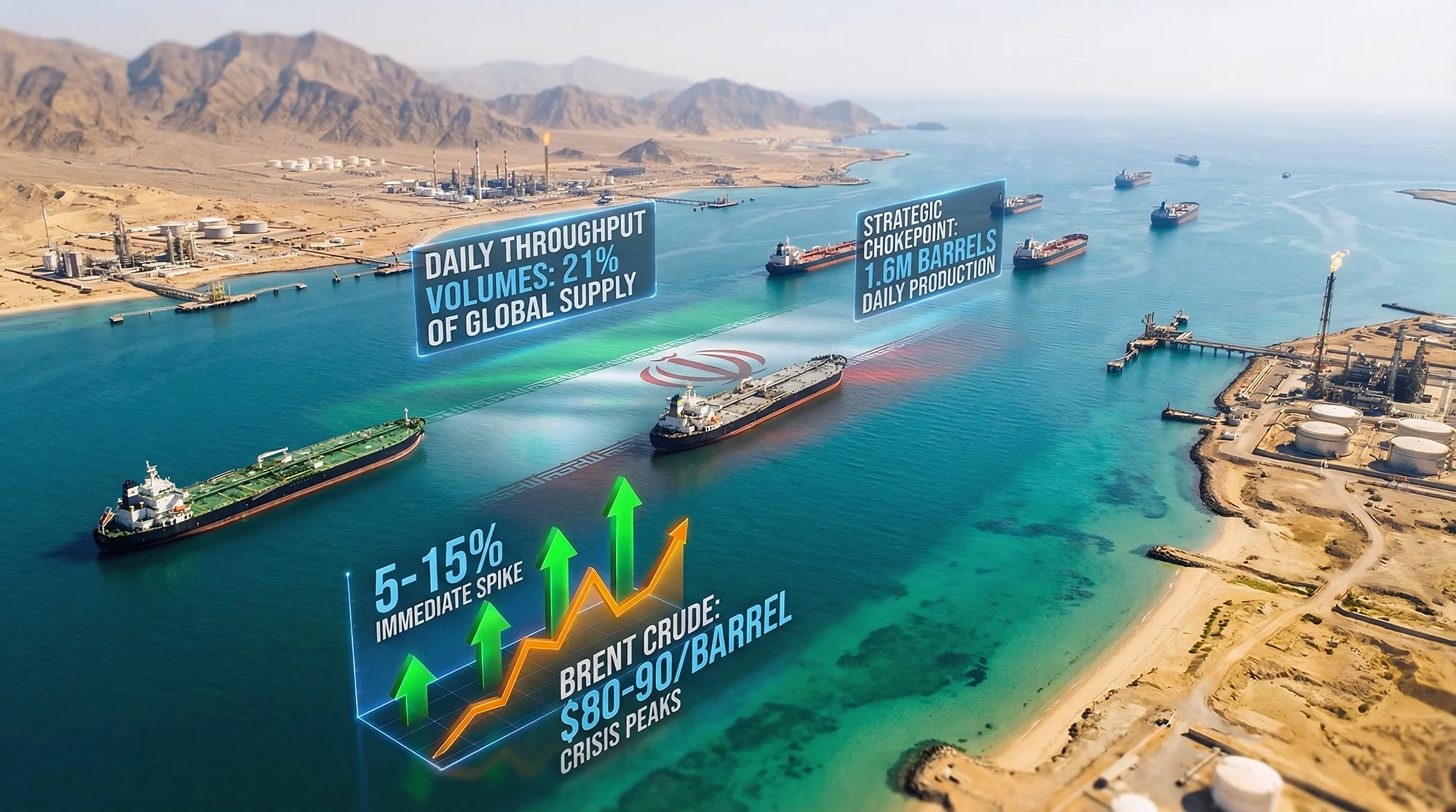
At the heart of the disruption is energy. The war has severed access to roughly 20% of global crude oil and liquefied natural gas, driving oil prices up by 50% and triggering shortages of downstream commodities – from fertiliser to helium. Christopher Tang, a professor of supply chain management at UCLA Anderson School of Management, put it bluntly in an interview with The Guardian: “The good old days are gone. Right now we see the gasoline prices going up, but that is only part of the story. Everything will be more expensive. And when the prices go up, they rarely come back down.”
The effects are cascading across sectors. Shipping costs have surged, with transpacific freight rates rising nearly 30% between late February and early April. Major carriers are scrambling to find workarounds. Karsten Kildahl, chief commercial officer at Maersk, acknowledged the scale of the challenge facing cargo customers in the Gulf: “Together, we are trying to find the best possible solution under these circumstances. This may involve having containers temporarily stored, having them returned, or identifying a new port to which they can be shipped. Our focus is on stability and delivering workable solutions in an unpredictable environment.”
The physical toll on shipping infrastructure has compounded the crisis. The Safeen Prestige, a Malta-flagged container vessel struck in the opening days of the war, has since sunk in the Strait of Hormuz – a chokepoint through which a significant portion of the world’s energy and goods flows.
For manufacturers and consumer goods brands, the disruptions are exposing the fragility of supply chains that were already under stress from tariffs and post-pandemic volatility. Jason Wong, founder and CEO of packaging producer Paking Duck, captured the frustration of many operators: “These black swan events keep coming at us. We just don’t have time to prepare.” Wong notes that, while some brands have stockpiled materials or sought domestic suppliers, a wholesale reshoring of supply chains remains largely impractical – particularly in packaging, where much of the specialist manufacturing capacity simply does not exist outside of China.
The aluminium sector offers another illustration of the compounding pressures. Smelters across the Middle East – responsible for around 9% of global production – have struggled to export, with Bahrain’s Alba declaring force majeure on contracts. Because smelters take considerable time to restart once capacity is curtailed, analysts warn of prolonged shortages feeding into vehicle manufacture, construction and even renewable energy hardware such as solar panels.
Food security is emerging as another front. Rising diesel and fertiliser prices are squeezing farmers globally as logistics costs also climb. Christopher Wolf, professor of agricultural economics at Cornell University, notes that price pressures on groceries are inevitable – and retailers are already moving to get ahead of them. “A lot of the retailers and processors have a rational expectations approach, which is, if we can see it coming, we’ll start adjusting prices up so that it isn’t a big shock all at once.”
Economists caution that even a swift resolution to the conflict would not immediately restore normality. David Bieri of Virginia Tech’s School of Public and International Affairs points out that strategic oil reserves drawn down during the crisis will need to be replenished at elevated market prices: “What we’re seeing now is as these inventories have been depleted, they will need to be filled up again with actually high-priced oil.”
The Dubai problem: when efficiency is vulnerability
Beneath the immediate disruptions lies a deeper structural flaw that industry insiders say has been quietly ignored for years: an over-concentration of global trade through a handful of highly efficient regional hubs.
André Scholle, VP and regional head for India, Turkey, MEA and CIS at ZF Aftermarket, has been watching the crisis expose what he describes as a strategic design flaw. “The unfolding crisis in the Middle East has exposed the structural vulnerability that business-to-business leaders have quietly ignored for years: an over-reliance on single regional hubs, such as Dubai, as the nexus for serving entire continental markets,” he elaborates.
Dubai’s rise as a global logistics hub was no accident. Following a period of relative stability and significant local infrastructure investment, it became the pre-eminent multi-modal re-export gateway connecting European manufacturers to high-growth markets across Africa and Asia. The post-pandemic shift toward Just-in-Time manufacturing – designed to minimise inventory costs – made efficient, uninterrupted logistics essential. The result was a concentration of trade through a small number of nodes, each of which now represents a single point of failure.
The effective closure of the Strait of Hormuz has made that failure concrete. “Customers in East Africa and Asia, traditionally served through Dubai, suddenly needed alternative routing overnight,” says Scholle. This forced companies to reroute cargo around the Cape of Good Hope or absorb the cost of premium air freight and overland trucking.
Scholle prescribes scenario planning, decentralisation and what he calls “information discipline”. Leaders, he argues, cannot afford to let Western media narratives drive operational decisions in complex regional environments. “Ground-level intelligence matters more than headlines to construct resilient strategies,” he emphasises – and while Dubai remains strategically important, he believes the crisis has permanently reframed the conversation. “Whatever happens, the conflict in the Middle East and its impact on global supply chains have reaffirmed the value of a decentralised model and the importance of diversity in locations, with customer proximity creating more resilient logistics networks,” he explains.
Looking further ahead, analysts see the crisis accelerating a longer-term structural shift. As energy economist Robin Mills has observed, the conflict is likely to prompt significant changes: “There will be a lot more desire for self-sufficiency or reliable partners, diversification of partners, diversification of supply chains, alternative materials – obviously a lot less reliance on oil and gas, a lot more on renewable energy.”