Face to face with Jan Aichinger
Face to face with Jan Aichinger
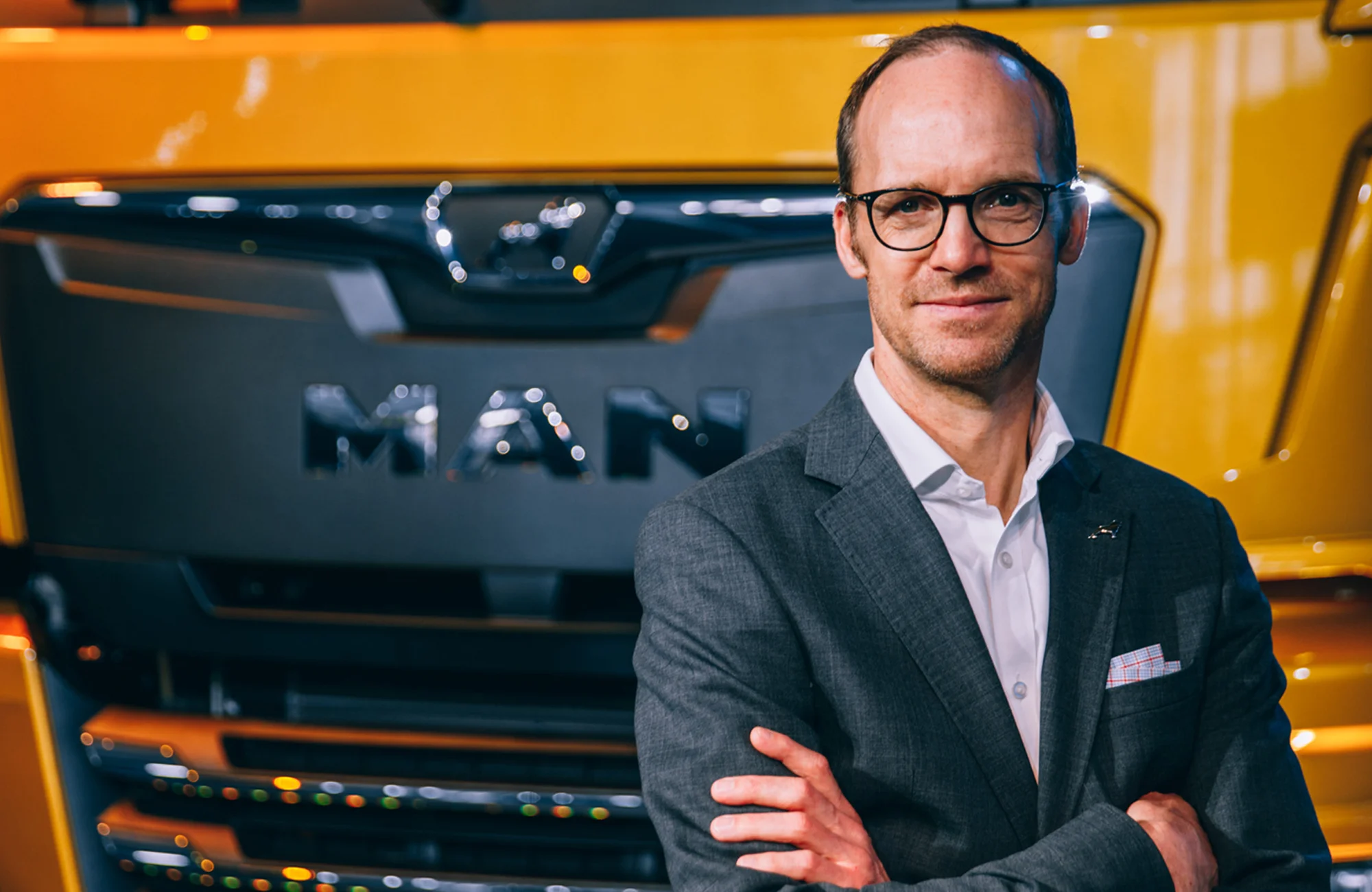
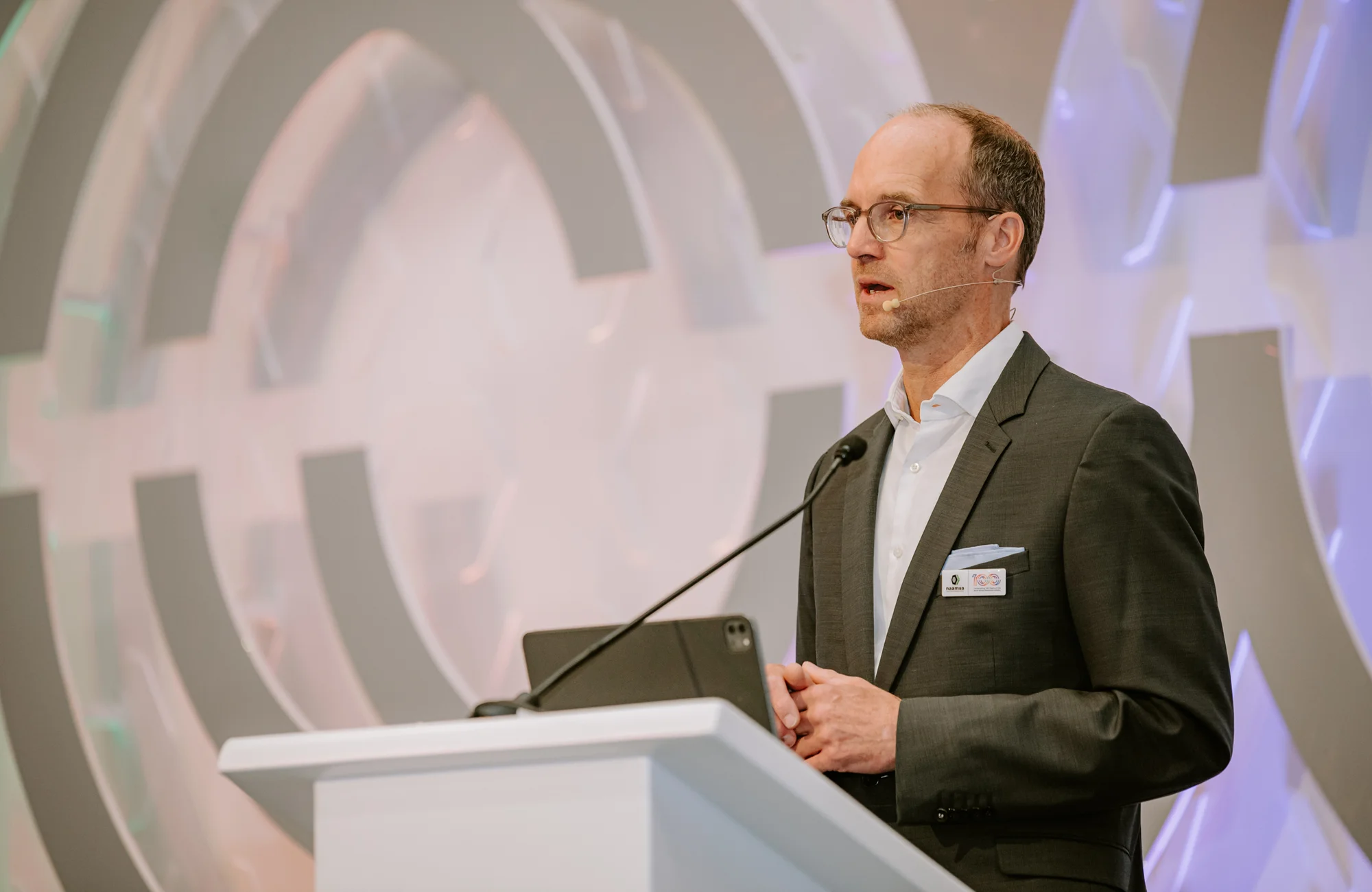
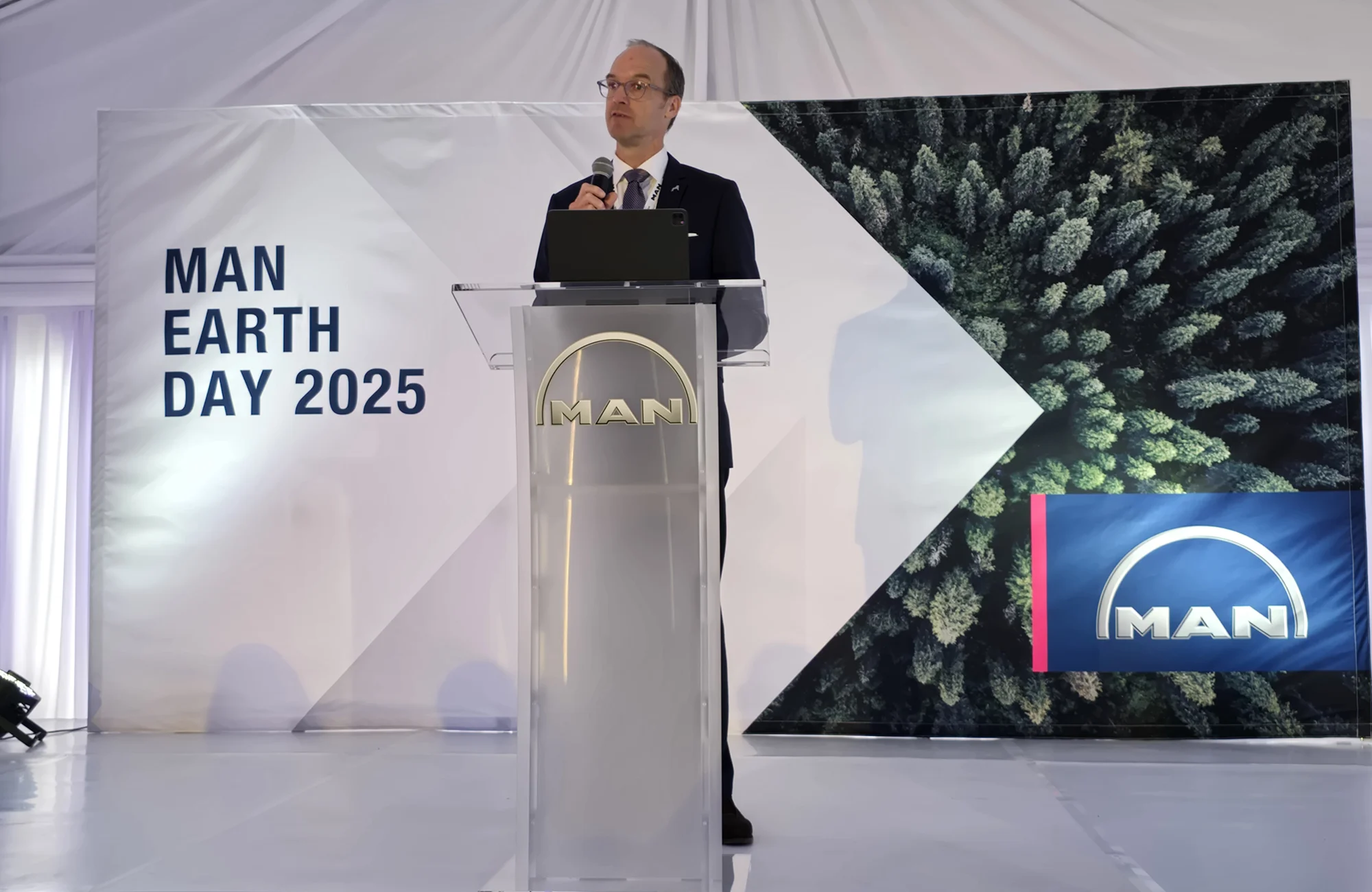
Jan Aichinger, managing director of MAN Automotive South Africa, has been re-elected as naamsa’s vice president for the medium and heavy commercial vehicles (MHCV) segment. In a heart-to-heart chat with CHARLEEN CLARKE, he reflects on competition, transformation and resilience in a commercial vehicle market shaped by disruption, pragmatism and cautious optimism.
When Jan Aichinger was re-elected as naamsa’s vice president for the medium and heavy commercial vehicles segment, it was less a victory lap than a reaffirmation of responsibility. As managing director of MAN Automotive South Africa, Aichinger finds himself at the intersection of market pressure, policy uncertainty and long-term transformation – a space that requires realism more than rhetoric.
“There are challenging times ahead of us in our industry,” he says candidly. “But I am fully committed to serving naamsa and the entire commercial vehicle industry as the South African market transitions into a different era in the automotive future.”
That future, he argues, will be shaped not by bold promises but by disciplined execution.
A tougher market than before
When we last spoke at the beginning of 2025, expectations were bleak. “You asked me then, and I said I was expecting a brutal year,” he recalls. “The question is whether it was as brutal as I expected.”
The answer, as is often the case in South Africa’s commercial vehicle sector, is nuanced. “Within the European segment, we’ve stabilised our market share,” he explains. “That was not really our ambition. Keeping the same market share in a shrinking market isn’t something to celebrate wildly. But if you look at it properly – and especially compared to our European peers – our market share has not declined, and that is an achievement.”
The numbers bear this out. MAN’s share of the European truck market in South Africa stood at 15.9% in 2023, dipped marginally to 15.5% in 2024, and recovered to 15.9% in 2025. “Since 2021, the premium segment has declined constantly,” Aichinger notes. “The budget (Japanese) segment has grown slightly, largely on the back of distribution, while the low-cost Chinese segment has increased dramatically.”
This shift is reshaping the competitive landscape – and posing hard questions for established OEMs.
The Chinese challenge is real
“In South Africa we’re seeing how much of a threat the Chinese are,” Aichinger says bluntly. “It’s no longer just about companies who cannot afford a premium truck turning to a Chinese vehicle.”
What has changed, he explains, is the buyer profile. “We are now seeing big companies buying Chinese products, so you cannot comfort yourself by saying, ‘That’s not our customer.’ It is our customer,” he says.
Price, however, is not where Aichinger believes the real battle will be won. “You need to have a competitive advantage with your network, with the service you can provide, with a brand of quality,” he says. “That is where we need to differentiate ourselves.”
For MAN, this means doubling down on service density, technician quality and long-term reliability – even as customers explore alternatives. “We need to explore new avenues on our side to attract customers,” he adds. “That requires being honest about where we can win – and where we can’t.”
Rethinking the used truck business
One of those avenues has been the used vehicle market, which has required sharper discipline than ever before. “At the beginning of 2025, we had too many used trucks in stock,” Aichinger admits. The rule, he says, is simple. “On the used side, you have to turn the vehicles within six months maximum. Otherwise, you’re destroying value.” In response, MAN Automotive South Africa introduced three new initiatives – each aimed at creating liquidity, expanding reach and reducing risk.
The first was a focused push into Africa. “We hired someone who didn’t come out of the industry, but who had lots of contacts into Africa. That was very deliberate,” Aichinger says.
Competing with Chinese manufacturers north of South Africa’s borders requires realism. “If you want to compete with the Chinese in the copper markets, you’re not going to win with used vehicles,” he says. “Those transporters buy new Chinese vehicles.” Instead, MAN has focused on other export sectors – and the results have been tangible.
Selling parts differently – and a global first
The second and third initiatives are arguably more radical – and have placed South Africa at the forefront of MAN’s global strategy. “We now have four product lines when it comes to parts: original parts, remanufactured parts, second-grade localised parts produced in South Africa and, now, used parts,” Aichinger explains.
This fourth category is entirely new. “I believe we are the only manufacturer in South Africa doing this,” he says. “And South Africa is the first MAN market worldwide to implement this product offering.” The logic is compelling. “We are selling used vehicles to ourselves,” he explains. “We disassemble them and sell the used parts.”
The implications for customers are significant. “If you have a major crash with a six-year-old vehicle, the insurance company might say it’s a write-off,” Aichinger says. “But that won’t necessarily happen if you can buy a used, fully trimmed cab.” He pauses. “Yes, the cab may be five years old. But it’s not older than the cab that was destroyed in the accident.”
In 2026, MAN expects to disassemble around 60 vehicles. “This is a completely new selling channel for us,” he says. “At the same time, it’s a real win for our customers; they can lower their expenses and grow their profits.”
Financing differently in a risk-averse world
Financing remains one of the biggest barriers in the used truck space – and one where Aichinger believes the industry still thinks too conservatively. “I’ve seen that banks are rather hesitant to finance used trucks,” he says. “But they are perfectly happy to finance a new vehicle where you lose 20% the moment it’s registered.”
The irony is not lost on him. “If something goes wrong in the first year, the loss on the bank’s side is enormous,” he says. “With a used truck, if an engine blows up, you have an opportunity.” That opportunity, he explains, is to finance the repair. “You add it to the monthly instalment. The customer is grateful, and you end up with a loyal customer going forward.”
MAN has responded by strengthening its financial arm. “We have hired a new managing director at MAN Financial Services South Africa – Paul Uys,” Aichinger says. “He came with a team of highly experienced experts. Together, we’ve developed alternative structures for financing used vehicles.” Customers, he adds, can also purchase warranties to further mitigate risk.
Products that quietly outperform
Despite the pressure on the premium segment, some MAN products have exceeded expectations. “The TGM has been a real success story in South Africa – to the point where we even ran short of stock last year,” Aichinger says. The reason is straightforward. “It’s the only truck in its class with a proper sleeper cabin,” he explains. “It’s not just a small little day cab, and that makes a real difference for customers.”
More product enhancements are coming. “We have some big news coming in 2026,” he says with a smile. “Watch this space!”
Getting closer to customers
Internally, MAN has also restructured to better reflect market realities. “We used to have three regions. Now we have four – Cape Town and the Garden Route, a central region, Gauteng, and KwaZulu-Natal – to get closer to the market,” Aichinger elaborates.
Sales processes have also been streamlined. “We used to have our own retail team and then salespeople working for our dealers. That wasn’t ideal; we were wasting capacity,” he says. Today, all sales activity is centrally coordinated. “Philip Kalil-Zackey, our vice president truck sales and product, and his team are steering all the salespeople,” Aichinger explains. “We’ve opened up the Customer Relationship Management (CRM) system. Everyone works on the same platform.”
Dealer reaction has been positive. “They were very supportive, and so they should be. This will free up capacity and help with market penetration,” he affirms.
Buses, batteries and patience
In the bus market, the past year delivered mixed emotions. “We were extremely successful last year, despite the fact that we didn’t have the HB2,” Aichinger says, acknowledging that this absence hurt: “Some customers want a 4×2, 12-m, 65-seater, full automatic. If you don’t have it, you can’t sell it.”
Supply constraints will persist until 2027, meaning another tough year lies ahead. Still, the team adapted. “They secured lots of small orders,” Aichinger says. “In a market dominated by big players, that’s impressive.”
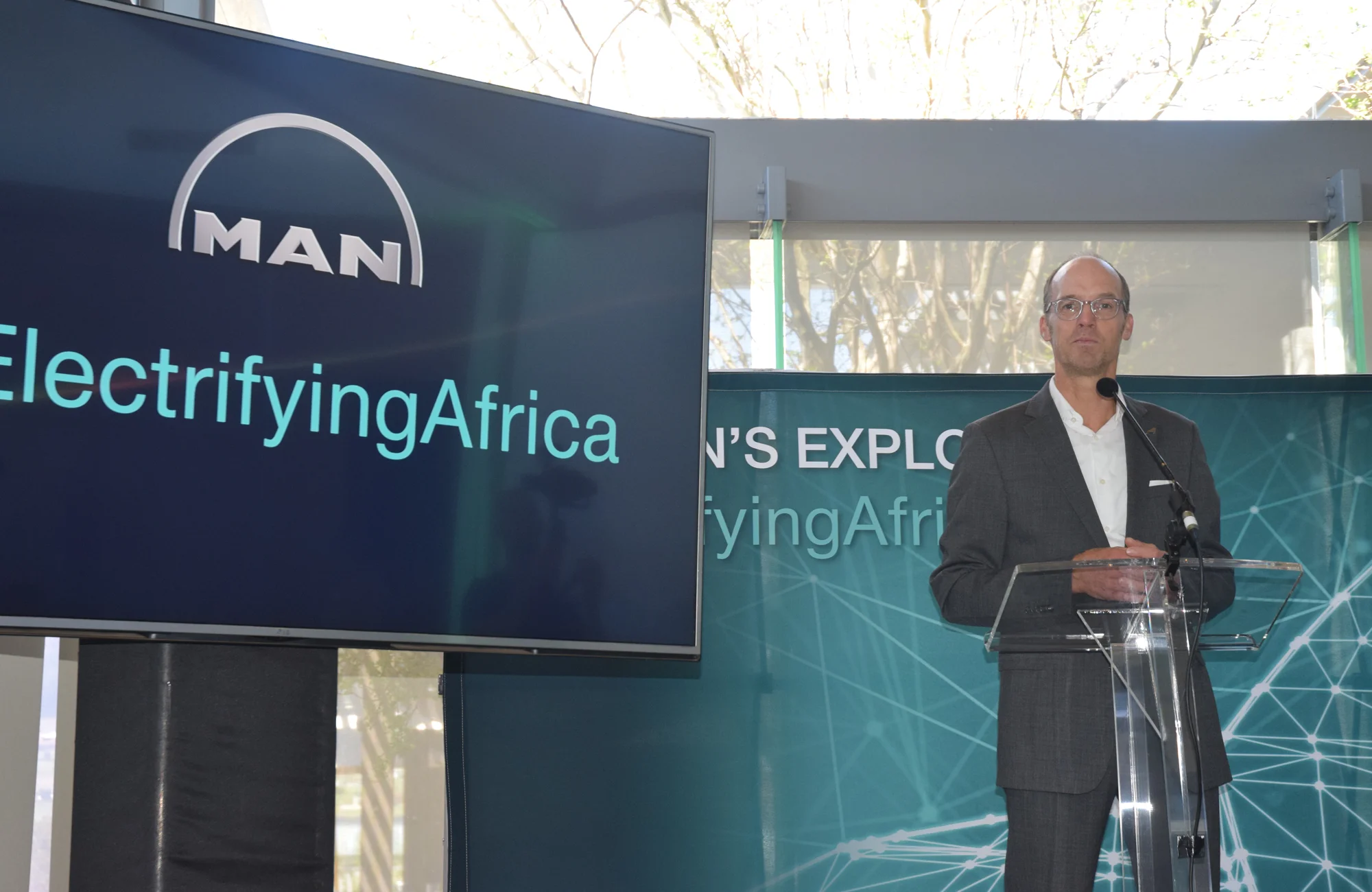
Electric mobility is also moving from theory to reality. “In 2026, the City of Johannesburg has asked for electric bus tests,” he says. “They’re inviting all manufacturers.” But not everyone is ready: “There are not many who can actually deliver,” Aichinger notes.
MAN can. “We want to deliver the first series vehicles to the Paruk Group,” he says. “That order for 100 electric city buses is MAN’s largest eBus order outside Europe.” Another milestone is securing the Passenger Rail Agency of South Africa (PRASA) tender, with Aichinger confirming that 17 coaches will be delivered in 2026.
Overall? “I expect the bus market to be stable in 2026,” he says.
Legislation is the real bottleneck
Looking ahead, Aichinger is clear that the industry’s future will be shaped less by policy. “My wish for 2026 is more momentum with legislation,” he says. “We need to move to Euro 5. If we don’t watch the rest of the world, we’re going to be disconnected.”
For him, the push is not ideological but practical. “As a major contributor to greenhouse gas emissions globally, transport has to change. That means a massive shift towards clean mobility solutions, particularly in road transport,” he explains. Encouragingly, he notes that progress has already begun: “Since 2022, we’ve seen more electric trucks and buses entering the domestic market. That’s a positive trend.”
Yet he is equally frank about the obstacles: “The upfront costs of these vehicles are still significantly higher than equivalent internal combustion engine (ICE) vehicles, and we simply don’t have the public charging infrastructure along our transport corridors needed to make this work at scale.”
The introduction of new energy vehicles (NEVs) has also brought unintended consequences. “From a manufacturer’s perspective, NEVs come with a weight penalty of around three metric tonnes and a length penalty of up to 1.5m,” Aichinger explains. “That’s because you need large battery packs or gas tanks to achieve the required range.”
These penalties clash with existing regulations. “Our trailer fleet – around 220,000 units – is legislated around ICE technology, so unless legislation is amended specifically for NEVs, operators are effectively penalised for trying to transition. We need regulatory relief on weight and length, so operators can continue using their existing trailers,” he stresses.
Cleaner fuels remain another sticking point. “Cleaner Fuels 2 has been on the table since 2014. The implementation date has moved again and again, and now it’s set for 1 July 2027. That date cannot move any further,” he says. “At the same time, we need a firm, aligned date for the introduction of Euro 5 – ideally linked to Cleaner Fuels 2.”
What frustrates him most is fragmentation. “We need different government departments to deal with different pieces of legislation, but they must work hand in hand. We need the DTIC to take the lead, to coordinate these workstreams,” he asserts. “We need it to be less bureaucratic – and we need it fast.”
Despite the challenges, Aichinger’s commitment to the sector remains unwavering. “The significance of the MHCV industry to South Africa’s economy is unquestionable,” he emphasises. “Transporting goods and people affects the entire economy.”
“There are challenging times ahead of us, but I am fully committed to serving naamsa and the entire commercial vehicle industry as we transition into a different era,” Aichinger concludes. “I invite my colleagues from all OEMs to join me on this journey. Let’s combine our forces and develop a common, executable strategy – one that puts South Africa firmly on the road to zero emissions.”
Published by

Focus on Transport

focusmagsa