Global demand for biofuels continues to rise, despite them being responsible for 16% more carbon dioxide (CO2) emissions than the fossil fuels they displace… JACO DE KLERK reports.
A recent study by Cerulogy*, a global consultancy that specialises in alternative and cleaner fuels policies, on behalf of Transport and Environment (T&E), has revealed that global biofuels production emits 16% more CO₂ than the fossil fuels it replaces. It also consumes vast areas of agricultural land that could be used for food production or more efficient renewable energy generation.
The findings come at a critical time, with biofuel demand projected to increase by at least 40% by 2030, driven by countries including India, Brazil and the US (as part of the Global Biofuels Alliance), as well as world leaders preparing to gather in Brazil for COP30 to discuss climate solutions.
Currently, growing crops specifically to be burnt as fuel occupies approximately 32 million hectares of land – roughly the size of Italy – yet this only meets 4% of global transport energy demand. By 2030, T&E projects that this will expand by 60% to 52 million hectares, equivalent to the entire landmass of France.
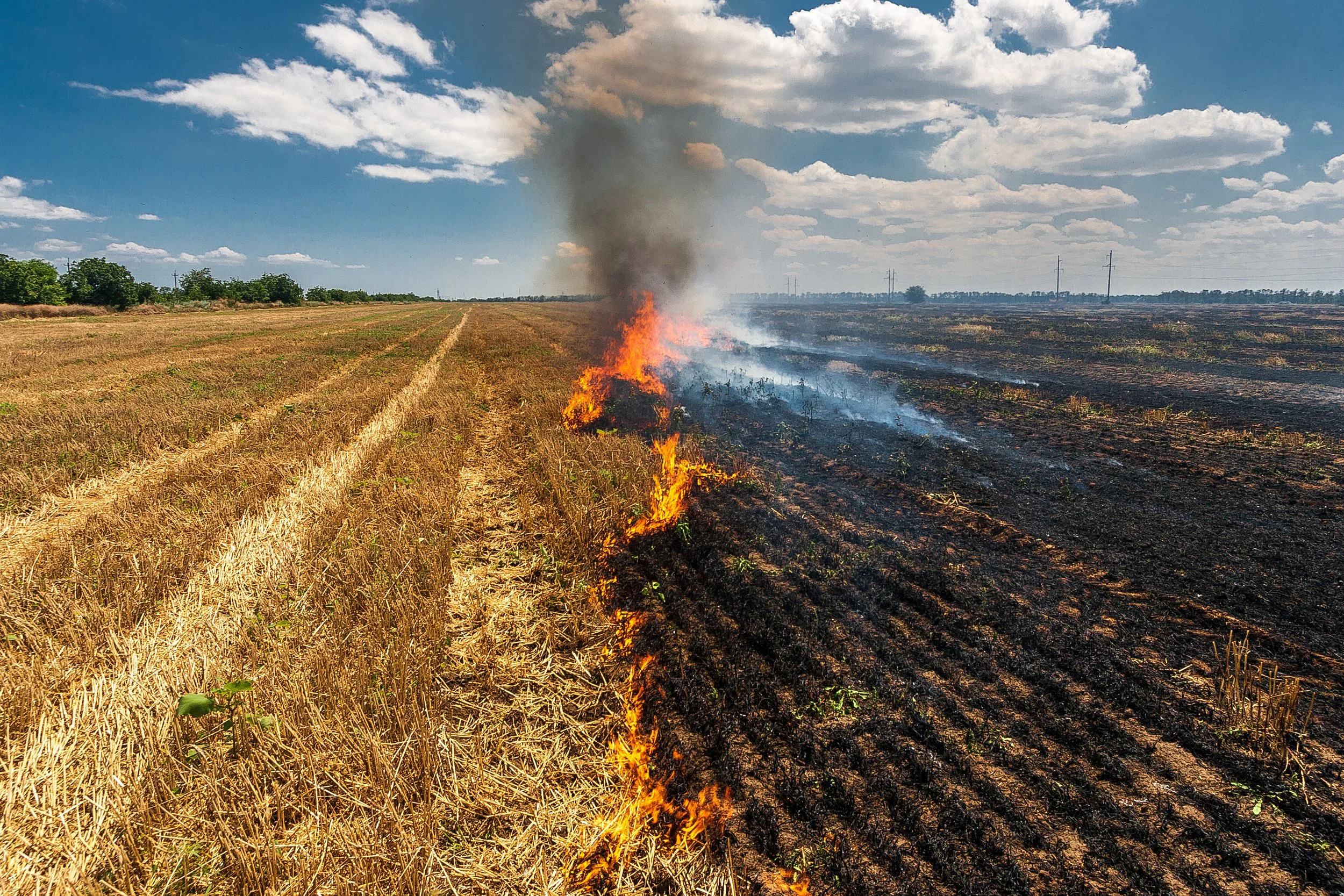
The brunt of biofuels’ increased impact on CO₂ emissions, when compared to fossil fuel, comes from the indirect effect it has on farming and deforestation. According to T&E’s report, “CrOP30: Why burning food for land-hungry biofuels is fuelling the climate crisis”, the use of crops and croplands for biofuel feedstocks has encouraged the expansion of farming into previously unfarmed areas. This has led to land clearance, habitat loss and significant greenhouse gas emissions from lost vegetation and soil disruption.
T&E’s analysis indicates that by 2030, biofuels are projected to emit 70 million tonnes of CO₂ equivalent (CO₂e – a measure of the effect of different greenhouse gases on the climate) more than the fossil fuels they replace. This matches the annual emissions of almost 30 million diesel vehicles. Meanwhile, globally, land restoration of areas currently used for biofuels would deliver 400 million tonnes a year in CO₂ savings, according to T&E’s report.
“Biofuels are a terrible climate solution and a staggering waste of land, food and millions in subsidies,” says Cian Delaney, biofuels campaigner at T&E. “Ensuring a sustainable balance between agriculture and nature is essential to tackling the climate crisis, and burning crops for fuel only pushes us further in the wrong direction. Using just 3% of the land we currently use for biofuels for solar panels would produce the same amount of energy. That would leave a lot more land for food and nature restoration. Governments around the world must prioritise renewables over crop biofuels.”
The impact on global food security is just as concerning. Despite advanced and waste biofuels being increasingly promoted as cleaner solutions, the analysis shows that 90% of global biofuel production still relies on food crops. In 2023, the biofuel industry consumed around 150 million tonnes of maize and 120 million tonnes of sugarcane and sugarbeet.