AI takes centre stage at the 2026 IFOY Award
AI takes centre stage at the 2026 IFOY Award
From robots that climb warehouse racks to AI that writes software, the 2026 IFOY Award winners are revealing the changing face of intralogistics.
Artificial intelligence may be the technology attracting the loudest attention in logistics, but the winners of the 2026 International Intralogistics and Forklift Truck of the Year (IFOY) Award have shown that real innovation is rarely about software alone.
The winning technologies combined AI with robotics, mechanical engineering, ergonomics and practical problem-solving. They tackled familiar warehouse challenges: coordinating mixed fleets, picking awkward products, automating existing racking, unloading containers safely and helping smaller companies adopt autonomous equipment without rebuilding their operations from scratch.
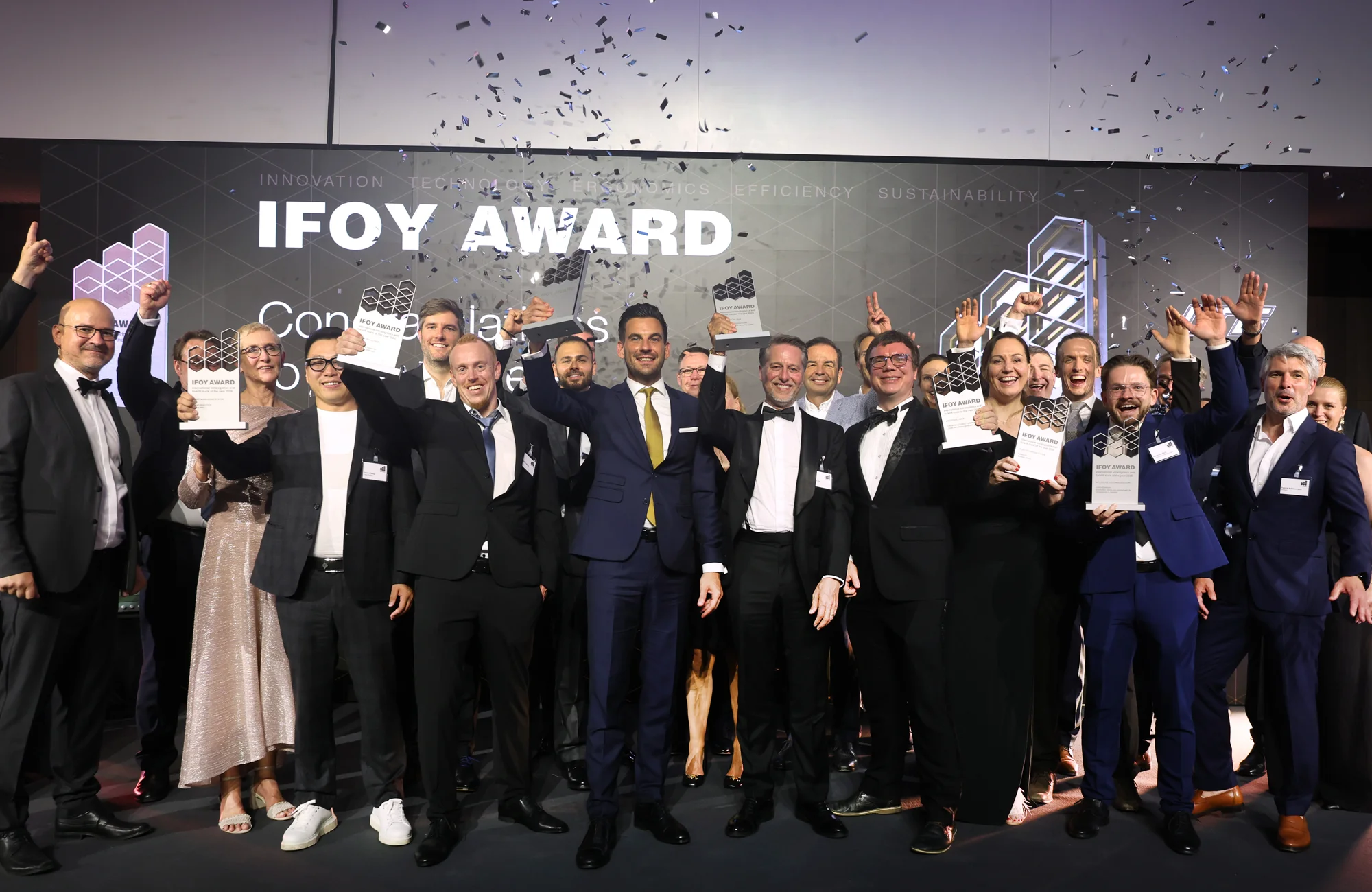
Seven products and solutions ultimately received recognition. Jungheinrich won Integrated Customer Solution of the Year, while Libiao Robotics and Nomagic shared victory in the Warehouse Robot System of the Year category after a tied jury vote. The Mobile Robot Company secured Industrial Truck of the Year, Idealworks won for intralogistics software, Wiltsche Fördersysteme took the special category and Pyck was named IFOY Start-up of the Year.
The winners were announced at a ceremony hosted by event partner AEB at its Stuttgart headquarters, attended by around 150 representatives from industry, academia, politics and the media.
A demanding route to the final
The IFOY Award is regarded as one of the sector’s most rigorous technology competitions. A total of 49 products and solutions entered the 2026 programme, with 17 reaching the final. Here, they were subjected to the multi-stage IFOY Audit during Test Camp Intralogistics.
The assessment combines practical testing, scientific analysis and an independent jury evaluation. Industrial trucks are examined against around 80 criteria, while the IFOY Innovation Check analyses the technical significance and market relevance of each finalist.
Importantly, finalists aren’t simply compared with the other products in their category. Each is measured against comparable solutions already available on the market. This helps the jury determine whether an entry represents genuine progress or merely packages existing technology in a different form. The winners are selected by an international jury of specialist trade journalists. South Africa is represented by Charleen Clarke, editorial director of FOCUS.
This year’s competition was exceptionally close, with several categories decided by narrow margins. For the first time in the Award’s 14-year history, the warehouse robotics category produced two winners with a tied vote.
“Artificial intelligence is the defining technology of our time, and it was the dominant theme of this year’s IFOY Award competition,” said Anita Würmser, executive chairperson of the IFOY Jury, in Stuttgart. “During the audit process, the finalists demonstrated impressively what can already be achieved in real-world operations using AI. The final decision was a nail-biter – full of surprises in an exceptionally strong field of competitors.”


Jungheinrich connects an entire operation
Jungheinrich won Integrated Customer Solution of the Year for an automated end-to-end system created for Liebherr’s central spare parts distribution centre in Ehingen, Germany.
The scale of the operation is substantial: it includes a high-bay pallet warehouse with 18,000 locations, a shuttle system with space for 40,000 totes and nine manual storage areas. Rather than controlling these sections independently, Jungheinrich’s solution coordinates the warehouse and shipping operation through a single platform.
The system uses self-learning algorithms to determine when orders should be picked and goods retrieved. It continually adjusts these decisions as priorities, workloads and shipping deadlines change. That distinction is important. Many warehouse systems automate individual movements or processes; Jungheinrich’s project uses AI to make decisions across the operation, allowing the different areas to function as one connected system.
The objective is to ensure that spare parts for Liebherr cranes reach customers around the world reliably. A delay in delivering a critical component can leave an expensive machine standing idle, making accuracy and timing as important as speed. The jury highlighted the system’s forecasting ability, reduced dependence on manual intervention and measurable operational improvements.
For South African companies, the project demonstrates how AI can be used for more than demand prediction or reporting – it can actively coordinate the physical movement of stock through a complicated facility. Such projects require significant investment and clean, reliable data. Nevertheless, they point towards warehouses in which software continually balances inventory, labour, equipment and dispatch requirements rather than following fixed instructions.
Two very different robots share the prize
The Warehouse Robot System of the Year title was shared by China’s Libiao Robotics and Poland’s Nomagic. Although both winners use robotics, they solve very different problems.
Libiao’s AirRob PRO is designed to automate storage and retrieval within racking. The robot climbs the storage structure and uses a swivelling arm to handle totes and cartons on either side of an aisle. Combining movement, picking and conveying functions in one system can increase throughput while reducing the amount of fixed equipment required.
Its most significant feature may be its ability to work with existing racking. Warehouse automation frequently requires extensive structural changes, making projects costly and disruptive. A system that can be introduced into an established facility lowers the barrier to adoption. This brownfield capability is especially relevant to South Africa, where many businesses operate from warehouses that were not designed for robotics. Replacing an entire storage system may be commercially impossible, even when the potential productivity benefits are attractive.
The jury praised AirRob PRO’s scalability, gripper technology and ability to automate existing infrastructure.
Nomagic’s Shoebox Picker addresses a far more specific problem, but one that has frustrated fashion and e-commerce operators for years: shoeboxes are surprisingly difficult for robots to handle. They vary in size, shape, colour and orientation; their lids may be loose; and the boxes may deform or open when gripped incorrectly.
Nomagic developed a system capable of identifying and moving unsealed shoeboxes reliably. Its AI-based vision technology assesses each item before selecting the most suitable handling method. The robotic picker uses several interchangeable grippers, automatically switching between them according to the product in front of it. This allows the system to perform work that has largely remained manual, even in otherwise highly automated fulfilment centres.
The jury described the technology as a potential game changer for fashion logistics. Its significance lies not in making robots faster, but in allowing them to handle products that have resisted conventional automation.


Idealworks creates a common language
Modern warehouses increasingly contain equipment from several suppliers. Autonomous mobile robots, automated guided vehicles, manual forklifts, sensors, gates and warehouse software may all need to exchange information. The difficulty is that these systems do not always communicate easily.
Idealworks won Intralogistics Software of the Year for its Idealworks Orchestration System – a cloud-based platform intended to coordinate different vehicles, devices and software systems through one operating environment.
Its open, vendor-independent architecture allows companies to integrate autonomous mobile robots, automated guided vehicles and manually operated vehicles from different manufacturers. It can also connect sensors, access gates, warehouse management systems and enterprise resource planning platforms. Real-time analysis, simulations and digital twins give operators a clearer view of material flows and allow them to test changes before applying them to the real operation.
The platform addresses an increasingly important concern: companies do not want to become permanently locked into one automation supplier simply because changing equipment would require replacing the software controlling the entire fleet. An open system provides greater flexibility when adding vehicles or expanding an operation.
The real test, as always, lies in integration. Open architecture is valuable only when the connected systems exchange dependable information and respond predictably. The jury nevertheless regarded Idealworks OS as an important foundation for scalable automation, particularly in facilities where equipment from several manufacturers must work together.
A pallet jack that does both jobs
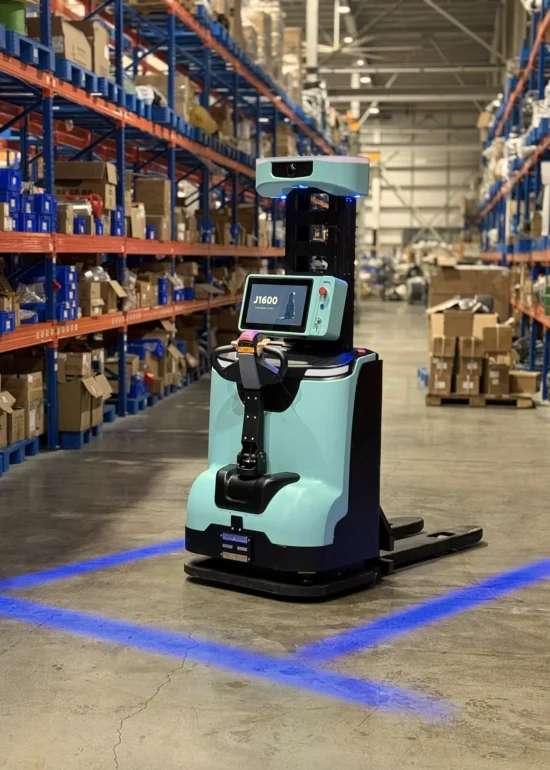
The Mobile Robot Company of Denmark won Industrial Truck of the Year with the J1600, a self-driving pallet jack. Offering a load capacity of 1.6 tonnes, its defining feature is its dual operating mode.
The J1600 can be used manually like a conventional electric pallet jack. When required, it can also navigate independently through warehouse and production environments using 3D LiDAR. That flexibility makes it possible to automate selected movements without removing the vehicle’s usefulness as a manually controlled machine.
For smaller companies, this could be particularly attractive. Full automation often appears inaccessible because of its cost, complexity and the need to redesign processes. The J1600 offers a more gradual route: a company can continue using it manually where human judgement is required, while assigning repetitive transport work to the autonomous mode.
The jury believed the vehicle lowered the entry barrier to mobile automation and could deliver productivity improvements without demanding an extensive implementation project.
For South African operations – where capital is often constrained and warehouse conditions vary considerably – this type of adaptable equipment may prove more realistic than a fully autonomous fleet introduced in one step.
Taking the strain out of container work
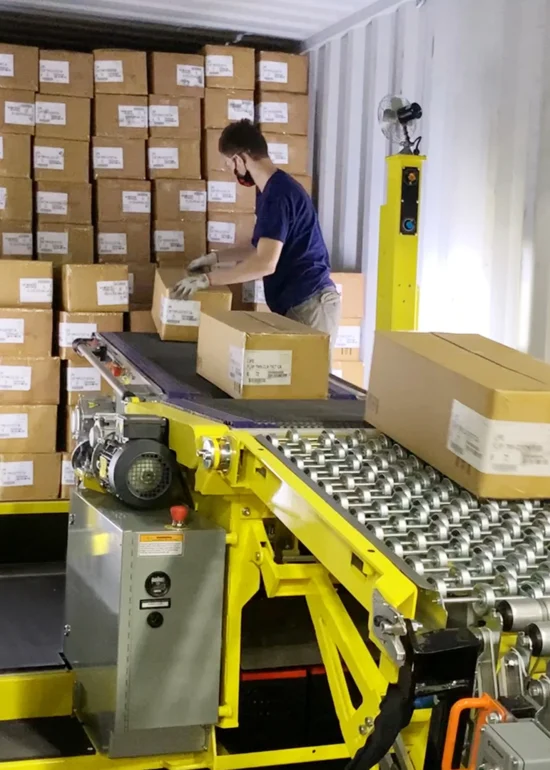
Wiltsche Fördersysteme won Special of the Year with Destuff-it, a mobile system designed to assist employees loading and unloading containers.
Container unloading remains one of logistics’ most physically demanding tasks. Workers repeatedly lift, twist and reach while handling goods in a confined space that can become extremely hot. Destuff-it brings an adjustable conveyor directly to the load. Parcels weighing up to 74kg can be transferred with far less manual carrying, while the platform can be adjusted to improve the worker’s position. The battery-powered unit can be moved between loading bays, avoiding the need to install one system permanently at every dock.
Its importance is easy to understand in South Africa, where large quantities of imported goods arrive in containers and much of the unloading process remains manual. The technology does not attempt to solve the difficult challenge of fully automating every container. Instead, it improves the work people are already doing.
The jury viewed Destuff-it as a practical bridge between labour-intensive unloading and future automation. Its benefits include improved throughput, reduced physical strain and a lower risk of workplace injury. It is a reminder that innovation does not always need AI or advanced robotics. Sometimes the most valuable solution is the one that removes a familiar source of pain, fatigue and lost productivity.
Pyck challenges traditional warehouse software
Germany’s Pyck was named IFOY Start-up of the Year for its open-source toolkit for warehouse software.
Conventional warehouse management systems generally require users to adapt their processes to workflows defined by the software. Pyck reverses this relationship. It allows logistics specialists to model their own warehouse processes, data structures and user interfaces. AI then helps generate the software required to support those processes.
The open-source approach means users retain greater control over their data and are less dependent on one software supplier. This could be particularly valuable in operations with unusual workflows that do not fit easily into a standard warehouse management system.
However, greater freedom also requires technical capability. Companies must understand their processes clearly and have access to people able to configure, maintain and govern an open system. The jury nevertheless saw Pyck as a compelling alternative to rigid, conventional platforms and recognised its potential to change how warehouse software is developed.
Practical innovation wins
The 2026 winners demonstrate that intralogistics innovation is moving in several directions at once. AI is becoming a working tool rather than a vague future promise. Robots are handling increasingly difficult products. Open software is connecting mixed fleets, while more accessible machines are allowing smaller operations to introduce automation gradually. At the same time, a comparatively straightforward unloading aid has shown that ergonomics and worker safety remain powerful drivers of innovation.
Not every winning technology will suit every South African operation. Investment costs, integration skills, infrastructure and maintenance support will determine what can be adopted locally. Yet the problems being addressed are familiar: rising labour costs, scarce skills, workplace injuries, inconsistent processes and pressure to move goods faster without losing accuracy.
The strongest message from Stuttgart was therefore not that every warehouse must automate immediately, but that the most effective innovations begin with a clearly understood operational problem. The 2026 IFOY Award winners did not all provide the same answer; they succeeded because each found a better way to solve a difficult, costly or persistent challenge.
Published by

Focus on Transport

focusmagsa