They see me rollin’, they hatin’

They see me rollin’, they hatin’

A rap song from the early 2000s perfectly summarises current tyre developments within the electric commercial vehicle industry…

The beginning of the chorus for Chamillionaire’s 2005 hit single, “Ridin'”, goes as follows:

They see me rollin’, they hatin’,

Patrollin’ and tryna catch me ridin’ dirty,

Tryna catch me ridin’ dirty, tryna catch me ridin’ dirty…

This encapsulates current developments for tyres in the electric commercial vehicle (CV) industry, with the German Federal Environment Agency estimating that contact between tyres and road surfaces produces at least 100,000 tonnes of abrasion particles per year. This corresponds to approximately one-third of the microplastic emissions released annually in Germany.

Due to their higher weight, electric vehicles (EVs) often produce more tyre abrasion than those with combustion engines. Scientists from Karlsruhe Institute of Technology (KIT) and the Fraunhofer Institute for Industrial Mathematics have launched the RAMUS project, which focuses on tyre-abrasion measurements and simulations, to investigate how EVs produce these abrasion particles. To develop a predictive model for tyre abrasion, they are testing tyres on a test rig by simulating operating cycles that represent real vehicle usage patterns in condensed form.

Whilst electrified delivery traffic plays a key role in climate-neutral mobility, tyre abrasion remains a significant challenge. Due to battery weight and high starting torques, these vehicles release higher quantities of tyre particles (in the form of microplastics) compared to conventionally powered vehicles. These particles appear in the air as fine dust, in water as sediments, and in soil as contaminants.

“In contrast to the sources of pollution, such as exhaust gases, which were in the focus so far, only little research has been done on the factors that favour the formation of these particles,” explains Dr Martin Gießler, head of the Tire-Wheel-Road Surface Research Group that is part of KIT’s Institute of Vehicle System Technology (FAST).
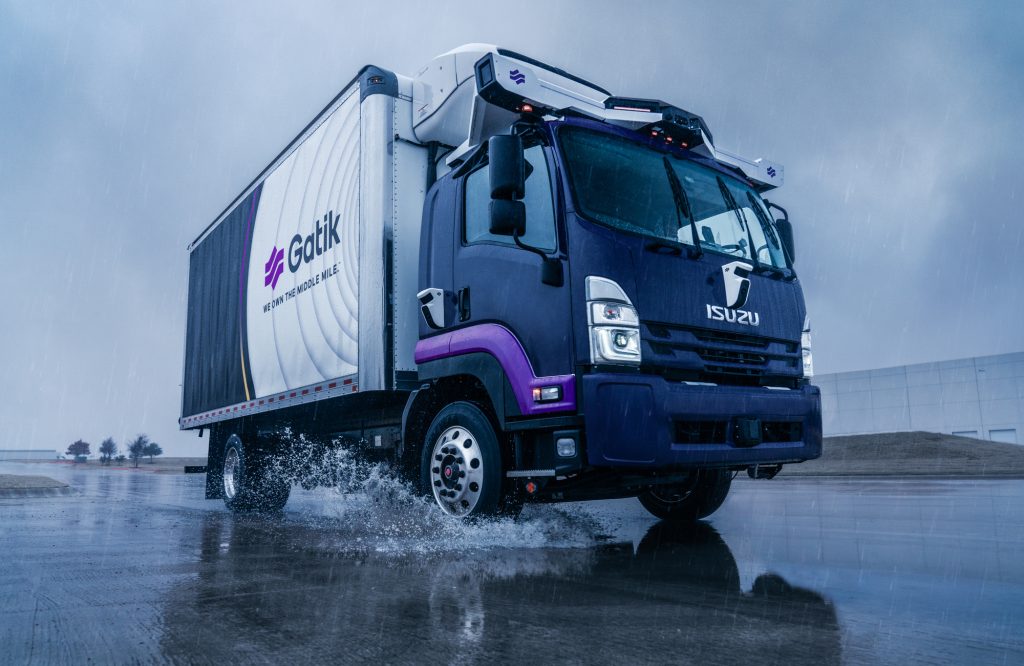
Research based on real traffic data

With the Euro 7 standard, tyre abrasion limit values will be introduced for the first time. These will apply to new tyre types from 1 July 2028 for passenger cars, from 1 April 2030 for light CVs, and from 1 April 2032 for heavy CVs and buses.

“To reduce abrasion and comply with the new limit values, we need to investigate more closely how abrasion particles are formed and how a number of factors, such as the vehicle weight or the type of tyres, bear on the amount of abrasion,” Gießler says. Other possible influencing factors include driver behaviour, such as acceleration and braking, road conditions including temperature and wetness, and traffic conditions such as traffic jams.

“We are using mobility data and driving profiles of electric delivery vehicles to define condensed operation profiles for the abrasion tests on the tyre test rig. The data obtained in these tests are then used to develop a simulation-based forecast model,” explains Gießler. The researchers have set up a tyre test rig with a real asphalt surface to measure the force transmission and abrasion behaviour of the tyre under various operating conditions.

Models for abrasion prediction

In addition, the researchers want to develop a tyre model based on rig tests and simulations, which will provide large amounts of data that describe the wear of virtual tyres. The data obtained from the real and virtual tests will then be integrated into a forecast model supposed to predict the influence of various factors – such as the type of tyre, the type of vehicle and its load, and the driving style – on tyre abrasion. The consortium is committed to transparency and will therefore present its method in publications and make project results and data available on a freely accessible platform.

So, while Chamillionaire’s wheels might have kept spinning clean, today’s electric delivery trucks are literally “ridin’ dirty” – leaving microscopic tyre particles in their wake as the price of going green. With this in mind, knowledge is power… and it will be insightful to see what RAMUS discovers and how this can change the tyre industry for EVs.

Published by

Jaco de Klerk

In his capacity as editor of SHEQ MANAGEMENT, Jaco de Klerk is regarded as one of the country’s leading journalists when it comes to the issue of sustainability. He is also assistant editor of FOCUS on Transport & Logistics.
Prev Going further with Delo Gold Ultra
Next Inside the SA bus industry's digital revolution

Leave a comment

This site is protected by reCAPTCHA and the Google Privacy Policy and Terms of Service apply.