Sinotruk fire trucks join Malaysia’s emergency response fleet
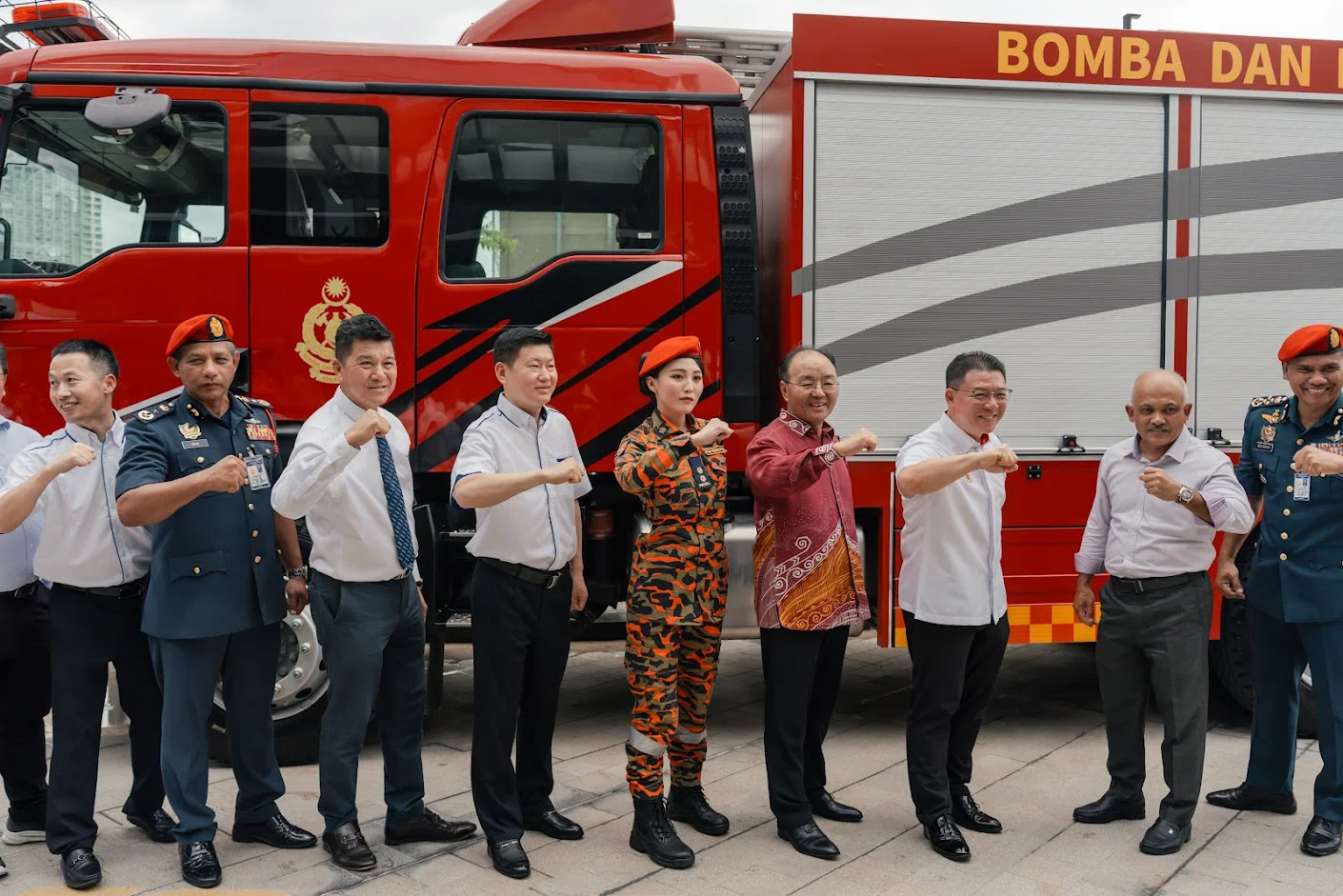
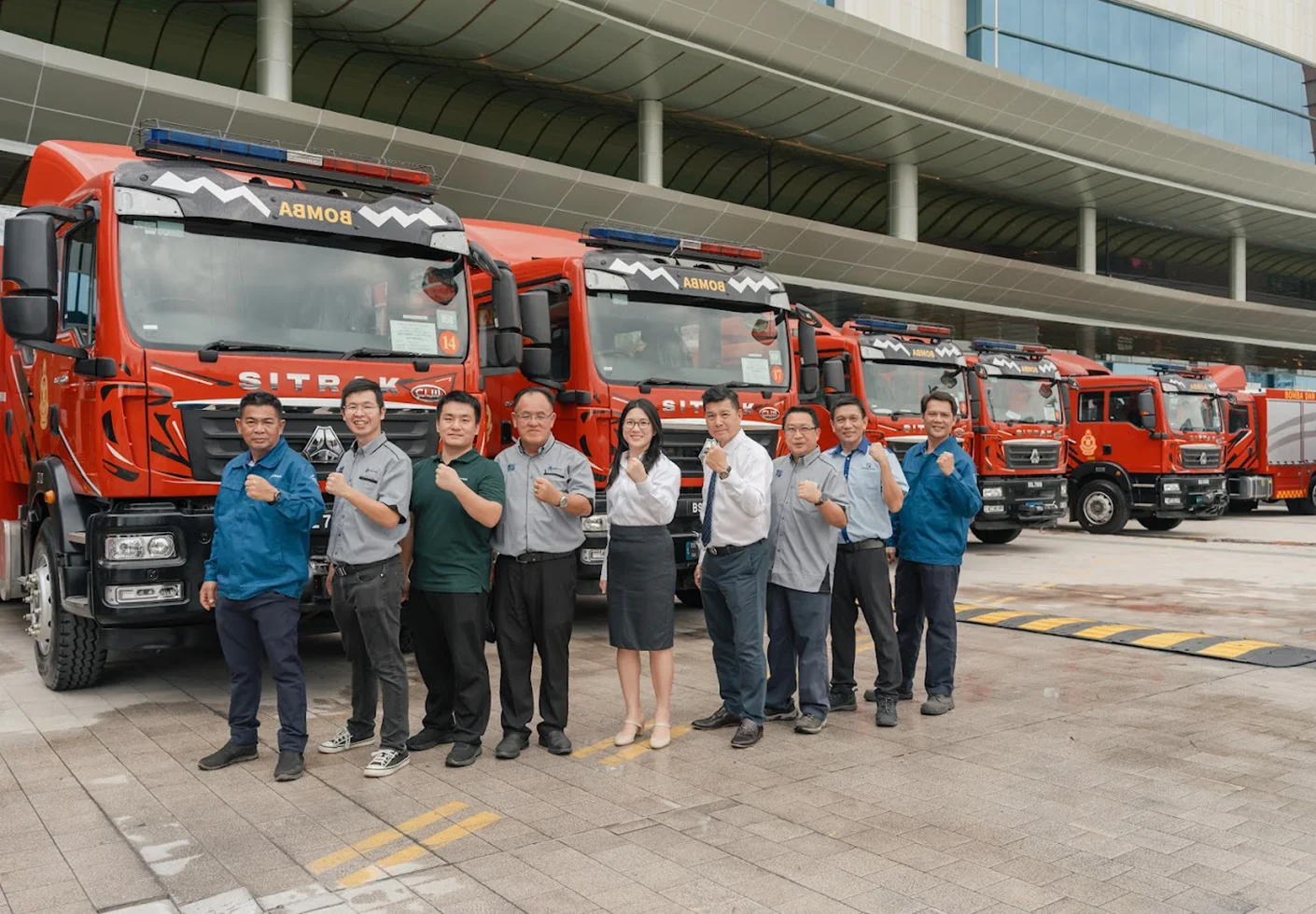
Malaysia’s fire and rescue service has taken delivery of 30 Sinotruk Sitrak G5-based fire engines, marking a significant change in fleet renewal, procurement and emergency vehicle deployment.
The delivery of the 30 new Fire Rescue Tender (FRT) units to Jabatan Bomba dan Penyelamat Malaysia (JBPM) is more than a routine fleet renewal exercise. It represents a notable shift in how specialised commercial vehicles (CVs) are being procured, deployed and integrated into Malaysia’s emergency response ecosystem.
Valued at approximately RM60 million (about R241.8 million), the new FRTs replace fire engines that have been in service for more than two decades. For JBPM, reliability and dependability directly affect life-saving outcomes.
In this case, the move underscores the growing importance of lifecycle management in government fleets. Ageing assets not only drive up maintenance costs, but also limit operational efficiency. Accordingly, the acquisition can be seen as a case study of an issue familiar to any CV operator.
A different procurement model
From an industry perspective, the procurement stands out for its adoption of a public-private-people partnership (4P) model. This approach departs from conventional government tender processes by emphasising faster delivery timelines and improved cost efficiency. For truck suppliers and bodybuilders, it signals a potential shift towards more agile procurement frameworks.
Equally significant is the international dimension of the deal. The FRT units were delivered through a collaboration between Malaysia and China, reflecting deeper bilateral ties and opening the door to increased participation by foreign original equipment manufacturers and specialised vehicle manufacturers in Malaysia’s emergency and municipal vehicle segments.
The vehicles were supplied by the Kapar-based Sendok Group, which is a leading participant in Malaysia’s Chinese truck market.


Sinotruk forms the foundation
The base vehicles are Sinotruk Sitrak G5 trucks powered by 6.9-litre Euro 5 engines producing 330hp. The G5-M long cab includes a steering wheel that can be adjusted vertically and fore and aft, electronic automatic air conditioning, a foldaway sleeper bunk, double-lock seatbelts and seating for a crew of eight in a 2+2+4 configuration.
The new-generation FRTs are understood to feature improved pumping capacity, enhanced onboard systems and better crew ergonomics. These enhancements align with global trends in firefighting vehicles, where safety, speed of deployment and multifunctionality are becoming increasingly important.
Targeted deployment
Distribution of the new FRTs across several states has an immediate operational impact, with priority given to stations still operating legacy units. This targeted deployment strategy mirrors best practice in fleet optimisation, whereby a dispersed organisation allocates newer, higher-capability assets to locations where demand and risk profiles are highest.
For Sinotruk, the order also demonstrates the increasing use of Chinese truck platforms in highly specialised and safety-critical applications rather than only in conventional freight operations.
Wider industry implications
For the broader commercial vehicle industry, the JBPM acquisition highlights several key trends: the rising importance of specialised vehicle segments, the influence of international partnerships and the government’s willingness to explore alternative procurement models.
It also reinforces the idea that public-sector demand can serve as a catalyst for innovation and competition within the CV sector.
The selection of the Sinotruk Sitrak G5 platform further illustrates how Chinese manufacturers are expanding their presence in specialist vehicle markets where durability, payload capacity, crew safety and dependable operation are essential.
- Original article by Asian Trucker Malaysia
Published by
Focus on Transport
focusmagsa