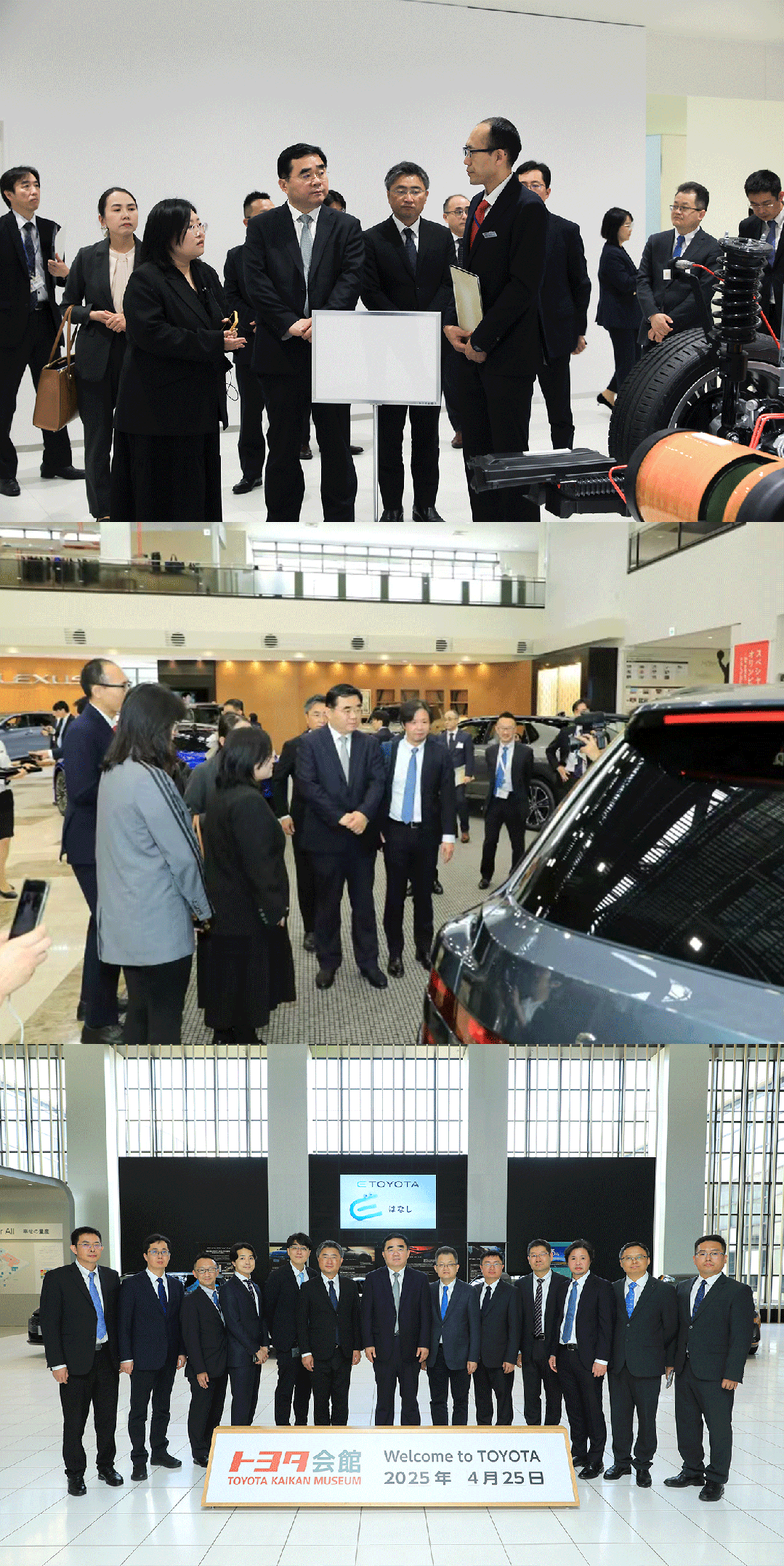
In a strategic move that could reshape the global heavy commercial vehicle (HCV) sector, Chinese manufacturer Sinotruk has strengthened its collaboration with Japanese automotive giant Toyota Motor Corporation, with a new focus on hydrogen-powered transport.
The agreement, signed at Toyota’s headquarters in Nagoya, Japan, on 25 April, marks a significant milestone in the development of zero-emission logistics solutions. It was formalised in the presence of senior executives from both companies, including Man Shengang, party secretary and chairperson of Shandong Heavy Industry Group (Sinotruk’s parent company) and Yoichi Miyazaki, executive vice president of Toyota Motor Corporation. Also in attendance were Ma Changhai, vice president of Shandong Heavy Industry Group, and Mitsumasa Yamagata, general manager of Toyota’s hydrogen factory.
Sinotruk steps onto the global stage
While Toyota’s pedigree in hydrogen fuel cell technology is well-established, it is Sinotruk’s growing stature in the global commercial vehicle (CV) space that commands attention, particularly as it asserts its leadership beyond China’s borders.
South African fleet operators and logistics providers are increasingly familiar with both brands: Toyota’s Hilux and Hino ranges are mainstays of local roads, while Sinotruk’s heavy-duty offerings are gradually gaining traction in mining, construction, and bulk freight sectors.
The two manufacturers have already delivered hydrogen fuel cell-powered tractor trucks to the market, a clear signal that their cooperation has moved beyond the conceptual phase. These early deployments are viewed as a foundation for a broader partnership aimed at jointly developing hydrogen-powered CVs. The initiative also includes plans for demonstration fleets, scaling up deployment, and innovating business models tailored to emerging energy ecosystems.
Shared vision for zero-carbon logistics
According to Sinotruk, the collaboration is part of a broader strategy to align with global trends in clean energy logistics. Shengang emphasised that Sinotruk is committed to open, international cooperation, and sees the Toyota partnership as a catalyst for innovation. “Working with industry leaders like Toyota allows us to complement each other’s strengths. We’re aiming to jointly explore and shape the future of hydrogen transport,” he said at the signing ceremony.
Toyota, for its part, highlighted China’s market as vital to the global uptake of hydrogen energy solutions. Executive vice president Miyazaki noted that heavy-duty, long-haul freight vehicles are particularly well-suited to hydrogen power, given their demanding energy requirements and the need for rapid refuelling. He added that both companies are committed to contributing to global carbon neutrality by developing practical, scalable zero-emission technologies.