ITOY: The race is on!

ITOY: The race is on!

As you read this column, I’m packing my bags for France. My destination? Lyon. My reason for going there? The Solutrans exhibition – which is where the winners of the 2026 International Truck of the Year (ITOY) and Truck Innovation Award (TIA) will be named.

The announcement of the 2026 ITOY and TIA winners will be made during a spectacular awards banquet at Solutrans on 18 November – a fitting occasion considering the stature of the awards… they’re a “Seriously Big Deal” in the world of transport.

One jury, made up of the world’s leading commercial vehicle journalists, selects the winners of both awards. I’m greatly honoured to represent South Africa on this jury (and I’m constantly in awe of my fellow jury members). Our task? To recognise technical excellence, real-world efficiency and forward-looking innovation in heavy-duty transport.

Meet the 2026 ITOY finalists

The battle for the main prize this year is particularly fierce, with a line-up spanning electric drivelines, next-generation diesels and clever hybrid engineering. In alphabetical order, the five contenders are DAF XD/XF Electric, MAN D30 PowerLion, MAN eTGS, SANY e435 and Scania Super 11.

DAF XD / XF Electric

DAF’s electric duo – the XD and XF Electric – are designed not as futuristic prototypes, but as real-world zero-emission workhorses. Modular battery packs ranging from 210 to 525kWh allow operators to tailor range and payload, while DAF quotes more than 500km of range in favourable conditions. Power outputs vary from 170kW (230hp) to 350kW (480hp), supported by a three-speed transmission for improved efficiency.

What truly distinguishes these trucks is DAF’s determination to mainstream electrification. They’re built on the same new-generation platform as the award-winning diesel XD and XF, offering excellent visibility, low entry height and class-leading comfort. In short, these are not experimental units for niche fleets – they’re production tools for everyday European logistics.

MAN D30 PowerLion

While many eyes are on electrification, MAN is reminding the industry that diesel isn’t done yet. The new D30 PowerLion engine is a 13-litre inline-six that achieves over 50% thermal efficiency and delivers fuel savings of up to 5% versus its predecessor, the D26.

Coupled with the TipMatic 14 automated transmission and a suite of aerodynamic tweaks, the PowerLion gives long-haul operators a practical way to cut CO₂ without sacrificing uptime. In markets where electrification infrastructure remains patchy, this engine is an intelligent bridge technology – proof that the internal combustion engine can still evolve responsibly.

MAN eTGS

MAN’s second finalist, the eTGS, is the brand’s heavy-duty battery-electric solution. Usable battery capacity can reach 480kWh or more, giving a working range of 500 to 750km in regional-haul operations. The platform is flexible enough for multiple body types, from rigid distribution trucks to semi-trailers, refuse vehicles and refrigerated units.

Its refinement and quiet operation demonstrate how far electric heavy trucks have progressed. The eTGS isn’t an experiment; it’s a genuine fleet proposition, pushing battery technology into heavier segments of the market.

SANY e435

China’s SANY may still be a newcomer to European roads, but its e435 heavy-duty 8×4 model is an attention-grabber. With roughly 350kWh of battery capacity, around 405kW of peak output and a real-world range of 300km, it’s aimed at construction, municipal and heavy-haul duties – sectors traditionally resistant to electrification.

The e435’s significance lies in its ability to tackle gruelling workloads with zero tailpipe emissions. By electrifying tough, high-torque applications, SANY is proving that electric trucks can move beyond the city centre.

Scania Super 11

The Scania Super 11-litre engine showcases incremental innovation at its best. Delivering 350 to 430hp of power and torque up to 2,200Nm, it’s roughly 85kg lighter than its 13-litre sibling and around 7% more fuel-efficient than the older nine-litre.

The result is a high-efficiency diesel suited to weight-sensitive and cost-critical operations. Scania’s approach emphasises evolution over revolution: squeezing every possible gain from combustion technology while preparing the path to electrification.

Who will take the crown?

Taken together, the five contenders show that trucking’s future isn’t a simple binary between diesel and electric. Instead, it’s a nuanced transition: electricity for certain routes and loads; advanced combustion for others.

The International Truck of the Year title goes to the vehicle launched within the past year that has made the most significant contribution to road-transport efficiency. Judging factors include technological innovation, safety, driver comfort, energy efficiency, environmental impact and total cost of ownership.

Will the jury favour the proven practicality of DAF’s electric twins? The dual-thrust strategy from MAN? The newcomer boldness of SANY? Or the refined discipline of Scania? We’ll know in Lyon – but one thing is clear: the bar for innovation has never been higher.

2026 Truck Innovation Award

If the ITOY celebrates excellence in production vehicles, the TIA honours the ideas shaping tomorrow’s industry. The 2026 shortlist offers a panoramic view of that transformation – from autonomy and connectivity to manufacturing reinvention. Listed alphabetically, the seven finalists are Accelera by Cummins; Aurora Driver; Bosch Predictive Road Hazard Service (PRHS); Einride; Scania and DHL Range Extender Project; Torc Robotics and Daimler Truck; and Volvo VNL Autonomous.

Accelera by Cummins

Together with Daimler Truck and PACCAR, Accelera is establishing Amplify Cell Technologies, a multibillion-dollar joint venture to manufacture battery cells for commercial vehicles in North America. In partnership with China’s EVE Energy, the project aims to localise the battery supply chain, cut manufacturing emissions and secure production for zero-emission trucks.

It’s less about breakthrough chemistry than strategic foresight: without control over batteries, no OEM can scale electrification sustainably.

Aurora Driver

Aurora’s Horizon platform began fully driverless commercial freight operations on Texan highways in 2025 – no safety drivers, no remote intervention. Partnered with PACCAR and Volvo, and supported by Continental and Nvidia, Aurora is proving that autonomous trucking can operate as a commercial service, not a test.

Its next challenge is scaling safely across states and fleets – the bridge from pilot to mainstream logistics.

Bosch PRHS

Bosch’s innovation may be quieter, but could prove just as transformative. Its predictive service uses data from vehicles and infrastructure to anticipate road hazards – such as ice patches or debris – and warn connected fleets in real time.

This collective-intelligence approach could significantly cut accidents and maintenance costs, enhancing both safety and efficiency as connectivity deepens across mixed fleets.

Einride

Swedish firm Einride made global headlines by performing the first autonomous, cabless electric-truck border crossing – entirely without human intervention – including customs clearance.

That’s a monumental achievement in regulatory as well as technical terms. It demonstrates that authorities are beginning to accept driverless operations, marking the dawn of practical cross-border autonomy.

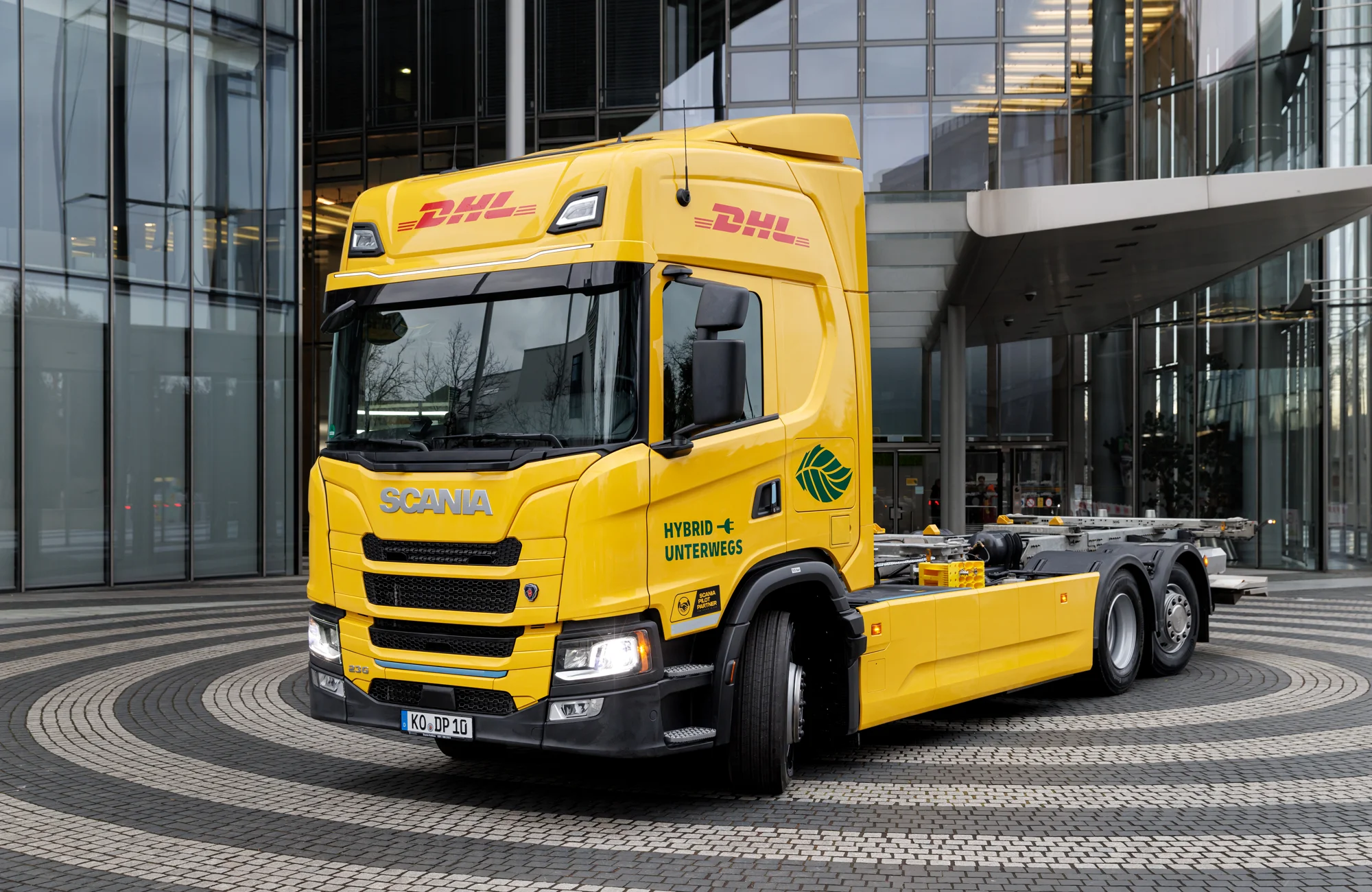
Scania and DHL Range Extender Project

Scania and DHL’s extended-range electric vehicle (EREV) programme brings refreshing realism to zero-emission ambitions. The trucks run primarily on battery power, but carry a compact generator that recharges on the move when needed.

During 100-day trials, the generator operated for just 8% of the total distance, yet the trucks cut CO₂ emissions by more than 90% versus diesel. It’s a clever hybrid step that acknowledges infrastructure gaps while still delivering major environmental gains.

Torc Robotics

As Daimler’s in-house autonomous division, Torc is building toward series production by integrating its self-driving systems into the Freightliner Cascadia platform.

Although full driverless operations aren’t yet live, the OEM integration and safety-validation framework give Torc a strong foundation as regulations mature. It’s a blueprint for industrialising autonomy from within the traditional manufacturing base.

Volvo VNL Autonomous

Volvo Trucks’ approach has been to engineer autonomy directly into the product line. The new VNL Autonomous is the first purpose-built OEM platform for level-four driverless transport, incorporating full redundancy and safety integration from day one.

And the winners are…

All eyes will be on Solutrans for the announcement of the winners of these two exceptionally important awards. Will they be an electric DAF, a driverless Volvo, a hybrid Scania or a self-thinking Bosch system? Irrespective of the winners, something has become obvious: road transport is reinventing itself faster than ever. For fleets, drivers and logistics planners alike, that is something worth celebrating. 

Published by

Charleen Clarke

CHARLEEN CLARKE is editorial director of FOCUS. While she is based in Johannesburg, she spends a considerable amount of time overseas, attending international transport events – largely in her capacity as associate member of the International Truck of the Year jury, member of the International Van of the Year jury, judge of the International Pickup Award, judge of the Truck Innovation Award, judge of the Truck of the Year Australasia, and IFOY Award jury member.
Prev Safer roads: better for life, better for business
Next Padkos, panic and physics

Leave a comment

This site is protected by reCAPTCHA and the Google Privacy Policy and Terms of Service apply.