From technician to MD: We meet the new man at the helm of Volvo

From technician to MD: We meet the new man at the helm of Volvo

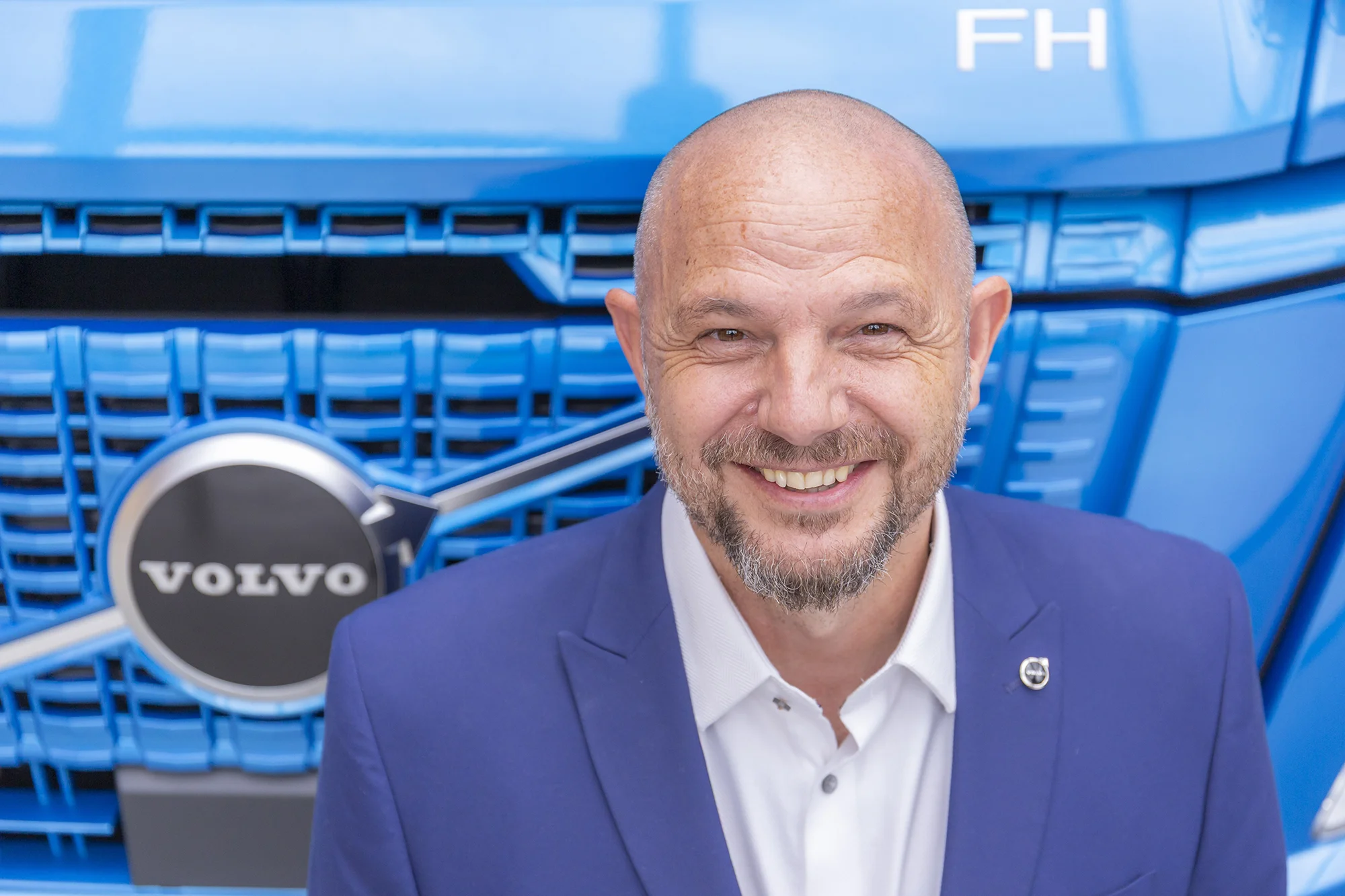
Stuart Potter has been appointed managing director of Volvo Group Southern Africa. As CHARLEEN CLARKE discovers, he is betting that strong relationships – not just strong trucks – will drive success.

Southern Africa’s transport sector demands resilience, adaptability and trust. For Stuart Potter, stepping into this environment marks not just a career milestone, but a test of leadership shaped over decades.

A move defined by opportunity… and complexity

For Potter, relocating to South Africa is more than a professional transition. It represents a deliberate step into one of the most demanding and complex trucking environments in the world. “In the Volvo Trucks world, South Africa is considered a prestigious market,” he says. “This is a fantastic opportunity for me to broaden my experience and share my industry knowledge with the local team.”

It is a market that contrasts sharply with the UK, where Potter has spent much of his career. Southern Africa’s transport landscape is defined by ultra-long-haul routes, often stretching beyond 1,500km, combined with inconsistent road conditions, port congestion, security risks and the operational realities of cross-border trade within the SADC region.

Yet, despite these structural differences, Potter sees a common thread that runs through every market in which he has worked. “Customers always want business partners and relationships they can rely on,” he explains. “Whether they are running through Europe from the UK, or cross-border within the SADC, they need to know and trust that we are standing by them.”

Experience built from the ground up

Potter’s perspective is rooted in more than three decades of experience in the commercial vehicle industry. What sets his journey apart is where it began – not in a boardroom, but on the workshop floor. “My background and the journey to date have had a huge influence on both my leadership style and how I make decisions,” he says. “Starting out as a technician and growing into the roles I’ve held since then has shaped a very human-centric approach.”

That foundation continues to mould how he engages with people across the business. From drivers and technicians to fleet managers and owners, Potter places a strong emphasis on understanding different perspectives. “I’ve spent so much time with technicians, drivers, owners and fleet managers,” he says. “That has given me the opportunity to value and anticipate others’ perspectives. If you can’t do that, you miss the most important piece of the puzzle.”

This ability to connect across levels is not simply cultural – it is operational. In a sector where small inefficiencies can have significant financial consequences, informed decision-making depends on understanding the realities of daily operations.

An industry driven by people

Despite the technological evolution of the trucking sector, Potter remains clear about what continues to define it. “Honestly, I just love it!” he says. “Whether it’s a driver, parts advisor, technician, owner or anyone in between, the personalities, the challenges and the dynamic nature of this industry inspire me every day.”

At the centre of this outlook is a simple but powerful belief: “People deal with people; people work with – and for – people.” This philosophy informs Potter’s approach to leadership: rather than focusing solely on systems or structures, he emphasises relationships as the foundation of performance. “Taking that forward it’s important, then, to keep it real,” he adds. “Simply put, it’s the only way to move forward together.”

Operating in a high-pressure environment

Fleet operators in South Africa operate under constant pressure. Fuel volatility, infrastructure constraints and security risks all contribute to a challenging cost environment. For Potter, supporting customers in this context requires more than product delivery. “Volvo Trucks is committed to helping fleet operators stay profitable,” he emphasises. “The most effective way we do this is by working side by side with our customers, understanding their operations, priorities and pain points.”

This collaborative approach underpins Volvo’s broader strategy in the region. Rather than offering standardised solutions, the focus is on tailoring combinations of vehicles, services and support structures to individual operations. “Our role is not just to supply a truck, but to support their business,” Potter explains. That support extends to technologies designed to improve uptime, reduce fuel consumption and enhance operational efficiency – all critical factors in a market where margins are often tight.

Adapting global strategy to local reality

One of the key challenges facing any global manufacturer is balancing international strategy with local market conditions. In Southern Africa, this is particularly evident in the transition towards cleaner technologies. “In South Africa, we know that the internal combustion engine will still be around for some years,” Potter says. At the same time, he points to the potential for regulatory progression, adding: “Hopefully, the country will soon move from Euro 2 to Euro 5 legislation standards.”

While electrification and alternative fuels are advancing rapidly in Europe, adoption in South Africa remains more gradual. Infrastructure limitations, cost considerations and operational realities all influence the pace of change. “I’ve seen first-hand how challenging it can be for some operators to visualise this transition,” Potter notes. However, he is clear that progress is already underway. “Although we’ve always expected it to be slow, adoption is happening with real-world operational successes in South Africa.”

Crucially, he emphasises that the transition requires a different kind of engagement between supplier and customer. “This is not a ‘sell a truck and watch it leave the yard’ scenario,” he stresses. “Successful EV adoption requires a genuine, ongoing partnership.”

Alternative fuels and practical solutions

Alongside electrification, alternative fuels like gas present additional opportunities – albeit with their own challenges. “The UK has seen great success with gas-powered trucks,” Potter elaborates. “From a product standpoint, we are confident and have strong evidence of success.”

However, he is pragmatic about the barriers to adoption in South Africa. “The challenge… lies in ensuring a consistent supply of high-quality gas,” he explains. “This will be a key factor in determining broader adoption.”

This measured approach reflects a broader theme in Potter’s thinking: the importance of context. “There is no one-size-fits-all solution,” he says. “The transition must be approached step by step.”

Strengthening networks and infrastructure

Beyond product and technology, Potter identifies the dealer network as a critical component of Volvo’s presence in the region. “To maintain a robust sales and service presence, we regularly evaluate our footprint,” he says. “This approach is guided first and foremost by our customers’ needs.”

Rather than focusing purely on expansion, the emphasis is on strategic positioning and service quality. “Our priority is to be strategically present, investing in a high-quality, efficient service network where it adds genuine value,” he explains.

This includes ongoing efforts to improve parts availability and service responsiveness, both of which are essential in a market where downtime carries significant cost. “Parts availability depends on our ability to forecast accurately and to source and deliver parts to the right place at the right time,” Potter expands. “We are actively strengthening both areas.”

Building on solid foundations

As he steps into his new role, Potter is mindful of the well-established foundations already in place. “My predecessor, Waldemar Christensen, and the team have done an excellent job bringing the company to where it is today,” he says, adding that because of this, his focus is not on radical change, but on continuous improvement. 

“There are no silver bullets,” he notes. “Just hard work, consistency and commitment.” This approach reflects a broader understanding of leadership within the industry – one that prioritises steady progress over quick fixes.

Priorities aplenty

For Potter, the immediate priorities are clear – and they are all about gaining understanding and deeper insights. “I’d say my first priorities are really getting to know my team, getting to know our customers and partners, and feeding my curiosity by learning as much as I can about this amazing country,” he says.

It is a mindset shaped not only by experience, but by a genuine desire to learn. “Moving to South Africa has made me realise just how much of the world I still want to see, explore and understand,” he reflects.

In a sector defined by constant movement, that sense of curiosity may prove to be as important as any technical or strategic capability, because – as Potter makes clear – the fundamentals of the industry have not changed. “Customers come first, always,” he says, “and they need partners they can trust.” That is precisely what he intends to deliver…
Published by

Charleen Clarke

CHARLEEN CLARKE is editorial director of FOCUS. While she is based in Johannesburg, she spends a considerable amount of time overseas, attending international transport events – largely in her capacity as associate member of the International Truck of the Year jury, member of the International Van of the Year jury, judge of the International Pickup Award, judge of the Truck Innovation Award, judge of the Truck of the Year Australasia, and IFOY Award jury member.
Prev Courier companies drive e-commerce logistics
Next From price shock to panic buying: record demand for fuel

Leave a comment

This site is protected by reCAPTCHA and the Google Privacy Policy and Terms of Service apply.