Fortune-telling for fleets

Fortune-telling for fleets

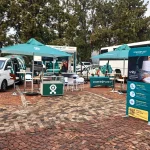
Vivo Energy, a pan-African retailer and marketer of Shell- and Engen-branded fuels and lubricants, launched its VE-CEM (continuous equipment monitoring) solution on 15 September, powered by digital twin technology from tech company Intangles.ย 

This new offer is targeted at commercial customers in the transport and logistics, mining, construction, and agricultural sectors, where equipment uptime is critical to operations and profitability. With VE-CEM, Vivo Energy says that customers can reduce downtime, cut maintenance costs, improve fleet availability, and make faster, smarter operational decisions.ย 

By harnessing real-time data from the electronic control unit (ECU), VE-CEM provides insights into key systems including the engine, aftertreatment, brakes, battery and alternator, and air intake, as well as how driver behaviour impacts vehicle health and fuel consumption. This offers a full view of fleet and asset health.ย 

โ€œAt Vivo Energy, we donโ€™t just fuel industries; we power transformation. With VE-CEM, our customers will be able to predict issues before they happen โ€“ slashing costs, boosting productivity, and gaining greater confidence in their operations,โ€ says Stan Mittelman, Vivo Energyโ€™s CEO. โ€œThis new offer will deliver real value where it matters most: keeping fleets and equipment working reliably, day after day.โ€

Twice as nice

The digital twin technology underlying VE-CEM creates what Intangles describes as more than just a digital copy. โ€œThe first step is the creation of a ‘base’ digital twin, using OEM information on the make and model of the vehicle and historical data gathered from other, similar vehicles and/or their digital twins,โ€ the artificial intelligence (AI)-powered fleet management provider points out.

โ€œThe twin exists in the cloud โ€“ a vast global network of connected servers โ€“ and it doesn’t really look like a truck, but rather a series of data (visualised into charts) that capture relevant information about the real-world vehicle,โ€ it continues. โ€œThe digital twin gets that data by being โ€˜connectedโ€™ to its physical twin via a telematics device installed in the real-world truck; with the Intangles platform, data from more than 450 sensors is continuously transmitted to the digital twin.โ€

As the data streams in, the system becomes increasingly sophisticated. โ€œAs more and more information comes in from the real truck, the digital twin becomes more and more complete, reflecting its physical counterpart with greater accuracy. Over time, it becomes much more than a copy of the make and model of a truck; instead, it becomes a copy of that particular vehicle, reflecting its mileage, its wear and tear, its driver’s behaviour, and a host of other variables โ€“ even road conditions, weather, and traffic,โ€ Intangles emphasises.

Yet the digital twin can do far more than just enable better diagnostics. It can also help fleet managers predict future issues. โ€œThatโ€™s where AI comes in. Through so-called machine learning โ€“ a branch of AI that explores ways to make machines learn the way humans do โ€“ the truckโ€™s digital twin gets smarter all the time,โ€ Intangles explains. โ€œFollowing a set of instructions known as an algorithm, the digital twin โ€˜learnsโ€™ from its own physical twin, as well as from historical data and data from other similar digital twins in the cloud.โ€ย 

The crystal ball of it all

This technology enables whatโ€™s called predictive modelling. โ€œUsing algorithms, physical-twin and historical data are analysed mathematically to forecast future outcomes โ€“ for instance, whether and when a particular part is likely to break down and will require maintenance, or how much fuel will be in the physical truckโ€™s tank at each stage of the trip,โ€ Intangles elaborates.ย 

This represents a shift from reactive to predictive maintenance. โ€œOur commercial customers face real pressures: tight margins, high equipment maintenance costs, and rising expectations around safety and sustainability,โ€ adds Kerim Kermen, Vivo Energyโ€™s VP of lubricants. โ€œVE-CEM provides something they have long needed โ€“ the ability not just to monitor, but to predict equipment failures and take action before a breakdown ever occurs. That foresight changes the game. It turns maintenance into a strategic advantage, reduces costs, lowers fuel consumption, and improves fleet availability.โ€

The system has already been piloted with mining and fleet operators in Kenya, Senegal, and Zambia, with customers reporting detection of potential issues weeks in advance. Vivo Energy plans to roll out VE-CEM across its commercial operations throughout Africa.

Published by

Jaco de Klerk

In his capacity as editor of SHEQ MANAGEMENT, Jaco de Klerk is regarded as one of the countryโ€™s leading journalists when it comes to the issue of sustainability. He is also assistant editor of FOCUS on Transport & Logistics.
Prev No flapping required: can drones learn to ride the wind?
Next Powerfleet Africa turns safety from reactive to proactive at SABOA

Leave a comment

This site is protected by reCAPTCHA and the Google Privacy Policy and Terms of Service apply.