Dunlop doubles down on fleet value
When margins are tight, downtime is costly and road conditions are unforgiving, tyres are strategic assets. Few suppliers understand this better than Dunlop Tyres South Africa.
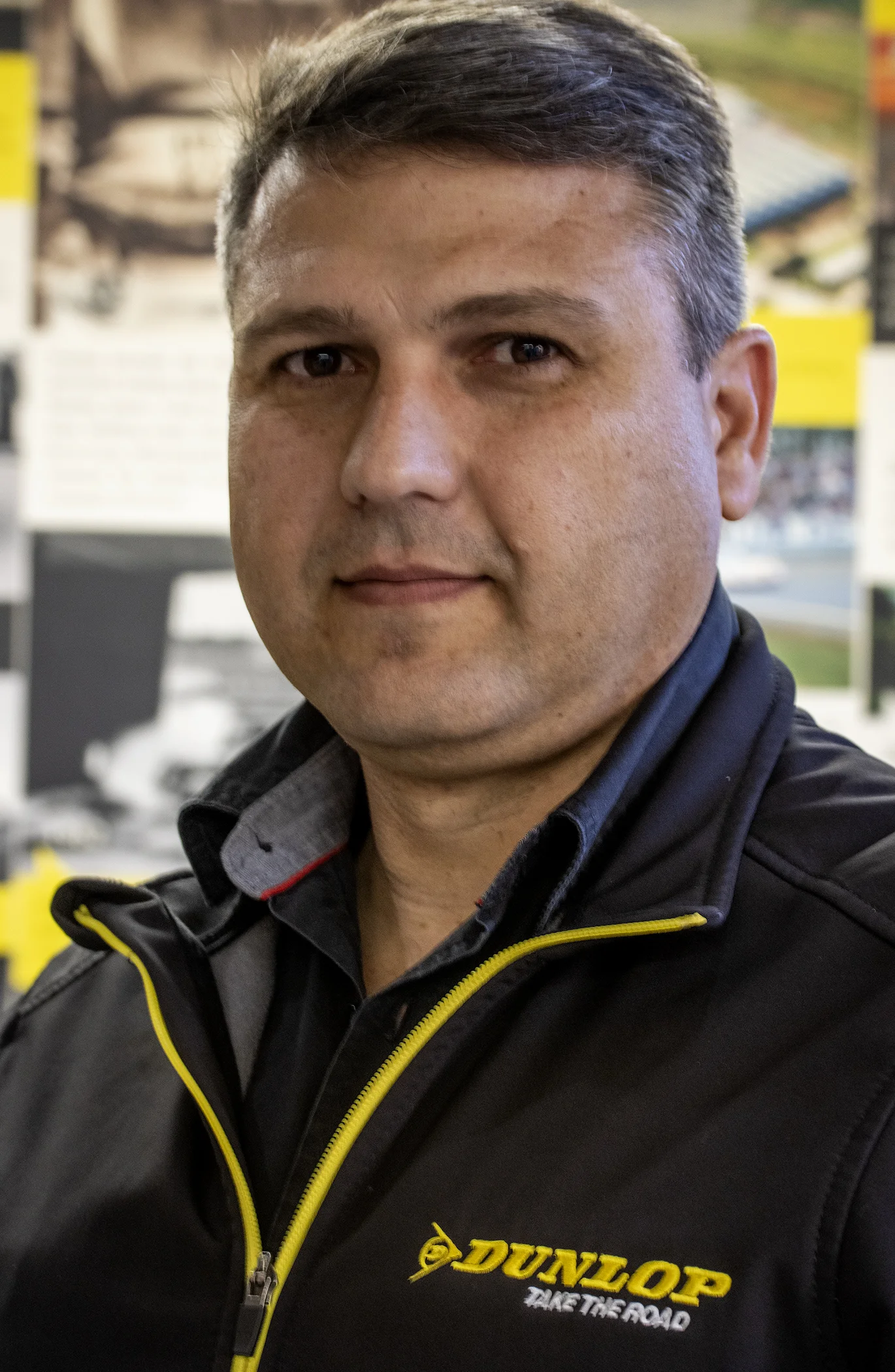
According to Louis Marais, general manager: commercial, the companyโs approach combines deep technical expertise, local adaptation and long-term partnership with fleets.
Marais says Dunlopโs support begins with people. โDunlop SA has the largest commercial sales team in the domestic market, with 15 experienced professionals supported by a technical team of nine specialists,โ he elaborates. โWe also have a dedicated training manager who delivers a range of practical training modules.โ
This on-the-ground presence allows Dunlop to engage fleets proactively โ not simply when tyres fail. Their teams conduct detailed tyre and fleet surveys (โrubber auditsโ), assessment of current stock and planning around future requirements. For fleets trying to manage cash flow, this means fewer surprises and a better handle on inventory.
Monthly scrap-tyre analysis has become one of Dunlopโs most valuable interventions. By examining failed tyres, the technical team identifies the root causes behind high wear or premature failure: underinflation, misalignment, overloading, driver behaviour or mechanical issues. As Marais highlights, these audits allow fleet managers to take corrective action promptly, protecting assets and improving safety.
Training also plays a crucial role in the company’s customer service offering. Fitters, mechanics, drivers and even transport managers regularly attend Dunlopโs truck and bus radial (TBR) product training, failure-mode workshops, alignment modules and factory tours that demonstrate the quality controls behind the brand. Structured load studies and route studies further ensure that axle loads, terrain challenges and heat cycles are fully understood and addressed before they become costly.
โOur goal is to be a true partner to fleet operators, reducing cost per kilometre (CPK), minimising downtime, improving fleet reputation and uplifting skills through driver and fitter training,โ says Marais.
Cooler-running tyres: safer and more efficient
One of the company’s biggest recent advances comes from Dunlop Energy Control Technologies (Dectes), engineered to optimise every kilometre travelled. At its core, Dectes focuses on controlling heat, the contact patch and energy loss โ the three factors most responsible for performance, safety and operating cost.
โBy keeping heat under control, the tyre runs cooler. Excessive heat is one of the main causes of fatigue and sudden failures. Cooler-running tyres mean less risk of blow-outs, more predictable performance and a stronger casing that is better suited for retreading,โ explains Marais.
A more rigid, uniform contact patch means even wear, improved braking consistency and reduced shoulder distortion, giving drivers confidence in all conditions. Because wear is more uniform, fleets also spend less time rotating tyres or addressing irregular patterns.
Dectesโ focus on reduced curvature and optimised tread design also delivers low rolling resistance, which is particularly significant in a high-fuel-price environment: โFor a fleet, this means better fuel economy on every route, and helping your fleet go further โ more safely and efficiently โ every day,โ says Marais. Lower fuel consumption also reduces COโ emissions, thereby also supporting environmental targets.
Designed in Japan, built for Africa
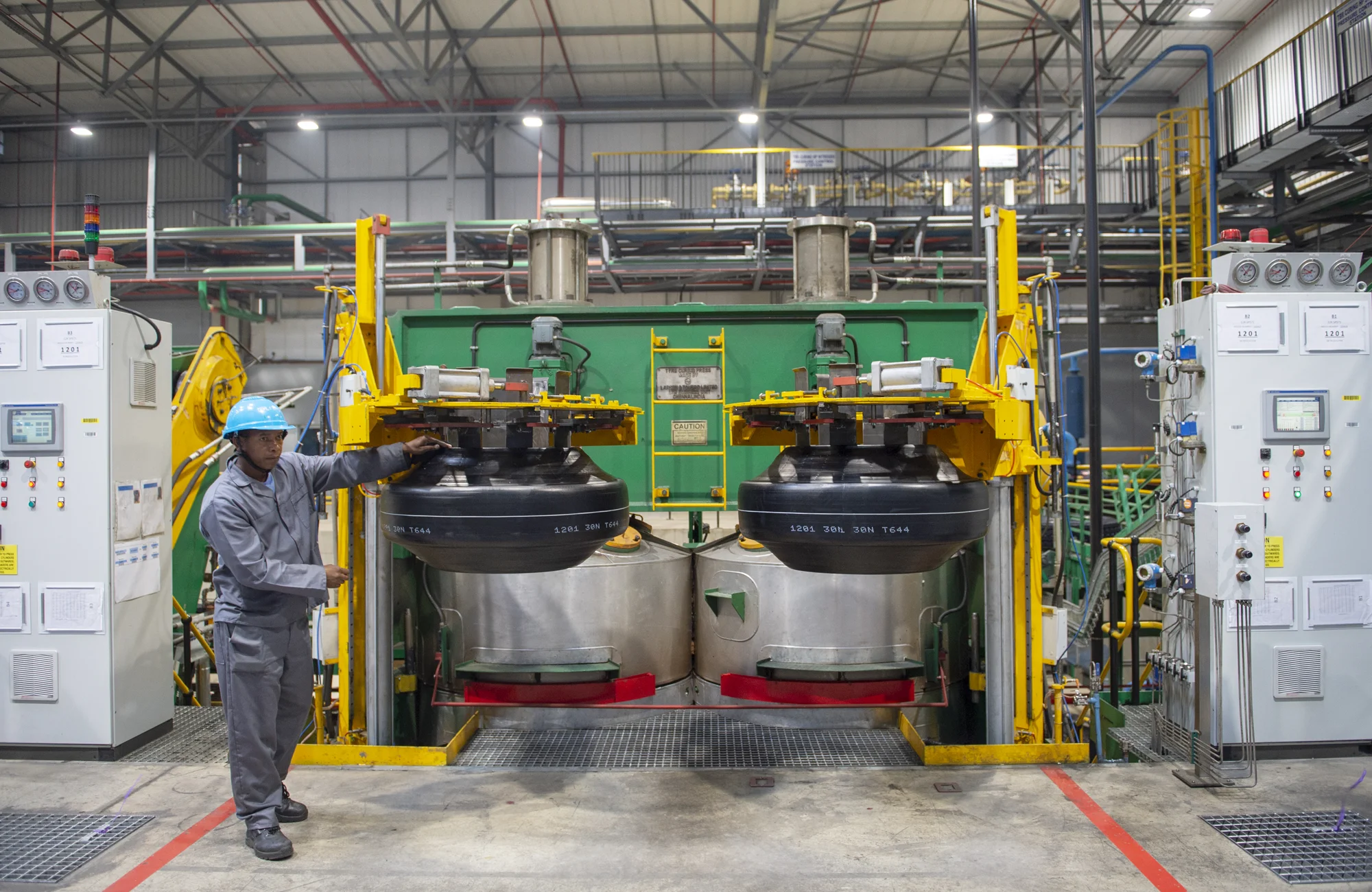
Although Dunlopโs TBR tyres are designed and engineered in Japan, every product undergoes local adaptation and long-term validation. Marais says the development team works with a clear principle: technology must meet African reality.
This means building tyres that withstand high ambient temperatures, rough variable road surfaces, frequent potholes, long inter-town hauls and curbing in dense urban environments. Carcass construction, tread design and rubber compounds are fine-tuned for each application: long haul, regional, construction, urban logistics or last-mile delivery.
Development doesnโt stop once a tyre hits the market. Continuous evaluation with local fleets takes place for years afterwards. โThis is where the Japanese word โKaizenโ comes in: continuous, incremental improvements in the manufacturing process or product performance to make it perfect,โ notes Marais.

Looking beyond price
One of the biggest mistakes fleet managers still make, Marais warns, is choosing tyres on price alone. With fleets under pressure, cheap imports may seem attractive, but often cost more in the long run.
โThe short answer is not to buy on price, but to rather look at CPK or total cost of ownership (TCO). At the price of tyres today, fleet owners should not look at tyres as a purchase, but rather as an investment โ a company asset.โ
High-quality tyres offer longer life, better retreadability, casing warranties and measurable fuel savings. More importantly, they reduce downtime โ a hidden cost that can dwarf the initial purchase price.
Navigating a tough environment
South Africaโs road network remains one of the tyre industryโs biggest headaches. โPotholes, overloaded vehicles and uneven road maintenance accelerate casing damage and blowouts,โ says Marais.
Beyond that, port congestion and border delays force trucks to stand idle, reducing productivity and pressuring fleets to acquire additional vehicles to maintain the same throughput. Shrinking margins tempt some operators to opt for cheaper tyres just to stay within monthly budgets.
Security concerns, breakdown risks and cargo theft โ as well as rising fuel, finance and insurance costs โ compound the situation, leaving tyre budgets squeezed even further.
Still, Marais sees opportunity in the crisis: โIf Covid taught us one thing, it is that with all challenges there are also opportunities.โ
He believes more operators will realise that poor-quality tyres are undermining safety, efficiency and even fleet reputation, and that investing in premium local products ultimately reduces running costs.
To help fleets manage the transition from low-cost imports to better-quality tyres, Dunlop is exploring innovative business models such as pay-per-kilometre programmes, casing return incentives and buyback schemes that keep monthly tyre budgets stable while dramatically improving lifecycle value.
A partnership mindset
From advanced tyre technologies to deep technical engagement with fleets, the commercial philosophy is clear: tyres are no longer a commodity, but a major lever of operational efficiency. Marais reinforces this repeatedly: high-quality tyres save fuel, reduce downtime, improve safety, preserve casings and ultimately enhance profitability.
Whatever the local transport sector faces over the next five years, Dunlop appears committed to walking the road with fleet operators, metre by metre, casing by casing, and kilometre by cost-efficient kilometre.
Published by
Focus on Transport
focusmagsa