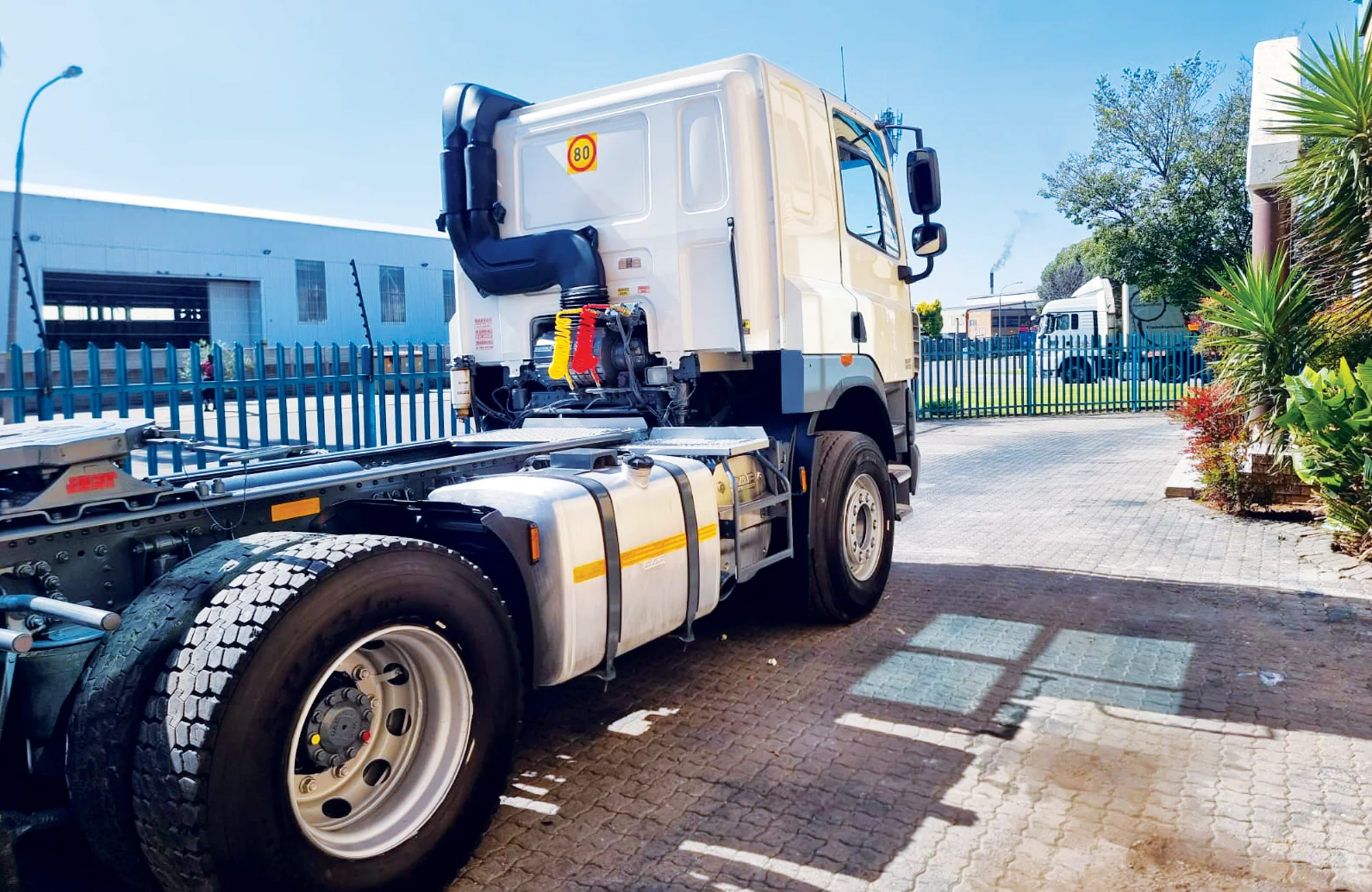
Economic pressure is reshaping South Africa’s truck market. Elliot Twani, head of used sales – DAF Trucks at Babcock International Group, tells CHARLEEN CLARKE that this is pushing operators towards premium used vehicles with affordable acquisition costs, optimal support and strong residual values.
South Africa’s used truck market is not growing because fleet operators have suddenly lost interest in new vehicles. It is growing because the economics of transport have become increasingly difficult to ignore.
High interest rates, restricted access to capital and rising operating costs are forcing businesses to reconsider how they replace and expand their fleets. At the same time, road freight remains central to the economy, particularly while rail capacity and reliability continue to constrain the movement of goods.
“Used trucks are surging in popularity across South Africa primarily due to severe economic pressures, which are forcing operators to think differently about how they invest in their fleets,” says Elliot Twani, head of used sales at Babcock International Group, the exclusive distributor of DAF trucks in South Africa.
“Operators are increasingly turning to pre-owned commercial vehicles (CVs) to protect cash flow, navigate high interest rates and maintain fleet operations amid logistical and rail capacity challenges,” he continues. For operators, the attraction starts with the purchase price. Twani estimates that pre-owned CVs can cost between 40 and 65% less than new models. That difference can free up capital for fuel, tyres, maintenance, drivers and
other working expenses rather than tying it up in the vehicle itself.
Twani says Babcock is seeing growing interest from owner-drivers, SMEs and established fleet operators looking to expand without taking on the cost of new vehicles. Rather than delaying investment, many are choosing inspected premium used trucks that are ready to work from day one. Yet affordability alone does not make a used truck a sound investment; a low purchase price quickly loses its appeal if the vehicle spends too much time off the road.
This shift is already evident among Babcock customers. “We’re seeing operators look well beyond the initial purchase price. One agricultural transport customer introduced three Premium Select DAF trucks into its fleet and, after seeing them perform in daily operations, returned just months later to purchase a fourth,” he says. “Those are the decisions that tell us operators are investing for long-term value rather than simply looking for the cheapest truck.”
Buyers are looking beyond price
Twani says South African buyers have become more demanding and methodical. They want roadworthy vehicles with full service records, sound mechanical and structural integrity, suitable payload capacity and the correct configuration for the work. Buyers are also paying closer attention to the overall condition of the vehicle, from drivetrain performance and tyre life to its suitability for the intended application. Operators are no longer searching for the cheapest truck available – they are looking for an asset that can begin earning immediately and continue earning over the long term.
Service history is central to that assessment. “It reveals the operating history and helps to verify whether all manufacturer-mandated service intervals were followed,” Twani explains. “It also helps to identify hidden mechanical issues and confirms warranty and recall compliance. A truck is an investment. Following the proper channels protects that investment against costly failures.”
The condition of a used truck is not determined by age or mileage alone. How it was driven, serviced, loaded and repaired can be just as important. For Babcock, managing total cost of ownership extends well beyond the point of sale. The objective is to keep trucks earning throughout their working lives through planned maintenance, genuine parts availability, technical expertise, proactive fleet support and efficient fuel consumption. Every aspect is focused on improving uptime and reducing the total cost of operating the vehicle over its lifecycle.
Driver training and telematics also play a part. “A telematics system that monitors driver behaviour can significantly reduce bad driving habits, curb diesel costs and prevent unwanted expenses,” Twani says.
What Premium Select is meant to provide
For operators under pressure, buying used shouldn’t mean accepting unnecessary risk. That’s the thinking behind DAF Premium Select, which offers a more controlled alternative to purchasing an ordinary used truck with limited verification. Twani says the programme is intended to help emerging and established operators acquire financeable vehicles that are fit for purpose and ready to work without the expense of buying new.
“Every Premium Select truck undergoes a comprehensive technical inspection before it reaches the customer,” he emphasises. “Our qualified technicians assess the vehicle against strict quality standards to ensure it is ready to work and capable of delivering dependable performance without stretching the customer’s budget.”
The assessment covers 200 inspection points and examines both mechanical and cosmetic condition. Twani describes it as a comprehensive quality assurance process completed before purchase and delivery, with category-specific checks intended to bring each truck up to the programme’s required standard.
A six-month driveline warranty provides customers with additional confidence during the early months of ownership, when trust in a used vehicle is being established. While no warranty can eliminate every risk associated with a pre-owned CV, it can reduce uncertainty around major driveline components during one of the most important stages of ownership.