Transport is the world’s fastest-growing source of pollution. According to RS South Africa’s Erick Wessels, this puts South Africa at risk of losing competitiveness and missing sustainability goals.
“Transportation is one of the fastest-growing contributors to global greenhouse gas emissions,” says Wessels, sales director of RS South Africa. “In 2019 alone, the sector accounted for 30% of global energy demand and 23% of direct CO₂ emissions. If we don’t act decisively, the challenge will only intensify.”
Road transport remains the worst offender – particularly freight. The global vehicle fleet is set to more than double by 2050, with older, more polluting vehicles concentrated in developing regions. “This is especially concerning for Africa and Latin America, where ageing fleets will continue to worsen emissions if not replaced by cleaner technologies,” Wessels elaborates.
Public transport: the obvious lever
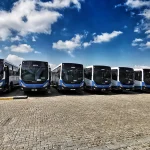
“Public transport is one of the most effective tools we have to cut emissions and congestion,” says Wessels. “Buses, trains, and trams offer far smaller carbon footprints compared to private vehicles.”
He points out that modern fleets are increasingly efficient by design, carrying more passengers per trip while consuming less fuel per capita. “When you add hybrid and electric buses to the mix, the sustainability gains are significant. And if you combine that with smart urban planning, you can achieve even greater reductions in traffic and emissions,” he adds.
Public transport adoption also improves city liveability. “If we can encourage more people out of private cars, not only do we reduce emissions, but we also free up roads, cut congestion, and reduce commuting times,” he notes.
Hard-to-abate sectors and dire consequences
But not all transport sectors are easy to electrify. “Aviation and shipping remain particularly challenging,” Wessels acknowledges. “Here, alternative fuels such as biofuels, hydrogen, and ammonia can provide viable pathways. The important caveat is that these fuels must be produced sustainably to deliver real impact.”
The implications for South Africa are serious; the automotive industry is a vital part of the economy, but global markets are shifting rapidly. “Europe has set 2035 as the date to phase out internal combustion engines,” says Wessels. “If South Africa doesn’t align, our manufacturing and export industries will be left stranded. Transitioning our supply chains towards electric mobility isn’t optional – it’s critical for survival.”
The South African government has introduced its Electric Vehicle Roadmap to address the energy transition, but Wessels warns that progress must be accelerated: “The roadmap is a good starting point, but what matters is rapid implementation. Delays will cost jobs, exports, and competitiveness.”
RS’s role in enabling the shift
RS is committed to supporting industries through this transition. “Our purpose is simple,” says Wessels. “We want to make amazing things happen for a better world. That means helping our customers operate efficiently, sustainably, and profitably.”
The company stocks more than 800,000 industrial and specialist products, with an additional five million available on demand, sourced from 2,500 suppliers worldwide. “This breadth allows us to support the entire industrial lifecycle – from design and build to maintenance and optimisation,” Wessels explains.
RS also integrates sustainability into its own operations. “Our 2030 plan commits us to reducing our carbon footprint, fostering innovation, and operating responsibly,” he says. “Environmental, social, and governance principles are embedded in everything we do.”
A decisive decade
For Wessels, the next decade will determine South Africa’s place in the global transport economy. “If we move decisively towards electrification, cleaner fuels, and sustainable infrastructure, we can remain competitive and deliver a better future for our people,” he explains. “But if we hesitate, we will fall behind – and catching up later will be far more difficult.”