Mercedes-Benz Sprinter turns 30!

Mercedes-Benz Sprinter turns 30!

In 1995 โ€“ while the world marvelled at Nelson Mandela handing the Rugby World Cup to Franรงois Pienaar, Microsoft released Windows 95, the World Trade Organization was founded, and Jeff Bezos sold his first book online โ€“ Mercedes-Benz quietly rolled out a vehicle that would, quite literally, move the world. That vehicle was the Sprinter.

Three decades on, the Mercedes-Benz Sprinter is more than just a van. Itโ€™s a benchmark, a byword, and a global workhorse that has come to define an entire category. With five million units sold across more than 130 countries, and still leading its segment in Europe, the Sprinter has secured its place in automotive history โ€“ not with flashy gimmicks or brute force, but through consistent innovation, class-leading versatility, and a reputation for reliability that has made it the van of choice for businesses, governments, and adventurers alike.

A new name for a new era

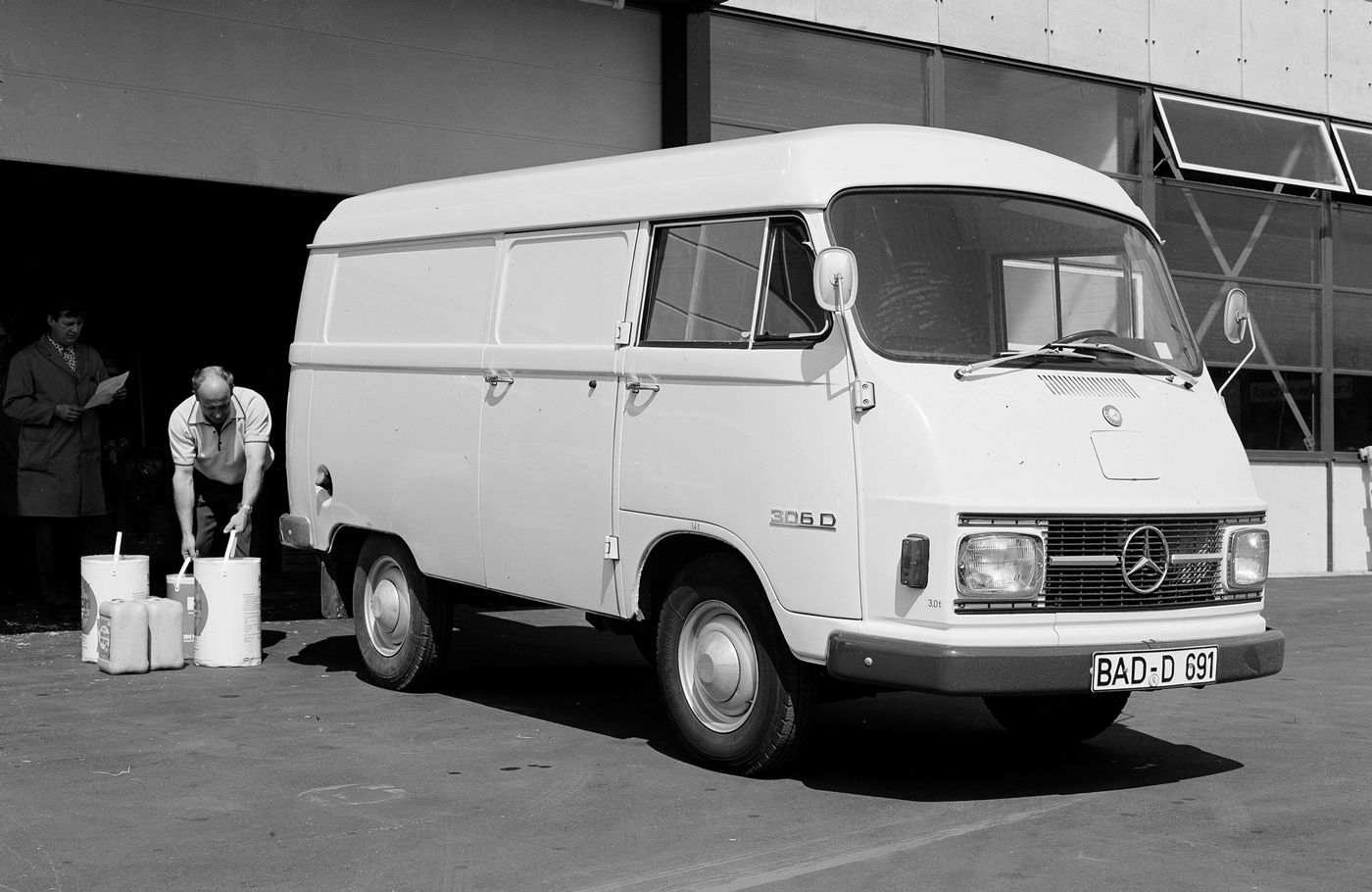
When the Sprinter debuted in 1995, it marked the beginning of a new philosophy in the world of light commercial vehicles. It was not merely a successor to the Mercedes-Benz T1 (internally designated TN); it was a complete reimagining of what a van could be. With a self-supporting body, independent front suspension, and powerful engines, the Sprinter offered a car-like driving experience โ€“ something virtually unheard of in the commercial van market at the time.

Importantly, it was also the first Mercedes-Benz van to carry an actual name, rather than a sterile alphanumeric designation. This small branding change had a big psychological impact. The “Sprinter” name conveyed agility, speed, and purpose. It was a van with identity โ€“ and this resonated with customers.

Safety first, always

From the beginning, safety was central to the Sprinterโ€™s mission. The original model came equipped with disc brakes on all wheels, ABS, height-adjustable seatbelts, and an optional driver airbag โ€“ making it a pioneer in van safety. Over the years, Mercedes-Benz pushed the envelope further. In 2002, the Sprinter became the first in its class to be offered with the Electronic Stability Program (ESP). By 2013, it introduced Crosswind Assist, another first in the van segment.

The second generation, introduced in 2006, continued the focus on safety with more standard electronic aids, while offering a greater range of body styles, wheelbases, and total weight capacities. With BlueEFFICIENCY technology arriving in 2009, fuel consumption and emissions were significantly reduced โ€“ a nod to a world becoming increasingly environmentally conscious.
The Sprinter evolves with the times

If the early Sprinters were revolutionary in form and function, the third generation, launched in 2018, was a full leap into the digital age. Mercedes-Benz equipped the van with the MBUX multimedia system โ€“ the same intelligent infotainment platform found in its passenger cars. For the first time, drivers of commercial vehicles had access to natural speech recognition, real-time traffic updates, and an intuitive digital interface. The van became not just a cargo hauler but a mobile command centre, a data-driven fleet asset, and a sophisticated workspace.

This generation also brought an even wider selection of drivetrains and body configurations. The introduction of front-wheel drive opened new possibilities for conversions and bodybuilders, while the nine-speed automatic gearbox offered unmatched driving refinement. Today, over 1,000 different Sprinter variants can be configured, allowing precise tailoring to use cases ranging from parcel delivery to emergency response.

The electric future: eSprinter

In 2019, Mercedes-Benz brought the Sprinter into the electric age with the introduction of the eSprinter. The battery-electric van wasnโ€™t just a symbolic gesture towards sustainability, but also a viable commercial tool. Updated in 2024, the latest eSprinter offers ranges of up to 478km (confirmed by WLTP), three battery sizes, and a modular platform designed for maximum flexibility.

Built on three continents โ€“ in Germany, Argentina, and the United States โ€“ the eSprinter now serves fleet customers from FedEx to municipal agencies, enabling last-mile delivery and urban logistics with zero local emissions.

Built for customisation

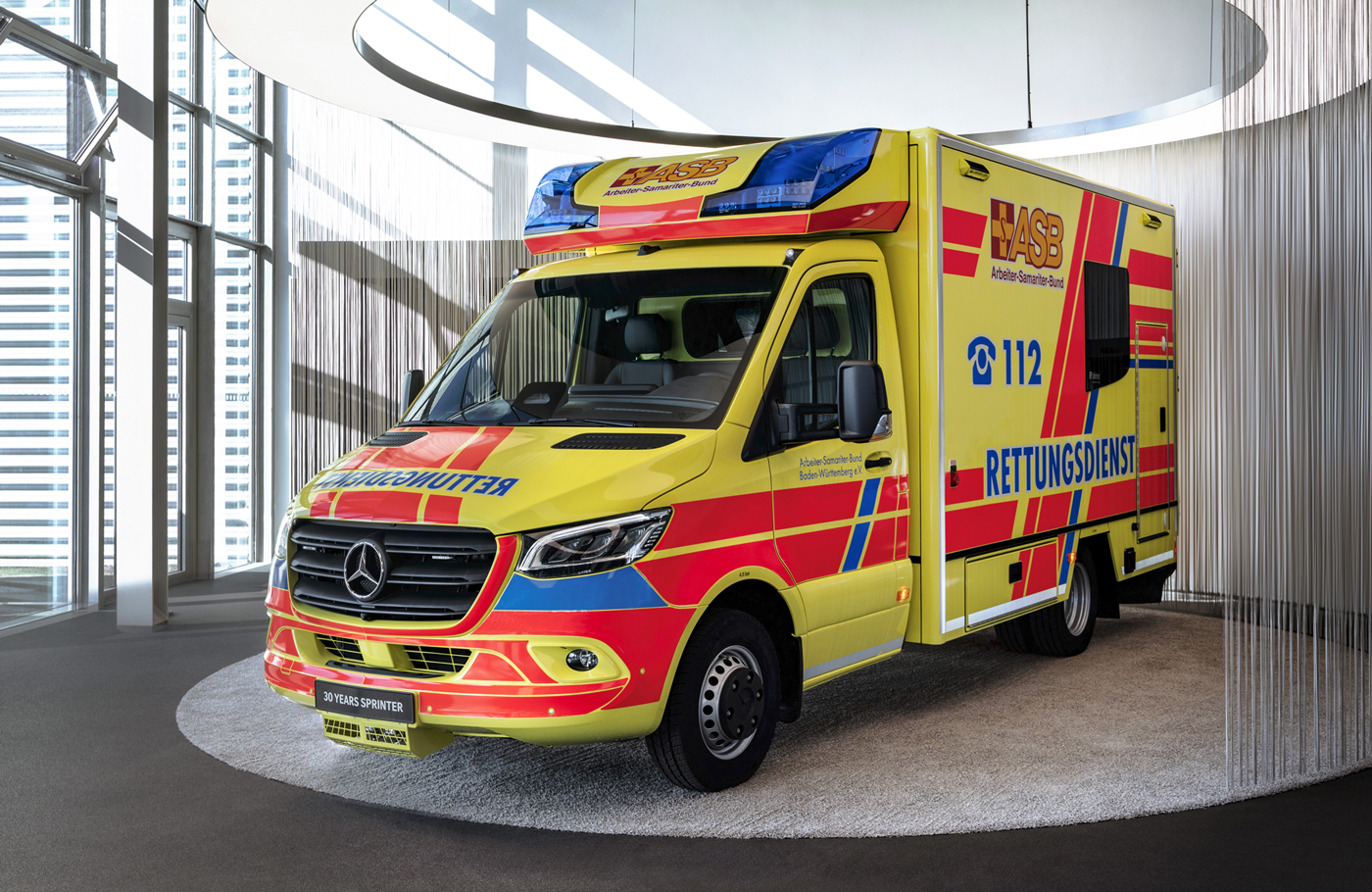
One of the most remarkable aspects of the Sprinterโ€™s success has been its relationship with third-party converters: around 75% of all Sprinters are modified after leaving the factory. This speaks volumes about the vehicleโ€™s adaptability. Whether itโ€™s turned into an ambulance, a fire truck, a mobile repair shop, a luxury camper van, or even a food truck, the Sprinter provides a solid, reliable foundation.

This customisability is no accident. Mercedes-Benz has long nurtured close relationships with upfitters, ensuring that the Sprinterโ€™s engineering supports easy conversion. The result is a vehicle platform trusted across industries, from public services and emergency operations to tradespeople, delivery firms, and mobile businesses of every kind.

Infinite stories for a cultural icon

As the Sprinter turns 30 in 2025, with more than five million Sprinters produced, the vehicle continues to dominate its segment globally. In Europe, it is the undisputed leader in the 3.5- to 5.5-tonne van class. In the United States and Canada, it has become a favourite for both individual business owners and large fleet operators.

To mark the anniversary, Mercedes-Benz launched a special edition Sprinter and eSprinter and hosted celebrations in Berlinโ€™s โ€œSprinter Cityโ€, a model city constructed to showcase the vanโ€™s role in modern urban life. From logistics to leisure, from emergency services to construction, the Sprinter is woven into the fabric of contemporary society.

Like Kleenex for tissues or Hoover for vacuum cleaners, โ€œSprinterโ€ has become shorthand for an entire class of vehicles. Itโ€™s no longer just a product โ€“ itโ€™s a cultural reference point. In tradesman circles, logistics hubs, and camper van forums alike, when someone says โ€œSprinterโ€, they mean business.

Its reputation has grown not only from its build quality and innovation but also from its real-world performance. Van owners often talk about the Sprinter with genuine affection; drivers report half a million kilometres without issue; owners of camper conversions wax lyrical about the vanโ€™s balance of space, drivability, and reliability; and fleet managers praise the total cost of ownership and excellent support from the Mercedes-Benz dealer network.

Behind the star: The human story

What also sets the Sprinter apart is the commitment behind its development. At facilities like Ludwigsfelde and Dรผsseldorf in Germany, and Charleston in the US, generations of engineers, designers, and assembly workers have contributed to this ongoing legacy.

The Sprinter has become a symbol of pride for these workers. As one Charleston employee puts it: โ€œEvery day is a new opportunity to grow, contribute, and be surrounded by a team that inspires me to reach new heightsโ€ฆ One band, one sound!โ€ Itโ€™s hard to argue with that kind of dedication.

Consistently changing the game

As the industry moves deeper into electric mobility, data integration, and sustainable production, the Sprinter is poised to lead the charge. Its new platform, introduced in the latest eSprinter, is designed to evolve โ€“ accommodating new body types, powertrains, and use cases that havenโ€™t even been imagined yet.

Mercedes-Benz Vans continues to refine the Sprinter with features like adaptive cruise control, cross-traffic braking, and updated MBUX systems, proving that even at 30, the Sprinter is still maturing. In many ways, it feels as if the Sprinter is only just beginning to tap into its full potential in a world where connectivity, efficiency and sustainability are no longer optional โ€“ theyโ€™re essential.

The Mercedes-Benz Sprinter didnโ€™t just set new standards in 1995. It has continually redefined what a commercial vehicle can be. Over the last 30 years, itโ€™s become more than a van: itโ€™s an industry benchmark, a fleet staple, a camper’s dream, and a name woven into our modern lexicon.

Like the best innovations of its birth year โ€“ Windows 95, the first smartphone, and even Amazon โ€“ the Sprinter has stood the test of time, adapting, expanding, and improving while never losing sight of its core purpose: to move people and goods safely, efficiently, and reliably. Three decades on, the Sprinter is not just surviving: itโ€™s thriving, and racing confidently into the future!

South African success story

The Sprinter is enormously successful in South Africa too, where it is available in various guises:

  • Sprinter Panel Van
    This is the workhorse of the range: versatile, economical, and designed for intelligent cargo transport. Ideal for businesses requiring reliable logistics, it offers efficient load handling and strong operational efficiency.
  • Sprinter Inkanyezi
    Tailored for South African conditions, the Inkanyezi is a rugged minibus variant featuring space for 22 passengers plus the driver. Suited for intercity travel, tourism, or commuter services, it combines durability with high passenger capacity.
  • Sprinter Chassis Cab
    This straightforward chassis-cab configuration provides an excellent foundation for custom builds. With an ergonomic cockpit designed for visibility and comfort, it allows bodybuilders full flexibility to fit specialised equipment.
  • Sprinter Tourer
    Offering the signature Sprinter blend of quality, efficiency, and comfort, the Tourer serves as a premium passenger transporter. It brings sophisticated design and refinement to shuttle services and executive transport.
  • eSprinter Panel Van
    The all-electric variant adds zero tailpipe emissions for environmentally conscious fleets. It builds on the proven Sprinter Panel Van with electric propulsion, making it ideal for urban delivery operations.

These models ensure that Mercedes-Benz caters comprehensively to South African needs โ€“ whether for cargo, passenger transport, or eco-friendly urban mobility.

Published by

Focus on Transport

FOCUS on Transport and Logistics is the oldest and most respected transport and logistics publication in southern Africa.
Prev From waste to worth: How the ROSE Foundation is greening SAโ€™s transport industry
Next Donโ€™t shoot the messenger

Leave a comment

This site is protected by reCAPTCHA and the Google Privacy Policy and Terms of Service apply.