ACT Expo 2025 maps the future of freight
ACT Expo 2025 maps the future of freight
Despite mounting uncertainty surrounding clean transport policy under the latest US administration, ACT Expo 2025 – the largest clean transportation event worldwide – showed no signs of slowing down. If anything, writes WILL SHIERS, it felt bigger and busier than ever.
Held at the Anaheim Convention Center in Los Angeles from 28 to 30 April, the event attracted more than 500 exhibitors, over 12,000 pre-registered attendees, 300 speakers, and nearly 200 zero- or low-emission trucks and vans. From battery-electric to hydrogen, a handful of gas-powered stalwarts, and even the occasional rogue diesel truck, the industry gathered to showcase progress, debate direction, and prepare for whatever comes next.
Freightliner still cooking with gas
ACT Expo may now be dominated by battery-electric and hydrogen vehicles, but gas power still has a strong presence. When the event first launched, it was very much a natural gas show – and reminders of those roots remain. Parked proudly outside the Anaheim Convention Center, the Penske-liveried Freightliner Cascadia marked the official launch of the model fitted with the Cummins X15N natural gas engine. Its presence served as a powerful reminder that compressed natural gas still has a meaningful role to play in the transition to cleaner transport.
Volvo driving toward full autonomy
Volvo Trucks showed a fully autonomous diesel-powered VNL on its stand. Developed in collaboration with Aurora, the truck is currently operating autonomously – with a safety driver – on a freight route in Texas between Dallas and Houston. The next phase will expand operations to a longer corridor between El Paso and Houston, with the ultimate goal of removing the driver altogether.
“We are not just testing technology; we are running real freight with real customers,” said Sasko Cuklev, head of on-road solutions for Volvo Autonomous Solutions. “Everything we’re building is designed to scale, using the existing road infrastructure without modifications.”
The autonomous VNL integrates Aurora’s virtual driver with Volvo’s autonomy-enabled truck platform, featuring full system redundancy for critical functions such as steering and braking.
“Our approach has always been to build safety into the truck from the ground up,” added Nils Jaeger, president of Volvo Autonomous Solutions. “We are following a structured deployment process, starting with safety drivers then moving to full autonomy once all safety cases are satisfied.”
The truck is part of Volvo’s broader strategy to tackle long-haul routes, which are increasingly difficult to staff due to an ongoing driver shortage. By focusing on predictable highway corridors in states like Texas, Volvo aims to accelerate the safe commercialisation of autonomous freight.
Volvo’s New River Valley plant in Virginia has already been upgraded to produce autonomy-ready trucks at scale, ensuring readiness for wider deployment as regulations and market acceptance evolve.



Hyundai’s hydrogen fuel cells
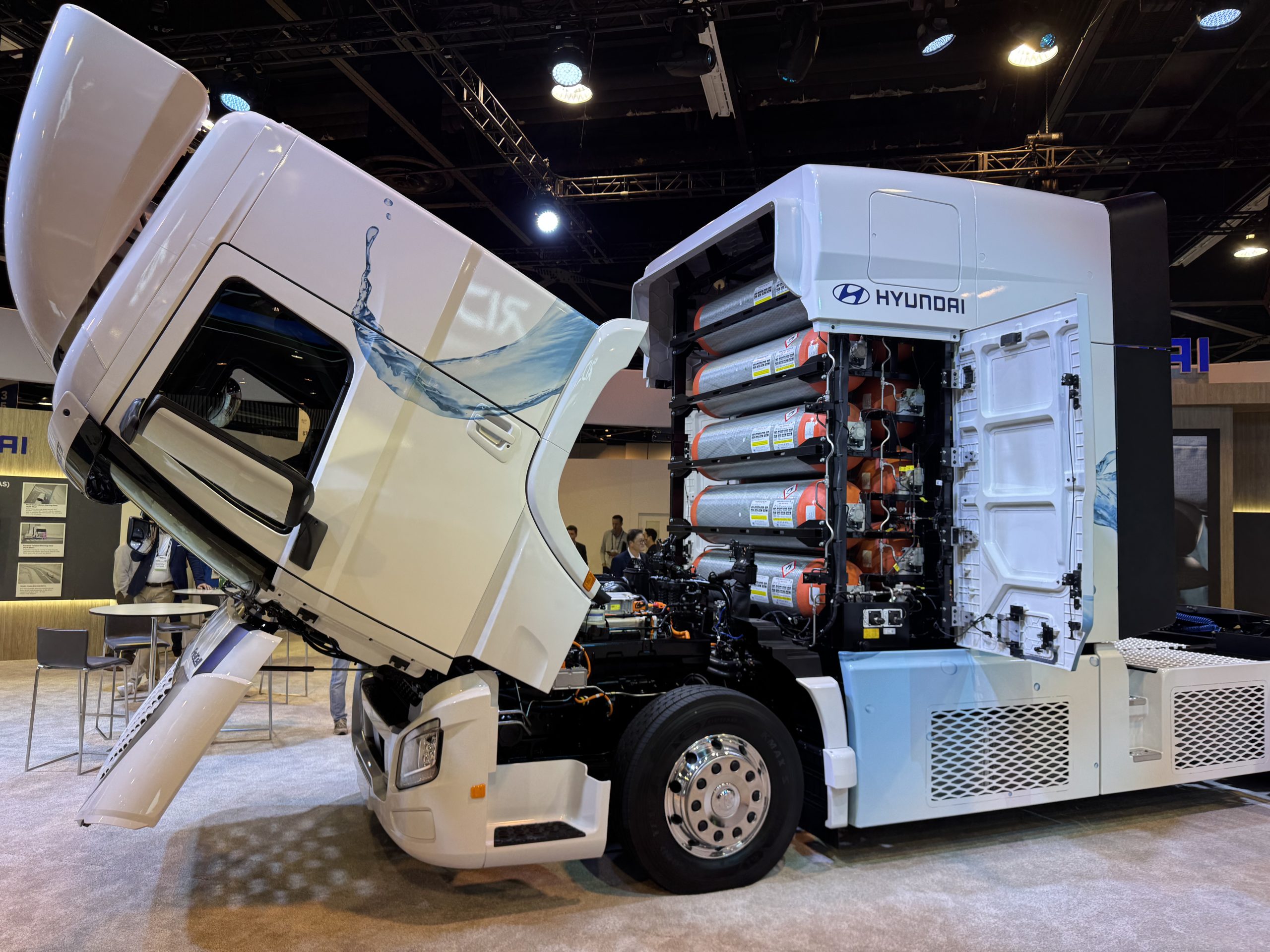
Hyundai unveiled its latest XCIENT Class 8 fuel cell electric truck, marking a major step in its zero-emission commercial vehicle programme for North America.
Powered by two 90-kW hydrogen fuel cell stacks and a 72-kWh battery, the XCIENT delivers 350kW of continuous power and up to 2,237Nm of torque. With a maximum range of 450 miles (724km), the truck features 10 hydrogen tanks holding approximately 68kg of fuel, offering fast refuelling and long-haul potential.
Tailored for the US market, the updated XCIENT includes a refreshed cabin design and a full suite of Advanced Driver Assistance Systems (ADAS) to improve driver safety and comfort during extended operations.
Hyundai also revealed that it is working with autonomous tech specialist Plus to integrate Level 4 autonomy into the XCIENT platform, aiming to boost freight efficiency while reducing driver workload.
“By combining hydrogen fuel cell technology with cutting-edge autonomy, we are shaping the future of sustainable freight,” said a Hyundai spokesperson.
Production and commercial deployment timelines are yet to be confirmed, but Hyundai says this latest XCIENT is its most advanced heavy-duty fuel cell truck to date.
Hybrid debut for Harbinger
California startup Harbinger made its ACT Expo debut with what it claims is the industry’s first purpose-built hybrid chassis for medium-duty commercial vehicles. Aimed at fleets that have to navigate long or unpredictable routes, it pairs a 140 or 175kWh battery with a 1.4-litre petrol range extender, offering up to 500 miles (805km) between charges.
Built at Harbinger’s Garden Grove facility, the platform supports a wide range of body styles, and production starts in 2026. Both hybrid and all-electric versions were on display, with Harbinger positioning itself as a price-parity alternative to diesel.
Autocar marks significant sustainability milestone
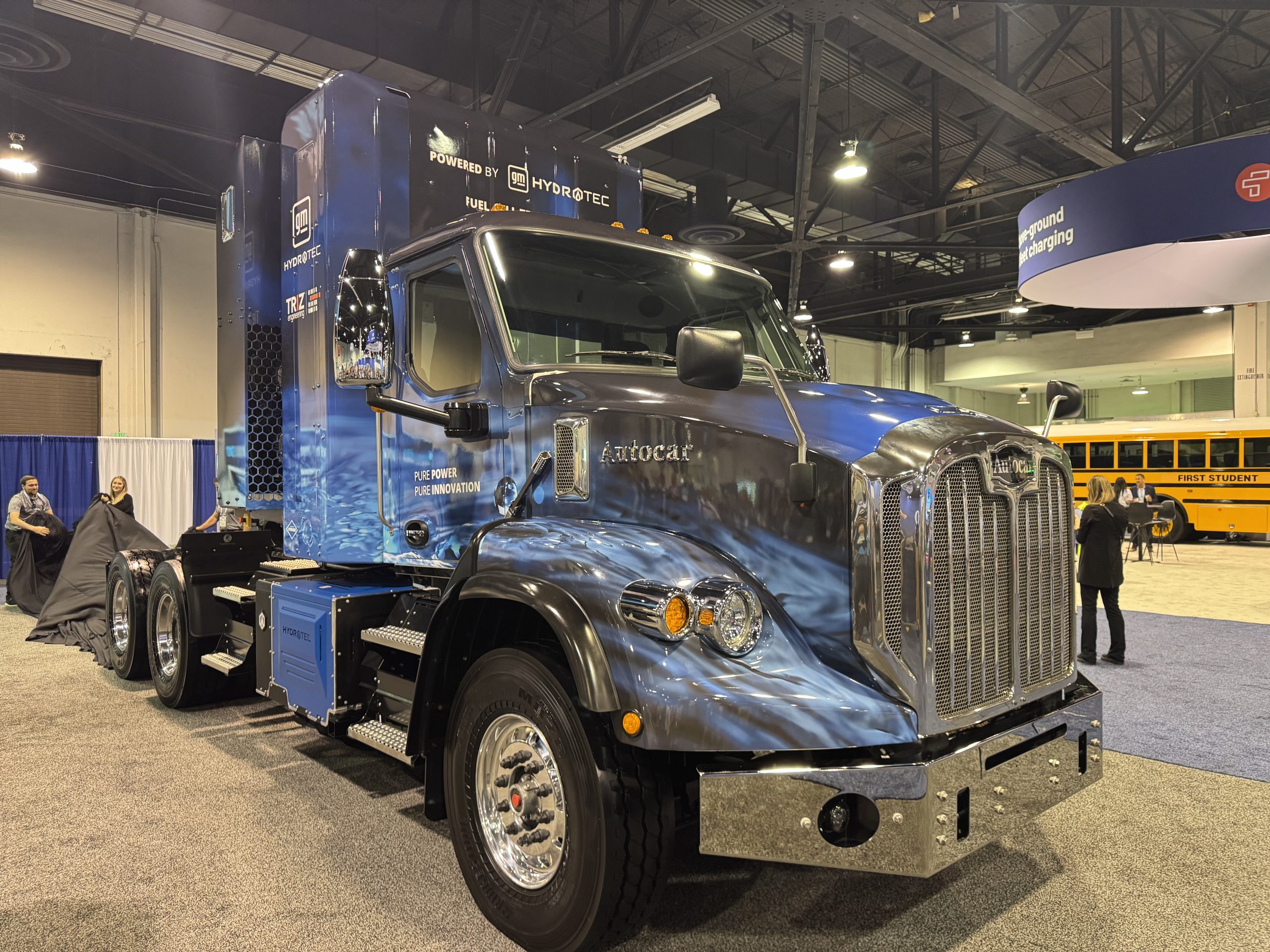
Autocar, the oldest US automotive brand, unveiled its new DC Fuel Cell truck: a hydrogen-powered, severe-duty conventional vehicle developed with General Motors and Triz Engineering.
Built for demanding vocational applications, the truck is powered by two GM Hydrotec fuel cell power cubes, each delivering 77kW of continuous power for a total of 154kW. A 140-kW battery supports peak loads and performance under heavy duty.
With a 5-kg hydrogen tank capacity, the DC Fuel Cell offers a projected range of up to 425 miles (684km). Power output is rated at 670hp and 2,170Nm of torque.
Although the fuel cell configuration adds weight, Autocar expects California and similar states to allow weight exemptions for zero-tailpipe-emission trucks. Claimed system efficiency is 55%.
“This marks a significant milestone in our sustainability journey,” said an Autocar spokesperson. “The DC Fuel Cell delivers uncompromised performance while enabling fleets to join the hydrogen revolution.”
Two new Peterbilt models
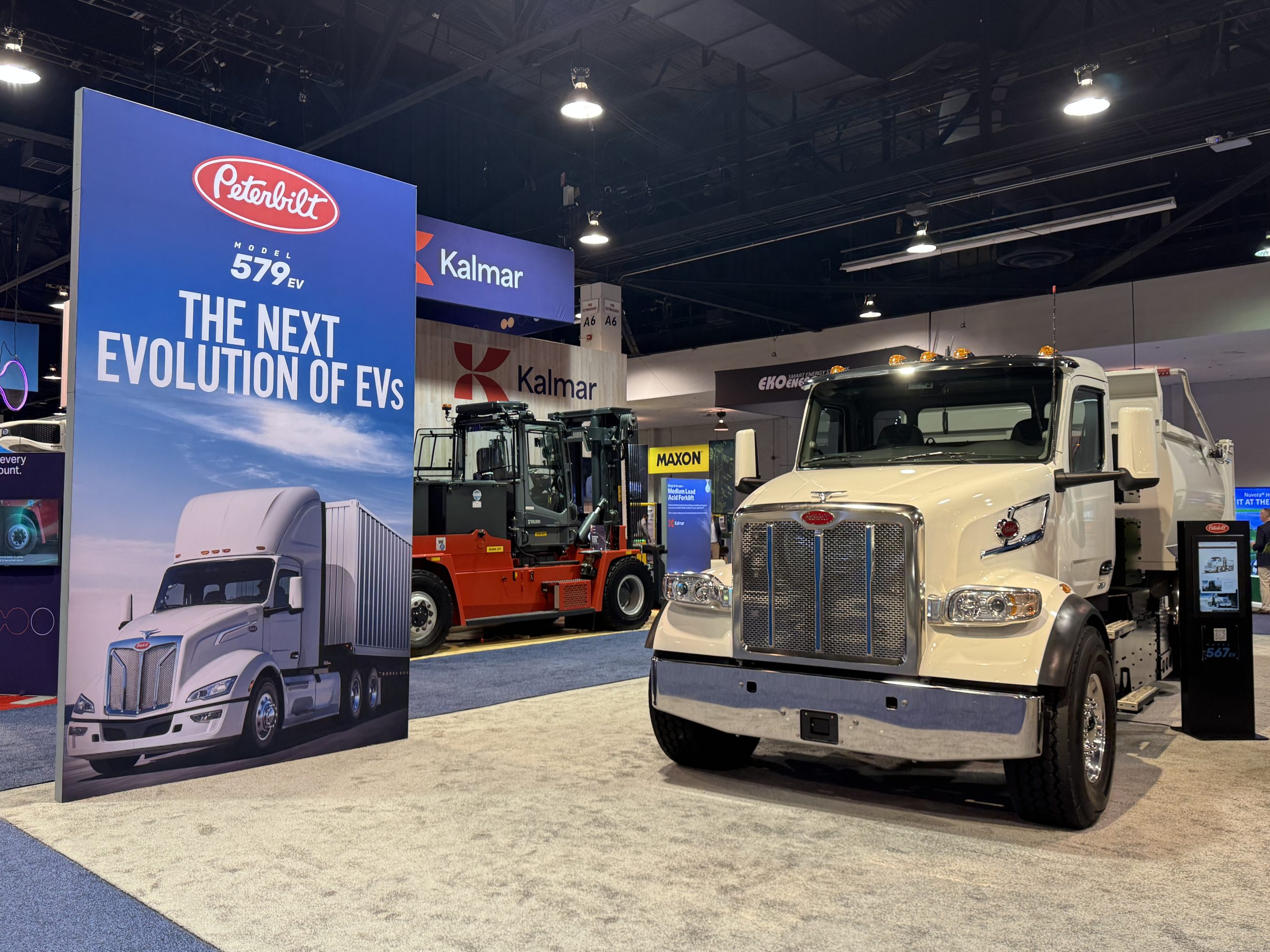
Peterbilt expanded its battery-electric lineup with two new models: the next-generation Model 579EV and the all-new vocational Model 567EV.
The 579EV, built for regional haul and drayage, offers up to 200 miles (322km) of range and 350kW fast charging, reaching 80% in just over 90 minutes. Meanwhile, the 567EV – claimed to be the industry’s first electric vocational conventional – is tailored for dump, utility, and equipment applications with up to 250 miles (402km) of range and ePTO options rated at 25 or 150kW.
“Peterbilt leads the industry with high-performance, zero-emission heavy-duty vehicles,” said Erik Johnson, assistant general manager of sales and marketing.

Battery-electric dolly from Revoy
Revoy has developed a battery-electric dolly that turns any diesel semi into a hybrid – no modifications required. The self-powered unit fits between a standard tractor and trailer, providing propulsion support during acceleration and hill climbs. Units can be swapped in about five minutes at dedicated stations, eliminating downtime and on-site charging.
Ryder is piloting the system on the I-30 corridor between Memphis, Tennessee, and Laredo, Texas. Fleets are billed based on diesel savings, making Revoy a low-risk bridge to lower emissions for operators not yet ready for full electrification.
Mack’s new on-highway offering
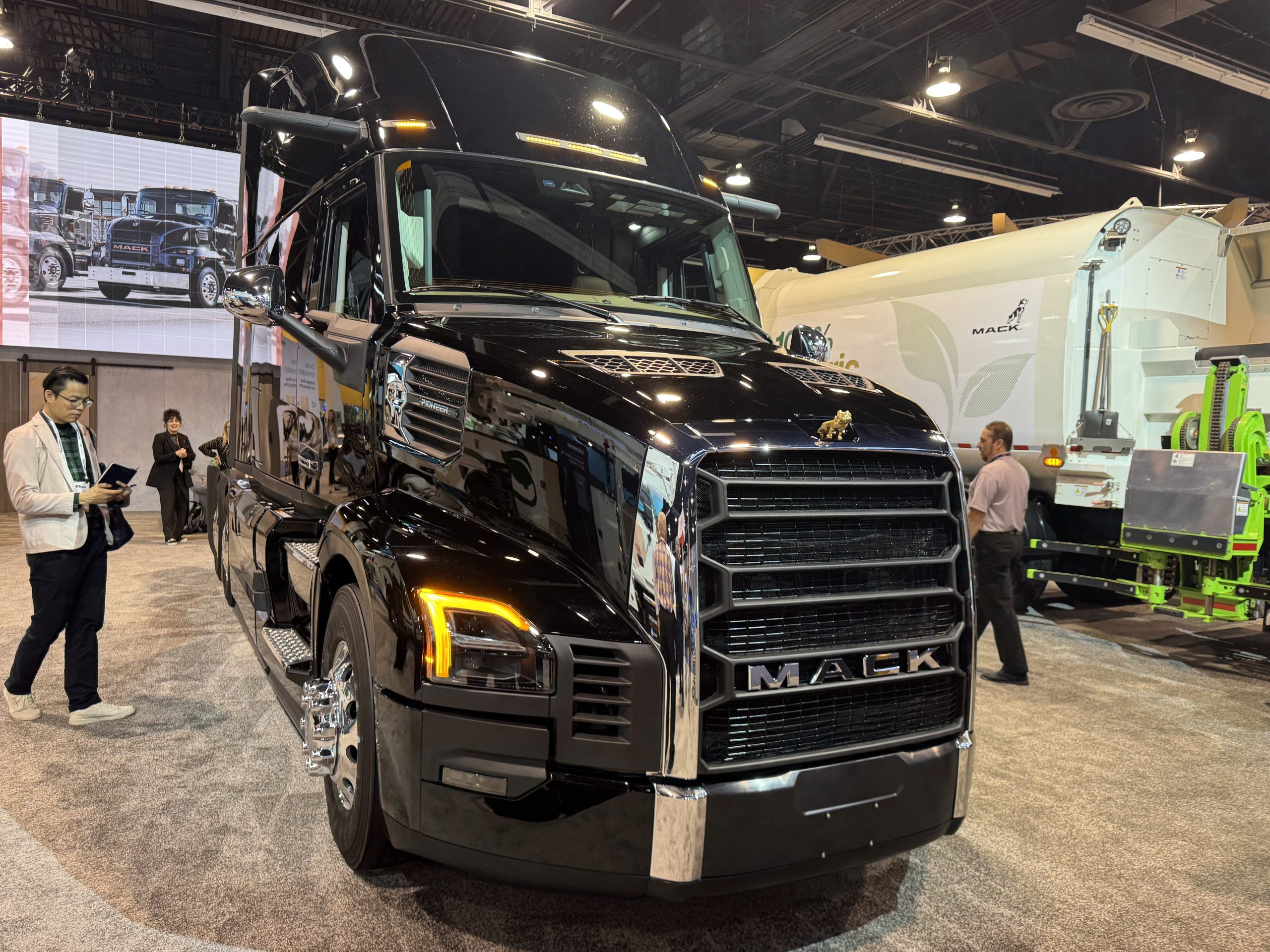
Mack Trucks has launched a new on-highway model, the Pioneer, which is the successor to the Anthem long-haul tractor introduced in 2017. President Jonathon Randall said it delivers up to 11% better fuel efficiency than its predecessor.
Featuring a more aerodynamic cab, revised driver ergonomics, and a new digital dashboard, the Pioneer targets long-haul operators seeking lower fuel costs and better uptime. An electric version will follow in 2026, featuring a newly developed Volvo Group eAxle.
Isuzu’s zero-emission strategy
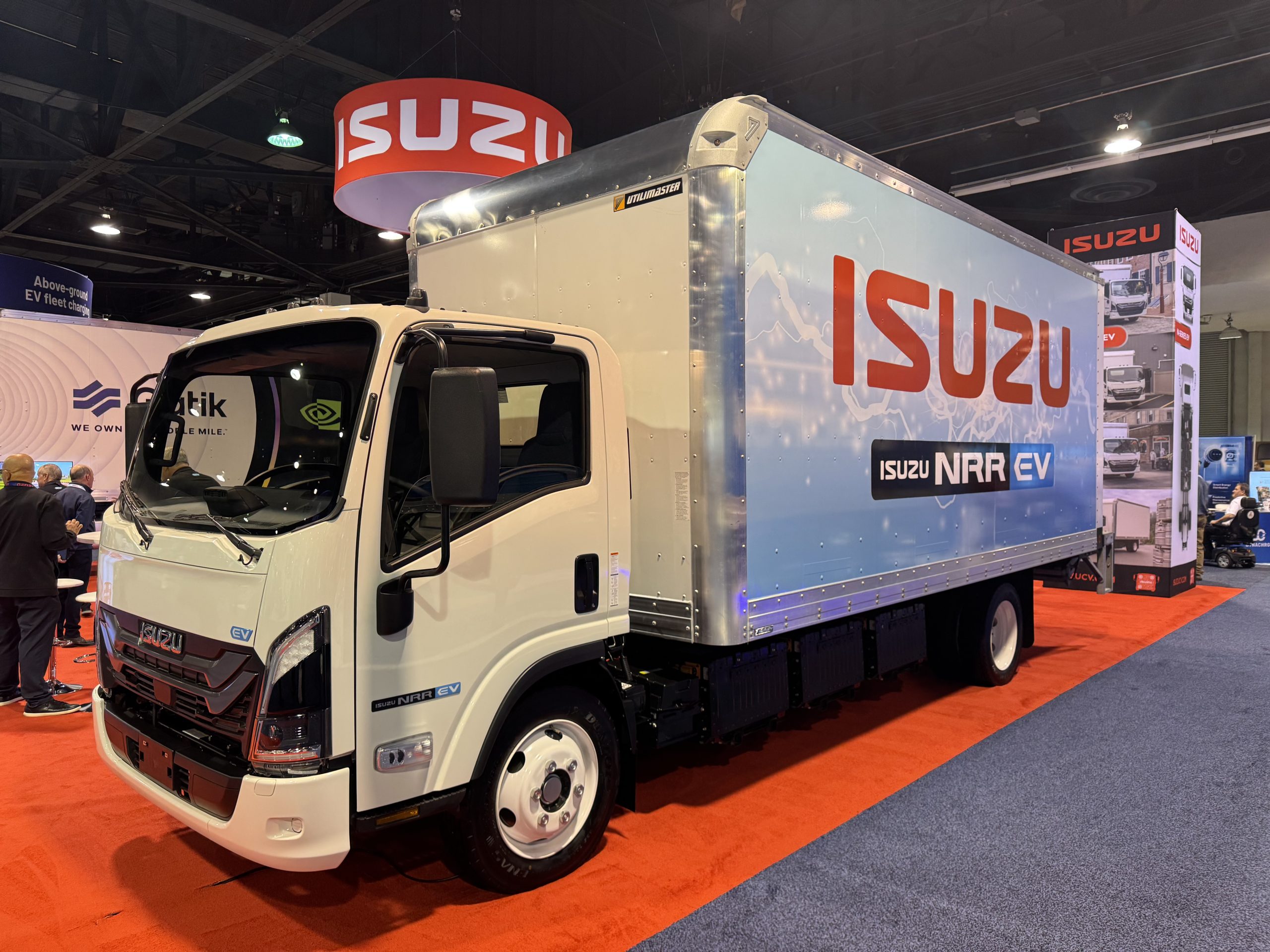
Isuzu showcased its zero-emission strategy at ACT Expo 2025, updating the NRR EV and announcing a new electric F-Series truck developed with Accelera by Cummins. Now in production in Charlotte, Michigan, the Class 5 NRR EV is available with four battery options, offering up to 235 miles (378km) of range.
Looking ahead, the co-developed F-Series Class 6 and 7 truck will use LFP batteries, a 14Xe eAxle, and Cummins’ PCAS 3.0 system, with production scheduled for 2027.
Rivian van now available States-wide
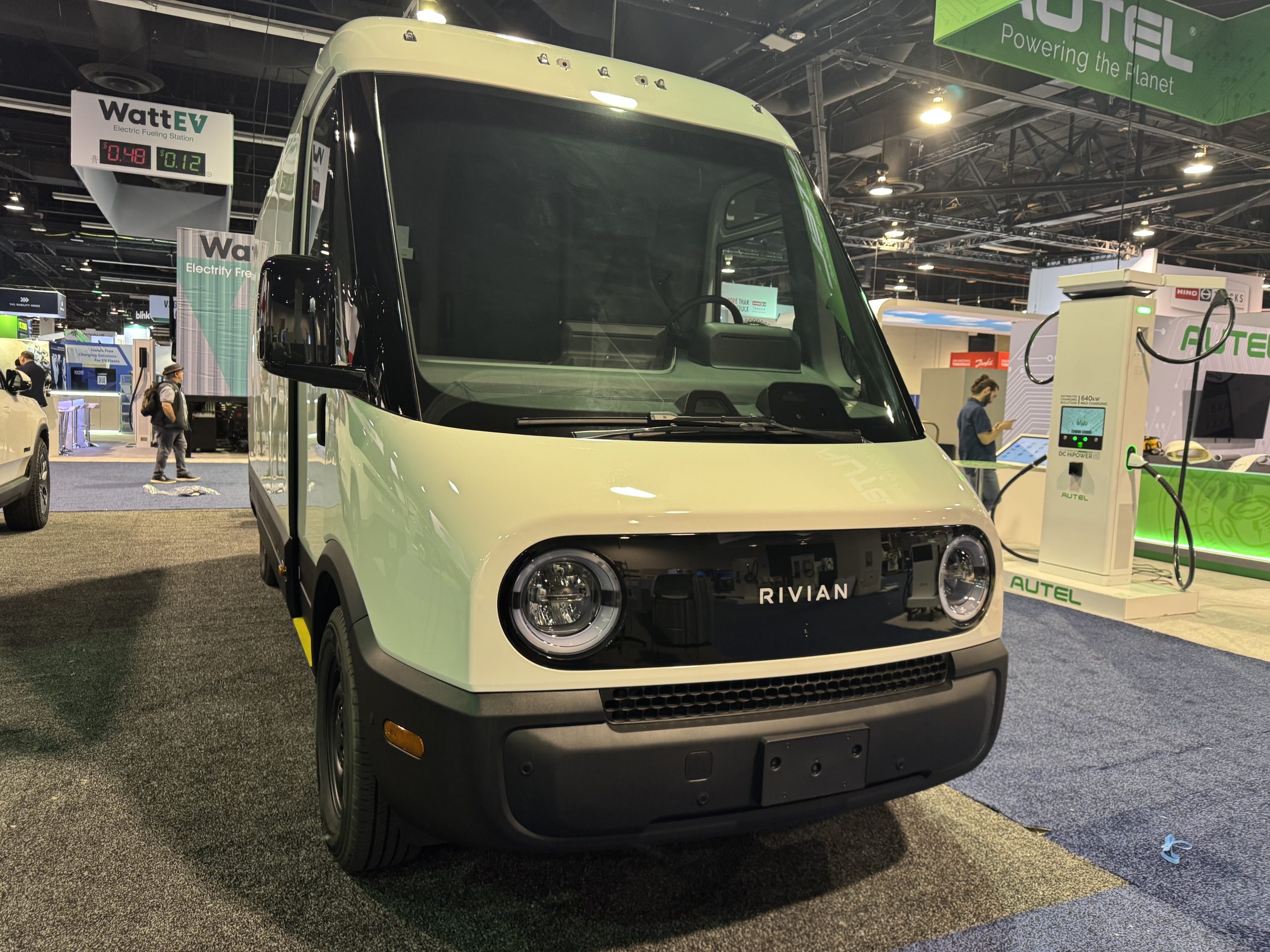
Rivian’s Commercial Van – originally built for Amazon – is now available to fleet operators across the US. Designed for last-mile delivery, it features a flat load floor, wide-opening doors, and integrated telematics.
Configurations vary by payload and range, and Rivian is now positioning the van as a flexible, zero-emission option for high-utilisation urban fleets.
GM takes aim at the last mile
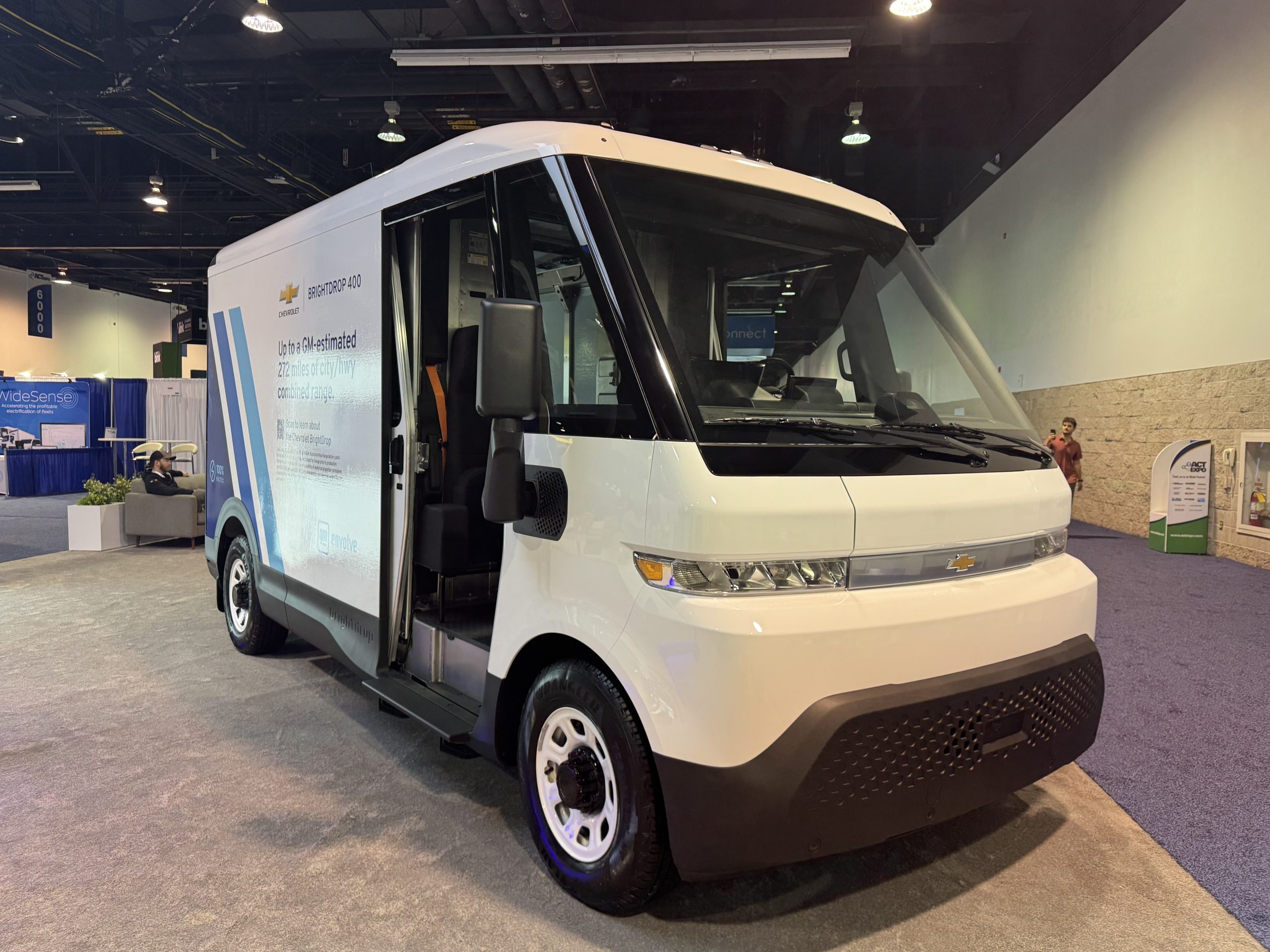
General Motors’ BrightDrop Zevo 400 electric van is aimed at urban last-mile delivery. Smaller than the Zevo 600, it offers up to 7m3 of cargo space and a GM-estimated range of up to 250 miles (402km).
Built on the Ultium platform and sold via GM’s Envolve division, it features low step-in height and ergonomics optimised for frequent stops.
Bollinger B4 ready to rumble
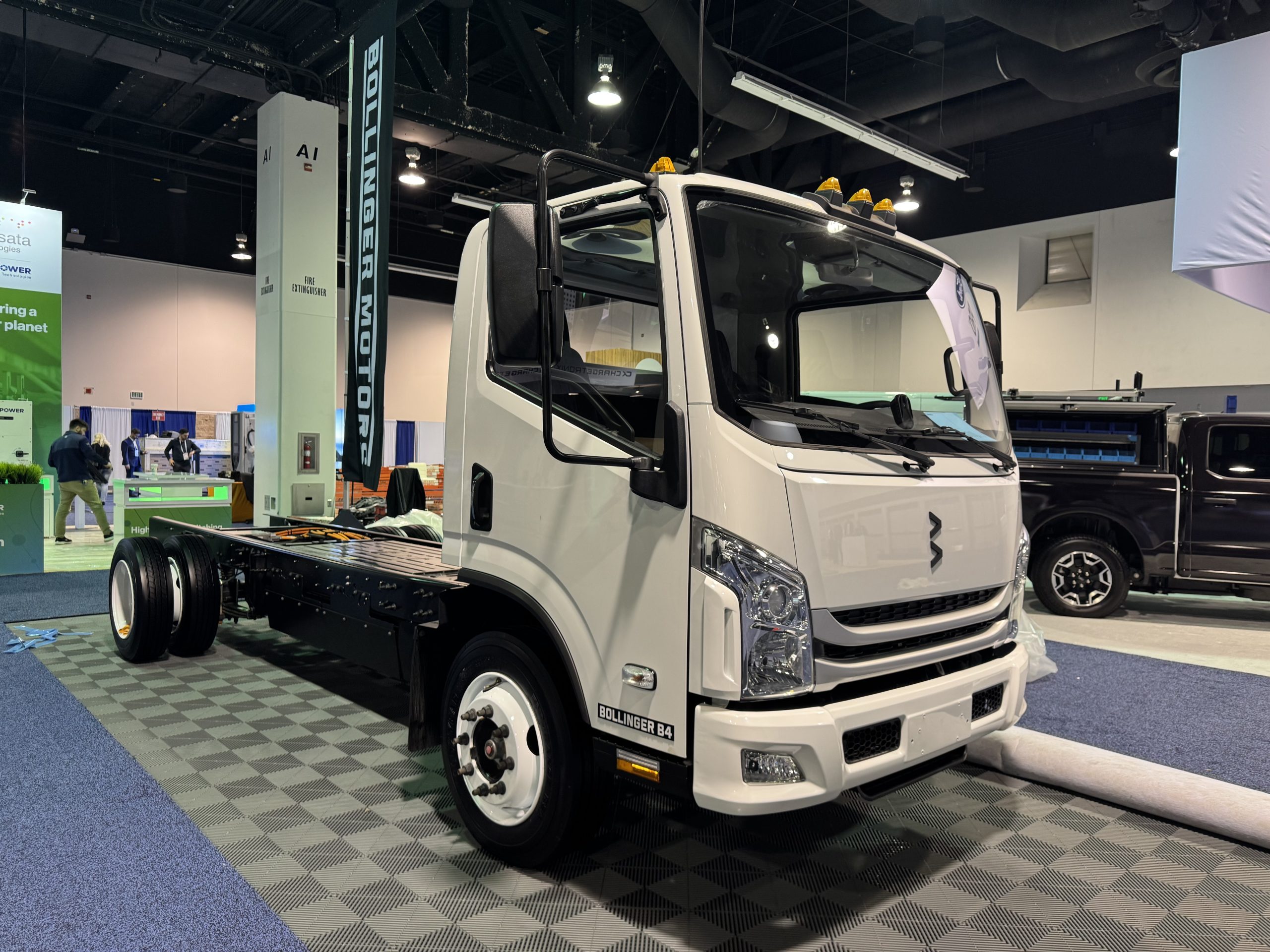
Bollinger Motors revealed the production-ready B4 electric truck. The first stripped chassis cab is heading to EnviroCharge for upfitting as a mobile charging unit.
The Class 4 cab-forward model features a Dana rear eAxle and dual 79-kWh LFP battery packs, offering up to 185 miles (298km) of range. It supports both Level 2 and DC fast charging.
Designed for electrification, the B4 includes flat frame rails and a modular build. Final assembly is handled by Roush Industries in Michigan.
Tesla rolling out charging hubs
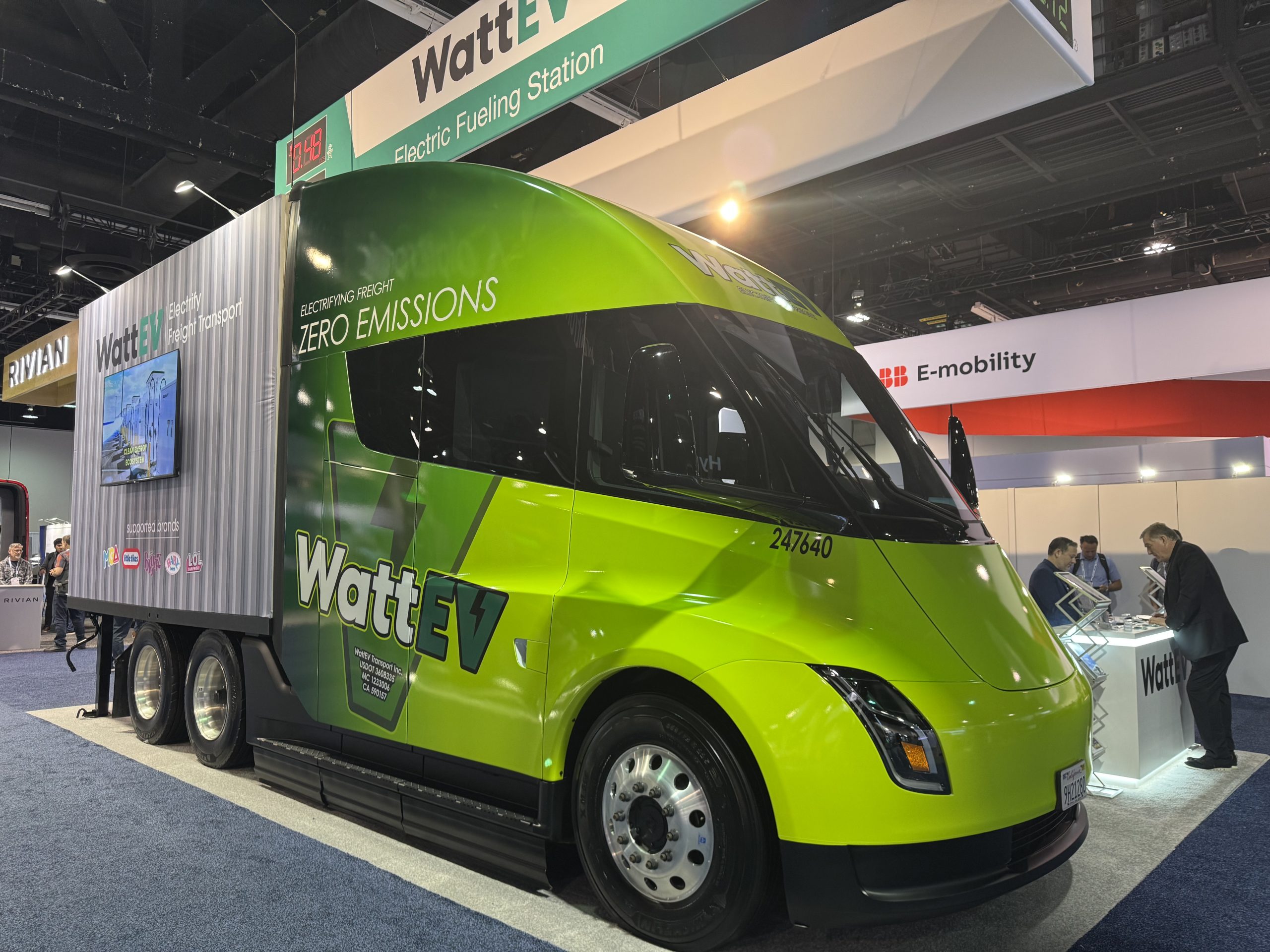
Tesla announced a national rollout of dedicated Semi charging hubs. Dan Priestley, senior manager for the Semi programme, said 46 public charging sites are in development, with over 300 megawatt-capable chargers to be installed in 2025.
Series production of the Semi begins in 2026 at Gigafactory Nevada, aiming for 50,000 units per year. Two variants – standard and long-range – are planned, with improved aerodynamics, visibility, and comfort.
Tesla’s new 1.2MW fast chargers reduce charger footprint by 50% and support ePTOs for refrigerated trailers. Initial Semi units will serve Tesla’s own logistics fleet, with wider customer deliveries to follow.
Volvo keeps on trucking
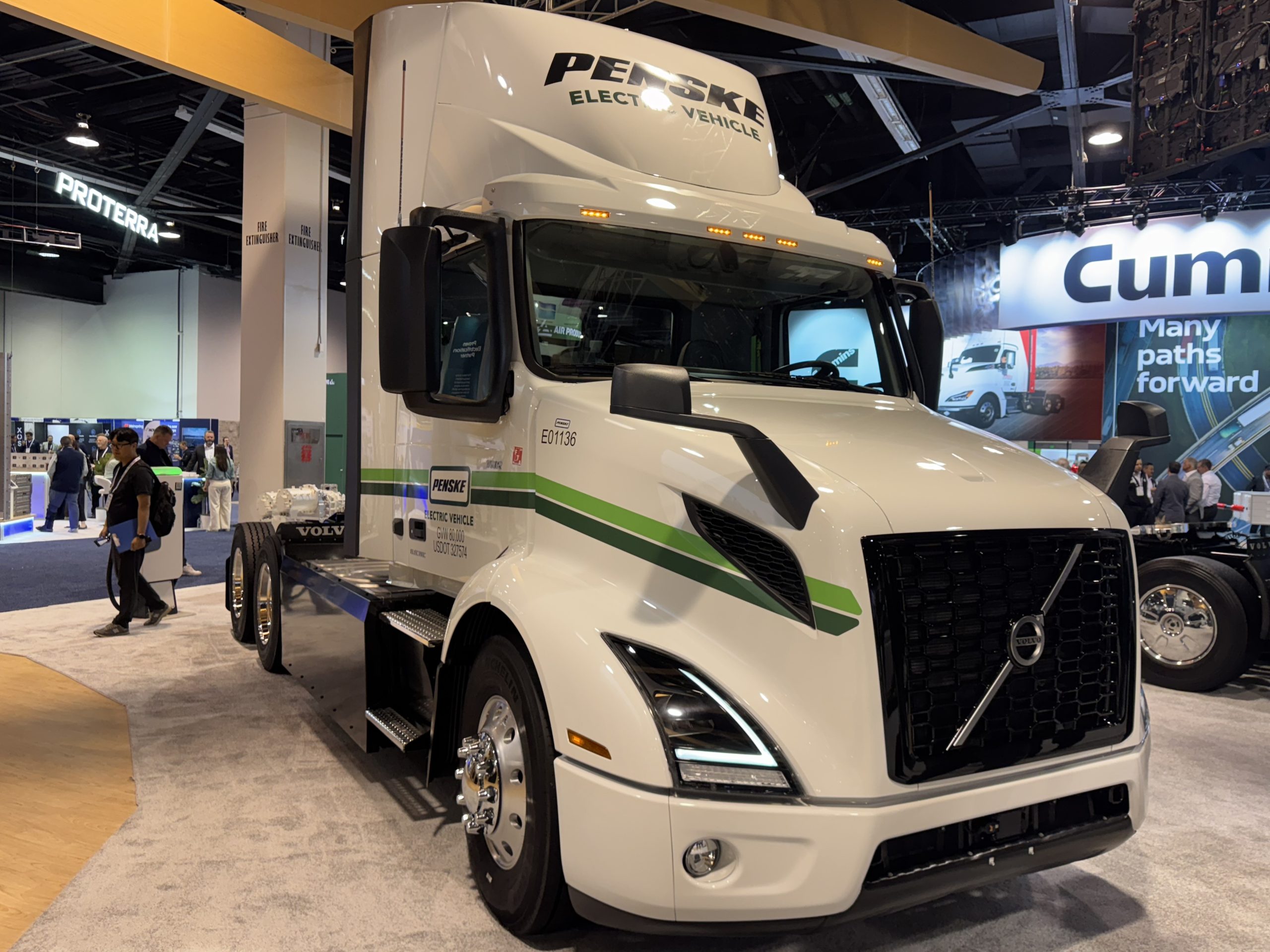
Volvo Trucks North America announced that its VNR Electric has surpassed 15 million miles (24.1 million kilometres) in customer operation. Since its commercial launch in 2020, over 700 units have entered service in North America.
“These are challenging times for zero-emission adoption,” said Peter Voorhoeve, president of Volvo Trucks North America. “But customers continue to defy the odds.”
Volvo will soon launch the all-new VNL Electric, featuring an integrated eAxle. Meanwhile, 74 Certified Electric Vehicle dealerships now support Volvo customers across 29 US states and four Canadian provinces.
Cummins showcases its range
Cummins and its zero-emissions brand, Accelera, showcased a wide range of low- and zero-emission technologies. A hybrid concept based on the 2027 X15 engine paired with Accelera batteries highlighted Cummins’ multi-fuel strategy.
Other technologies on display included the X15N natural gas engine, X15H hydrogen engine, Meritor transmissions, and 14X HE drive axles. Accelera contributed the 14Xe eAxle, ELFA motor, PCAS, and LFP battery platform.
“Whatever the duty cycle, whatever the fuel, we’re providing real, ready-now options,” said a Cummins representative.
Kalmar’s autonomous game-changer
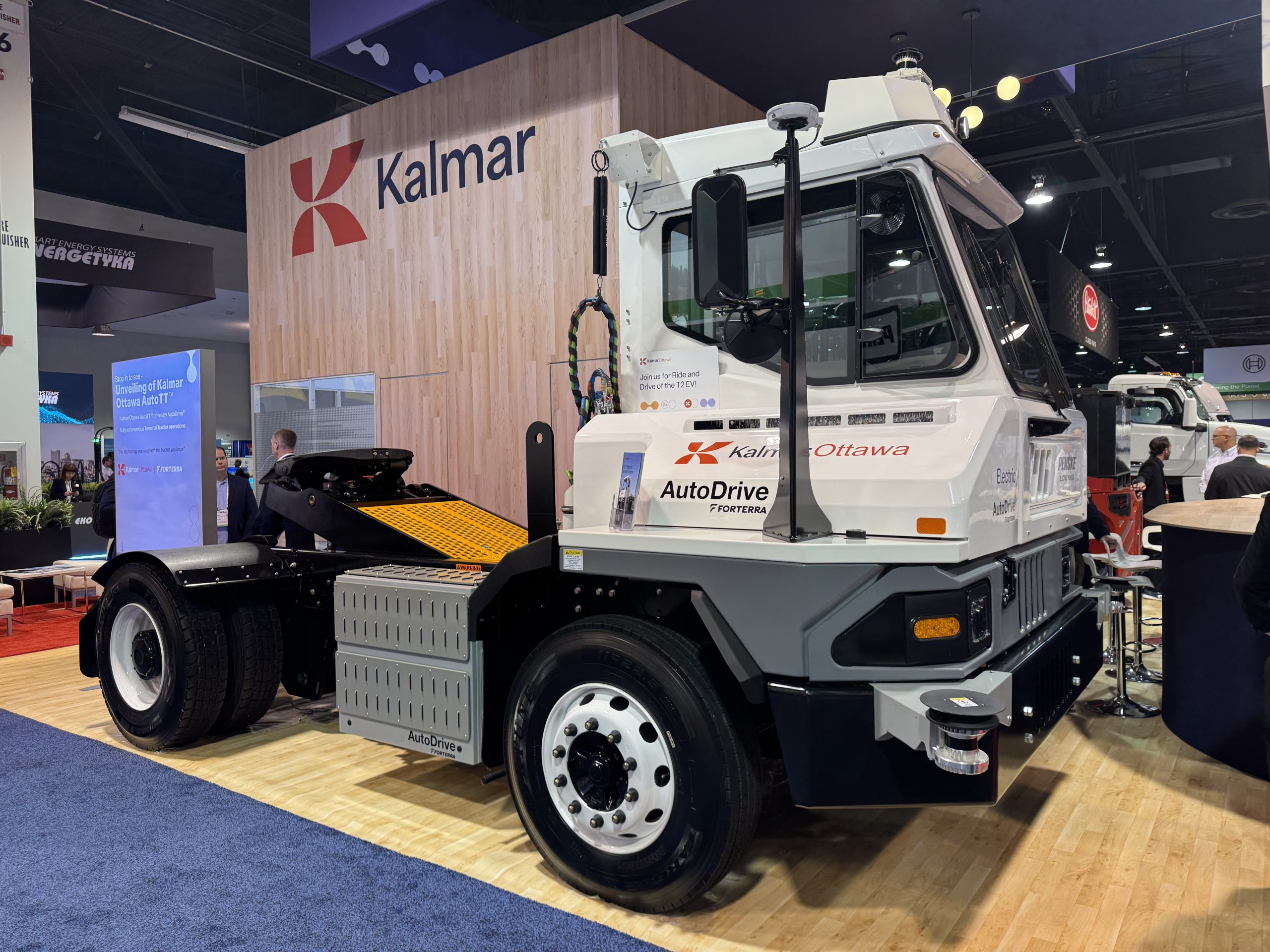
Kalmar and Forterra revealed the Kalmar Ottawa AutoTT – an autonomous terminal tractor designed for yards and distribution centres. Now in its second testing phase, production is targeted for late 2026.
The AutoTT integrates Forterra’s military-grade AutoDrive system with Kalmar’s automation-ready platform. Initial deployments will use diesel models, with electric versions to follow.
“This is a game-changer,” said Timo Alho, director of product management, automation at Kalmar.
Kenworth launches two battery-electrics
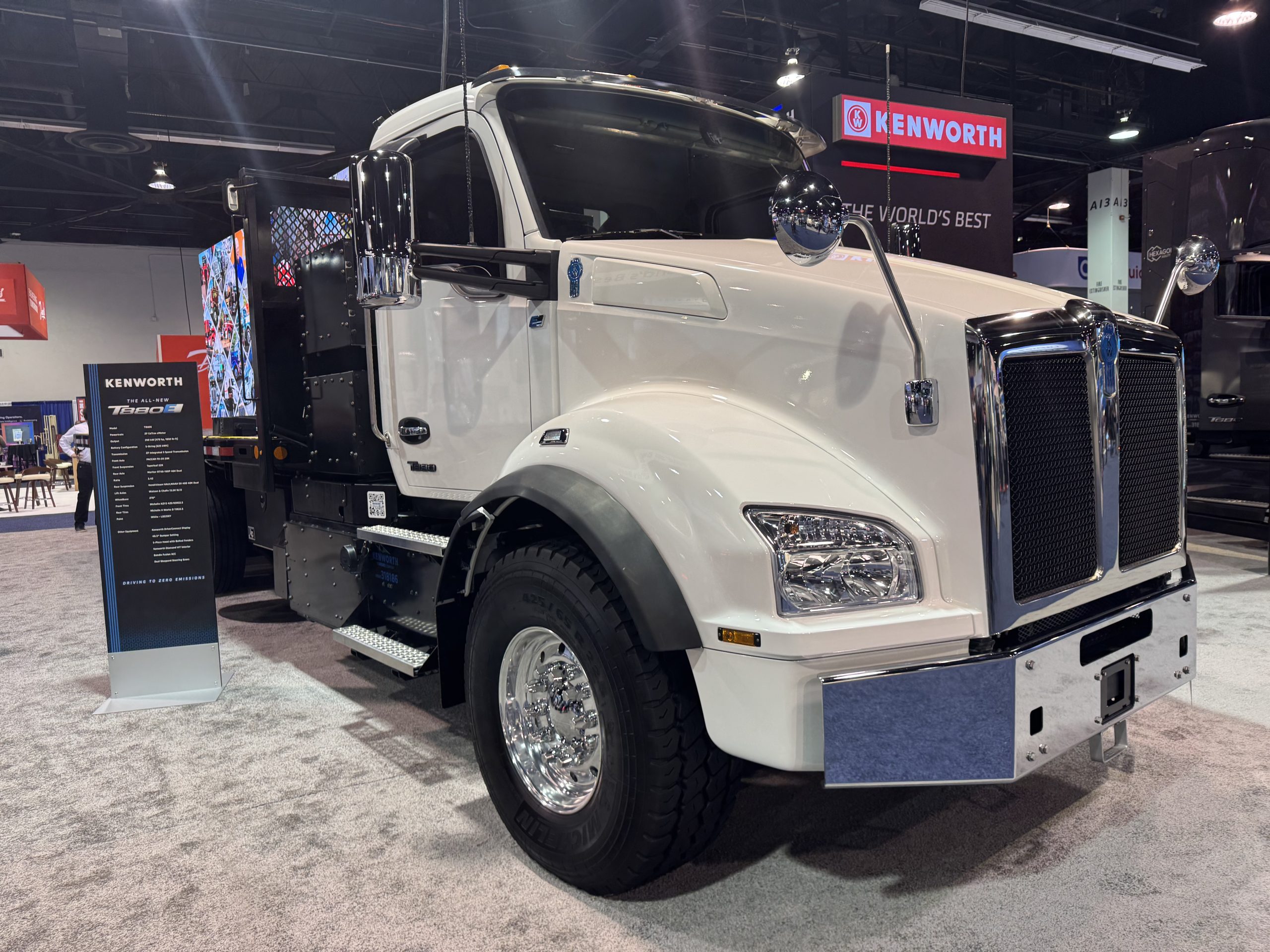
Kenworth launched two new battery-electric trucks: the T880E, a vocational Class 8 vehicle, and the next-generation T680E for regional and drayage applications.
The T880E delivers 605hp, 2,508Nm of torque, and over 250 miles (402km) of range, supporting fast charging and ePTO options. The T680E features a 500kWh battery, more than 200 miles (322km) of range, improved aerodynamics, and Kenworth’s 15-inch DriverConnect display.
Published by

Will Shiers


focusmagsa