Unlocking Africa’s trade arteries: The North-South challenge
The North-South Corridor is the lifeline of Southern Africa’s trade, yet inefficiency, corruption and poor coordination are choking growth. Unlocking its potential, writes NICK PORÉE, could transform regional economies under the African Continental Free Trade Area (AfCFTA).
The North-South Corridor (NSC) extends inland for over 3,000km and serves the landlocked countries of Zimbabwe, Malawi, Zambia and the DRC. The NSC provides maritime access for international trade into South and Southern Africa via the KwaZulu-Natal ports of Durban and Richards Bay. It is also the most important corridor for South African trade with the landlocked countries of the region. The corridor is served primarily by road transport for freight and passengers, as the region’s railway networks are connected but do not provide effective services.
Trade
South Africa’s trade with Africa amounted to over US$40 billion in 2022, representing about 17% of South Africa’s total trade. In 2024, African countries received 44% of South Africa’s agricultural exports, with the leading exports being maize and maize meal, wheat, soybean oil, sunflower oil, oilcake, sugar, apples and pears, fruit juices and wine. Other exports include construction materials, textiles, food and beverages, chemicals and manufactured products.
Although South Africa has the most advanced economy in the region, manufacturing output has fallen from 25% to approximately 13% of GDP, mainly due to deindustrialisation caused by Chinese and other import competition. South Africa’s ambitions to take advantage of the AfCFTA to expand exports will depend on resolving the inefficiencies of the NSC.
Competition
The high costs of using the NSC are driving private sector investment and management in competing regional ports and transport systems. Maputo is expanding container capacity to 550,000 units/annum. Beira is deepening its channels and berths to accommodate 500,000 containers/annum and bulk cargoes, as well as rehabilitating the Machipanda rail line to Zimbabwe, with a connection to Malawi. Nacala is expanding its coal and container capacity, while Dar es Salaam aims to double throughput to 30 million tonnes/annum, supported by a private terminal operator and the rehabilitation of the Tazara line to meet increasing exports from Zambia and the DRC. Walvis Bay is expanding container capacity from 350,000 to one million/annum and Lüderitz is increasing bulk export capacity for manganese ore from South Africa. Lobito has a US-supported US$600-million plan to develop its port and rail for the export of copper from the DRC and Zambia.
Recent developments in South Africa offer some hope for effective planning, management and investment in ports and railways… if the state monopoly can be replaced by efficient, competitive and commercially-driven private initiatives.
Privatisation
The most significant feature of logistics activities in the region is the growing dependence on private sector investment and management. Long-term build-operate-transfer (BOT) contracts are essential to improve efficiency and encourage innovation within logistics systems, supporting economic growth and promoting international demand for Southern Africa’s commodities.
Inefficiencies
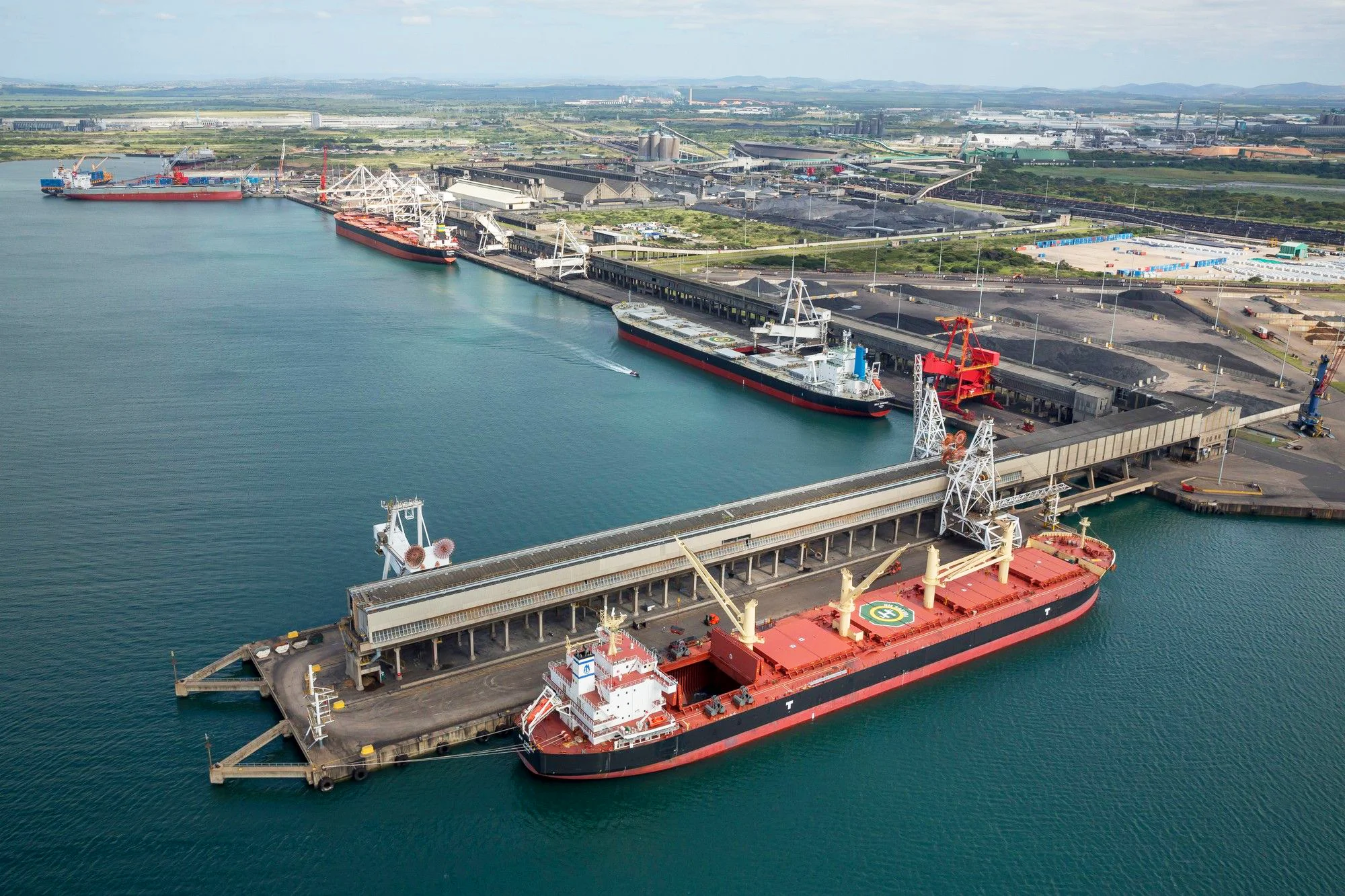
The inefficiencies of the NSC begin at the Port of Durban, which faces a 30-year backlog in development and relies on a congested road freight system burdened by administrative costs and delays. Additional expenses arise from excessive delays at borders along the corridor.
A round trip between Durban and Kolwezi in the DRC can take between 26 and 40 days, depending on congestion and the type of cargo carried. Attempts at digitalising pre-clearance are undermined by Chinese mines and importers requiring hard copy documentation and physical clearance procedures.
Non-tariff barriers (NTBs) include the insistence on national transit bonds and vehicle sealing, which add complexity and cost. In Zimbabwe, vehicles are escorted to off-border CONDEP* inspection centres instead of being processed at border posts, leading to long queues and ad hoc diversions to off-route anti-smuggling inspection sites. At Chirundu, all tankers are dipped for water, while in the DRC, hijacking of valuable commodities like copper cathodes has occurred.
System delays arise from export permits, inconsistent regulatory standards and onerous customs procedures, compounded by poor road conditions and the harassment and bribery of drivers by officials and locals along the corridor. These complications are causing the demise of carriers and reducing options for interstate trade, with little sign of remedial action.
Costs
Current costs from Durban to Harare are around R85,000 (R2,833/tonne), compared to about US$8,250 or R140,250 (R8,675/tonne) to Kolwezi – prices so high that regional businesses are urgently seeking alternatives. This is likely to diminish South Africa’s and the NSC’s competitiveness in promoting the AfCFTA initiative.
The main cost issue for transporters is the time lost to inadequate facilities and inefficient cross-border processing. With a fixed cost of over US$30 (R500) per hour for a long-haul combination, a 26-day round trip can cost R200,000 per 30-tonne load – unrecoverable losses that reduce performance and profitability.
As a result, competition among regional carriers favours those with lower-cost vehicles, fuel and drivers. The excessive delay costs on the corridor amount to roughly US$171.6 million (R2.9 billion) per year, with 80% of delays occurring at Beitbridge, Chirundu and Kasumbalesa.
Northbound delays are more than double those southbound due to the nature of the cargoes and the fact that around 25% of southbound vehicles are empty. Despite the huge costs of inefficiency, there is little interest in resolving the issues, as most costs are borne by the landlocked countries, which appear to prioritise customs revenue (7 to 10% of fiscal collections) over longer-term tax gains from business growth.
Obstacles
The major obstacles to improving the corridor’s efficiency lie in the facilities, systems and actions of officials along its route. Border and police authorities tend to focus on maximising revenue (both official and unofficial) from the captive market of drivers and operators who act as proxies for cargo owners. Customs activities are further complicated by the perception that operators are intent on avoiding duties or smuggling illicit goods – sometimes justified by isolated cases of wrongdoing. Meanwhile, collusion between some carriers and authorities enables corruption at multiple levels.
At the intergovernmental level, the existence of various Regional Economic Communities (RECs) adds further complexity, exacerbated by the lack of integration between customs systems along the corridor. The consequences of poor coordination are evident when compared with Kenya’s Northern Corridor, where border crossings take hours rather than days.
Solutions
Coordination of the corridor involves nine or more countries with direct or indirect linkages. Although the problems are well-known and -documented, solutions are hindered by the absence of a coordinating body with delegated authority from participating governments. There is an urgent need for an independent corridor authority, as demonstrated by the success of Kenya’s Northern Corridor, which shows how a well-constituted and -managed authority can clear obstacles and promote efficiency.
Reluctance to cede sovereignty to a coordinating institution has repeatedly derailed past initiatives and remains unresolved among Regional Economic Communities (RECs) and their member states. A more viable alternative is to promote the EU-IRU-based TIR “carnet de passage” system, which has successfully opened trade routes across the Northern Hemisphere. The system’s appeal lies in its private sector leadership, government acceptance, guaranteed security and transparent processes. It operates effectively across road, rail, air and maritime corridors, from Europe to China. The North African Maghreb region has already adopted the system, which is now being promoted by the Union of African Transport and Logistics Organisations (UAOTL) of the African Union (AU).
The success of the TIR system is rooted in its clear standards for vehicles and operations and the precise adherence to these. The main challenge in Southern Africa is the absence of institutional structures to register and control commercial road freight fleets, vehicles, drivers and operating standards. This is compounded by the lack of commercially viable transport associations capable of implementing and managing the TIR system across the region’s corridors.
The data on delay costs along the NSC alone justify urgent action by both the road freight industry and the authorities if the AfCFTA is to succeed in promoting greater interstate trade. Establishing the necessary conditions for a TIR system will require leadership, vision and commitment from key industry figures with the authority and resources to drive the process.
Nick Porée and Associates would be pleased to assist in defining and mapping the steps required to establish the structures and resources that underpin the integrity of the TIR system – a proven framework already adopted by 78 countries worldwide.
* CONDEP inspection centres – sometimes referred to as Container Depots or Consolidation and Deconsolidation Points – are off-border customs inspection facilities used in some Southern African countries (particularly Zimbabwe) to handle goods moving along major trade corridors such as the North-South Corridor.
Published by
Nick Porée
focusmagsa