Really thinking BIG about logistics
Really thinking BIG about logistics
South Africa’s logistics crisis is draining the economy daily, yet plans for revival risk repeating past failures. NICK PORÉE explains why urgent, radical reforms – not timid tweaks – are the only real solution.
At the recent PSG “Think Big” webinar, Minister of Transport Barbara Creecy presented the government’s plans to recover South Africa’s logistics disaster. She admitted that the task is a challenge, even with her reputation as a “doer” who accepts no “bullsch”. She is the first Minister of Transport in about 100 years to be allowed to think about railways as part of the national transport system, so we listened eagerly to her – our 13th Minister of Transport since we first consulted on national transport policy in 1984.
We hoped for indications of big thinking and came away dismayed by the restricted perspective, and the plans to pour further billions of rands into the black elite enrichment (BEE) and authorised nepotism and corruption (ANC) policies, which appear to be the sole justification for the state-owned companies (SOCs) in railways and ports. The transport SOCs have cost South Africa over one trillion rands in this period, and the Department of Transport (DoT) itself has expensively ineffective departments and agencies (one CEO paying himself a R10 million salary) in need of comprehensive restructuring.
The planned agenda is to be implemented at glacial speed by the same SOCs that created the disaster, instead of tackling the urgent need to restructure the freight transport sector into a well-managed, multimodal, commercially competitive industry driven by private initiative and investment, as we have recommended in multiple policy studies over the years. Déjà vu indeed…
As a 40-year background to the current policy impasse: the South African economy was wavering in 1980–1985, partly due to the restriction imposed by the railway monopoly on the logistics sector. Following the National Transport Policy Study (NTPS 1987), the deregulation of road freight transport released a flood of private sector investment and engagement, which transformed the economic trajectory of the country for the next 20 years. Political intervention, however, quashed the Road Transport Quality System (RTQS), failed to commercialise the railway, and retained the SOC rail transport monopoly. The railway withdrew from competition with road freight and contact with the private sector logistics industry, to focus on captive trainload bulk commodities. Road freight expanded – unregulated but commercially competitive – by absorbing ex-railway cargoes. The Passenger Rail Agency of South Africa (PRASA) was created to manage commuter passenger transport, followed later by the Gautrain, neither of which has proved to be commercially viable.
Inevitably, from the policy of bureaucratic versus commercial management and employment, the SOC railways have suffered from executive incompetence and malfeasance which has led to the current debt of R135 billion and interest payments of over R1 billion per month, which is greater than anticipated profits for the next five to 10 years. The port and rail inefficiencies are estimated to have cost South African industries R353 billion in 2023, according to GAIN Group.
In 2025 we are again at a crossroads, where there is an urgent need to introduce the discipline and accountability of competition, private sector investment, and expertise into the railway and ports systems, which are bleeding billions of rands per day from the economy.
All over Africa, there is a bustle of transport and logistics development in railway and ports, and policy in trade and commerce is trying to catch up to international standards and prepare for the African Continental Free Trade Agreement (AfCFTA). This is being driven by private sector expertise and investment (ironically including SA companies) and a global disengagement from governmental commercial activities. For example, Brazil has put 35 port terminals up for sale to private investors, retaining only a token shareholding.
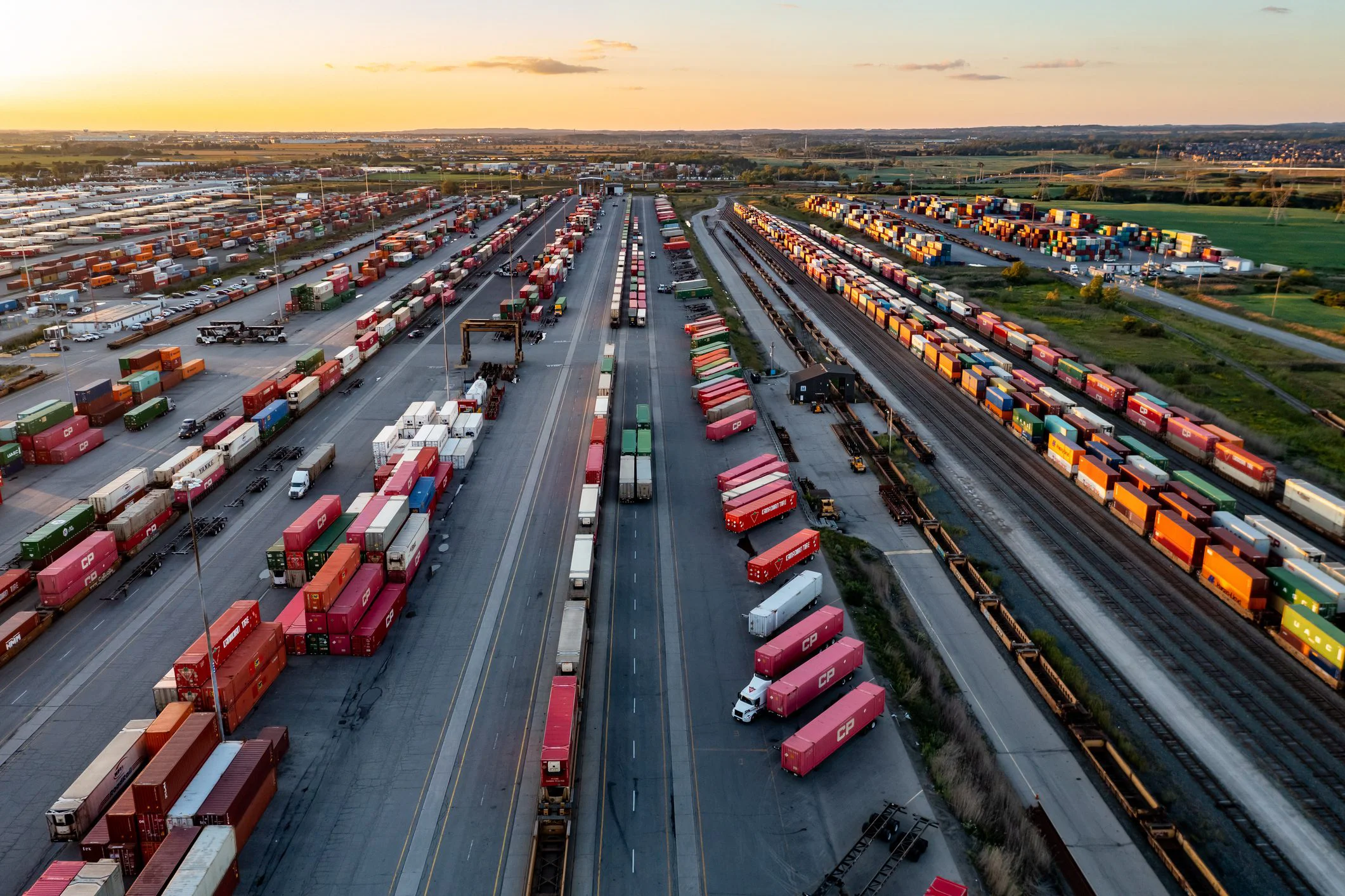
Here’s how to really think big
If we really want to think big and achieve meaningful change, each of the transport modes (railways, ports, and aviation) need to be tackled in their own right.
Railways
In order to prepare for serious change, the first issue is for the Rail Bill to legislate the process of restructuring the railway network into an independent public utility, similar to the national roads, within the DoT. The Railway Network Manager needs to retain all the train coordination systems and relate to all train operating companies (TOCs) within the terms defined by the Economic Regulator and Railway Safety Regulator.
This will attract and support a multimodal commercial transport and logistics industry and encourage the very extensive investment required to replace the railway breakbulk facilities abandoned 30 years ago. It will also permit “open access” for public and private sector TOCs to engage in regulated competition. The core rail network requires maintenance and upgrading, but there is minimal justification for the repeated suggestion of a need for standard gauge railway within current and future volumes.
The DoT has produced a Private Sector Participation (PSP) Plan – the antithesis of open access – as it is designed to include a Transnet Infrastructure Manager and Network Statement. According to Creecy, the PSP will allow private TOCs to “run on key routes and offer niche services”, while Transnet continues to manage its own train operations. This is unlikely to attract much serious PSP. In contrast, Switzerland has 26 multimodal TOCs operating on its network and no heavy goods vehicle (HGV) freight transport; the Port of Hamburg is used by over 20 railway companies.
The second issue, with a view to clearing the massive debt and future liability, is that Transnet Freight Rail TOC should be restructured into three or more operating divisions, which can be sold to local industrial or international investors. This will enable them to be commercialised into sustainable companies with standard accountability and professional management.
It is noteworthy that further largesse will be required to rehabilitate PRASA; this is best done by transferring it to provinces and metros and integrating the services into provincial and metropolitan transport plans. This is, however, unlikely to meet the goal of 600 million passenger journeys per year, given the increasing levels of poverty, unemployment, and the development of informal housing areas remote from railways.
Ports
The eight commercial ports currently suffer from a 30-year backlog of investment, modernisation, and infrastructure development. The ports have been used as the “cash cow” to hold Transnet together and provide the funding for excessive expenditures. The result is that they are rated the worst in the world by the World Bank and are in need of drastic reorganisation. The management of the ports should also be changed to create representative local boards as ruled in the National Ports Act No. 12 of 2005. The Transnet Port Terminals division should be released to build-operate-transfer (BOT) investors, who will lease the facilities from the Ports Authorities, expand port capacities, and aim for sustainable commercial competitiveness of the ports. The local port authority will be the government’s landlord and manage marine services and operations within the ambit of the South African Maritime Safety Authority (SAMSA).
Aviation
The suggested annual goals for air cargo (1.2 million tonnes) and passenger journeys (42 million) are targets to increase Airports Company South Africa (ACSA) capacity, but the volumes are imaginative and dependent on a very wide range of factors outside of the minister’s control, except the currently problematical technical management provided by the Air Traffic and Navigation Services (ATNS) SOC.
Private sector TOC investment perspectives
Realities may challenge some of the goals of increasing railway usage by private sector TOCs, as South Africa has limited and reducing industrialisation, and many commodities are challenging as rail cargo – for a number of logical commercial reasons. It is important to bear the following in mind:
- Agricultural commodities are seasonal, and origins and destinations are often off-rail.
- Import and export commodities fluctuate with shipping movements, and surges require speed and flexibility, which has been a problem for railways.
- Very few industrial developments over the last 20 years include rail facilities, as railway has distanced itself from delivery and distribution operations.
- Multimodal operations are very limited, with about 200,000 import-export containers per annum – three trainloads per day in each direction. Rail transport of vehicles is sporadic with market demand, and road transport offers flexibility and competitive pricing.
- Railway deficiencies have switched many commodities to road – fertiliser, sugar, steel, grains, timber, cement, clinker – and will be difficult to recapture.
- Investment in TOC railway equipment is very expensive and will only be considered for commodities with regular volumes (R40 million per locomotive; R1.3 million per wagon), most of which are already on Transnet Freight Rail contracts.
- As there are very limited rail-side breakbulk facilities, there is usually a need for cross-hauls and/or handling equipment, which makes rail uncompetitive with road. It is only viable to build facilities at locations where there is adequate demand quantity.
Future reality
I would like to spell out the future reality. This is the situation in which the country finds itself:
- Transnet railway and ports operations are no longer economically or commercially viable.
- The costs of restoring the port and rail services – even to acceptable current market demand levels – are such that it will not be possible to supply services at commercially acceptable prices, and there is limited potential for SOCs to improve service levels if industrial activity ever increases.
- Investment in capital equipment does not solve the very extensive deficiencies in management, accountability, operational skills, and industrial relations, or the lack of commercial logistics perspectives.
- It is also debatable whether investments in upgrading SOCs to support increased industrial and agricultural production are commercially justifiable in relation to the projected declining South African industrial production, due to current economic policy.
- It is likely that industry will continue to ignore railways due to a dubious service offering, and international shipping will continue to avoid ports or apply cargo penalties over the medium term.
- Government (also known as Transnet) investment, borrowing, and foreign loans merely increase the future burden on taxpayers and skew logistics costs by masking inefficiencies and lack of accountability. There can be no ethical justification in supporting the “recovery” of the failed SOCs, as taxpayers will be forced to subsidise bankrupt operations for several years merely to avoid foreclosure. The logical solution is to divest by designing investment packages that offer opportunities for improving earnings through increased efficiency.
Published by

Nick Porée
focusmagsa