Minister unveils ambitious transport overhaul at SATC
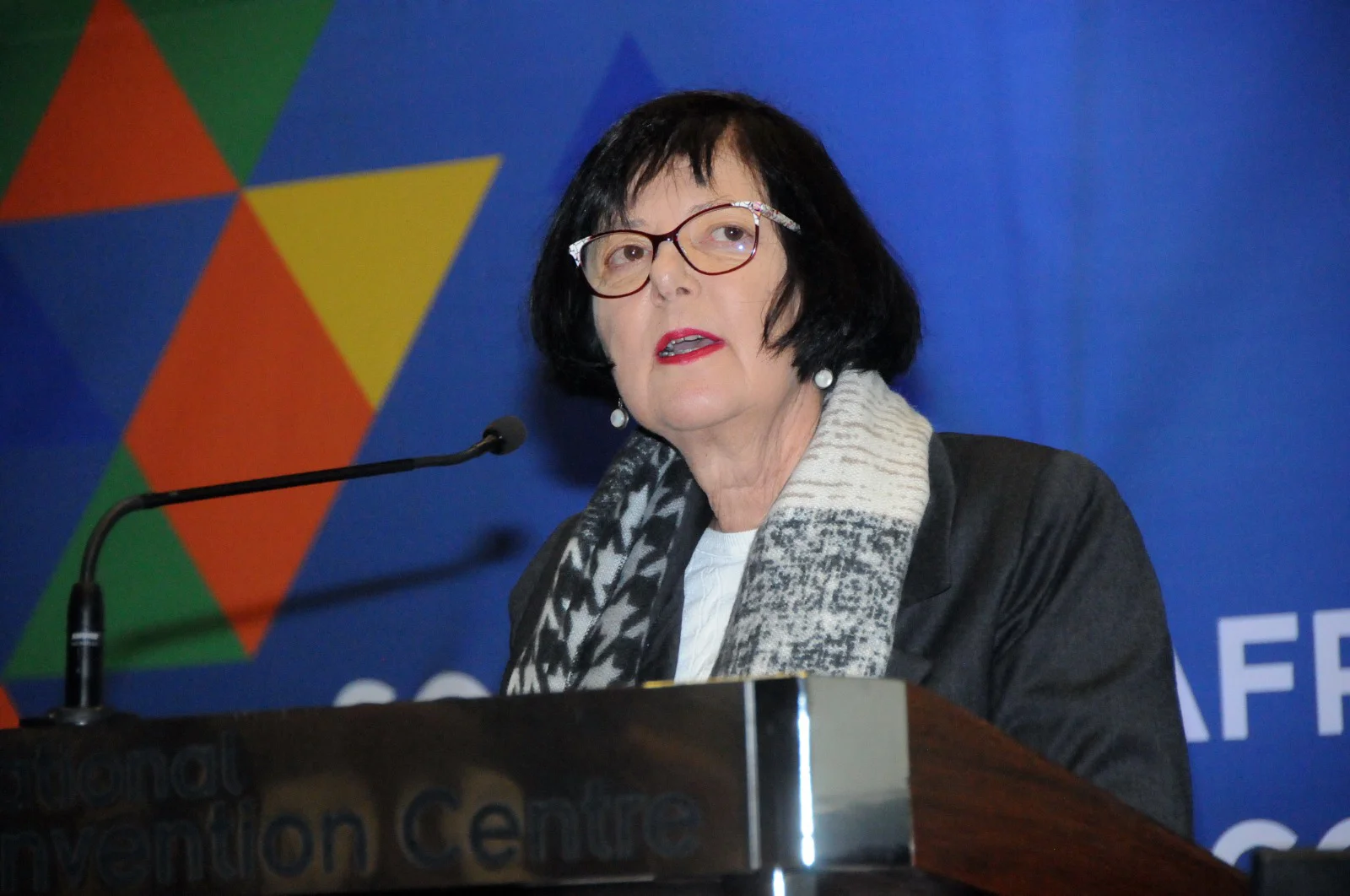
At the 43rd annual Southern African Transport Conference and Exhibition (SATC), Minister of Transport Barbara Creecy laid out a bold transport strategy aimed at transforming South Africa’s infrastructure, revitalising rail, boosting aviation, and improving road safety. CHARLEEN CLARKE reports that the strategy aims to unlock long-term economic growth.
The Department of Transport (DoT) has an ambitious agenda to transform passenger and freight transport in South Africa – with the aim of driving economic growth, creating jobs, and improving road safety. This was the key message from Creecy, who delivered the opening address at the SATC in Pretoria last month.
She stressed the importance of an optimally functioning transport system, telling delegates, “It is a cornerstone for achieving our national objectives of inclusive economic growth, social development, and building a capable state.” In this regard, she outlined six clear targets that will guide the DoT’s work over the next four years to transform the passenger, freight, and aviation sectors.
Six strategic targets to guide reform
The first target is to ensure that by 2029, 250 million tonnes of freight are carried annually on the Transnet network, strengthening the backbone of South Africa’s logistics. The second focuses on improving port efficiency to achieve the international benchmark of 30 gross crane movements per hour when loading and unloading ships. “We need to achieve this standard to remain globally competitive,” Creecy noted. The third target is to guarantee that the passenger rail system provides safe, reliable, and affordable transport to workers and their families, with a goal of reaching 600 million passenger journeys per annum by 2030.
Turning to aviation, Creecy said the fourth target is to boost the sector’s contribution to tourism, economic development, and job creation, with an expectation that 42 million passengers per year will move through the ACSA network of airports by the end of this political term. The fifth target seeks to move 1.2 million tonnes of air freight annually through ACSA airports, positioning South Africa as a key player in regional and international trade.
The sixth – and most critical – target is to reduce road fatalities by 45% by 2029, in line with the United Nations (UN) goal of halving road deaths by 2030. Creecy praised the progress made so far, reporting a consistent 9% annual decline in accidents and fatalities, but emphasised the need to intensify efforts to reduce pedestrian deaths, which account for 44% of fatalities.
Rebuilding rail as the sector backbone
Highlighting rail as a central focus, Creecy affirmed the DoT’s commitment to re-establishing it as the backbone of transport for both people and goods. “By the end of May 2025, PRASA reopened 35 out of 40 passenger corridors nationwide. Passenger journeys are expected to rise from 77 million in the last financial year to 116 million in the 2025/26 financial year,” she said.
Private sector partnerships to fund infrastructure
Creecy highlighted the importance of private sector investment, given the limited availability of state resources to fund infrastructure development. “To guide private sector investment in our five priority rail and port corridors, we have just concluded a Request for Information process,” she said.
Transnet will issue Requests for Proposals from the end of August 2025 to begin the formal procurement process. Creecy also confirmed the establishment of the Private Sector Participation Unit at the Development Bank of Southern Africa (DBSA), which will help direct private investment into rail and port infrastructure.
Aviation set for major expansion
In a further boost for aviation, Creecy announced that R21.7 billion has been allocated to ACSA for infrastructure development, which includes modernising passenger facilities and constructing a new freight terminal at OR Tambo International Airport.
Highlighting the economic role of South African Airways (SAA), she said, “A recent Oxford Economics Africa study confirms SAA contributed R9.1 billion to South Africa’s GDP in 2023/24, with projections rising to R32.6 billion by 2029/30. The airline is set to support 86,700 jobs by the end of this term, up from 25,000 today.”
Addressing the state of South Africa’s roads
Creecy acknowledged public concerns about road infrastructure, noting that SANRAL has taken over 3,099km of provincial roads at the request of premiers and has reprioritised funding to ensure these roads are maintained.
However, she cautioned that SANRAL cannot take on further upgrades without overburdening its budget. “Our priority is to ensure provinces and municipalities spend their existing road budgets effectively,” she said.
Oversight and accountability in road funding
To strengthen oversight, Creecy announced that R94 million has been allocated to provide technical support to provincial road departments. She also revealed a new Memorandum of Understanding with the South African Local Government Association (SALGA) to monitor spending on the Municipal Infrastructure Grant, stressing that 17% of this grant is intended for road and bridge maintenance, “yet too often it is either used for other purposes or returned to the National Treasury unspent”.
Formalising and financing the taxi industry
On the taxi industry, which transports more than 85% of commuters, Creecy emphasised the need for formalisation and the elimination of criminality. “We are working with banks and vehicle manufacturers to de-risk financing, and developing a Standard Operating Procedure for issuing operating licences,” she said.
Transport: lifeline of the nation
Creecy ended by underscoring the vital role of transport in South Africa’s future. “A fully integrated transport system lies at the heart of any nation’s development. It is the artery through which progress flows – connecting communities, facilitating trade, and enabling access to opportunities. Our responsibility as roleplayers in the transport sector is immense. We hold the key to unlocking the full potential of our nation’s economy,” she concluded.
Published by


focusmagsa