Milestone on paper, mixed picture in practice
Milestone on paper, mixed picture in practice
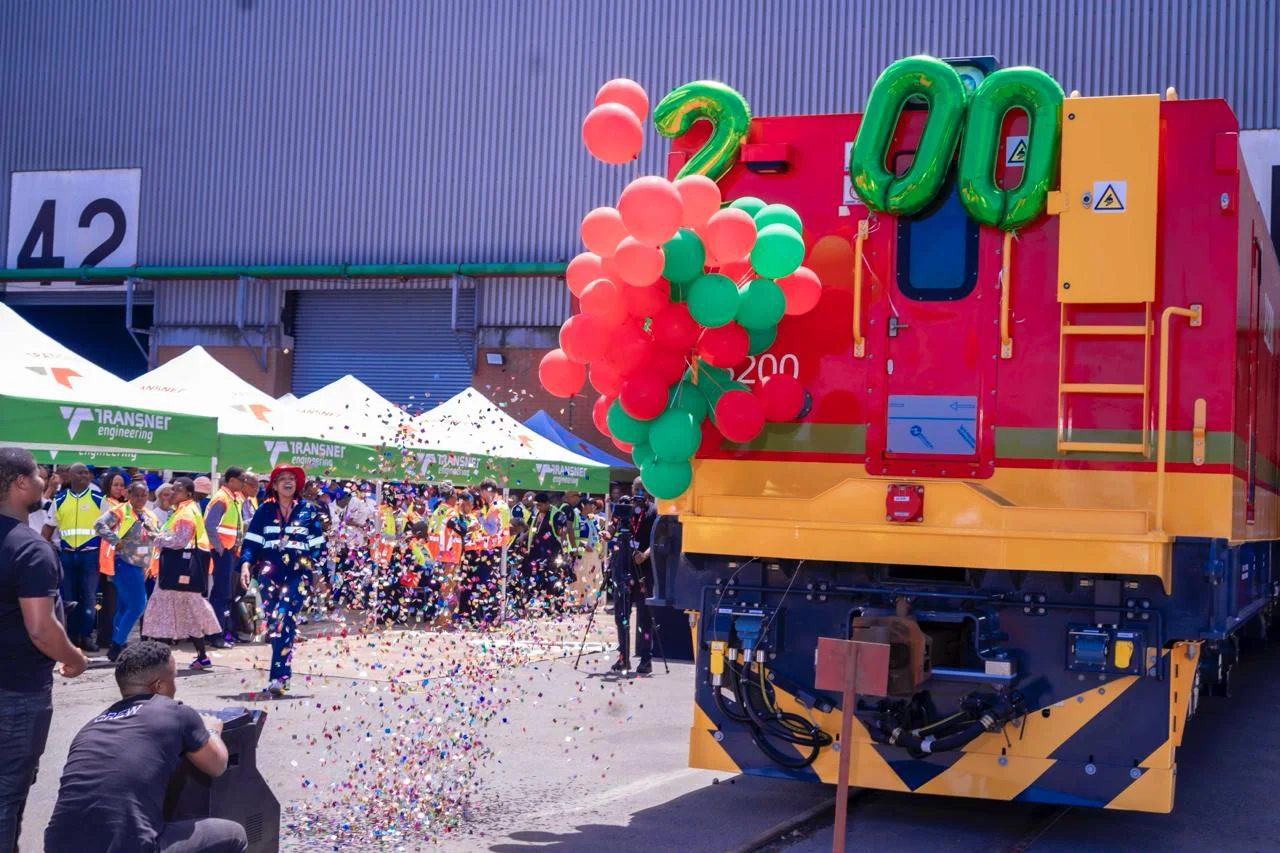
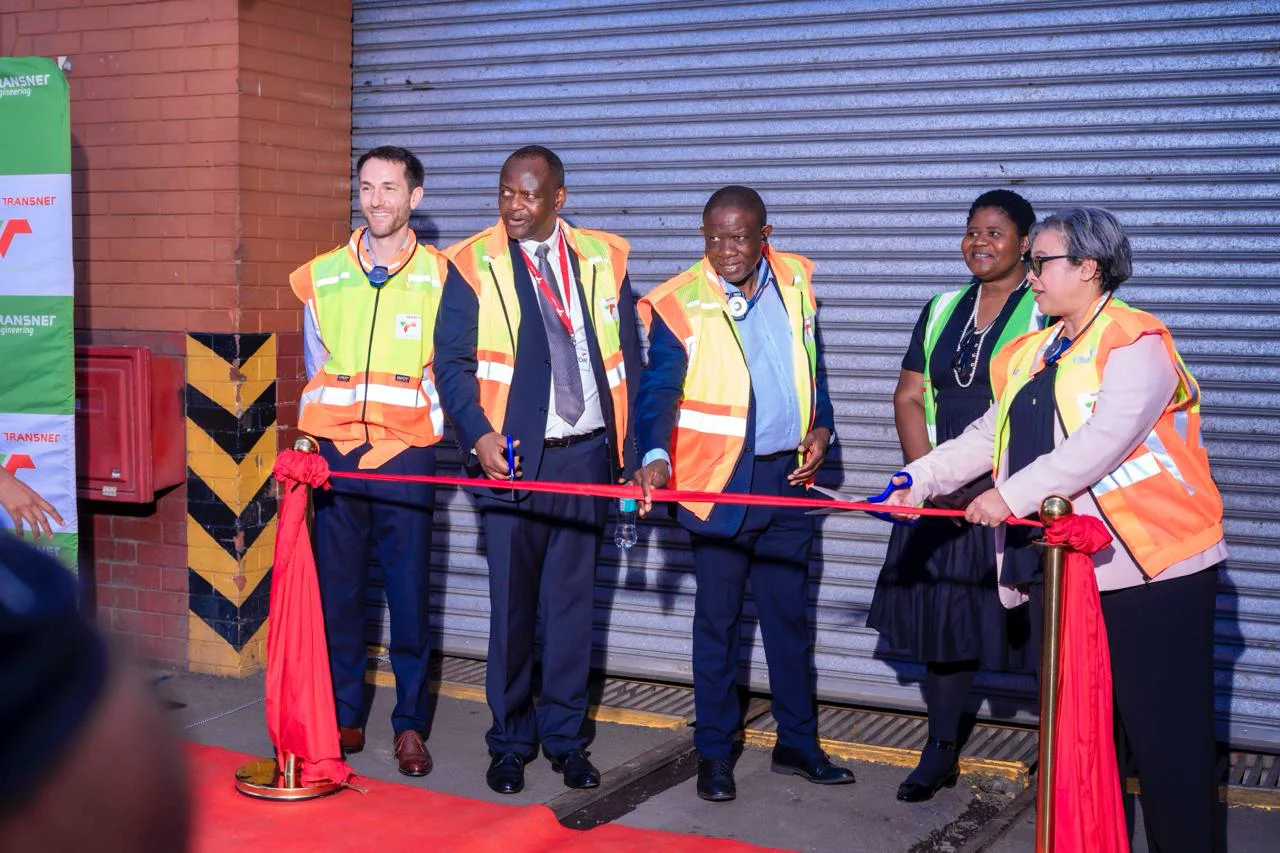
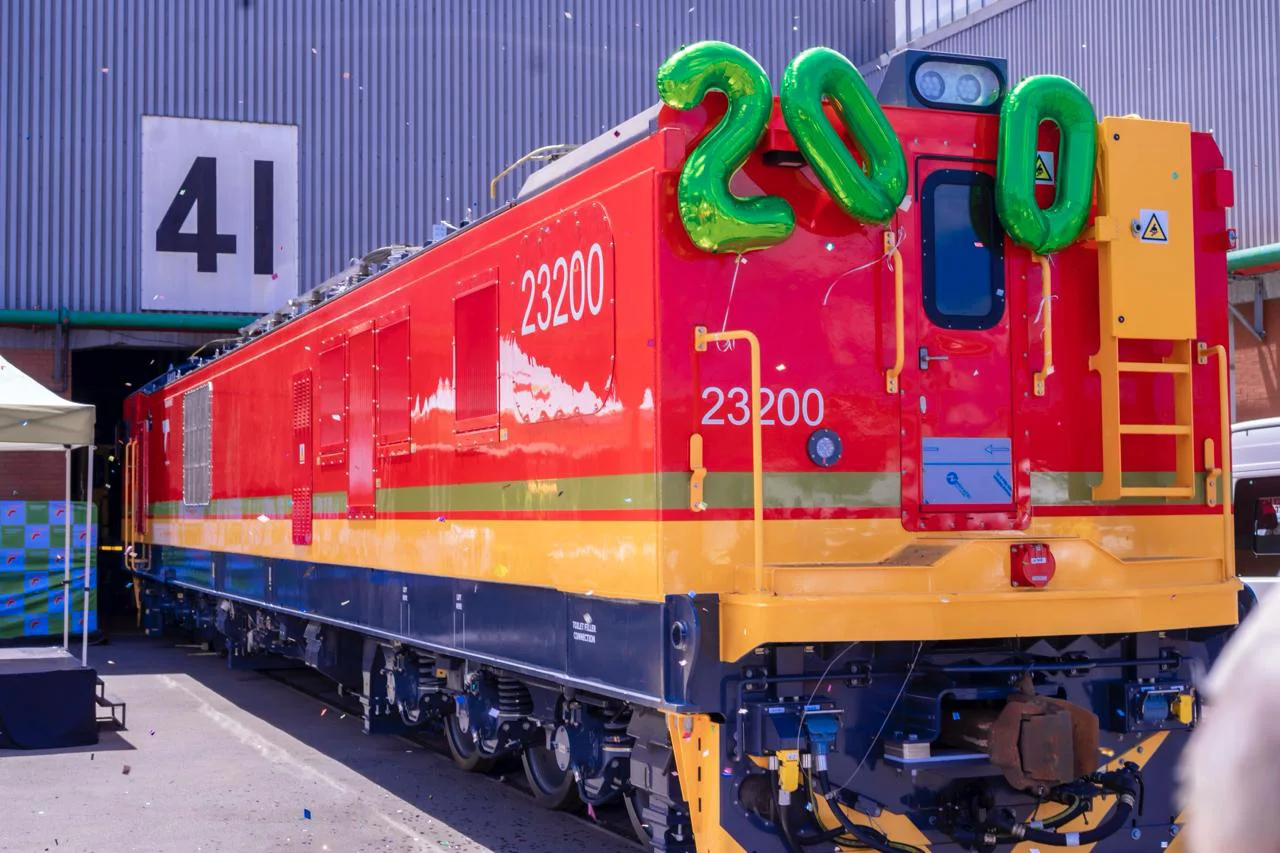
Transnet recently celebrated what it termed “a pivotal milestone in South Africa’s industrial and economic recovery” as the 200th state-of-the-art Traxx 23E locomotive rolled off the assembly line. ALISTAIR CHRISTISON was there…
The locomotive – which rolled off the assembly line at the Bayhead facility in Durban – is part of the 240 units that Transnet has procured as part of its fleet renewal programme. In principle, the event marked a significant milestone in the locomotive-manufacturing programme of Transnet Engineering, developed in partnership with Alstom. In practice, it offered an opportunity to ask hard questions of the organisation’s leadership and observe the state of South Africa’s rail-manufacturing ecosystem up close.
The result, for me, was a more nuanced picture than the celebratory tone of the official event suggested – one in which genuine engineering achievement sits alongside structural uncertainty, policy complexity and the slow, sometimes painful reshaping of South Africa’s freight-rail landscape.
A ceremony framed by bigger questions
The morning at Bayhead had the usual trimmings of an official rollout: speeches, staged photographs and polite applause. Senior Transnet executives were present, including chairperson of the Transnet board Andile Sangqu and chief executive Michelle Phillip, as was Alstom’s leadership team led by managing director Tristan le Masne. The mood among staff was positive… and that in itself was encouraging.
However, what set this event apart wasn’t the ceremonial unveiling of the locomotive, but the willingness of Transnet leadership to take questions on broader issues affecting the organisation: the faltering separation between Transnet and TRIM, the implications for private operators, the status of diesel-locomotive production and the sustainability of the 23E production line.
It was these conversations, more than the locomotive rollout itself, that revealed where South Africa’s freight-rail environment truly stands.
How the Class 23E gets built
The Class 23E programme involves a complex manufacturing chain, albeit one that is now functioning more smoothly than in years past. Locomotive bodies are constructed by Alstom in Boksburg and transported by road to Bayhead. Alstom supplies a full suite of parts for final assembly, while Transnet Engineering manufactures the bogie frames in Durban. At Bayhead, the components are brought together and the locomotive is fully assembled, tested and rolled directly onto Transnet’s tracks for delivery to Transnet Freight Rail (TFR).
Originally, 240 units were ordered, and Transnet expects this to be completed by June 2026. The leadership hinted that follow-on orders are likely – not necessarily because demand is assured, but because shutting down the production line would result in a catastrophic loss of skills, tooling and supplier capability.
South Africa’s relations with Chinese rolling-stock manufacturers have collapsed to the point that the Bayhead assembly line is now the country’s only functioning electric-locomotive production facility. Staff are sourced locally, many components are locally manufactured and the line is capable of producing 10 locomotives a month. That makes this factory, by default, strategically vital.
I was told that the first 200 locomotives delivered are achieving 98% availability against a contractual requirement of 95%. In a sector where availability figures are too often dismal, that is noteworthy.
What the Class 23E can (and can’t) do
The locomotive itself is technically impressive, though not without compromises. It has a single cab at one end, weighs 132 tonnes and rides on six axles with a 22-tonne axle load. Technically, this exceeds the standard 20-tonne axle loading allowed on most of South Africa’s general-freight network, but Transnet has for years permitted locomotives – though not wagons – to exceed this slightly. The coal and iron-ore corridors, with their heavier axle-load ratings, are obviously more suitable.
The 23E’s dual-voltage capability, switching automatically between 3kV DC and 25kV AC, enables it to operate anywhere on the electrified main lines. The locomotive produces 480kN starting tractive effort and 400kN continuous tractive effort, making it powerful enough for one unit to haul 50 loaded 40-foot flat-deck container wagons between Durban and Johannesburg. That is a significant leap and would replace three Class 18E locomotives currently needed for the same work.
There is regenerative braking, creep control for bulk loading beneath overhead bins and a crew toilet – small things, but not insignificant. Both Alstom and Transnet Engineering confirmed that locomotives of this class can be sold or leased to private operators.
The single-cab design, however, means the locomotive must be turned at the end of each journey. When I asked whether the possibility of wheel and rail wear had been fully assessed – particularly in the tight curves of the Natal Midlands – I received no firm answer. The locomotives have travelled that way en route to the Highveld, but real operating data remains limited. It is also worth noting that the current Class 18E locomotives have only four axles; substituting a six-axle locomotive on those curves may have implications that have not yet fully surfaced.
The TAL 2000 diesel: Good idea without a market
While not formally part of the day’s agenda, the presence of Transnet’s engineering leadership allowed for a brief update on the TAL 2000 diesel locomotive: Only three units have been built on speculation, no orders have materialised and production has now been paused.
The locomotive is designed for branch-line and sub-main-line use and can haul around 35 wagons on the same track conditions as the 23E. The bogie-centre spacing matches that of the ageing Class 35 fleet, allowing it to handle tight curves.
There will come a time when the current diesel fleet reaches the end of its economic life, and presumably orders will eventually pick up. But for now, the TAL 2000 sits in limbo.
Private operators face an awkward transitional phase
One of the most revealing discussions of the day concerned the role of private freight operators. Many in the sector have been confused – and in some cases frustrated – by Transnet’s recent announcements about continued investment in track maintenance. Under the reform programme, the track authority (TRIM) is supposed to manage infrastructure; the operating company (TFR) should not.
Sangqu offered a candid explanation: in years past, Transnet entered financial agreements that require its asset base to remain unchanged. These agreements are, for now, legally binding, and Transnet expects disentanglement to take another three years. Until that time, Transnet cannot fully separate the infrastructure authority and the operating company – it cannot leave the track unfunded for three years. Thus, Transnet is maintaining the infrastructure on TRIM’s behalf, even as TRIM develops its own management capacity.
Sangqu told me that the process of separation is actually progressing faster than in some other jurisdictions – Germany being a notable example where structural unbundling took almost five decades. He pointed out that 11 private operators have already been approved, and that Transnet is creating a rolling-stock leasing company (“LeaseCo”) to enable non-Transnet operators to access locomotives. Whether this works in practice remains to be seen.
In the meantime, private operators will spend the next three years running trains on infrastructure maintained by Transnet, while competing directly with Transnet trains on the same network. This arrangement will require extremely careful oversight from the Department of Transport, which will manage path allocation, as the scope for perceived or actual unfairness is obvious.
Inside the Bayhead workshops: A positive note
While Transnet has its challenges, I must acknowledge that the Bayhead workshops impressed me. They were clean, well-organised and safe; staff morale was high; employees were genuinely pleased to have senior leadership – especially Sangqu and Phillips – in attendance.
Alstom’s Le Masne expressed satisfaction with the production line, saying that it now matched facilities in other parts of the world. Given the turbulence of recent years, this is no small achievement.
The Class 23E fleet’s 98% availability rate speaks for itself, suggesting that, in purely operational terms, the locomotive is a sound investment. For that reason, I believe Transnet should issue further orders for the 23E – not because the market suddenly demands them, but because the loss of this manufacturing capability would leave South Africa dangerously dependent on imports, with few options should geopolitical winds shift again. Private operators, too, should consider the 23E for their future operations.
The broader programme: Local manufacturing and skills transfer
Much was made – and rightly so – of the programme’s localisation achievements. More than 60% of each locomotive is manufactured domestically, involving more than 100 direct vendors and an additional 120 secondary suppliers.
Assembly takes place in Durban and propulsion systems are built at Alstom’s Nigel facility. The programme employs 380 people directly and has created over 2,000 indirect jobs. Skills-transfer initiatives involve training in South Africa and internationally, encompassing engineering, quality, safety and operations.
These are not trivial achievements. However, whether this ecosystem can be sustained once the final locomotives are delivered in 2026 is a separate question – and one Transnet has yet to convincingly answer.
Progress, fragility and the road ahead
Leaving the event, I found myself holding two contrasting impressions. On one hand, the Class 23E locomotive is technically sound, locally built, impressively reliable and, by all indications, suited to South Africa’s freight demands. The workshops are well-run. Staff morale is high. Skills have been developed. A domestic supply chain exists – a rare asset in South African industry.
On the other hand, the structural uncertainties of South Africa’s freight-rail sector overshadow everything. TRIM remains only partially separated. Private operators face three years of co-existence with their largest competitor. A diesel locomotive with promising capabilities sits idle, waiting for a market that may or may not emerge. The future of the 23E line hinges on decisions that are as political as they are operational.
The celebration of the 200th locomotive rollout was justified, but the truly important work lies ahead. Ensuring that this engineering achievement does not become an isolated success story will require clarity, consistency and political will that South Africa’s rail sector has not always shown.
If Transnet can provide sustained orders, if private operators are granted genuinely fair access and if TRIM is structurally and financially empowered to function independently, then the 23E may yet become not only a milestone, but a foundation. Until then, the locomotive stands as both symbol and reminder: South Africa can build world-class rolling stock – the question is whether the system around it can catch up.
Published by

Alistair Christison
focusmagsa