Bus industry – not a bed of roses!
The bus industry faces mounting challenges, from fatal crashes to arson attacks. As safety concerns rise, SHARMINI NAIDOO calls for urgent action and accountability.
During March and April this year, the bus industry came under the spotlight for all the wrong reasons. There were a few horrific and tragic bus accidents that unfortunately claimed the lives of many of our passengers and, in some cases, our drivers.
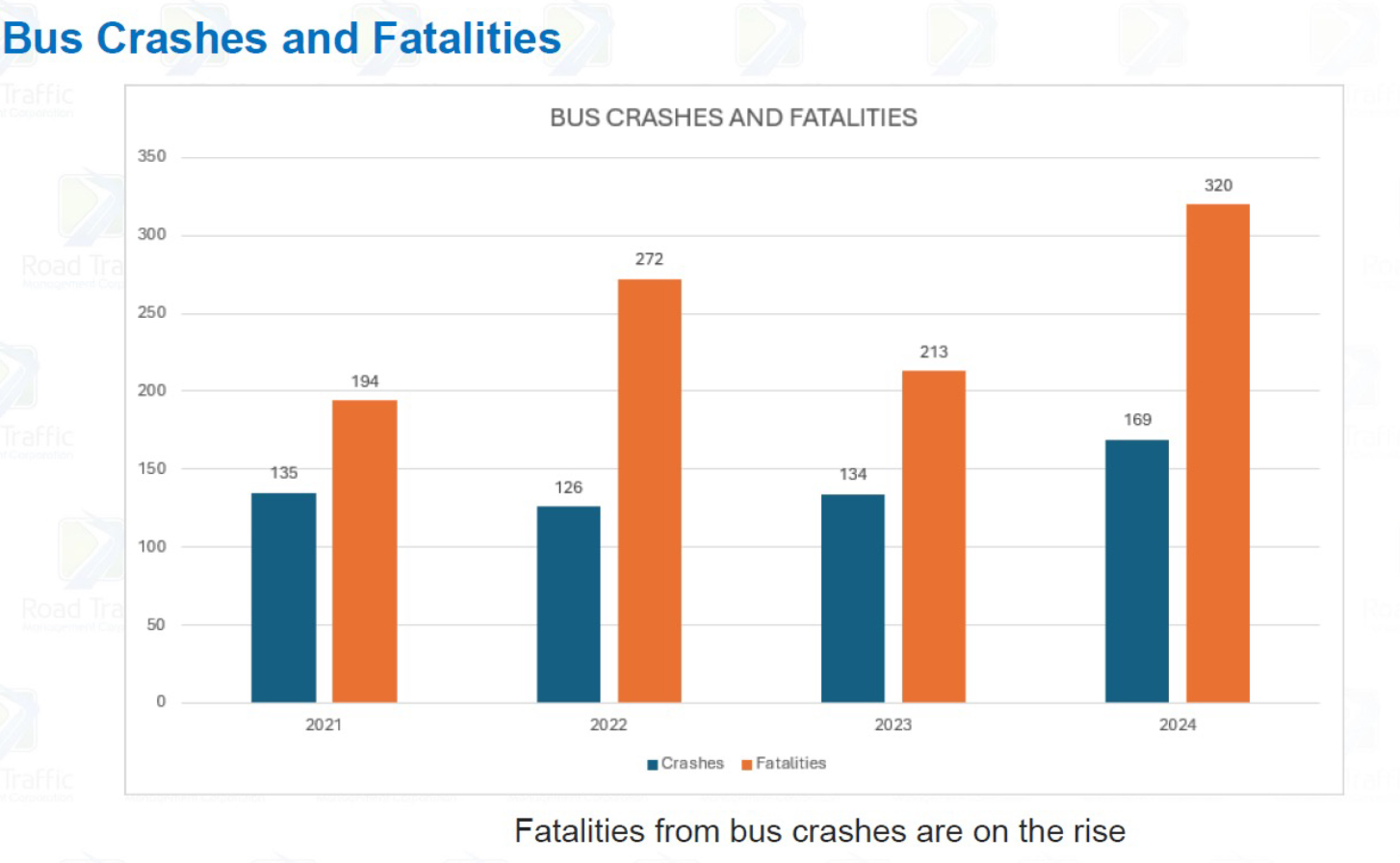
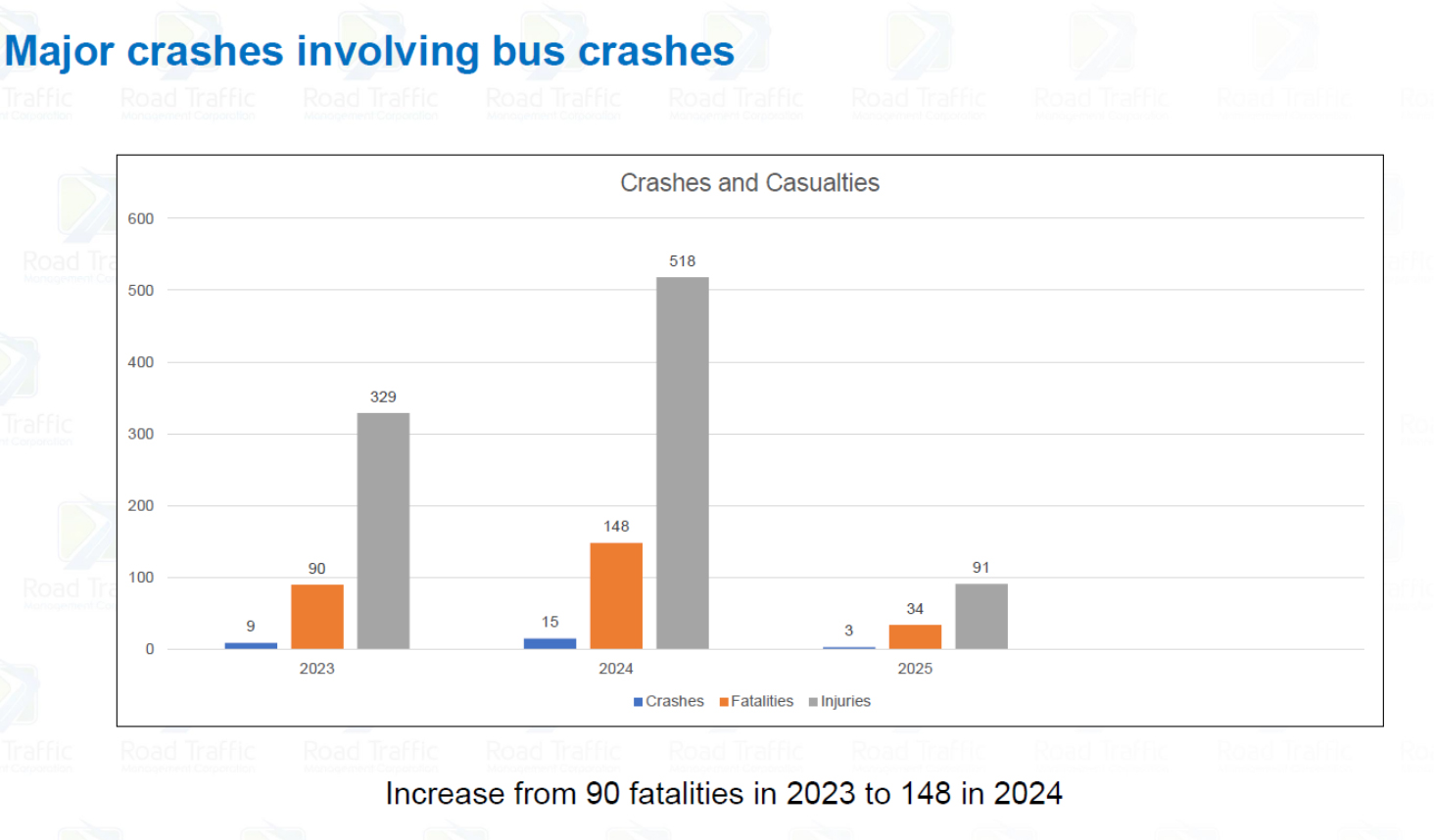
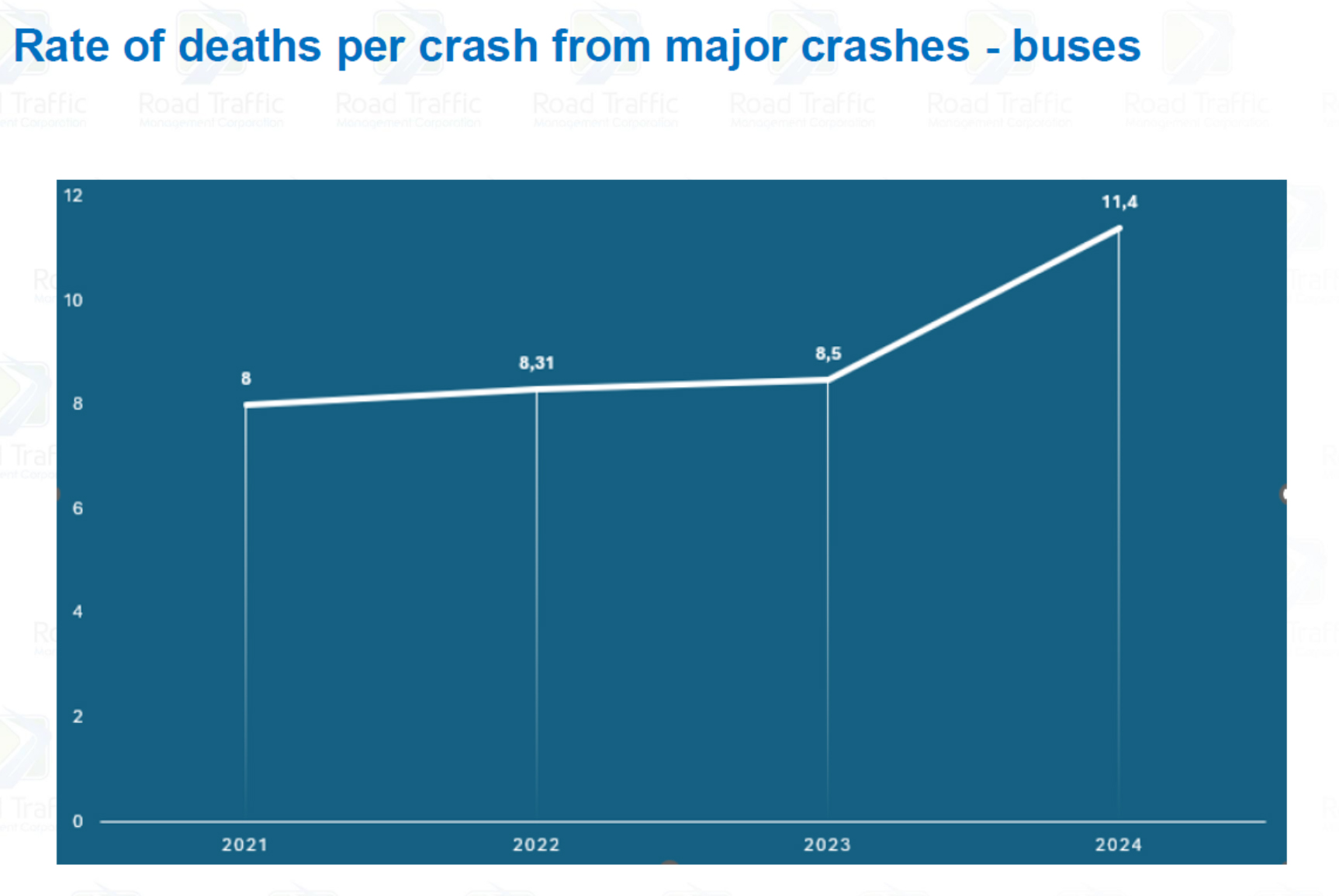
The accompanying graphs from the Road Traffic Management Corporation (RTMC) show some statistics on bus crashes and fatalities over the past few years.
SABOA has always been a strong champion of road safety and recently pledged its support for the launch of the Department of Transport’s (DoT’s) and RTMC’s road safety campaign. It has a three-phased approach during three periods: pre-Easter, Easter, and post-Easter.
The RTMC has defined Easter as typically having the following period characteristics:
- Long weekends with mass movement – religious denominations, holidaymakers, tourists, and migrant workers
- Critical routes – major and secondary
- Inclement weather – rain, floods, snow, shorter day length
- Persistent increase in pedestrian fatalities
- Poor road usage – holiday behavioural risk factors
- High volumes in shorter period – four long weekends, high concentration of traffic
Rethinking enforcement
Enforcement is not solely about roadblocks. In fact, this often causes much frustration for motorists, some of whom are tempted to speed and drive recklessly to make up for time spent in these roadblocks. The RTMC has also adopted an approach of continuous policing throughout the year and increased visible policing in partnership with municipal and provincial law enforcement departments – together with their mobile vehicle testing centres.
Encouraging operational excellence
During an engagement with the RTMC, bus companies were urged to adopt a culture of operational excellence encompassing four key aspects, as follows:
- Driver training: Mandate continuous professional development, implement telematics and real-time monitoring, use psychometric assessments, and encourage a culture of safety.
- Vehicle safety: Conduct routine and mandatory vehicle inspections, adopt modern safety technologies, and encourage fleet renewal programmes.
- Awareness: Educate passengers on safe boarding and disembarking practices, implement awareness campaigns, and provide emergency training for passengers.
- Post-crashes: Equip all buses with first aid kits and fire extinguishers, improve emergency response times, and enhance post-crash rehabilitation programmes.
SABOA strongly condemns any negligence and reckless behaviour on the roads, including the operation of unroadworthy and poorly maintained vehicles, and holds members to account.
Similarly, the association has a Code of Conduct and a Road Safety Code of Conduct, to ensure that members adhere to the highest standards of professionalism in terms of regulations and legislation, ethics, vehicle roadworthiness, road safety standards, and customer service in South Africa. SABOA members are held to account in cases of contraventions.
Risky season for road travel
With the Easter season being synonymous with an increased risk of accidents and incidents on our roads, most bus operators usually run their own awareness campaigns, including refresher training. Drivers are urged to take extra care on the roads, be more vigilant, and stop at certain points for long-distance travel.
Not all incidents involving buses are due to unroadworthy vehicles or driver error. We share the road with other motorists – and it is the duty and responsibility of all motorists to be patient, exercise care, and act responsibly.
South Africa’s road safety crisis: the bigger picture
A 2018 report released by the World Health Organization (WHO), the Global Status Report on Road Safety, cited road deaths as the leading cause of death among people aged between five and 29 years, and the eighth leading cause of death in the world. In the same report, South Africa was ranked number 159 of the 175 countries surveyed. South Africa’s December road death toll was more than that of most countries annually. South Africa’s road death toll per 100,000 inhabitants is also higher than the average both in Africa and globally.
Here are the eight leading causes of South African road accidents:
- DISTRACTIONS
Distractions that cause drivers to lose focus on the road are one of the leading causes of road accidents. They include common behaviours like using a mobile phone, eating food, and applying make-up.
In October 2023, a quarter of the accidents in the country involved the use of a mobile phone while driving. When talking on a phone, a driver’s reaction and response times are slower – dangerous when a split-second decision may be needed to avoid an accident. A person is more likely to weave, veer out of their lane, or hit a guardrail or road sign if their eyes or mind are on the phone rather than the road. According to Discovery Insure, a mere 20 seconds on the phone during each trip increases accident risk by more than 60%.
Texting while driving is even more dangerous and can have devastating consequences. Statistics indicate that texting while driving makes you 23% more likely to be involved in an accident. Why is texting while driving such a lethal combination? In the field of psychology, distracted driving encompasses any activity that diverts attention from the road and can be categorised as visual, manual, auditory, and cognitive distractions:
- Visual distraction: When you text while driving, your eyes are glued to the screen, causing you to lose sight of the road ahead. Even a momentary lapse in attention can lead to a catastrophic accident.
- Cognitive distraction: Texting isn’t just about tapping on a screen; it also requires mental engagement. Your brain diverts valuable cognitive resources away from driving to process the text, making it harder to react to sudden changes in traffic.
- Manual distraction: Physically holding your phone and typing takes at least one hand off the steering wheel. In emergencies, this can result in a delayed or impaired response.
- DRUNK DRIVING
According to the RTMC, 27% of road fatalities in South Africa are linked to alcohol consumption. The limit for driving while under the influence is a blood alcohol content of 0.05% per 100 ml and 0.02g BAC or 0.10mg breath alcohol for holders of a professional driving permit (PrDP) – for example a taxi or bus driver.
There is absolutely no excuse for a professional driver to get behind the wheel of a vehicle if they are under the influence of alcohol, as they endanger the lives of every single passenger from the minute they set foot in the vehicle.
- SPEEDING
According to Arrive Alive, the likelihood of death due to a collision at 80km/h is 20 times higher than a collision at 32km/h. Speeding also increases the likelihood of having a collision, as it exponentially increases stopping time.
- RECKLESS DRIVING
Reckless or negligent driving includes actions like overtaking when it’s unsafe to do so, not stopping properly at stop signs or traffic lights, and changing lanes into tight spaces.
- JAYWALKING
Jaywalking, especially on highways, causes accidents when pedestrians are struck or cars swerve to avoid them. According to the Automobile Association of South Africa (AA), pedestrians account for one-third of road fatalities, with 5,339 pedestrian deaths in 2017 alone. More recent research indicates that pedestrians are the biggest contributors to accidents in South Africa.
- WEATHER
Bad weather – rain in particular – is a major contributor to road accidents because it creates poor visibility and difficult driving conditions. Heavy rains can lead to flooding and large puddles that cause cars to aquaplane (slide uncontrollably on a wet surface).
- POOR ROAD CONDITIONS
Potholes, cracks, and uneven or loose road surfaces also contribute to road accidents. The AA has reportedly said that proper road maintenance in South Africa would result in an immediate 5% decrease in road deaths.
- VEHICLE FAULTS
Poorly maintained and unroadworthy vehicles cause accidents when parts such as brakes or tyres fail. A lack of mirrors, cracked windshields, faulty lights and indicators, and non-functional windscreen wipers all increase the likelihood of a collision.
Unroadworthy vehicles due to, for example, bald tyres or poor braking systems – combined with poor road conditions and bad weather – are frequently a recipe for disaster.
Belt up!
While on the subject of vehicles and their equipment, the use of seatbelts in public transport vehicles will soon become a serious topic of discussion. It is commonly known that seatbelts are crucial in reducing the risk of fatalities and severe injuries during accidents.
Retrofitting older buses with seatbelts entails significant expenses, as does purchasing new buses already equipped with this safety feature. However, with many learners’ lives being put at risk and lost in both taxis and buses transporting scholars, we see this conversation happening very soon.
In addressing non-compliance with road safety, understanding user behaviour, and implementing behaviour change, techniques such as road safety interventions and awareness campaigns have always been favoured. However, there is also some merit in looking at a person’s values. If we do not respect life and are not considerate, we will practise the same behaviour on our roads.
Children begin to form values as early as five to seven years old, influenced by their family, culture, and immediate surroundings. As children grow, they start to build their own value systems, influenced by their own experiences and interactions with peers and other authority figures. These continue to evolve as we gain experiences and mature.
Children learn by observing, adopting, and absorbing the behaviours, attitudes, and beliefs of those around them, especially parents and other close family members. So perhaps this should be the starting place to build the foundation for road safety.
Not a bed of roses…
On another note, I think it’s safe to say that operating in the bus industry is not a bed of roses. There are many thorns under foot, as operators have to continuously grapple with non-payment, contract uncertainty, and legal battles to ensure that they are fairly treated. Although not ideal or cheap, legal action often seems to be the only way for the industry to be taken seriously. In KwaZulu-Natal, the legal challenges regarding negotiated transformation contracts are ongoing, as is the matter of negotiated contracts in Gauteng.
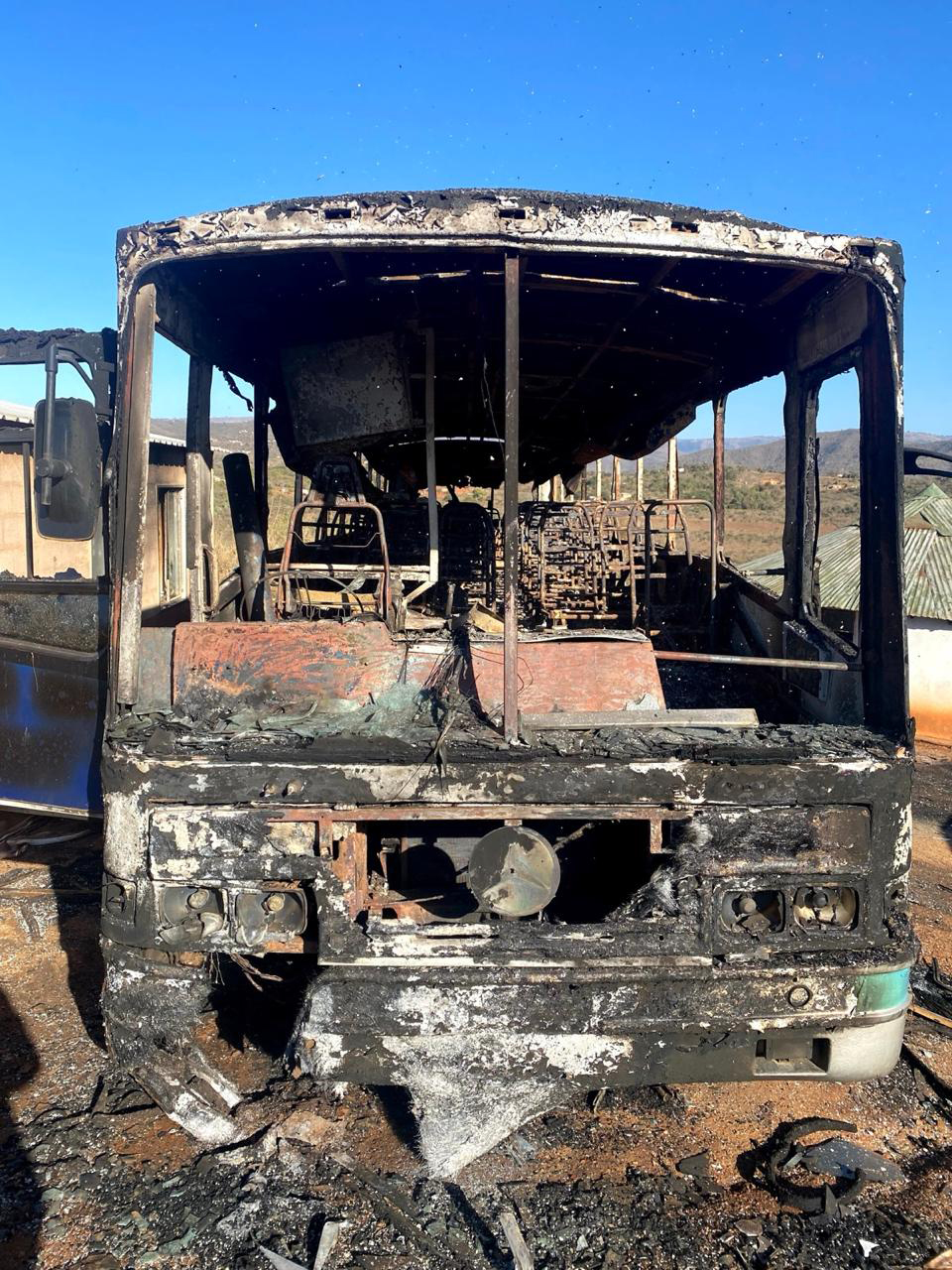
In recent years, the bus industry has become the target of some gruesome and heinous acts of violence. In January this year, 51 buses were burnt in Moloto and two depots were severely damaged. One employee was shot and another was struck on the head during the incident. In February, nine buses were torched in Moretele, north of Pretoria, while in October last year, 23 buses were reduced to ashes in a suspected arson attack in Rustenburg. In August 2023, more than 100 buses were damaged and nine buses were completely burnt out in the Western Cape during the taxi strike. Since 2021, there have been many unsolved incidents in KwaZulu-Natal – with over 32 buses being set alight and destroyed. Some of the drivers were also shot during these incidents, resulting in fatalities.
Although many of these are cold cases that may never be solved, these devastating and senseless attacks not only threaten the safety of bus drivers and commuters, but also disrupt essential transport services on which thousands of South Africans daily – not to mention the losses and costs to operators that can never be recouped, no matter how well they are insured.
The Association has formed a relationship with the SAPS National Joint Operational and Intelligence Structure (NATJOINTS) – the inter-departmental team formed to address crime in the country. NATJOINTS has committed to holding regular engagements with SABOA, sharing relevant information, and facilitating discussions with senior SAPS officials. Members are requested to please share information on incidents as soon as they occur so that action can be taken swiftly and without the risk of evidence being compromised.
Published by



focusmagsa