Electric vans – once seen as a futuristic luxury – are fast becoming a serious contender in the commercial vehicle space. According to a new report from tech analysts IDTechEx, it may not be long before they’re also the cheaper option.
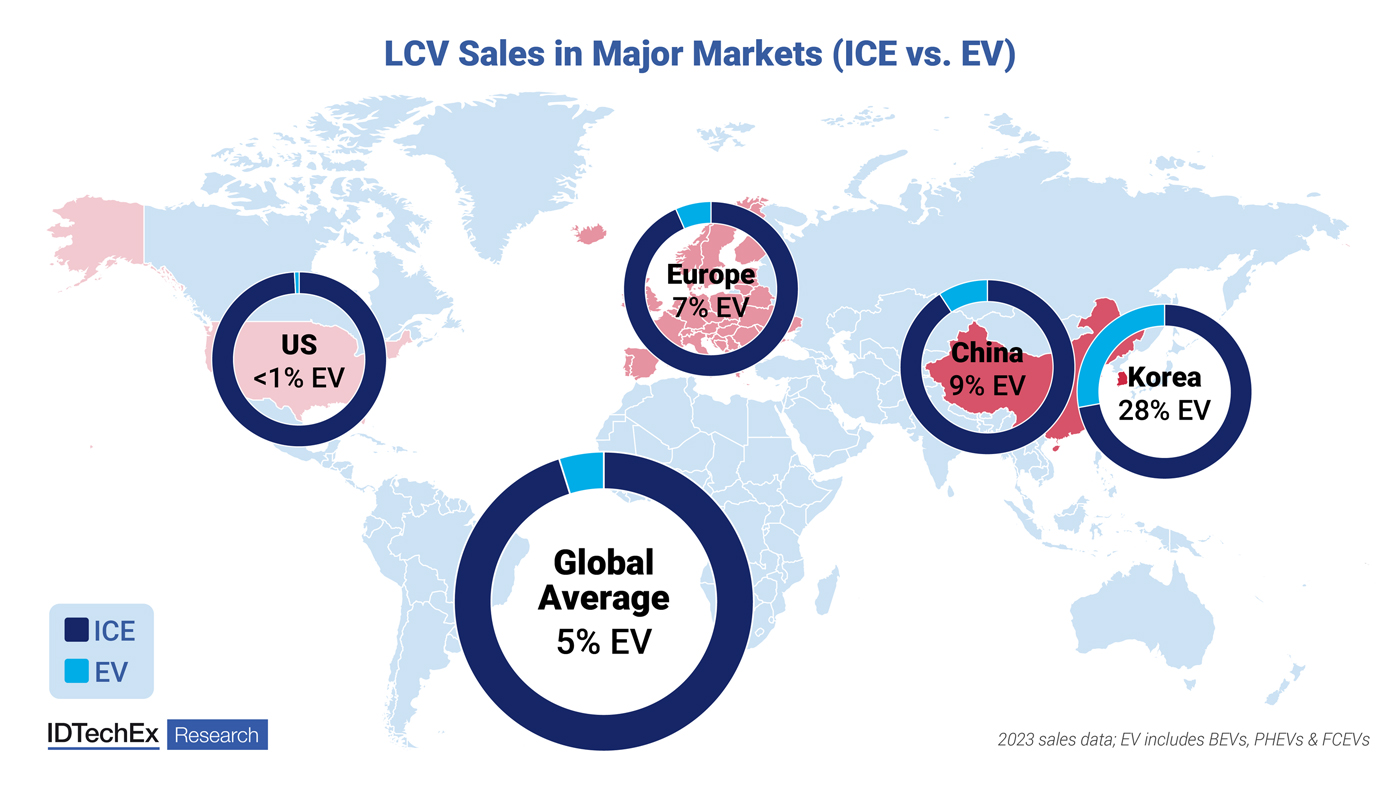
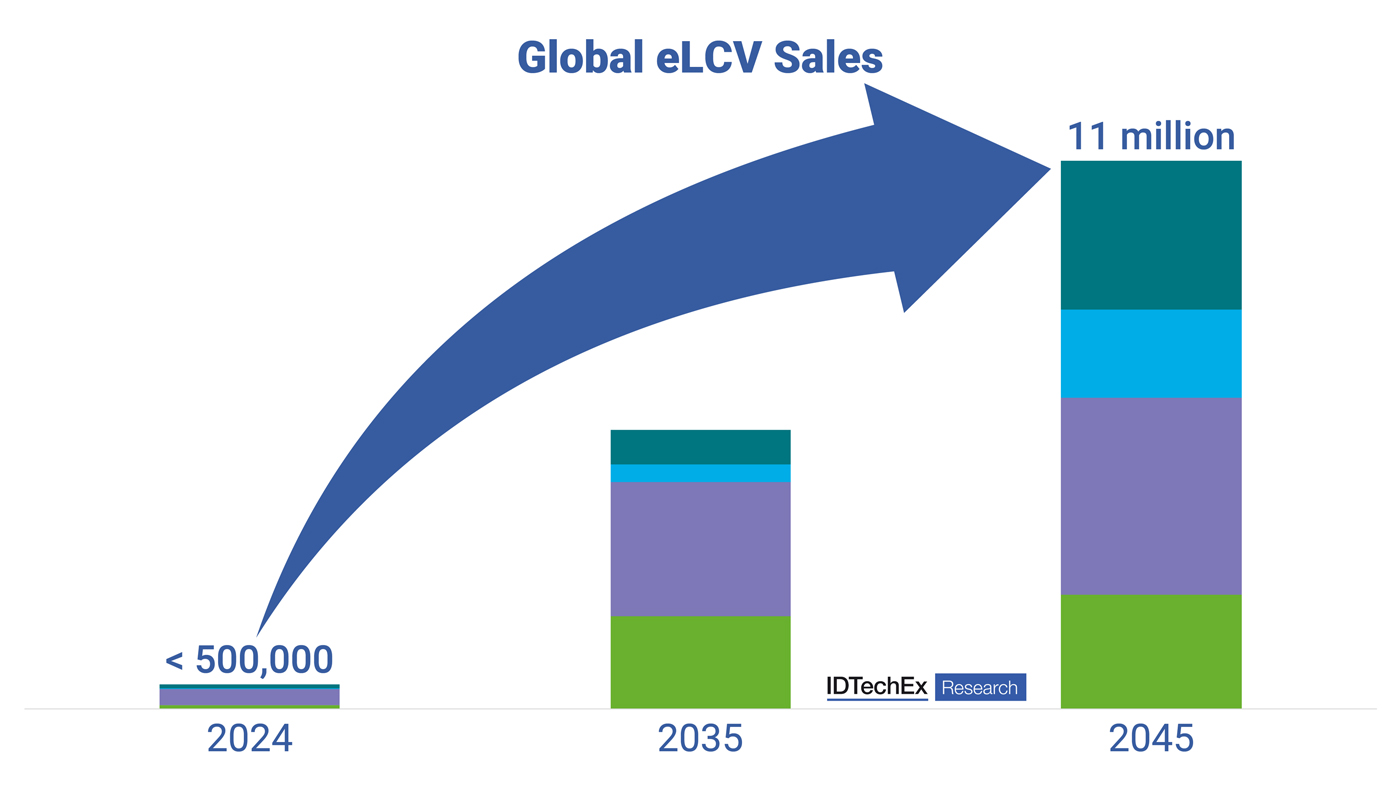
In 2023, about 5% of all global light commercial vehicle (LCV) sales were electric vehicles (EVs). In 2024, fewer than 500,000 electric LCVs (eLCVs) were sold globally.
That’s all about to change. eLCVs are no longer a science experiment. They’re maturing quickly – and when it comes to cost, they’re catching up fast. As a result, IDTechEx predicts that annual eLCV sales will exceed 11 million units by 2045.
That’s the future, but for now, buyers remain wary for one important reason: electric vans cost more to buy than their diesel counterparts. The biggest culprit, of course, is the battery – along with the drivetrain. Unlike diesel engines, which have been mass-produced for decades, EV components are still gaining economies of scale.
“Where eLCVs do struggle is in their higher upfront costs. The CAPEX of an eLCV is still higher than that of combustion, with the cost of battery systems and drivetrains being a major contributor to the price premium,” notes Pranav Jaswani, technology analyst at IDTechEx. “eLCVs also have higher R&D costs and are currently lacking in the economies of scale which may bring prices down. The price premium of an eLCV varies by manufacturer, region, and size – sometimes as low as 10 to 20% for a smaller vehicle or reaching up to 40 to 60% for the largest ones.”
It’s not just the purchase price that’s problematic, though: electric vans lose their value faster, eating into any savings made through lower running costs.
Cheaper to run – by a long shot
Despite the higher purchase price, however, the day-to-day costs of owning and operating an electric van are significantly lower. “A standard eLCV can save as much as US$1,300 (about R25,000) per year on energy alone compared to a diesel alternative,” Jaswani notes. That’s because electricity is far cheaper than diesel in most markets, while there is also protection from those wild price swings at the pumps.
Electric vans also have fewer moving parts, which means less maintenance, fewer breakdowns, and more time on the road. IDTechEx estimates that this could mean two extra days of operation per vehicle per year – not insignificant for time-sensitive businesses.
Getting closer to TCO parity
The holy grail for electric van adoption is total cost of ownership (TCO) parity – the point where, over a five-year period, an electric van costs the same or less than its diesel counterpart when you add everything up: purchase price, fuel, maintenance, insurance, and resale value.
We’re not quite there yet, but things are moving quickly in the right direction. On one side, the cost of building electric vans is coming down; on the other, the cost of running diesel vans is going up.