In a recent edition of the Financial Mail, RATP Dev placed a 12-page corporate report devoted to the role of the company in South African public transport. In response, VAUGHAN MOSTERT has penned this open letter to the organisation.
From a public relations point of view, the insert may have ticked some boxes, but from a public transport perspective there was nothing of comfort for those who would like to see improvements in South Africa.
As the world’s third-largest public transport operator, the RATP Group should be doing better than this.
At a time when serious leadership is needed to fix public transport in South Africa, the insert merely repeated worn-out platitudes and claims that Gautrain is highly successful and that it is a best practice case study for successful public-private collaboration.
This is simply not true. The reality is that Gautrain has been disastrous for public transport in South Africa. Money spent on it so far could have been used much more productively to improve existing public transport operations countrywide. None of the vague claims – such as “added R5 billion to GDP”, for example – have been subject to rigorous analysis.
The collapse of rail transport in South Africa should have taught us that trackbound modes (whether of the heavy rail or light rail variety) may be nice to have, but are by no means essential for the transport needs of most cities – not only in South Africa, but worldwide.
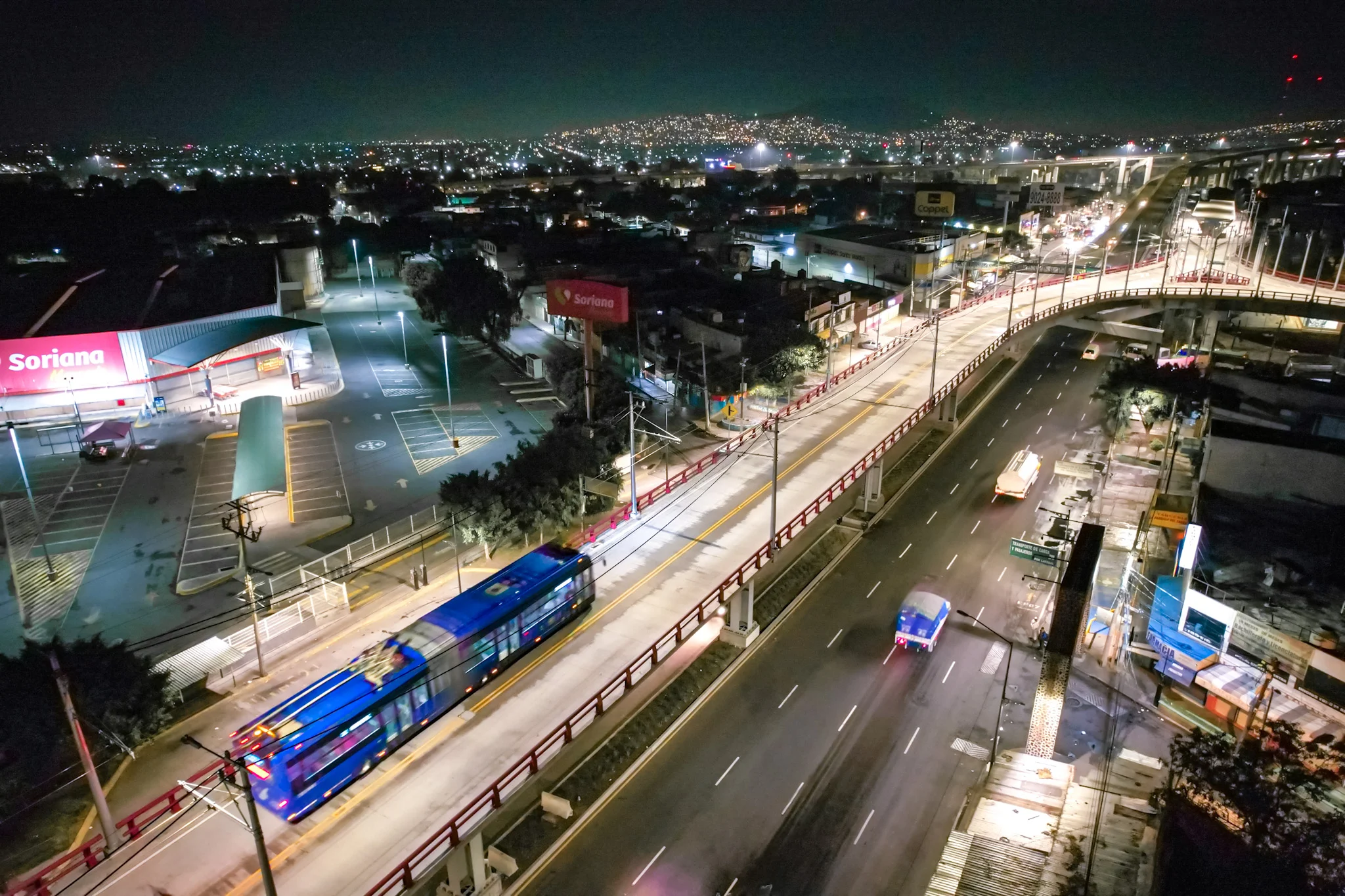
Big cities worldwide have failed to pay proper attention to the electric trolleybus – by far the most mismanaged form of mass public transport of the last 100 years. Trolleybus projects should be approached with the same positive mindset as other modes – particularly rail. The presence of wires above any road should be seen as the psychological equivalent of rails laid in the street, and the roads below the wires must be seen as priority roads for public transport (and be enforced as such). Far from being a visual intrusion, wires tell people: “Someone takes public transport seriously here”.
Organisations like RATP, UITP and other big players in transport need to promote the trackfree concept with more vigour. Perhaps their willingness to associate their names with expensive trackbound projects is simply due to the huge contract prices involved.
In most places, a four-axle, double articulated trolleybus can do anything light rail is doing, and on virtually any route in the world it will offer the highest capacity of any rubber-tyred mode.
A suitable route to employ this concept is the Moloto Road north-east of Tshwane, which has been the subject of rail feasibility studies for decades now. While a road mode will be slower than rail on the main haul, the lifetime costs of a trackfree option will be far less than that of a trackbound scheme. The additional flexibility – both at the inner and at the outer ends – will also reduce the need for a costly fleet of feeder buses to serve the stations.
Another step would be to convert the existing Gautrain line to trackfree trolleybus operation. Existing infrastructure can be used to create a trackfree electric busway linking Park station with Hatfield; the electric infrastructure is already there. The route could then be extended into Soweto along the existing ReaVaya busway. This would give us a continuous 200-odd-km electric busway linking Moloto Road with Soweto – a world record. The single-track tunnel between Park and Sandton could be used in the morning peak by buses travelling northwards and during the evening peak by buses travelling southbound. Trolleybuses going in the opposite direction would travel along Oxford Road on battery power.