New Scania Super targets lower fuel consumption and higher uptime

New Scania Super targets lower fuel consumption and higher uptime

As South African transport operators grapple with rising fuel costs, tighter margins and increasing pressure to reduce emissions, operational efficiency has become more critical than ever. The new Scania Super powertrain has been engineered to address these challenges through lower fuel consumption, improved uptime and stronger overall performance.

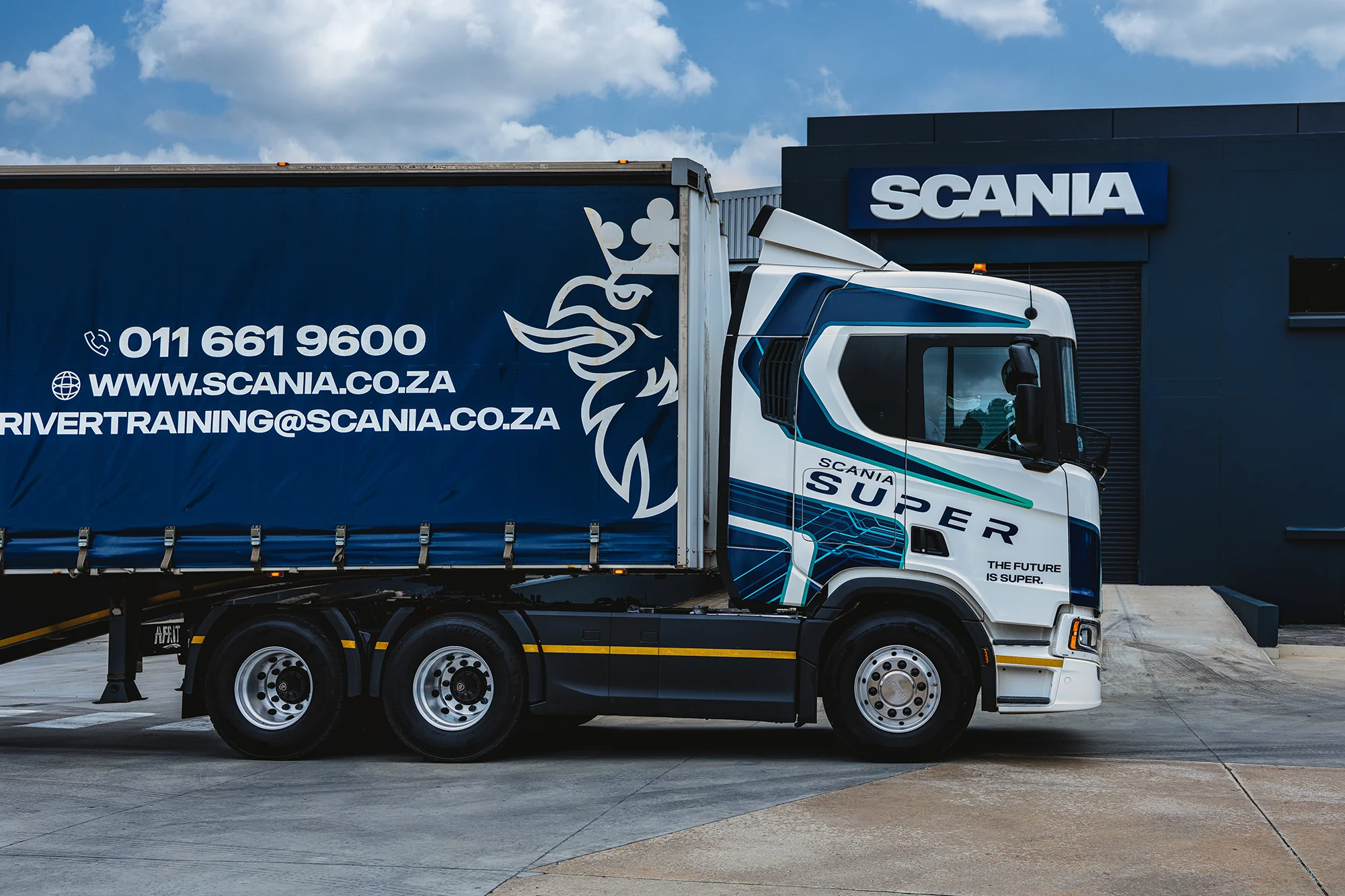
Scania South Africa used NAMPO Harvest Day 2026 to showcase its new Scania Super powertrain, positioning the vehicle as a response to the increasing economic and operational pressures facing South Africa’s transport and logistics sectors. Displayed at NAMPO Park during one of the country’s largest agricultural exhibitions, the Scania Super formed part of broader industry discussions around efficiency, sustainability and operating costs in heavy-duty transport.

Road freight remains the dominant mode of goods movement in South Africa, particularly within agriculture, mining and retail supply chains. However, rising fuel prices continue to place pressure on operators already managing high maintenance costs, infrastructure challenges and narrow operating margins.

According to industry estimates, fuel can account for between 30 and 50% of total operating costs in heavy-duty transport operations, making fuel efficiency a significant commercial consideration for fleet owners.

Focus on operating efficiency

The Scania Super features a new 13-litre engine platform designed to improve fuel efficiency and overall operating economy. According to Scania, the engine achieves up to 50% brake thermal efficiency and can reduce fuel consumption by as much as 8% compared with the previous generation.

The improvements are supported by updates to the Scania Opticruise gearbox, rear axle and modular chassis architecture. Together, these changes are intended to improve durability, payload capacity and vehicle performance under demanding operating conditions.

“We are operating in an environment where efficiency is no longer simply a technical benchmark. It has become central to profitability and sustainability,” said Erik Bergvall, managing director of Scania Southern Africa. “Customers are increasingly evaluating what efficiency delivers per kilometre, per load and over the full lifecycle of the vehicle.”
Pressure on fleet operators

The transport sector continues to face growing operational complexity. In addition to fuel costs, fleet operators are contending with route inefficiencies, traffic congestion, load optimisation challenges and vehicle downtime.

These factors can significantly affect productivity and profitability, particularly in industries reliant on time-sensitive freight movement. Technologies aimed at improving predictability, reducing downtime and supporting more efficient operations are therefore becoming increasingly important within the logistics sector.

Scania believes meaningful sustainability gains can still be achieved through improvements to existing internal combustion technology, particularly in regions where alternative energy infrastructure remains limited. Lower fuel consumption and improved operational efficiency can reduce emissions intensity while allowing operators to maintain commercially viable transport operations.

“Sustainability in transport is not only about future technologies. It is also about how efficiently goods are moved today,” said Mark Templeton, sustainability manager at Scania South Africa. “Improving efficiency within existing fleets remains one of the most immediate ways to reduce fuel usage and environmental impact.”

NAMPO attracts logistics stakeholders

NAMPO Harvest Day continues to attract a growing number of transport and logistics stakeholders due to the close relationship between agriculture and freight movement in South Africa. The exhibition draws farmers, agribusinesses, transport operators and logistics providers from across the country, creating a platform for discussions around vehicle performance, operating costs and supply chain efficiency.

Scania officially unveiled the Super on Wednesday, 13 May, with the vehicle attracting strong interest from exhibition visitors. The company said its participation at NAMPO reflects the increasing importance of efficiency within both the agricultural and transport sectors as operators attempt to balance economic pressures with sustainability expectations.

Published by

Focus on Transport

FOCUS on Transport and Logistics is the oldest and most respected transport and logistics publication in southern Africa.
Prev Fuel price relief? What the Iran deal means for SA transport
Next SAPICS recognises role of Truck Test in supply chain efficiency

Leave a comment

This site is protected by reCAPTCHA and the Google Privacy Policy and Terms of Service apply.