Shifting gears: insights from the RFA Convention

Shifting gears: insights from the RFA Convention

South Africa’s road freight industry is navigating rising costs, political uncertainty, labour tensions and rapid technological change. JULIA TEW attended the 2026 RFA Convention and she reports that while the industry is under immense pressure, it is also actively searching for new solutions, stronger partnerships and opportunities for long-term transformation. 

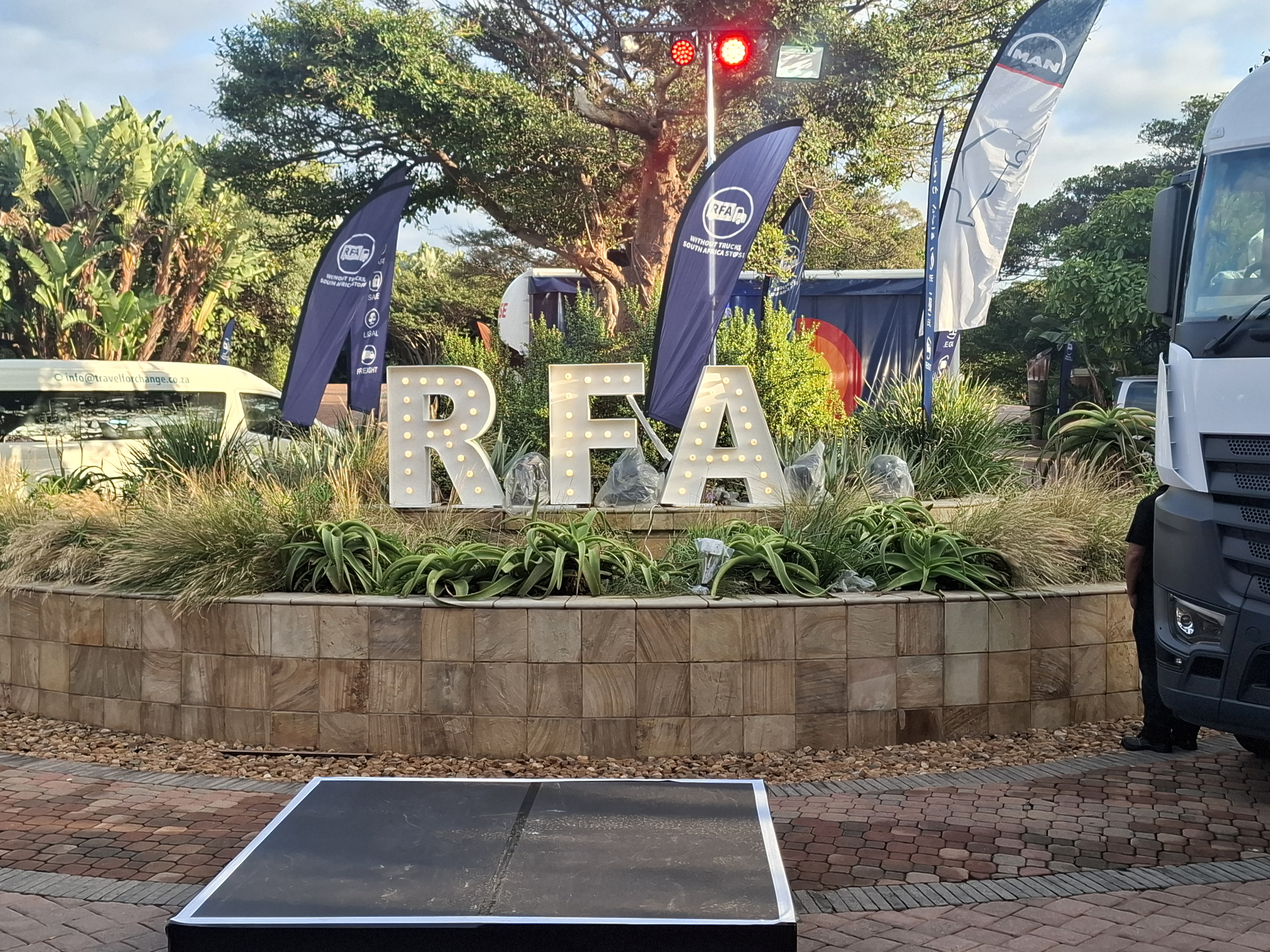
The Road Freight Association’s annual convention returned with renewed energy at The Capital Zimbali on the KwaZulu-Natal coast, gathering operators, executives, government officials and industry experts under the theme “Shifting Gears” – a nod to both the industry’s resilience and the urgent transformation it faces. From geopolitical uncertainty to green technology, AI to wage negotiations, the agenda was as wide-ranging as the challenges confronting South Africa’s trucking sector.

A sector under pressure

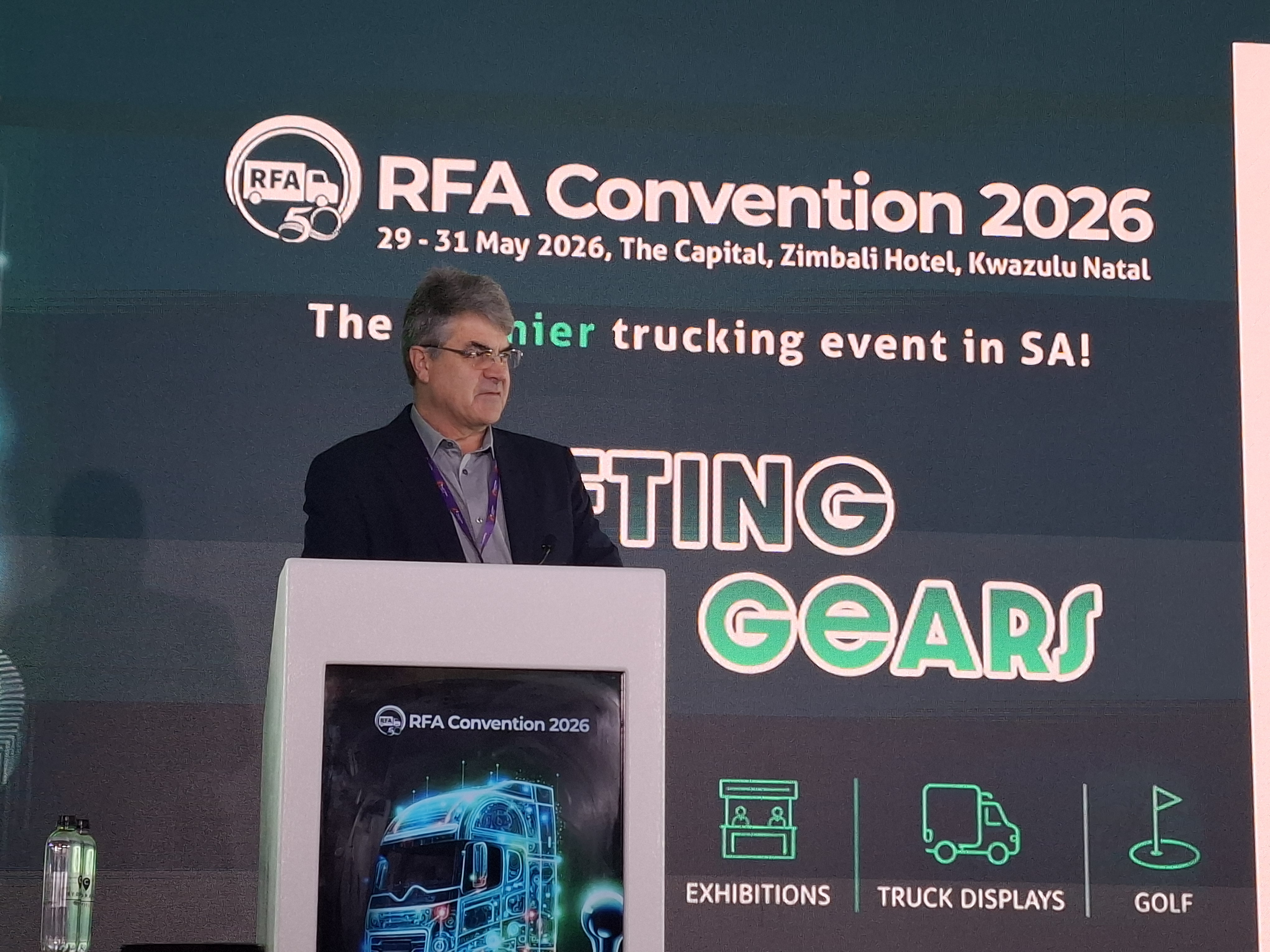
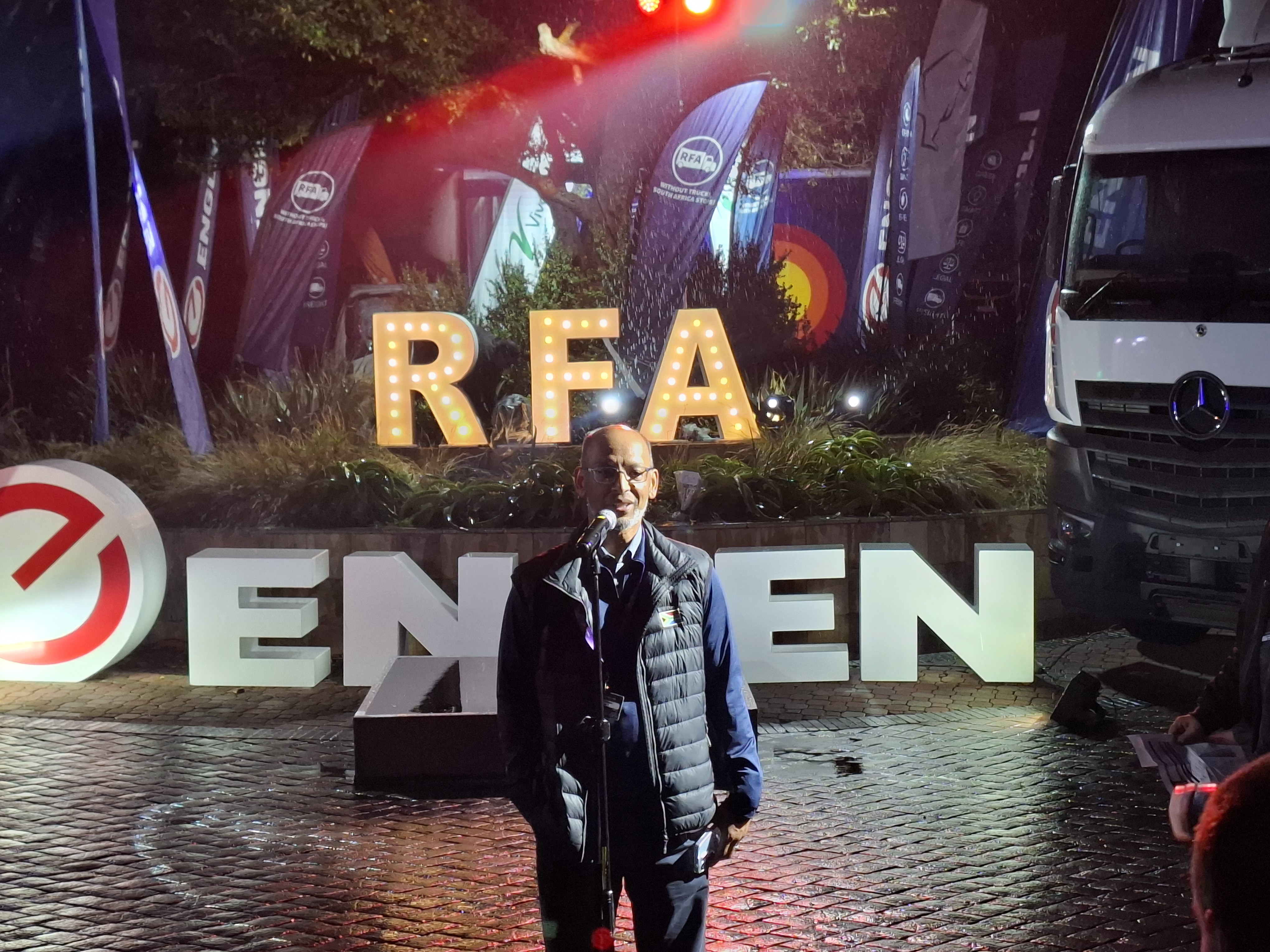
RFA Chairperson Penwell Lunga set the tone with characteristic candour. He described a transport entrepreneur he’d recently met who felt he was “driving uphill, in the wrong gear”: diesel costs higher than anything seen before, four trucks lost to hijacking and two to arson, and the owner now self-insured out of desperation. “We are in a tough spot, and it does feel different,” Lunga acknowledged. “A lot of things are changing, but a lot are the same.” His message, however, was not one of defeat. The sector employs tens of thousands of people; failure simply is not an option. “There’s very little we can do to change the road, so it’s up to us to decide how we are going to drive,” he added.

CEO Gavin Kelly followed with a frank assessment of the landscape. Membership grew 14% in 2025 – a sign of the RFA’s growing relevance – but the pressures are real: undocumented foreign nationals, B-BBEE compliance, AARTO, port inefficiencies and the looming prospect of
strike action during the upcoming wage negotiations. Kelly pointed to opportunity in Africa as a future market and highlighted the rand’s status as the best-performing emerging market currency as a reason for cautious optimism. His advice? Stay connected, share information and use the RFA as a partner in mitigating risk. “Without you, South Africa stops,” he emphasised.

Government steps up – and commits

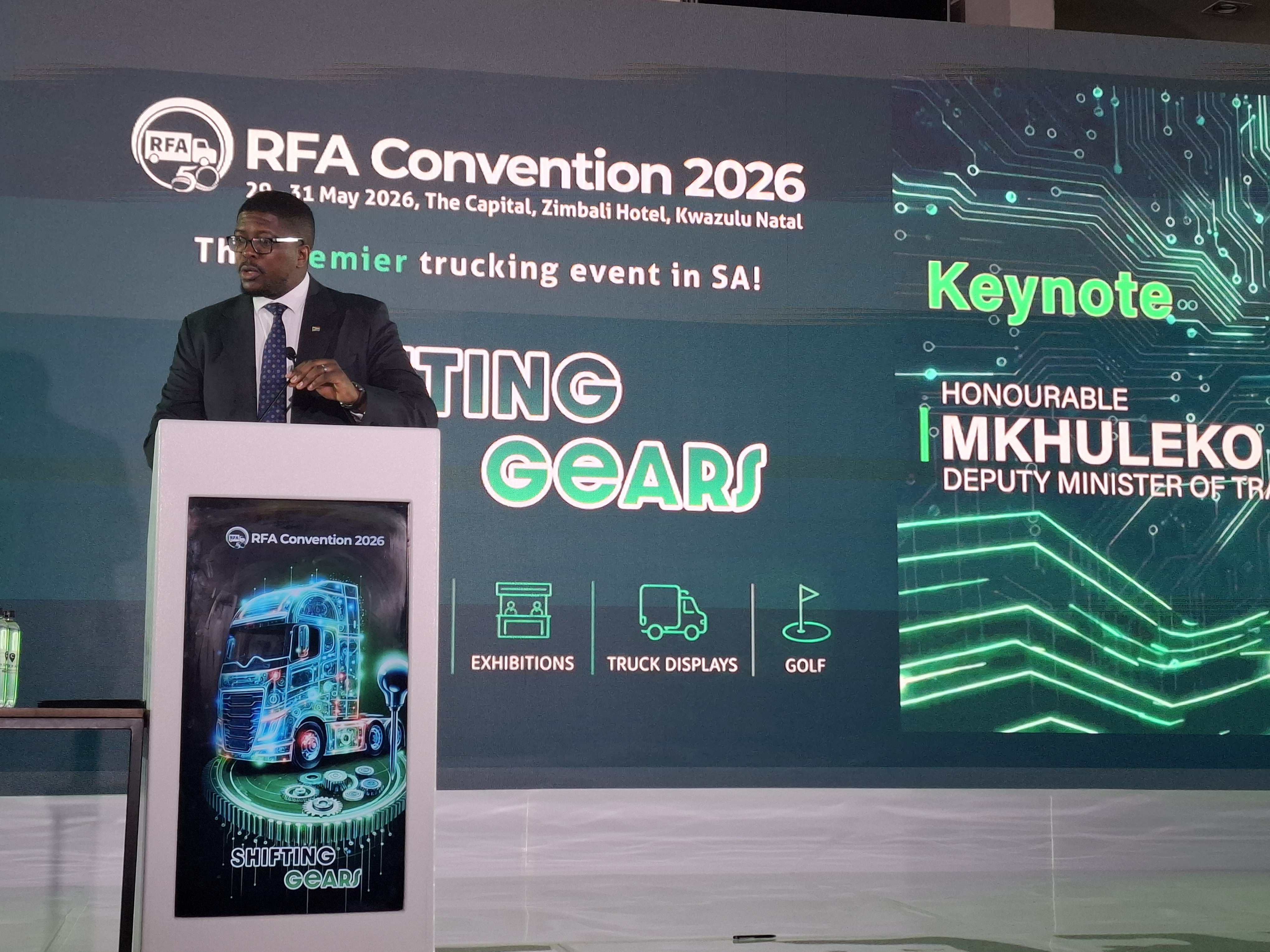
Deputy Minister of Transport Mkhuleko Hlengwa delivered perhaps the most detailed and encouraging address of the convention, outlining six time-bound departmental priorities and a R102-billion transport budget, with R31 billion allocated to SANRAL. He directly acknowledged sector frustrations – congestion on freight corridors, deteriorating infrastructure, border inefficiencies – and committed to targeted reforms.

Highlights included: 11 private train operators are set to begin operations on 1 April 2027 under the Transnet network, Lebombo border processing times have already been reduced following joint attention and government is exploring how to front-load infrastructure financing. Also mentioned was the ambitious road fatality reduction target of 45% by 2029, in the face of the 11,400 lives lost on South African roads in 2025 alone.

Hlengwa was candid about the complexities of multimodal transportation. Thousands of freight vehicles access sections of the Durban Port daily, for instance, and 80 to 84% of SA’s cargo by tonnage moves by road. Rail and road, he insisted, must complement each other rather than compete: “Policy alone will not deliver reform. Partnership will.”
Reading the economic and political weather

Absa’s Simphiwe Letlojane gave delegates a clear-eyed view of the macroeconomic environment. Geopolitical turbulence – from US tariffs to tensions around the Strait of Hormuz – is creating volatility that filters directly into fuel prices and transport costs. The South African Reserve Bank (SARB) expects inflation to peak at 5% before easing, and while global interest rates are broadly declining, South Africa’s own rate ticked up 25 basis points on 28 May. The transport sector – a 10 to 11% contributor to GDP and heavily dependent on mining, quarrying and food and beverages – has not yet recovered to pre-Covid levels. His advice was to hedge with stocks that thrive in turbulent times.

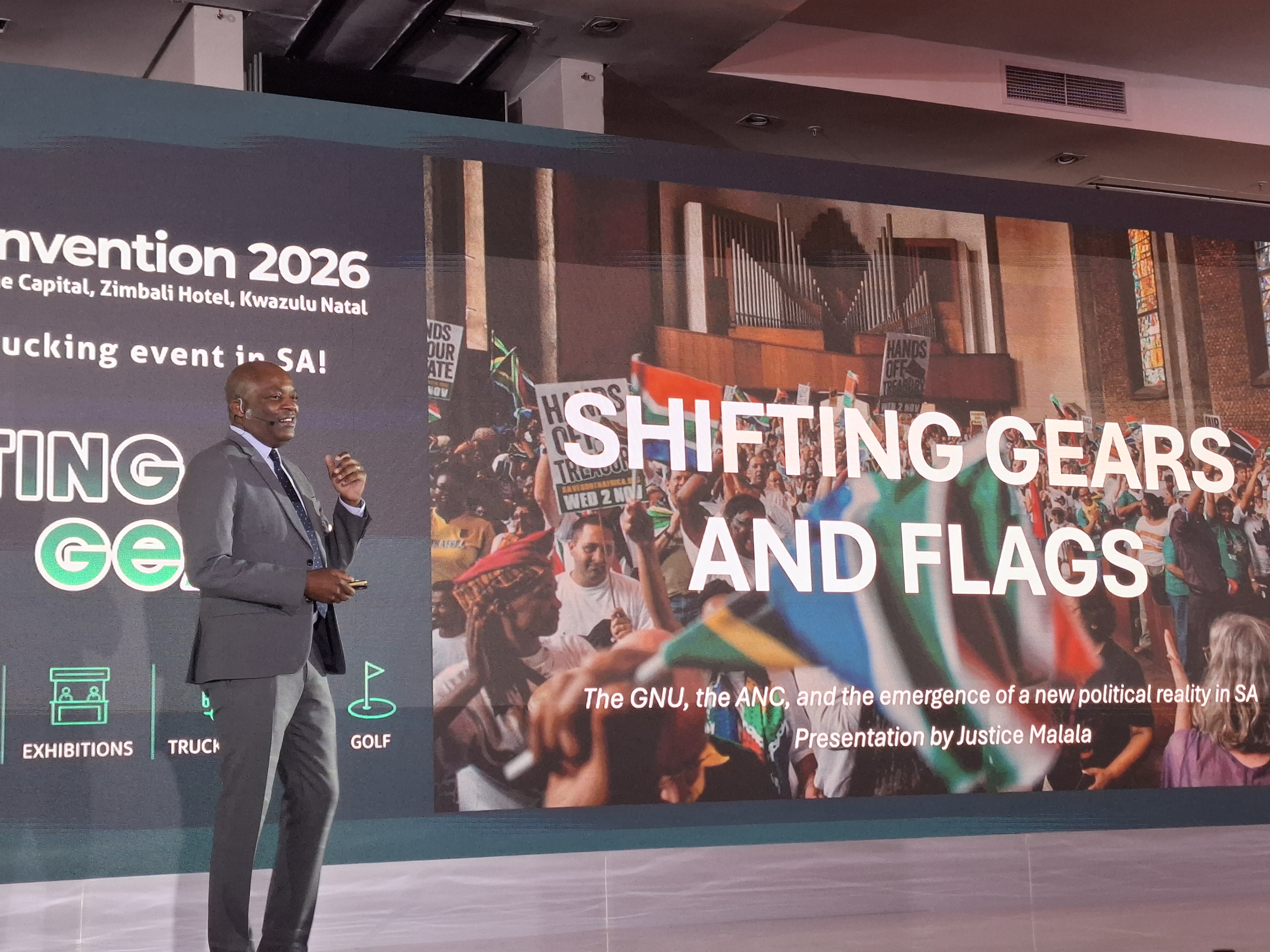
Political analyst Justice Malala brought his trademark blend of wit and warning to the proceedings. Business confidence surged after the Government of National Unity was formed, but its survival remains far from guaranteed. The Trump effect, illegal immigration tensions (particularly in KZN), ANC internal instability and the looming 2026 local elections – with the MK Party polling at 44% support in eThekwini – all represent flags that business needs to watch carefully. His broader point? Strong institutions are the unsung flag that protects against overreach and corruption – and unity matters: “When flags are going up, you need to have other people on your side.”

Green transport: closer than you think

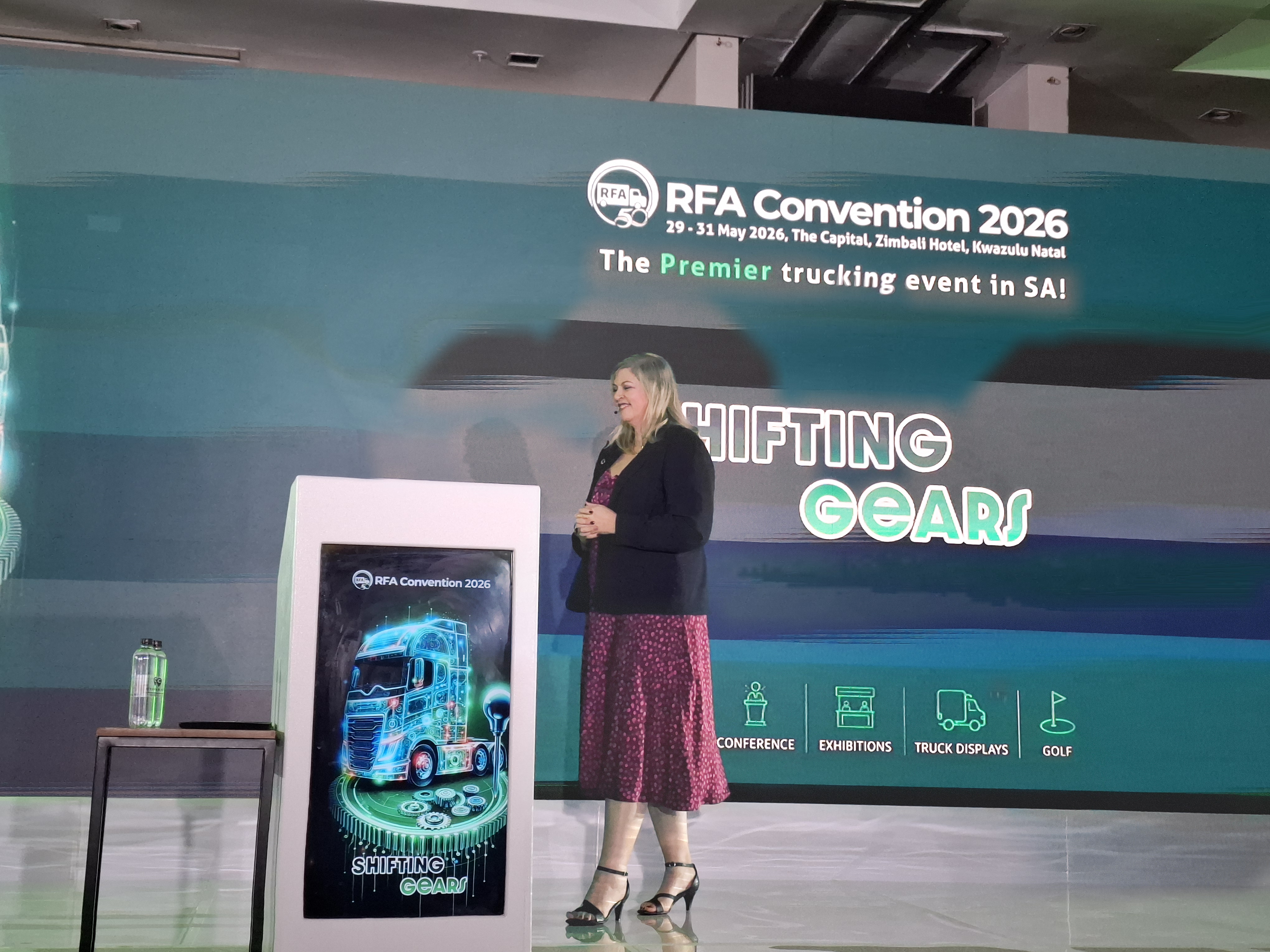
Liesl De Wet, chairperson of the RFA’s Green Transport Working Group, delivered what may have been the convention’s most forward-looking address. Her opening line was a gauntlet thrown down: “Inaction right now is the highest-risk strategy we can deploy.”

She walked delegates through a five-gear transition roadmap, starting with data and dashboarding as the foundation, moving through operational efficiency and building towards electric vehicle (EV) adoption and hydrogen fuel-cell technology – potentially viable as early as 2032. Stellenbosch University has already developed an EV Skills Course Framework in partnership with the Transport Education and Training Authority (TETA). Battery-swapping stations, innovative financing models and solar energy (not a problem in South Africa, she noted) are all part of the emerging infrastructure. One initiative stood out: Circular Energy repurposes EV batteries to power solar systems at Early Childhood Development centres across the country through its Energy 4 Hope programme.

The current regulatory barrier is that electric extra-heavy commercial vehicles are not yet permitted on national roads due to vehicle weight and length restrictions. This is being worked on, and De Wet was clear that once this and a few other hurdles are overcome, uptake will be rapid, noting: “Sustainability futureproofs your business.”

AARTO: ticking clock or ticking time bomb?

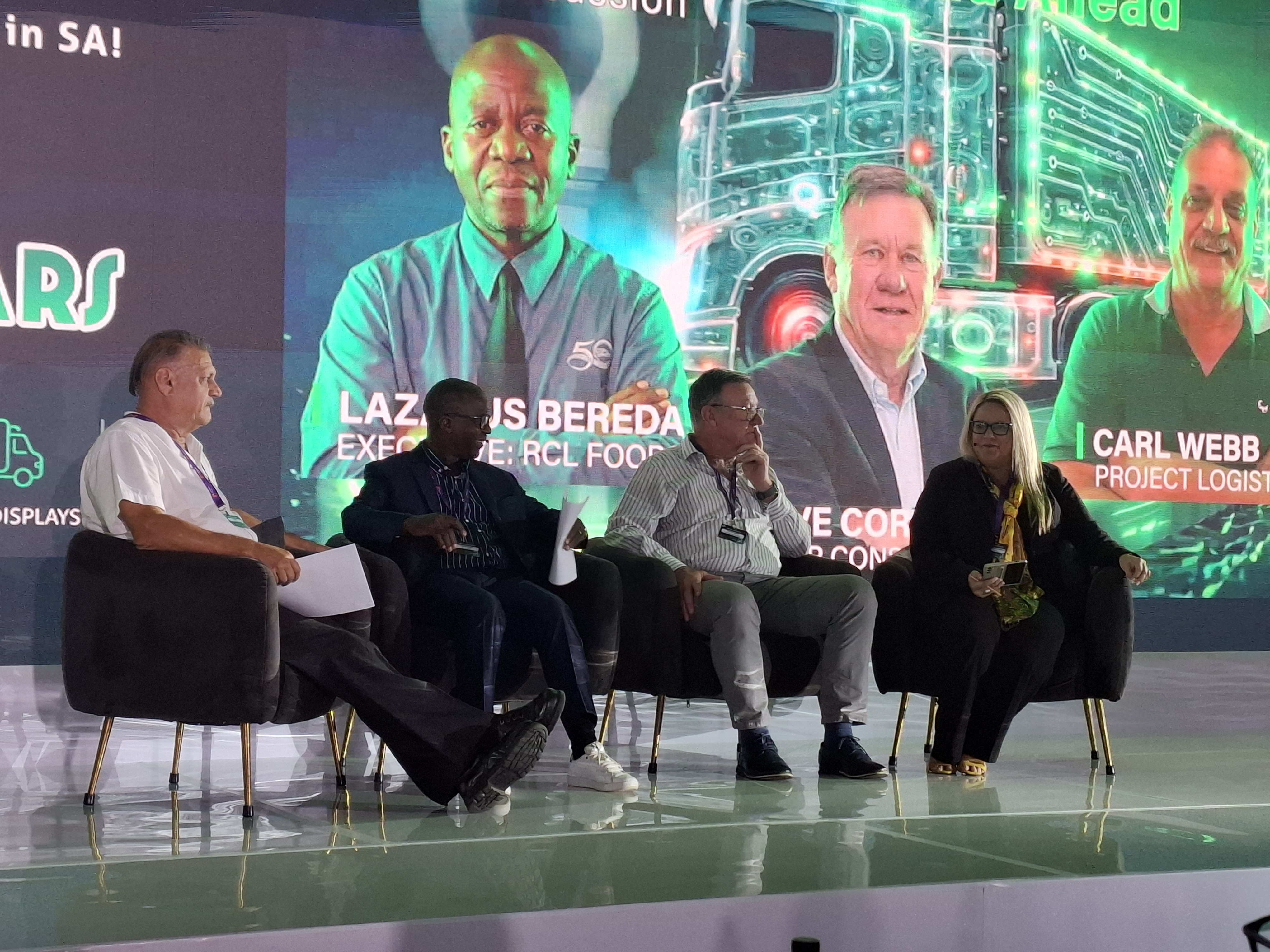
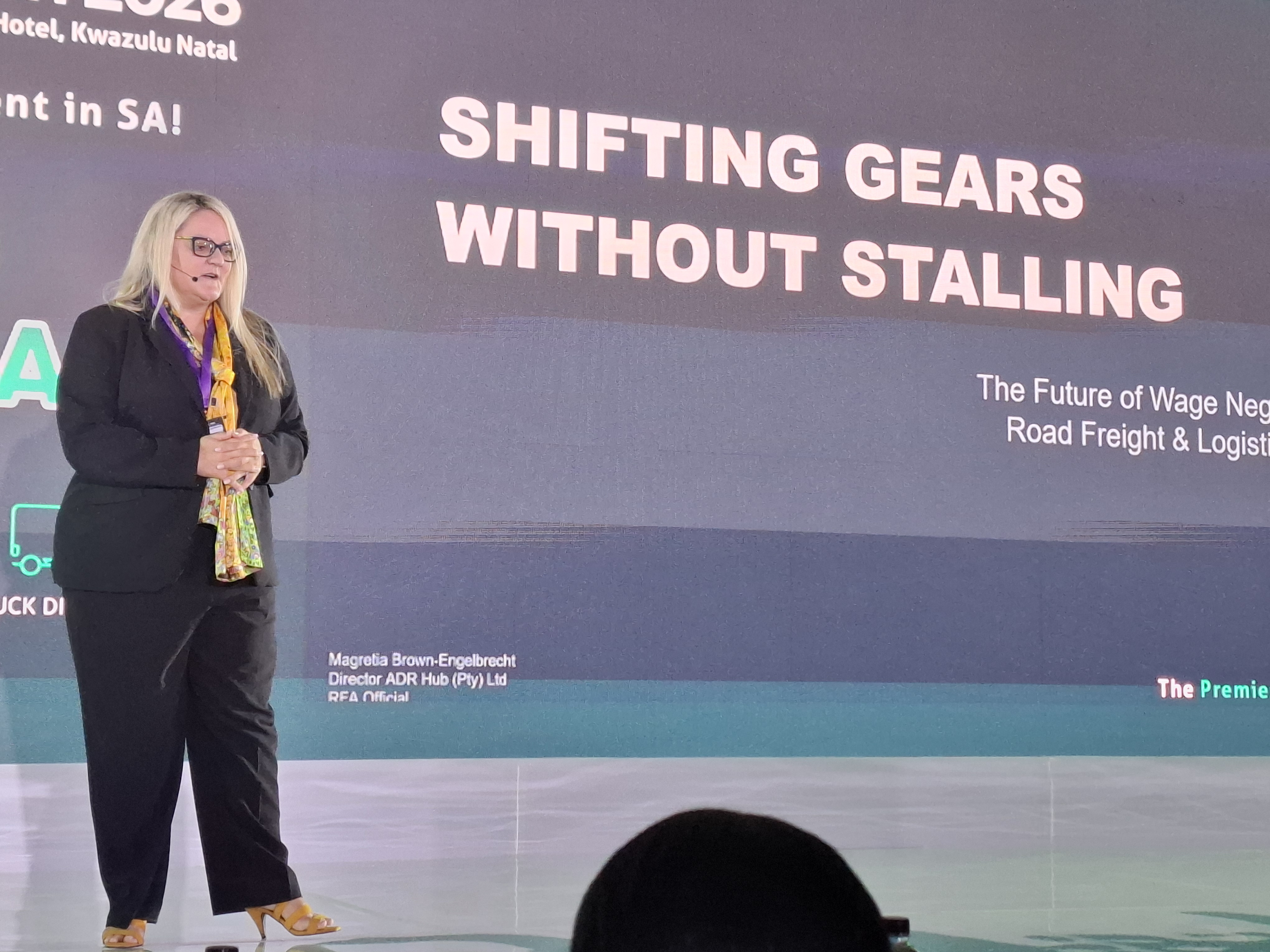
The panel on AARTO compliance, moderated by labour relations specialist Magretia Brown-Engelbrecht, was one of the liveliest of the day. The consensus? It is coming, it will be punitive and the industry is not ready.

RCL Foods logistics executive Lazarus Bereda saw genuine upsides if implemented well (greater safety, better driver management) but flagged the practical nightmare of a driver’s licence being suspended for three months. What does an employer do in that situation? Policies need rewriting, consent under POPIA must be obtained and training must happen before enforcement kicks in. “All staff have to understand what will happen, ahead of time,” he stressed.

Carl Webb of Project Logistics was less sanguine. “Your bribes are going to double,” he said bluntly, pointing to the challenge of enforcement integrity. Compliance consultant Steve Cornelius raised the insurance angle: companies that cannot demonstrate full awareness and control of their drivers’ demerit status may find claims repudiated after accidents – a potential catastrophe for a business.

Load broking: disruption or destruction?

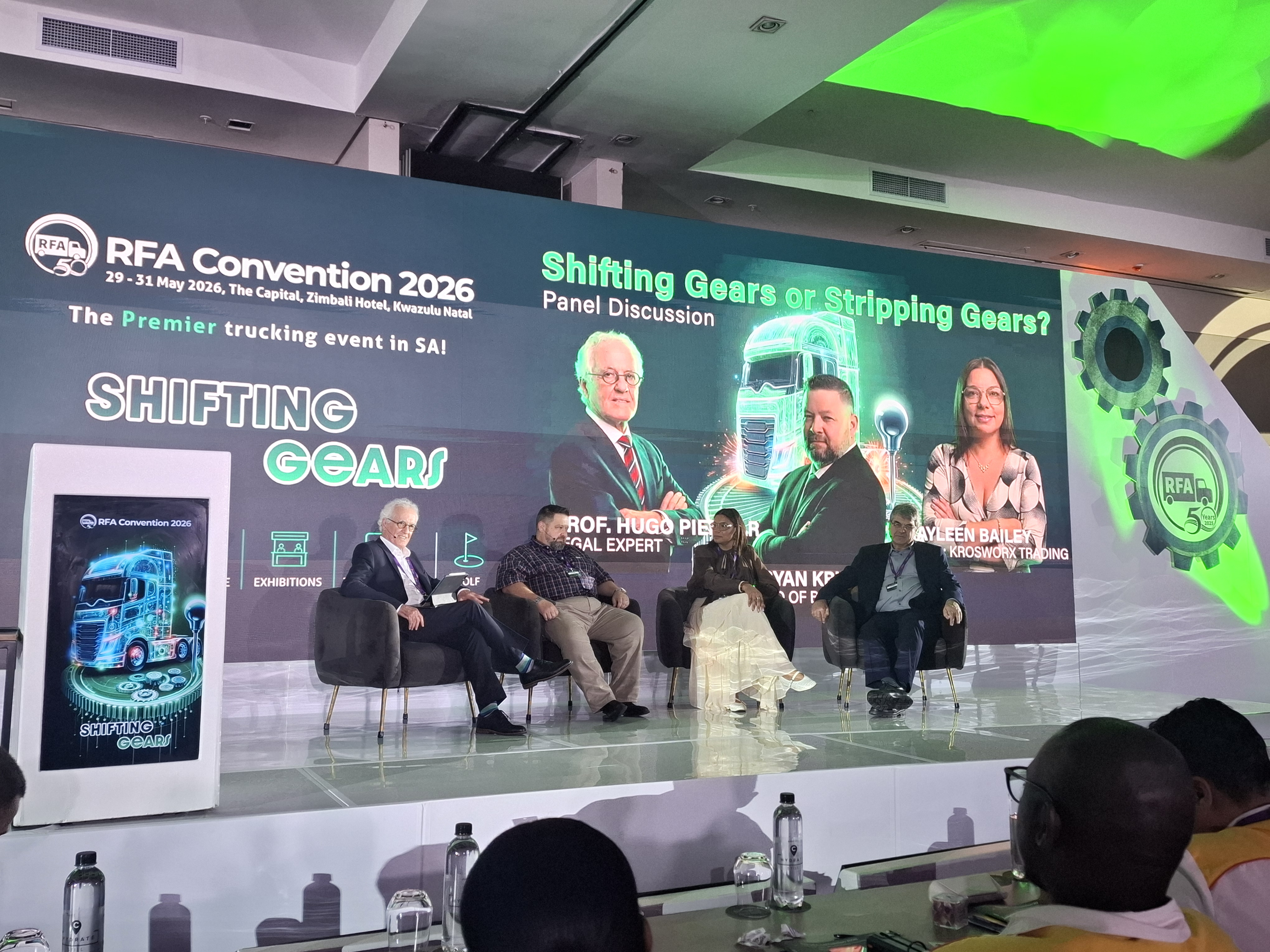
A panel on load broking – moderated by legal expert Prof Hugo Pienaar – tackled one of the industry’s most contested fault lines. The RFA’s Kelly was careful to distinguish the practice from simple subcontracting, noting that some RFA members are themselves using load brokers. The core concern is unfair competition: how do established operators, carrying full compliance costs, compete with platforms offering rates that can’t possibly cover the
basics?

Prayleen Bailey of Krosworx Trading offered a more nuanced view: brokers fill a genuine aggregation role in a demanding, speed-oriented market – but the lack of any accreditation framework is a serious gap. Ryan Kruger of Britannia pointed to the customer ultimately paying more through unaccredited brokers adding margins of approximately 30%, while operators at the bottom are squeezed. The question of ghost bidding on digital platforms – and what has been stripped from the cost structure to make those prices possible – remains unanswered. Pienaar’s closing words were pragmatic: “Manage it rationally or it will change chaotically.”

Labour: negotiations on a knife’s edge

Brown-Engelbrecht returned to close the formal programme with a sobering preview of the upcoming wage negotiations – the first full round since Covid. Fifteen years of labour peace in road freight is a remarkable achievement but, she noted, this cycle will be harder. Fuel volatility, AARTO’s unintended consequences on the shop floor, foreign driver tensions and the question of representivity in the bargaining council all complicate the picture. Her call to the room was to prepare thoroughly, take skills development seriously and approach negotiations as a we rather than an us and them: “The future doesn’t arrive fully formed – it’s negotiated into existence.”

Next stop: Hermanus

At its best, the RFA convention was exactly what an industry gathering should be: honest about the difficulty of the road ahead, clear-eyed about the risks and genuinely energised by the possibilities. As Lunga put it at the outset, the sector has faced down challenges before – including Covid – and found a way through collectively. The next convention takes place at Arabella Hotel, Golf & Spa in Hermanus from 4 to 6 June 2027. Given the pace of change, delegates will have much to learn, discuss and debate by then. 

Published by

Focus on Transport

FOCUS on Transport and Logistics is the oldest and most respected transport and logistics publication in southern Africa.
Prev SAPICS recognises role of Truck Test in supply chain efficiency
Next ITOY turns 50: These were the winners from 1992 to 1996

Leave a comment

This site is protected by reCAPTCHA and the Google Privacy Policy and Terms of Service apply.