Why can’t South Africa move like this?
While testing the new-generation DAF trucks in the Netherlands, I found myself equally fascinated by something else entirely: a public transport system that is affordable, seamless, safe and astonishingly efficient.
I am writing this column from Amsterdam – a city I have been fortunate enough to visit many times over the years. Every single time I return, I find myself amazed all over again, not only by the canals, bicycles and beautiful architecture, but by something far more practical: the public transport.
Quite honestly, it is extraordinary. I cannot help asking the same question over and over: why can’t South Africa have this too?
A ferry that simply works
One of my favourite examples is the ferry across the IJ River in Amsterdam. Need to get from one side to the other? You simply walk onto a ferry. There is no drama, no confusion, no endless waiting. The ferries run constantly and, astonishingly, they are free. Yes – completely free.
The crossing takes roughly six minutes, yet it feels symbolic of something much larger. Public transport here is not treated as a burden or a last resort. It is viewed as an essential public service that makes life easier for everyone.
Imagine that concept being embraced properly in South Africa… Imagine arriving at a transport hub where everything works exactly as it should: buses arrive on time, trains connect seamlessly, payment systems are integrated. People feel safe, information is clear and services are affordable.
It sounds almost utopian from a South African perspective. Yet here in the Netherlands, it is simply normal daily life.
One connected system
The Dutch transport network is remarkably integrated. Intercity trains, regional buses, trams, metros and ferries all work together through a unified check-in and check-out system. When you do have to pay (which, as I’ve said, is not the case on the ferries), you can simply tap in and out using your credit card. Or, if you really insist, you can buy an old-fashioned paper ticket. Either way, you move from one mode of transport to another with minimal effort.
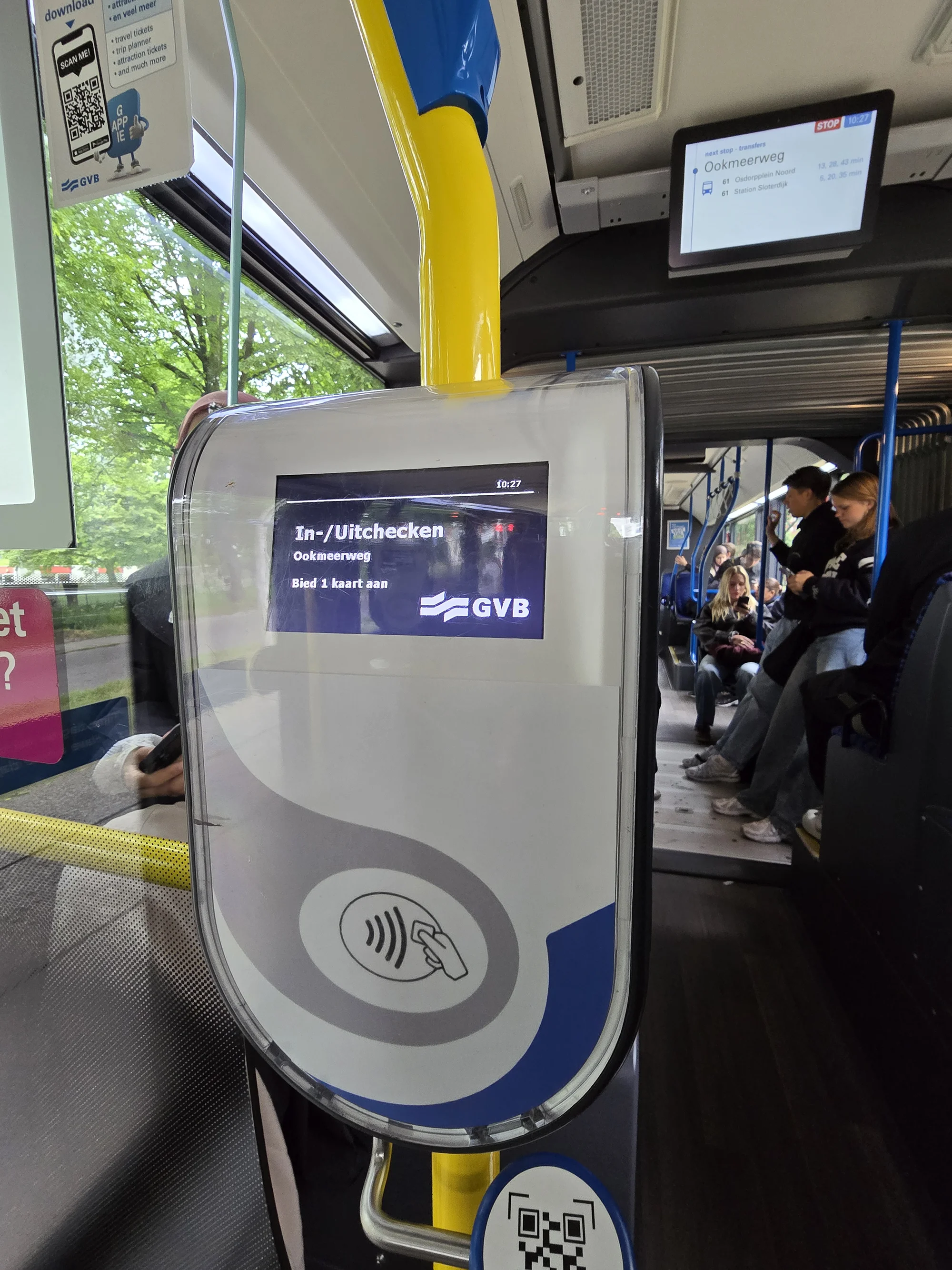
That integration matters more than many people realise. Public transport only truly succeeds when it feels simple and convenient. In South Africa, public transport is often fragmented and unreliable. Taxis, buses and trains frequently operate independently of one another, with commuters left to figure things out for themselves.
The Dutch have eliminated much of that friction. And importantly, public transport here is not viewed as something only lower-income citizens use. Everybody uses it: professionals use trains, students cycle everywhere, families hop on ferries. Even business executives arrive at meetings by bicycle without a second thought. There is no stigma attached to public transport. If anything, it signals practicality and common sense.
Safety changes everything
Another thing that stands out immediately is the sense of safety. At train stations, on trams and even late at night, there is a visible feeling of order and calm. That does not happen accidentally. The Dutch rail operator has systems allowing passengers to report unsafe situations directly via WhatsApp or text message. Staff respond rapidly, security is visible but not oppressive and problems are dealt with before they escalate.
That matters enormously because safety is the foundation of successful public transport. If people do not feel safe, they simply will not use the system. South Africans understand this problem intimately. We know how quickly concerns around crime and personal safety can undermine public confidence in buses, trains and commuter infrastructure. A world-class transport network is not only about vehicles and infrastructure. It is about trust – and those clever Dutch people have mastered this art.
Published by



focusmagsa