ECG Congress highlights turbulent times and technological transitions

ECG Congress highlights turbulent times and technological transitions

At a time when global trade faces unprecedented geopolitical shocks and the finished vehicle logistics (FVL) sector is navigating declining volumes, the ECG General Assembly & Spring Congress in Cascais struck a sobering, yet forward-looking tone. CHARLEEN CLARKE reports from Portugal.

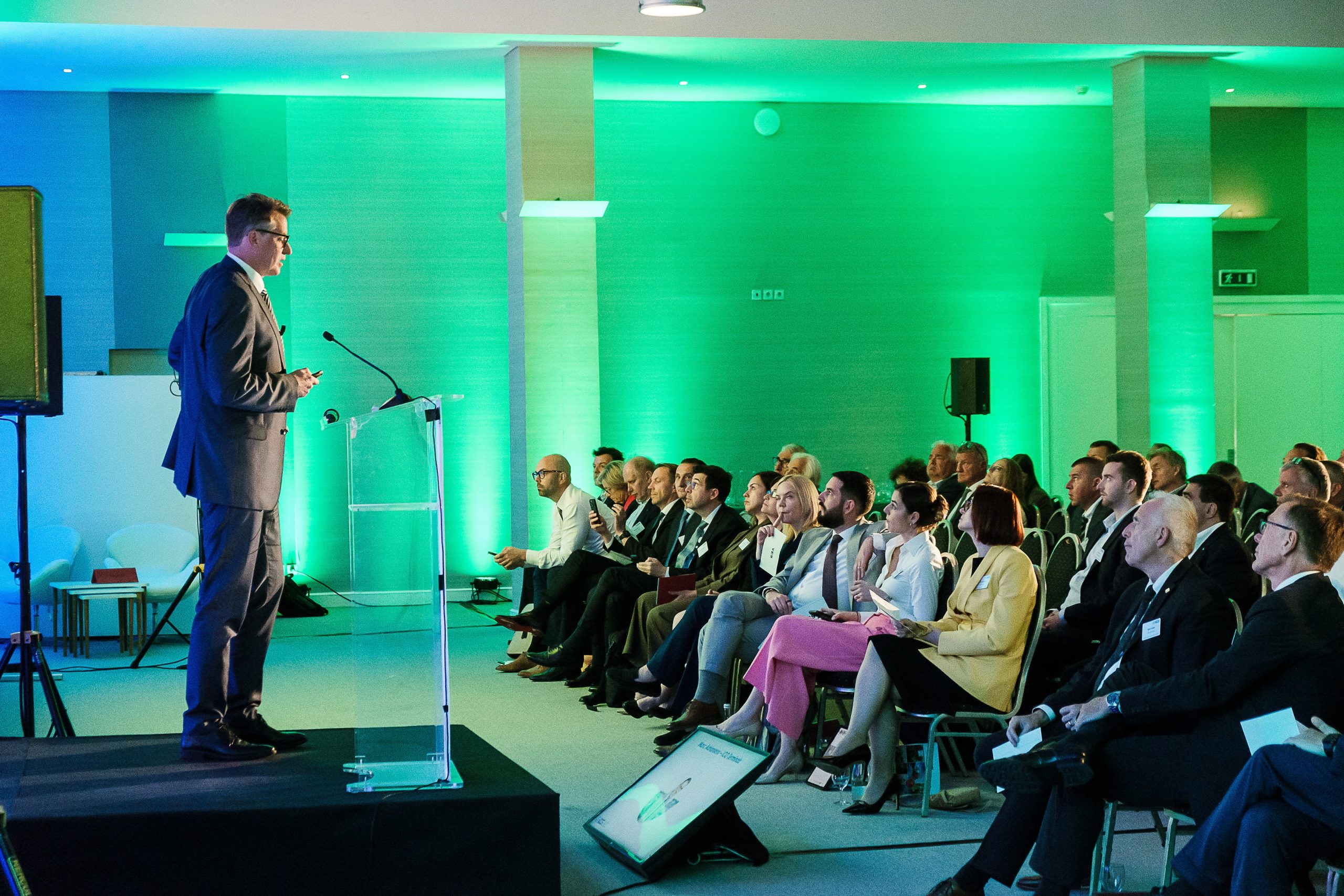
Hosted by the Association of European Vehicle Logistics (ECG), the event gathered industry leaders, economists, and technologists to unpack the state of play in a sector critical to Europeโ€™s industrial base.

A sector under pressure

Wolfgang Gรถbel, president of the ECG, opened the Congress by acknowledging the grim market conditions: โ€œThe outlook for the market is flat. The first quarter for all the OEMs has not been promisingโ€ฆ 25/26 will be more or less on the levels we have seen before,โ€ he said, noting that around 51% of FVL companies are already experiencing a drop in volumes. The willingness to invest, meanwhile, decreased by 30% in the past year. โ€œWe are facing an uncertain world,โ€ Gรถbel emphasised.

With 80 to 85% of Europeโ€™s FVL industry represented among ECGโ€™s 200+ members, the association serves as a bellwether for a โ‚ฌ21.3-billion sector that employs more than 93,000 Europeans directly and an additional 224,000 indirectly. Gรถbel warned of increased uncertainty and deteriorating financial performance among client OEMs, and pointed to a need for structural realignment: โ€œOur members will need to adaptโ€ฆ The competitiveness of the European manufacturers in the mass markets is decreasing versus the Chinese.โ€

Geopolitics and trade: โ€œThe elephant in the roomโ€

A stark analysis came from Prof. Dr. Alexander Sandkamp of the Kiel Institute for the World Economy, who highlighted the fragility of global trade. โ€œSince Trump got into office, US trade policy has shifted to protectionism and high uncertainty,โ€ he said. โ€œThis is extremely difficult for the global trading environment.โ€

With potential tariffs of an additional 25% on automotive imports, Sandkamp warned of retaliatory spirals. โ€œWe can hurt the US, but we also hurt ourselves,โ€ he cautioned. โ€œWe must be clever with tariffs โ€“ target products where the political pain is felt most.โ€

Sandkamp also tackled EU-China relations, now defined by โ€œde-riskingโ€. Trade dependence on China has waned โ€“ exports are down to 8% โ€“ but imports remain substantial. โ€œTaiwan is the elephant in the room,โ€ he warned. โ€œIf China invades Taiwan, we could stop trading with them entirely. That would be costlier than current US tariffs.โ€

Industry realignment: exports, capacity, and contraction

Justin Cox, director, global production at LMC Automotive, contextualised these trade tensions within a fragile European automotive landscape. โ€œAbout 50% of all Europeโ€™s US-destined light vehicle exports are produced in Germany,โ€ he said. Brands like Porsche and Volvo, heavily reliant on the US, are especially vulnerable.

Cox described a bleak export trajectory to China and a challenging domestic market. โ€œPan-European vehicle sales are expected to contract by 1.7% year-on-year,โ€ he said. European OEMs face mounting cost pressures, exacerbated by potential US tariffs. โ€œIt may not be financially viable to build C-segment cars in Europe and export them to the US,โ€ he warned.

Even where European brands have US facilities, spare capacity is limited, with BMW (12%), Mercedes (21%), and VW (32%) all sitting at less than half capacity. Volvo โ€“ at 84% but lacking full-scale battery-electric vehicle (BEV) plans โ€“ is the most likely to move production to the US.

Technology in transition

Yet amid the gloom, innovation provided a measure of optimism. The event featured a strong focus on artificial intelligence (AI), reflecting ECGโ€™s push for long-term efficiency gains. โ€œAround 70% of the people here are already using AI in their business,โ€ said Gรถbel, supporting AI as an enabling tool, not a threat: โ€œWe still think that we need a tool to accompany the transition to a carbon-reduced transport world.โ€

Federico Avellรกn Borgmeyer, chief partner officer at efcom, traced AIโ€™s evolution from Turingโ€™s wartime code-breaking to todayโ€™s generative models. โ€œAI is already replacing humans in translations, medical diagnostics, and software programming,โ€ he said.

For the logistics industry, the opportunity lies in automating repetitive tasks. Anike Murrenhoff, deputy head of intralogistics and IT planning at Fraunhofer Institute for Material Flow and Logistics, showcased how AI-driven digital twins and real-time data from trans-shipment terminals, developed with Dachser Intelligent Logistics, are slashing driving times and increasing asset efficiency with the @ILO terminal.

Using AI-powered optical scanning, it creates a real-time digital map of packages and processes within the terminal. This innovation improves tracking accuracy, speeds up workflows, and reduces manual effort. Already in use at sites near Munich and Heilbronn, the system enhances efficiency, supports load planning, and aims to cut emissions โ€“ marking a major step forward in smart, sustainable logistics operations.
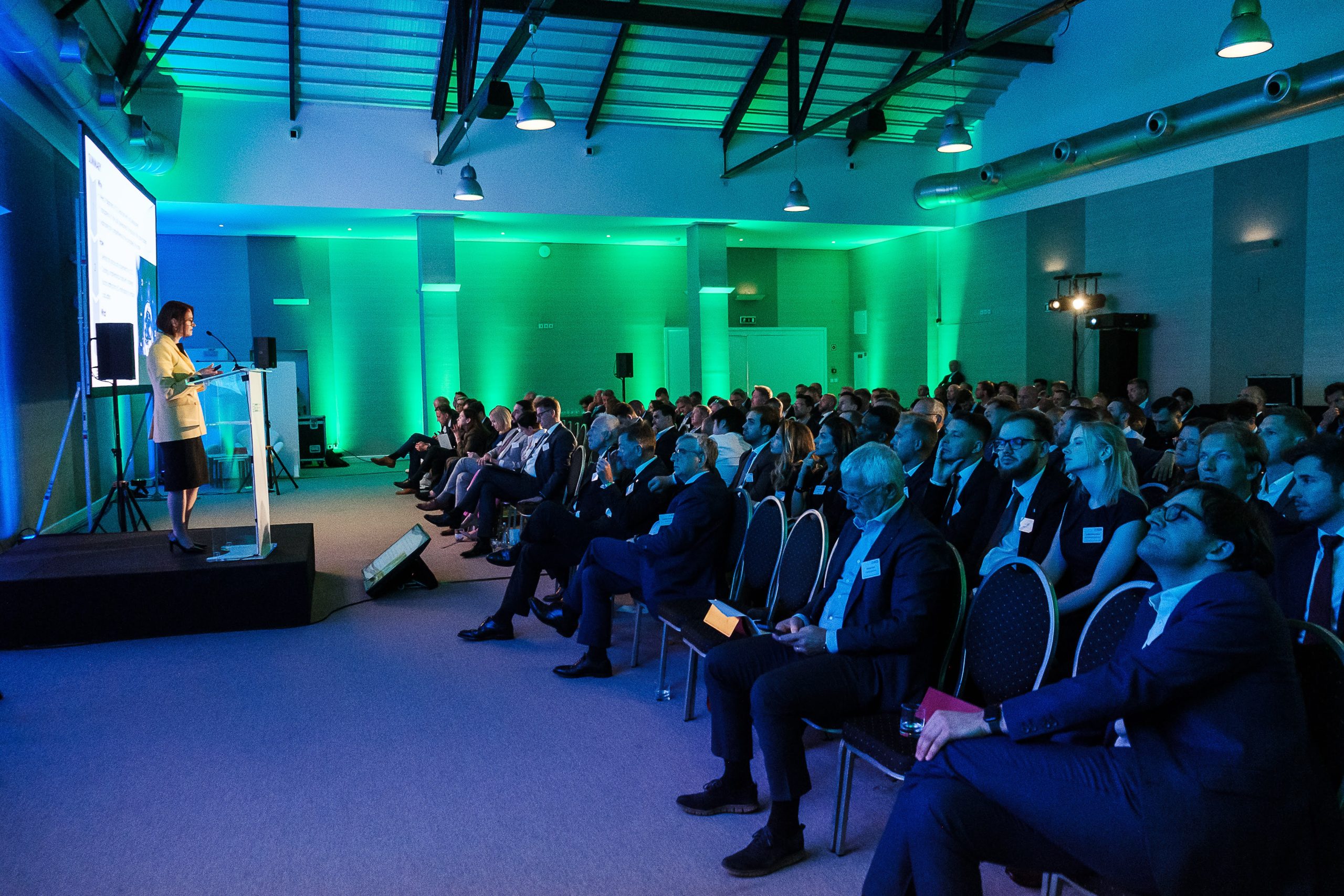
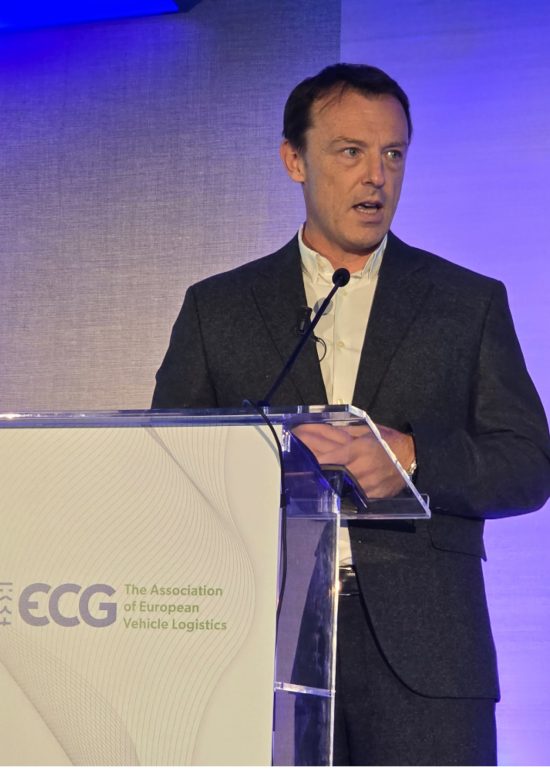
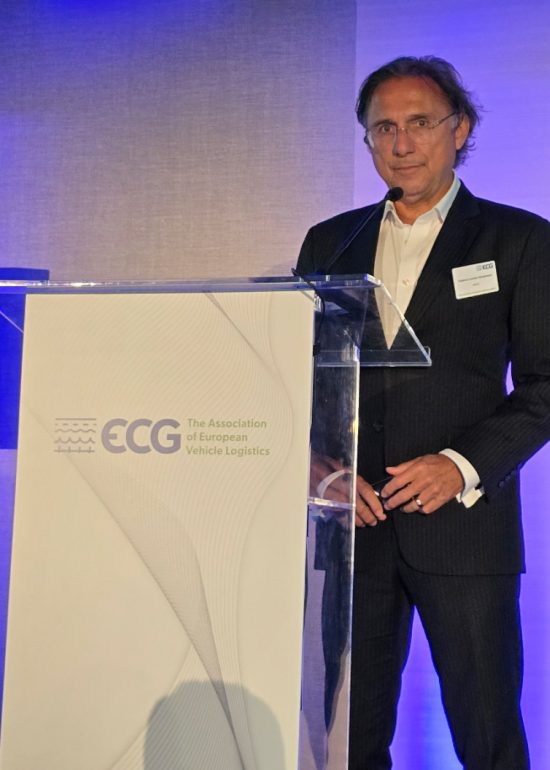
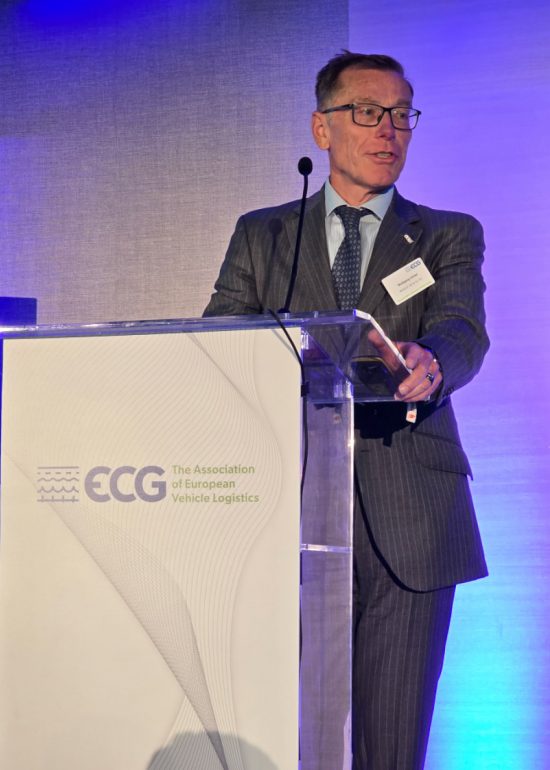
Jean Christophe (JC) Deville from Toyota Motor Europe said AI wonโ€™t get rid of people.

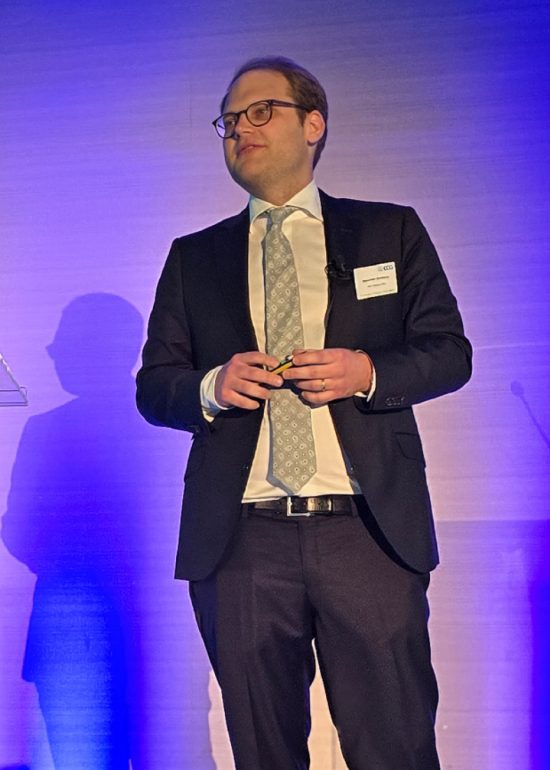
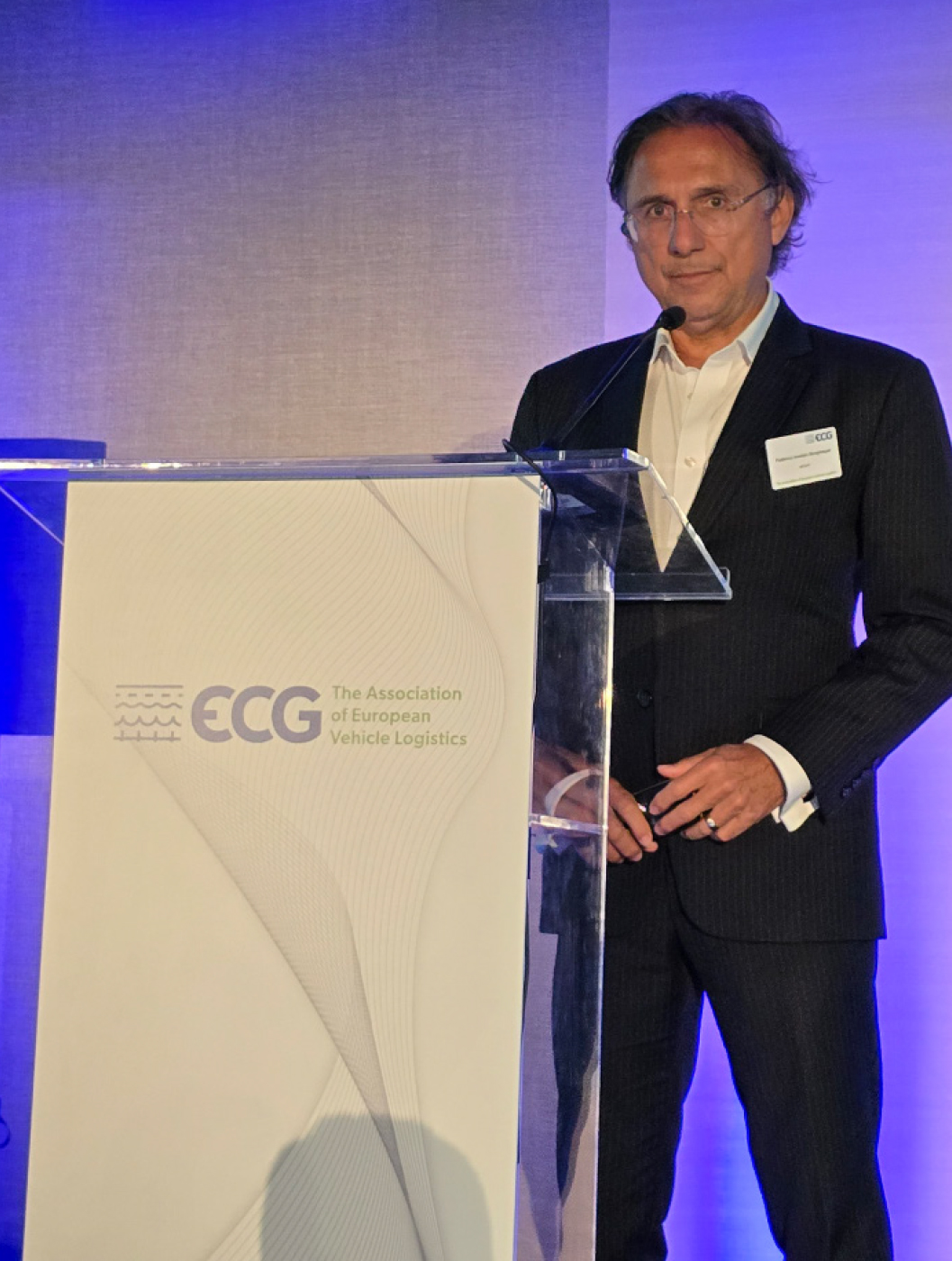
efcom's Federico Avellรกn Borgmeyer traced AIโ€™s evolution from Turingโ€™s wartime code-breaking to todayโ€™s generative models.

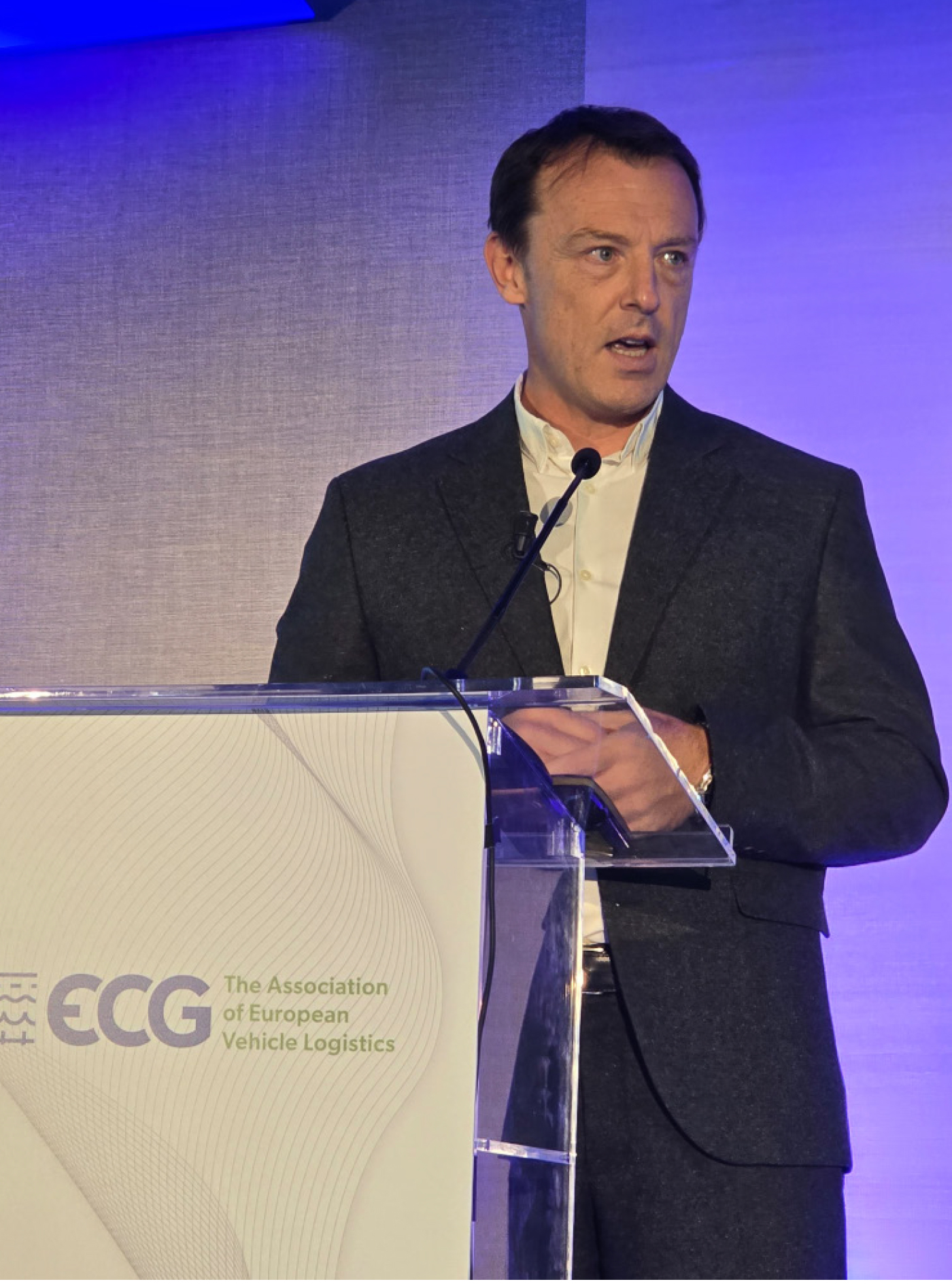
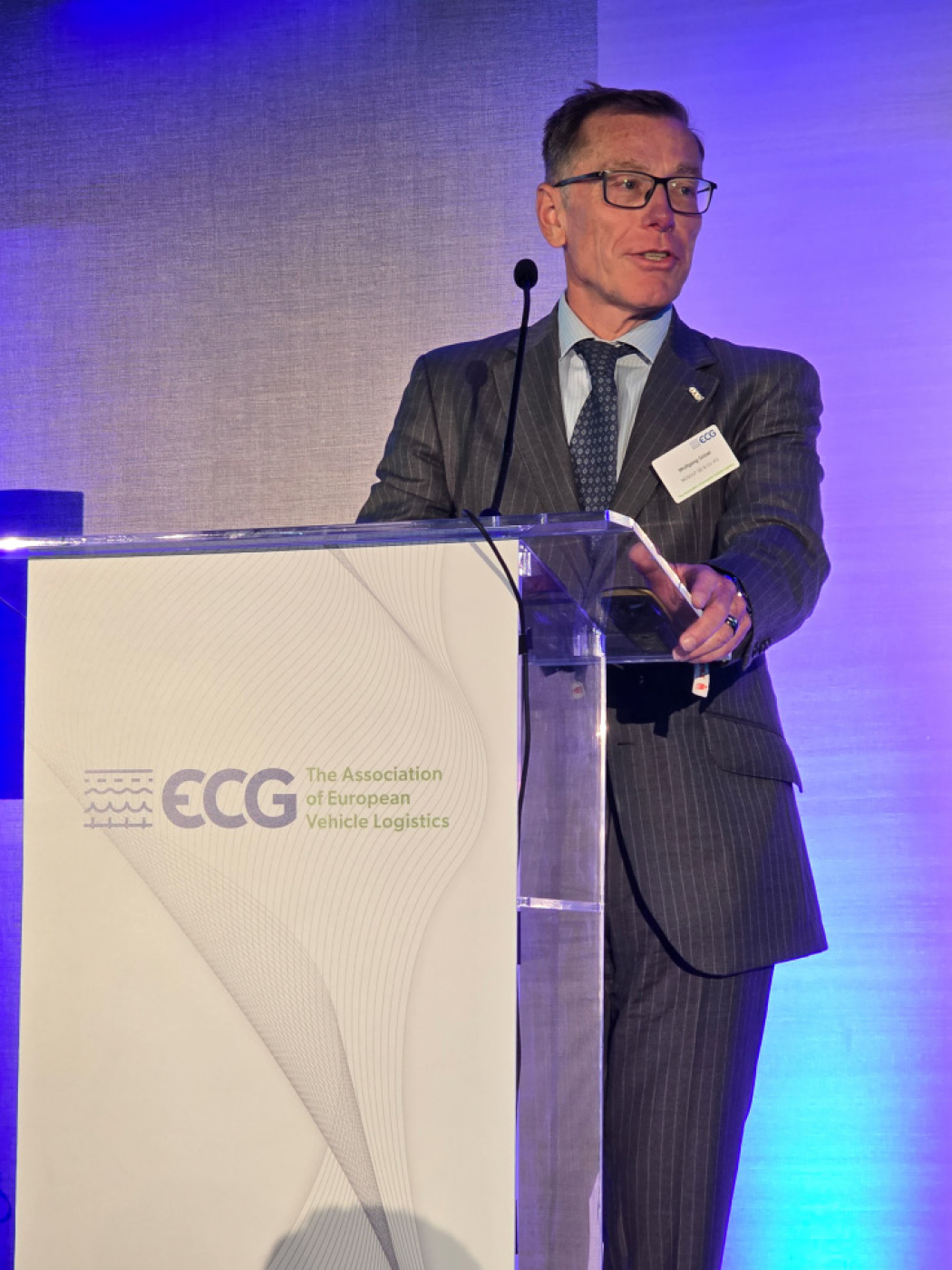
Wolfgang Gรถbel, president of the ECG, opened the Congress by acknowledging the grim market conditions.

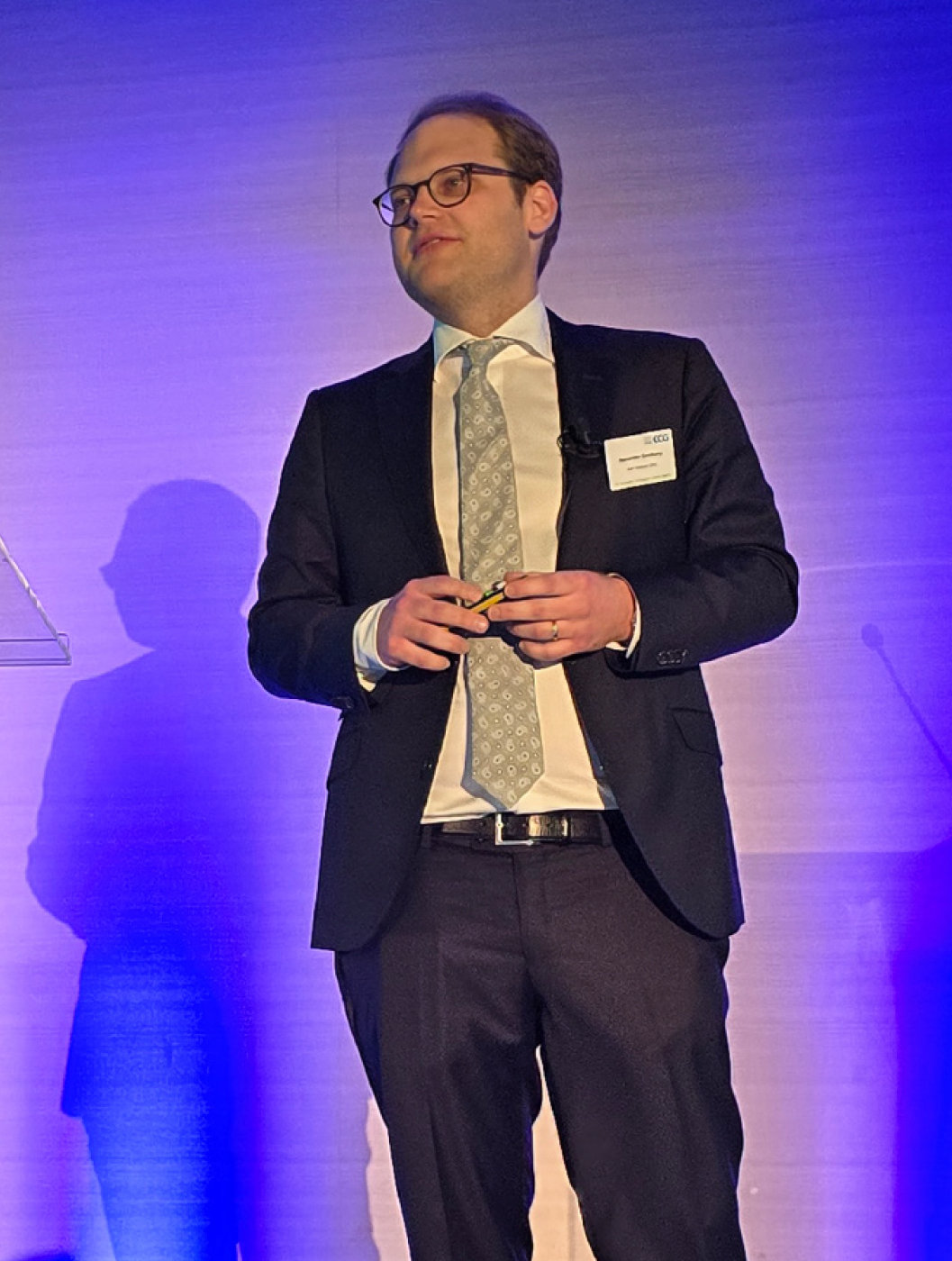
Prof. Alexander Sandkamp, of the Kiel Institute for the World Economy, highlighted the fragility of global trade.

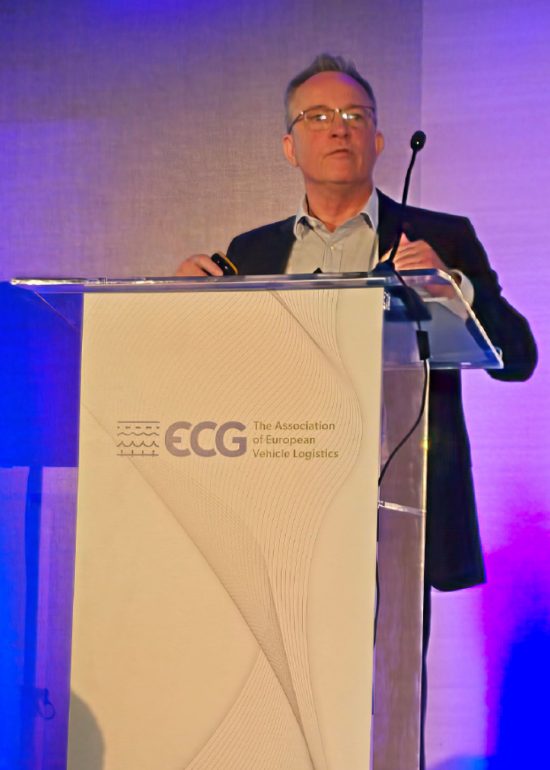
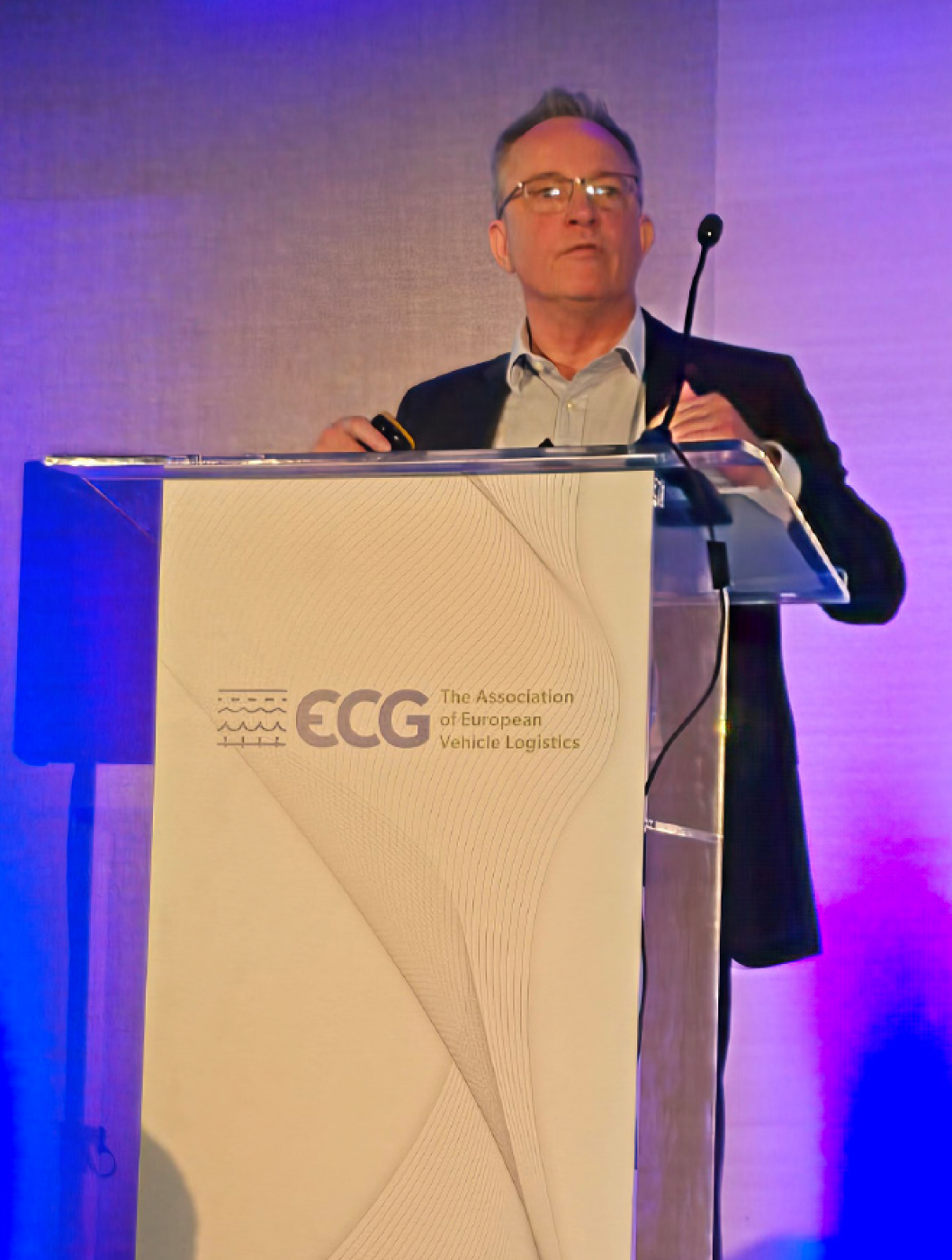
LMC Automotive's Justin Cox revealed that Germany produces about 50% of Europeโ€™s US-destined light vehicles.

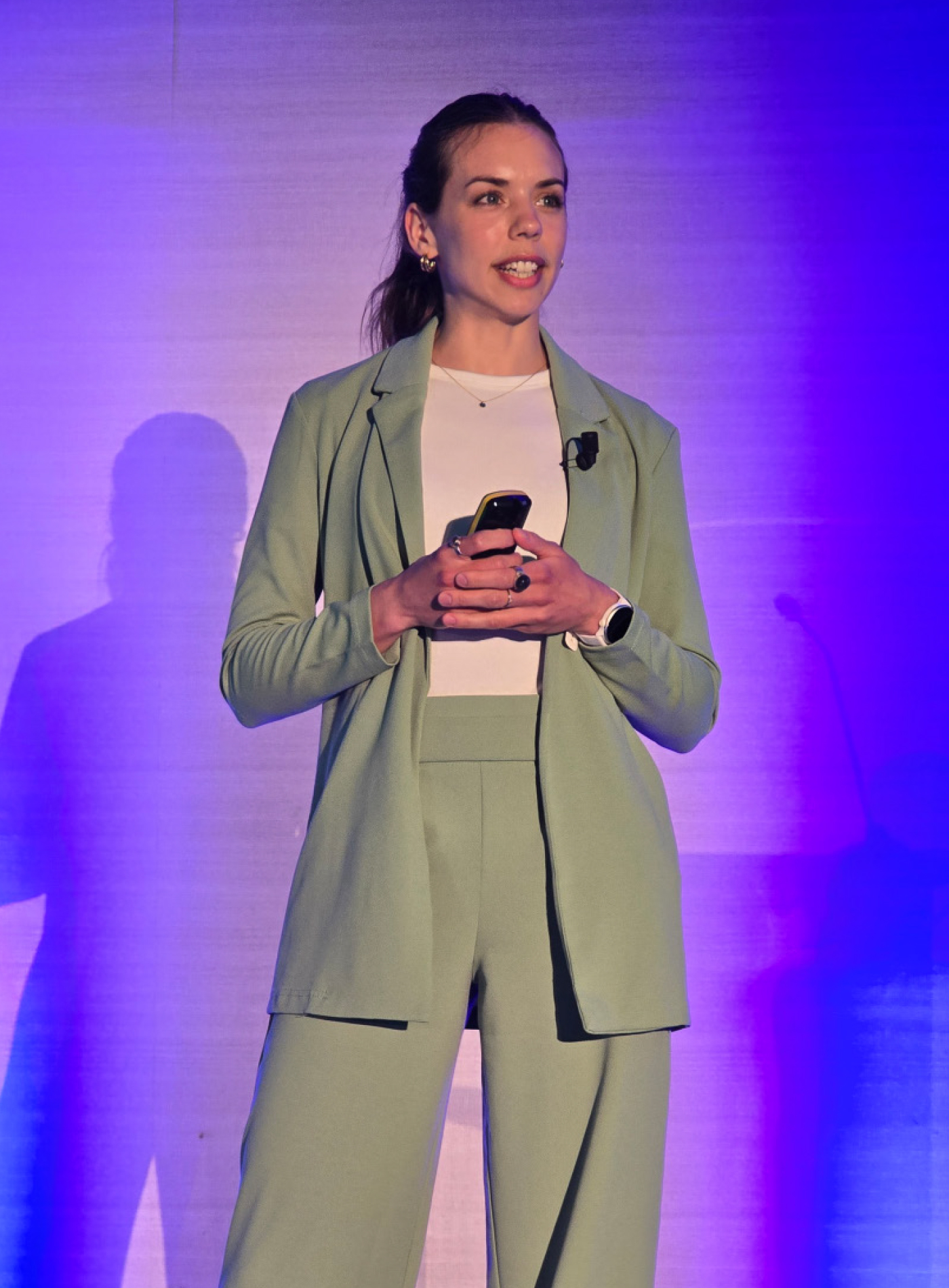
Anike Murrenhoff, from the Fraunhofer Institute for Material Flow and Logistics, showcased how AI is slashing driving times and increasing asset efficiency.

The human factor

Yet, the message was clear: AI is not a silver bullet. Jean Christophe (JC) Deville, vice president of supply chain at Toyota Motor Europe, issued a reality check. โ€œWe cannot pretend that AI is a reality in Toyotaโ€™s business right now,โ€ he said. โ€œAI will reveal areas where we are badโ€ฆ but we donโ€™t see it as a way to get rid of people.โ€

Instead, he framed AI as a tool for improving lead times and freeing up humans for higher-value decision-making. โ€œIf we can eliminate just one day of lead time, the consequences are vast,โ€ he pointed out.

A call for collaboration

Despite the tough talk, the ECG Assembly underscored the importance of collaboration. Membership has grown from 120 prior to the Covid-19 pandemic to stand at over 200 in mid-2025.ย 

โ€œUncertainty is leading to collaboration,โ€ affirmed Frank Schnelle, executive director of the association. Gรถbel reiterated this theme.ย 

โ€œWe are an extremely active association,โ€ he said. โ€œWe need to align, and talk the same language.โ€

At the conference, there was also growing recognition of ECGโ€™s advocacy role. โ€œWe will try to address regulators,โ€ said Andreea Maria Serbu, senior manager external affairs at the association, highlighting the burden of compliance, particularly for SMEs, as she continued: โ€œWeโ€™re overwhelmed by requirements and reporting. This doesnโ€™t really help small companies.โ€

All is not lost

From geopolitics to AI, the 2025 ECG Congress laid bare the volatile forces reshaping vehicle logistics. While short-term prospects remain flat, there was no shortage of resolve.

Gรถbel summarised the mood: โ€œThe general message is, weโ€™re expecting a flat market. Exports wonโ€™t boom. We donโ€™t see a huge recovery in the domestic marketsโ€ฆ But our outreach continues, reflecting the global footprint of the automotive sector.โ€

With growth in the Middle East, a watching brief on China, and a technology-led reshaping of logistics, the ECG community is leaning into uncertainty. This is nothing new. It has faced enormous challenges before โ€“ Covid, for instance. It currently faces a perfect storm of challenges. However, one gets the impression that โ€“ with data, diplomacy and digital tools as its resources โ€“ it will bounce back once again.

Published by

Charleen Clarke

CHARLEEN CLARKE is editorial director of FOCUS. While she is based in Johannesburg, she spends a considerable amount of time overseas, attending international transport events โ€“ largely in her capacity as associate member of the International Truck of the Year jury, member of the International Van of the Year jury, judge of the International Pickup Award, judge of the Truck Innovation Award, judge of the Truck of the Year Australasia, and IFOY Award jury member.
Prev Castrol GTX LOOOOOONG RIDE is launched
Next Road to hell

Leave a comment

This site is protected by reCAPTCHA and the Google Privacy Policy and Terms of Service apply.