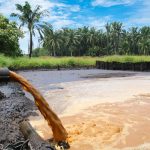
Whenever things were going badly, if asked how he was doing a close friend of mine would usually reply: “I’m like a hundred miles of bad road, all of it dirt.”
But when things were going well with him, he would answer: “I’m strong, Jim, strong like Russia in the sixties.” Those were essentially his two life positions; mostly he was like Russia in the sixties.
I was reminded of this when we handed over a substantial sum to become temporary road users in Namibia. They impose a foreign road-user charge at each border post. The bitter taste of parting with those funds is brief, because within minutes you are marvelling at the best-maintained roads on the continent.
Wherever you drive on gravel roads, you come across road maintenance crews; efficient, self-managed teams consisting of a grader operator, field mechanic, fuel bowser, and robust mobile home/workshop trailer that gets towed around by the grader. These efficient teams run the grader each day, servicing and fuelling it each evening before driving it on to the next section of road ready for the following day. Their supplies are replenished by diesel tankers or by calling in at regional centres with fuel reservoirs and stores. It is a system that works.
We saw many such road camps, sometimes more than once a day. No one is standing around leaning on spades, no machinery is lying idle; no “tenderpreneurs”, no wastage. These are Namibian government machines, working hard, properly supported and managed by trained drivers and crews. Their endless gravel roads are better than many of our tarmac roads here. Once you have driven a few thousand kilometres in Namibia, you will never again begrudge them their road-user charge. In fact, you would be happy to pay more.
There was a time when South Africa’s roads were also outstanding. They were a regional benchmark and a source of considerable envy south of the equator. The gravel roads were smooth, compacted, and regularly graded, while the tarmac roads were in exceptional condition. We have long been pushed off that pedestal.
The sharp contrast between atrociously bad roads and well-maintained ones has great implications for transporters and the logistics industry. I view this impact on three distinct levels.
At ground zero, drivers and vehicles alike take a terrible hiding from bad roads. Spring packs break, brake boosters crack, wheel nuts loosen, wheels come off, rims crack, shock absorbers fail, components begin leaking, pipes and insulation chafe, air leaks develop, batteries crack, and wheel alignment goes haywire. Vehicle bodywork suffers, lights go out of adjustment, drop-sides rattle loose, and doors shake open; mud flaps and chevrons fall off, skid plates crack, and grilles and body panels fly open.
Drivers find themselves in an all-day boxing match. They get fatigued and stressed and become less productive because the constant pounding on their kidneys and the rest of their bodies from endless corrugations, jolts, and shocks eventually hurts them. At low speeds, deep holes exceed the limit of axle articulation, so the chassis hits the bump stops every few seconds, sending a vicious jolt right through the bodywork. The driver is bouncing up and down on their seat trying to keep their feet on the pedals and their hands on the wheel. If speed increases, tyres suffer impact fractures, sidewall damage, tread penetrations, and chipping, and the trailers begin bouncing all over the road. The shock loads become more severe and the entire combination begins to age prematurely.
At an operational level, fuel consumption is significantly worse. The combination is driving in low gear and cannot maintain an efficient cruise speed. Trip times are lengthened – they may average 20km/h instead of 75km/h. Transporters can’t choose the shortest route, they must choose the best road, often travelling far distances in the wrong direction just to avoid a notorious section of road. Productivity suffers because delivery times lengthen. Perishable goods begin to live up to their name, perishing en route because of bruising, temperature variation, or mechanical damage. Deliveries are delayed; meeting time slots becomes a gamble. Wear and tear costs increase rapidly and maintenance costs follow suit.
At the strategic level, supply chain reliability can no longer be counted upon. Regional connectivity becomes extremely challenging, or an impossible dream. Transport times are unpredictable – a period measured in days and weeks rather than hours. Just-in-time (JIT) production efficiencies become impossible and businesses must carry greater inventory to compensate for the high unpredictability of replenishment timing. Unable to rely on JIT resupply, they tie up working capital in increased stock holding, which in turn affects their return on invested capital (ROIC).
The increased stock holding erodes competitive advantage, with regions and businesses served by reliablesupply chains enjoying an immediate and significant advantage over their competitors. They don’t have to carry inventory, as it is constantly and reliably en route to them. Bad roads don’t just affect traffic flows, delay deliveries, or reduce productivity. More importantly, they cause a ripple effect that filters through an entire economy and shapes future business strategies. Transport is a derived need; people don’t want transport per se. They don’t even particularly like trucks. They just want certain commodities moved from where they are produced to where they are consumed.
When those of us in the transport sector are forced to plan around bad roads, we are building hidden costs into our economy that are either never recovered (to the transporter’s detriment) or are only recouped by charging more for everything being transported. Everyone pays this unwelcome hidden price – a charge effectively levied against us because we exist; a “living” tax that we all pay as consumers. Like a hundred miles of bad road, all of it dirt.
This article builds upon Charleen Clarke’s sobering April editorial, “Cracks in the tar, rust on the rails,” which refers to ruined roads and rotten railroads, further unpacking the impact of ruined South African roads.