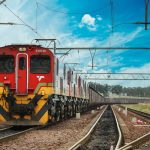
While increased competition and private sector involvement could theoretically improve efficiency, NICK PORÉE writes that the restructuring of the railways must precede any significant change, while current strategic manoeuvring indicates an unwillingness to relax Transnet SOC monopoly control.
Gavin Kelly, CEO of the Road Freight Association (RFA), raises some important points regarding the potential impact of opening up South Africa’s rail network to third-party operators. However, in order to create real “Open Access”, the fundamental and first essential requirement is the creation of an independent Track Network Agency (TNA) – possibly located in the Department of Transport (DoT) and separated in all respects from Transnet SOC and the Passenger Rail Agency of South Africa (PRASA). This agency should have ownership and operating responsibility for the entire network.
Secondly, the fee levels and conditions for train operations for all commercially competitive railway operators must be defined by the Railway Economic Regulator (RER) and the Railway Safety Regulator (RSR), in collaboration with the Network Agency – not with Transnet.
The RER must publish the totally equitable rates, terms, and conditions for use of the network by all Train Operating Companies (TOCs), including Transnet Freight Rail (TFR) and PRASA. Access fee invoicing, slot allocation, and operational coordination of all TOCs on the entire network must be functions of the TNA, not of train operators. The process of setting up the operational requirements must include representative consultations with industry and prospective TOCs. This is essential to achieving commercial viability, without which there will be little private sector engagement.
Even after the complete restructuring, the economic viability of large-scale rail freight in South Africa remains a significant challenge, as there is need for more than R80 billion to rehabilitate the core track network, as well as a further R60 billion to restore the operational capacity of the state-owned companies (SOCs). These expenses are the responsibility of government, despite current national debts, and are definitely not recoverable from new TOCs if rail is to be competitive with road haulage.
Our calculations indicate that an efficient railway can be considerably cheaper for the direct linehaul segment, but comparative costs per load often turn negative once facilities, transhipment, cross-haulage, handling and administration costs, and backhaul potential are factored in.
One critical issue is the absence of breakbulk rail infrastructure in the country – aside from a few container terminals, all of which are operated by TFR. Establishing a functional network for diverse breakbulk freight movements will require massive private sector capital investment in railway installations, terminals, and handling facilities, in addition to traction and rolling stock. Without this investment, the anticipated shift to rail may be very slow, with new TOC activity based primarily on competition for existing bulk commodities, rather than on competition with road haulage.