Face to face with Maretha Gerber
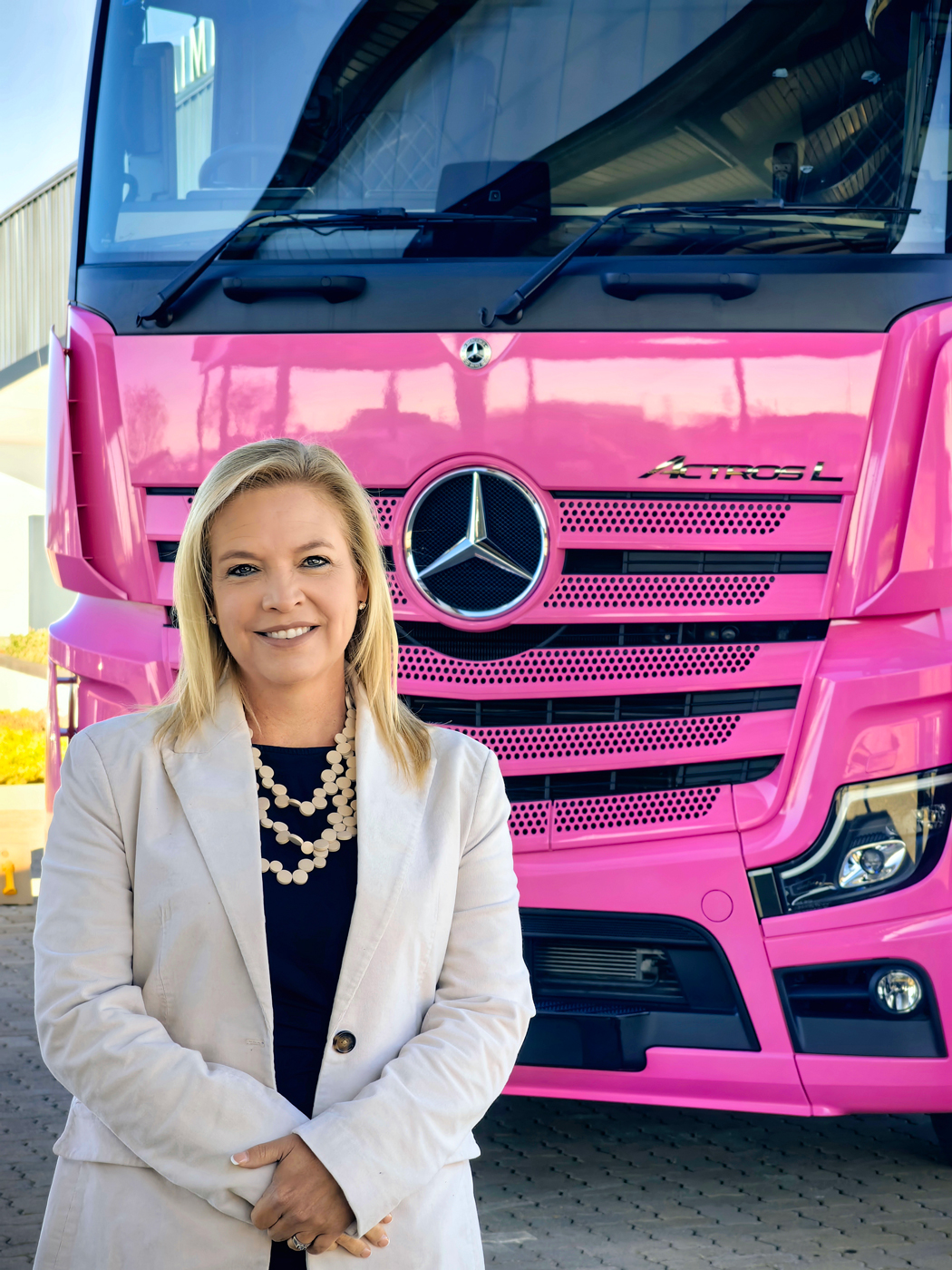
History was made earlier this year when Maretha Gerber was appointed group CEO and president of Daimler Truck Southern Africa. This was the first time that a woman had ever been appointed into this position, and CHARLEEN CLARKE reports that transformation at Daimler Truck is not limited to senior management…
From selling photocopying machines to heading up Daimler Truck Southern Africa, Gerber’s career reads like a real rags to riches story.
This story starts in 1999, when she concluded her marketing studies. “I had to go and find a job, and – for my sins – I sold copiers,” she recalls with a big smile. Coincidentally, DaimlerChrysler was one of her clients, and – judging by the progression of her career – Gerber did a rather good job of selling those copiers. “One day, one of the Mercedes-Benz managers asked me to come to their offices for a chat. As it so happens, that manager wanted to interview me for a job! I walked into an interview for which I was not prepared!” she recalls.
Clearly, that interview for which she was totally unprepared went rather well; she was immediately appointed key account manager at DaimlerChrysler. Various management positions followed at DaimlerChrysler and subsequently Mercedes-Benz South Africa.
In 2015, she moved into automotive retailing. “This was amazing because it taught me about the other part of the business, which was important. I gained enormous insight while in that role. I also learnt all about retail finance and processes. It was a really fantastic time, which was pivotal for my career,” she elaborates.
Shifting gears: the move to CV
In 2018, while still working in retail, Gerber was asked to interview for a role within the commercial vehicle (CV) division – specifically, head of Mercedes-Benz Trucks Southern Africa.
“I’d never considered working in the CV business, but by that time I had learnt a lot about automotive and I thought, why not? I believed I could apply the knowledge I had gained in automotive to the truck industry,” she says. “Of course, the two are very different: with passenger cars, you aim to please an individual, but with commercial vehicles, you impact the industry and the country. I wanted to see if I could apply my skillset in the CV environment…”
She got that chance and, in her new role, she was responsible for heading up the Mercedes-Benz Truck portfolio in Southern Africa. This encompassed the end-to-end transport and logistics solution: from product, supply chain, sales, and aftersales to Fleetboard telematics and dealer steering.
Gerber loved her new role. “It was an easy transition because I knew the company. Of course, there were moments when I wondered if I had done the right thing, but you learn that there will always be some uncomfortable moments when you’re challenging yourself. Those moments are good: they force you to ask for help, collaborate, and build stronger relationships,” she notes. Gerber subsequently became the vice president for sales and marketing for both Mercedes-Benz Trucks and Fuso before being promoted to president and group CEO.
Meaningful mentors
Gerber attributes much of her growth to her strong relationships. “I had fantastic mentors and leaders, who supported me on the journey. Their constant affirmation really helped,” she notes. “Then there are my husband and my dad, who are my personal mentors. My daily chats with them fill me with inspiration. Their views are often different to mine, but that’s good.”
Surprisingly, most of her mentors have been men. “It has been really interesting to have these men play a significant role in my journey. Many of those mentors are still within the Daimler Group; at least seven people who were invaluable mentors are now in top leadership positions in Daimler,” she reveals.
The support of her mentors has encouraged her to do the same for other people. “I love having informal and formal chats with people, and mentoring. I enjoy reading people’s body language, which is why online meetings aren’t always ideal. I think that during any engagement with an employee, you can play a role and help that person,” says Gerber.
She believes that being a member of the fairer sex impacts on her mentoring. “I believe it’s a motherly instinct, and it’s something that makes women good mentors. Of course, some people are not used to the warm and fuzzy approach. But the good thing is that most people welcome the motherly instinct I’m sometimes displaying,” she relates.
In April 2024, Gerber was appointed group CEO and president of Daimler Truck Southern Africa. “It was incredible to be given this opportunity. It was my aspiration, but it didn’t happen according to my timeline. It happened much faster than I expected!” she enthuses. “It confirms that hard work pays off. The goal that I set myself – to make a difference in our industry – is so much closer now. I’m privileged and honoured to be afforded this opportunity”.
It’s a role she relishes, as she continues: “I love this job because every day is different. This job is all about being able to walk into a meeting to tackle a tough topic or challenge and walk out with a solution. That’s what I enjoy about CVs: we’re constantly looking for unique solutions. It is an engaging, volatile, think-outside-the-box environment.”
Gerber says her vision for the company is to build on the fantastic foundation created by her predecessor. “We are in the middle of a perfect storm this year, and it’s my job to make sure that we withstand it. We need to create a company that can go into the future. The key thing is to create a company so robust that it can deal with any challenge it faces. We need to be sustainable, a good business partner, and an attractive employer,” she stresses.
Rising to the challenge
In her first year in her new role, Gerber is focusing on creating a stable working environment and a stable business. “We have a lot of challenges. For instance, South Africa has a lot of new entrants into a market that isn’t huge. This will impact the CV industry and has already impacted the car business; the fact that we have 46 car brands in the country is crazy! We currently have over 18 brands in the CV space and this is growing. Everyone wants a piece of the pie; this will result in price wars and some brands will eventually exit.” While this is a major concern, she reaffirms Daimler Truck Southern Africa’s commitment to the Southern Africa region.
“One of the biggest challenges I foresee for the future is the used vehicle market, which could take massive strain thanks to the arrival of all the new players,” she continues. “We need to reaffirm our foundations to deal with challenges like this. Accordingly, I want to gear the team to see beyond today and start looking into the future, while still getting the job done today.”
This means focusing on customer excellence: “We can do everything, but if we don’t have the customers and we don’t deliver the service, we will fail. People who believe in service excellence are key,” she stresses.
Daimler Truck Southern Africa employees are exceptionally important to Gerber. “I’m a firm believer in the saying, ‘you’re only as good as your team’. You can never achieve anything individually – it’s about having a collaborative approach. This can slow things down, but I believe in taking the journey together. That has always been my style and it has worked for me,” she says.
Accordingly, she’s very focused on the professional development and growth of employees. “I think that, at Daimler Truck, we are privileged to have a lot of leadership programmes in place: we have training programmes, coaching programmes, mentorships… and we have also started open fireside chats, which create a trusting environment,” she explains. “Thereafter, people will often contact me individually, asking for a quick coffee, advice, and an individual chat. This plays a very important role, in that the employees can ask questions and not feel intimidated. I want to create an environment where employees realise that they are in control of their development; they should never feel threatened in any way,” she elaborates.
The quality that Gerber most appreciates in her team is resilience. “As South Africans, we get knocked down, but we always get up again. Things will go wrong and we will vent, but four hours later, someone will walk into my office with an idea. The saying ‘maak ’n plan’ is something even the Germans are using now,” she notes with a chuckle. “We often need a ‘maak ’n plan’ moment, and we will always find it. In this manner, we always get through any situation.”
Thriving in a competitive market
Of course, some current situations are especially challenging. For instance, improving customer satisfaction and loyalty in the highly competitive CV market is always going to be perplexing. As Gerber notes: “There is very little that differentiates products today.”
She says that competition is good, though, and ensures that the company strives to do better. “We need to delight customers. In this regard, we are fortunate that the company has been around for such a long time, so we know what customers need. Right now, they need information instantly, so we have improved our telematics offer and we are providing even better customer insight,” she explains.
“We have built a dashboard that we launched in January called the DTSA Telematics Dashboard. It gives the customer one comprehensive overview, using any device: they can have an overview of their business while sitting in the Seychelles with their feet in the ocean,” she reveals. “We also launched our Daimler Truck Parts Portal offering online parts shopping to our customers. We are constantly making it easier for the customer to deal with us and do business. So, we are focusing on speed, the ease of business, and transparency – because this builds trust,” she continues.
While the company is constantly innovating, Gerber says success also involves going back to the basics. “We need to deliver an exceptional product, we need to provide incomparable service, and we must have an engaged team. We need to stick to what we know and ensure that the company that has been here for over a century will be here for the next century,” she asserts.
She accepts that sometimes the team will drop the ball, though. “We make mistakes and we have to learn from them,” she insists. Surprisingly, she says that a screaming customer isn’t necessarily a bad thing: “If they go quiet, that’s when you must worry – because maybe they have given up on you.”
Looking towards a sustainable future
Turning to the future, Gerber says that the country has to find a workaround in terms of road and rail. “We need to come up with a sustainable business model. Everywhere else in the world, road and rail work together. Why can’t it work here?” she asks.
The country – and indeed the transport industry – must also decarbonise. “This won’t happen tomorrow. We need to evolve and develop so that, when it is time to make the switch, we are ready. We believe that diesel will be with us for many years, which is why we are continuing to invest in this technology. We are not just focusing on one technology, though: we’re also focusing on battery-electric and fuel cells. Hydrogen propulsion is also a relevant technology, but it’s not the silver bullet,” she explains.
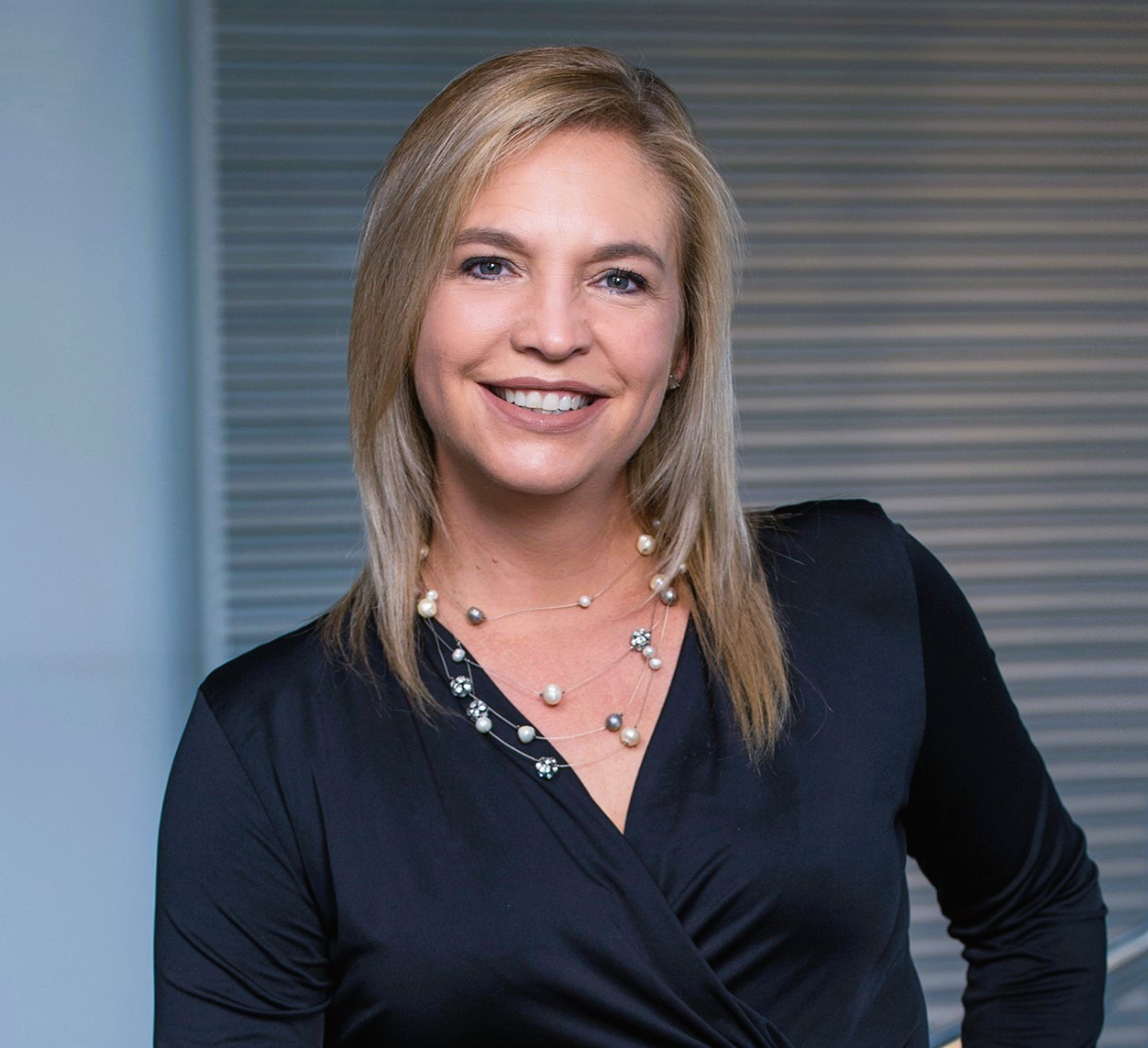
While the country and industry will change in the future, so too will Daimler Truck Southern Africa. “I plan to promote diversity and inclusion within the company. This is part of the Daimler global strategy and something we’ve been concentrating on for years,” Gerber emphasises.
“I have a particular focus on women in the CV industry. It is my fervent hope that one day we will not talk about excellent women leaders; we will talk about leaders. We say ‘It starts with us’, meaning that the empowerment of women in the industry starts with the women who are currently in the industry,” she adds.
“The biggest challenge with diversity is the fear of the unknown. Breaking beliefs is central to expanding diversity. We need to convince the traditionalists that we are capable; we need to demonstrate this through our actions,” she continues. “I always say to the ladies in my team that we have a massive responsibility because if we show that we can do it, other women will get opportunities.”
The company is already making significant progress when it comes to diversity. “If I think of what the CV division looked like 10 years ago, we’re moving in the right direction. Previously, the boardroom was full of men. Now there are women there too – and they have different perspectives,” she notes.
“Diversity in generations is also important; a 25-year-old will think completely differently to a 50-year-old. I believe that the youth is the future, and I can see that the average age of the company is decreasing… this is obvious from the dress code! I’m proud to say that we are transforming into a more diverse and younger company, which is more agile for the future. Can we do more? Absolutely. But we’re making incredible progress,” she adds.
Finally, does Gerber have any advice for aspiring leaders in the CV industry – especially women? Her advice is three-fold: “Firstly, don’t be impatient. Expand your skillsets and don’t limit yourself to the position that you think you want. Believe in yourself and never give up – the right job and the right opportunity will come up. If it feels right and you think you can do it, go for it!
“Secondly, I firmly believe that hard work is critical; you have to put in the hours. You have to challenge yourself and build a good network – both personally and in the business,” she asserts.
“Finally, you need to take a helicopter view of every task. You must constantly challenge yourself and consider what you’re doing and how it impacts the business. That way, you play a more strategic role. Don’t have a closed view; step back and see how you can strategically influence the business in the right way,” she stresses.
Which, of course, is exactly what Gerber has done…
Published by


focusmagsa